





 English
  Francês
  Alemão
  Italiano
  Japonês
  Norueguês
  Portuguese
  Spanish
  4 min of reading


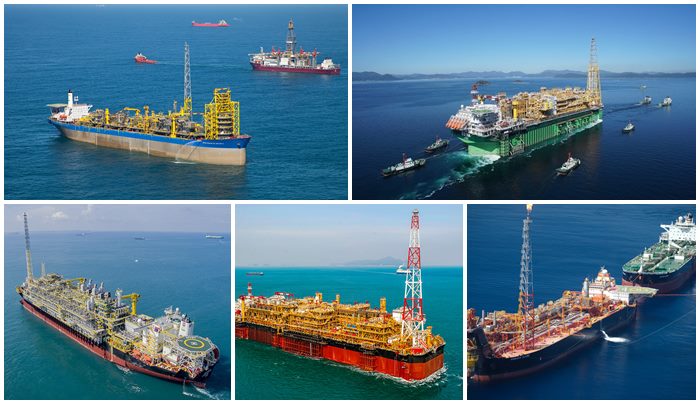
Pre-Salt Sector Estimates 19 Additional FPSOs Amid Entry of Foreign Operators and Investments and Changes in Contracting Timelines
The floating production market in Brazil has enjoyed a decade of intense growth as the main component of a 1.5 million barrels per day increase in the pre-salt, and now, although the sector continues to expand, there are likely to be changes in terms of engineering and contractual models due, in part, to the arrival of new operators on site.
A recent report commissioned by the federal entity PPSA predicted that 14 production sharing contracts covering the pre-salt outlook would generate about 19 new projects for floating production, storage, and offloading units, and total investments of US$ 144 billion.
The forecast takes into account the fact that many of the prospects have a relatively low risk from an exploration standpoint, and some are essentially evaluations of known reservoirs.
-
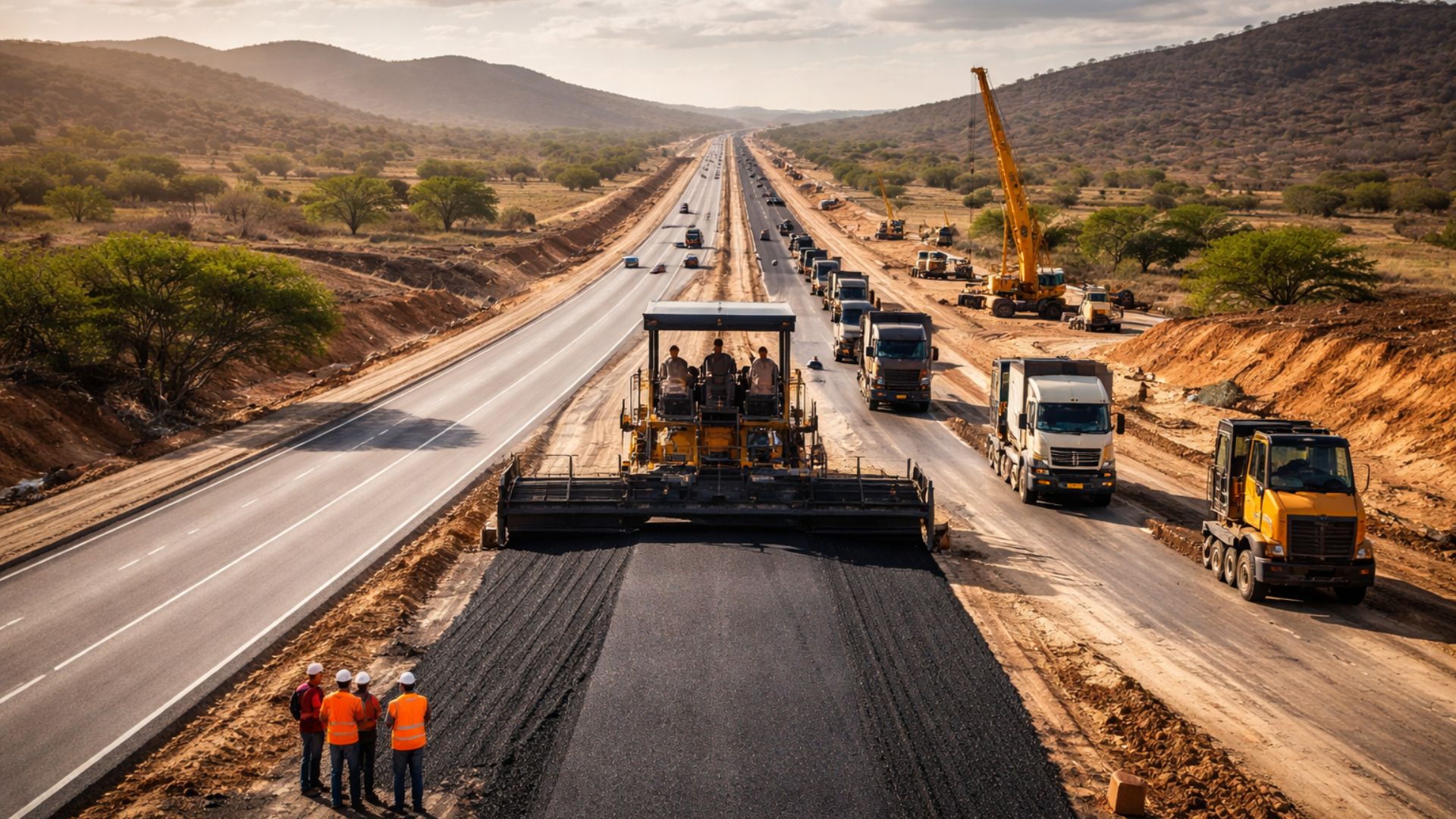
Government unlocks R$ 554 million for a highway that has been requested for decades and accelerates the duplication of BR.
-
Without bricks, without cement, and without endless construction: the cardboard house that is assembled in modules and can be moved.

-
Billions of barrels on the equatorial margin could lead Amapá to double its oil production in Brazil — the state aims to enter the route of companies in the Campos Basin, attract investments, and boost jobs and businesses in the oil and gas sector.

-
Without bricks, without cement, and without endless construction: the cardboard house that is assembled in modules and can be moved.

Growth could be even greater if frontier exploration outside the pre-salt province leads to more development projects, with high hopes for the deepwater polygons of Potiguar and Sergipe Alagoas and, depending also on environmental licensing, the equatorial margin. Asset sales by the state-owned Petrobras, along with investments in mature basins and exploration of the pre-salt in deeper horizons, could also generate demand for floaters.
A track record of success in the Campos and Santos Basins means that this growth will almost certainly be driven by FPSOs and the subsea completion format, while advances in subsea processing may lead to higher production per unit.
Recently, Petrobras has focused on completing the installation of its first wave of pre-salt projects aimed at generating revenue, although a new cycle of investments is now beginning.
Major Players in Brazil and Expected Demands
In the chartering sector, Modec and SBM Offshore have split the majority of contracts, delivering 21 units between them since 2017.
Many of Petrobras’s production units have experienced construction delays, but the final elements in this first phase of development are also nearing completion.
The FPSO P-67 is ready to start production in the Lula field, where the FPSO P-69 is also in the growth phase, and with eight large FPSOs, this iconic development will soon reach a production peak of 1.1 million bpd, to the delight and relief of Petrobras and its partners Shell and Galp.
The ramp-up in the Búzios field is also progressing quickly after construction delays of four floaters, each with a capacity of 150,000 bpd of crude oil and 6 million cubic meters of natural gas per day, and operated by Petrobras under a rights transfer agreement.
The FPSO P-77 cleared customs in southern Brazil two weeks ago and is heading to the Búzios field, where the P-75 recently started production and the P-76 is also expected to receive first oil in February.
Petrobras also has ongoing proposals and last Friday received bids from three companies hoping to supply two FPSOs for the Marlim revitalization project. Bids are also due for an FPSO for the development of Parque das Baleias and for the Mero-2 floater, the latter with a production capacity of 180,000 bpd and 12 MMcmd of gas compression.
A tender for a chartered FPSO for the Buzios-5 project has resulted in a frustrating delay for Petrobras due to the inability so far to finalize an agreement with Exmar from Belgium.
Petrobras’s current business plan indicates that two more FPSO auctions will be ready for production to start in 2023.
Itapu in the Santos Basin
One of them is the first production unit in the deepwater sector of the Sergipe-Alagoas basin, with a processing capacity of 100,000 bpd. The other is for an FPSO to be installed in the pre-salt field of Itapu, in the Santos Basin, with a processing capacity of 120,000 bpd.
After Itapu, sources say Petrobras is expected to proceed with tenders for two more units for the Mero field, in partnership with Shell, Total, China National Petroleum Corporation, and China National Offshore Oil Corporation.
Petrobras has not provided the initial oil dates for Mero-3 and Mero-4, but project managers have suggested that the four projects will be launched at intervals of about 12 months.
However, delays in the first FPSO contract and now the subsea packages, umbilicals, risers, and flowlines are threatening the initial oil targets for Mero-1 and pushing the others back. Industry sources are also hopeful of seeing documents for a sixth FPSO to be installed in the pre-salt field of Búzios, although they may get a new proposal for Búzios-5 first.
There are also growing expectations that limitations in the contracting models used in Petrobras’s recent tenders, along with the arrival of major international operators to the scene, will bring significant changes to the models used for contracting.








Seja o primeiro a reagir!