





 Portuguese
  English
  Spanish
  3 min of reading
  5 comments


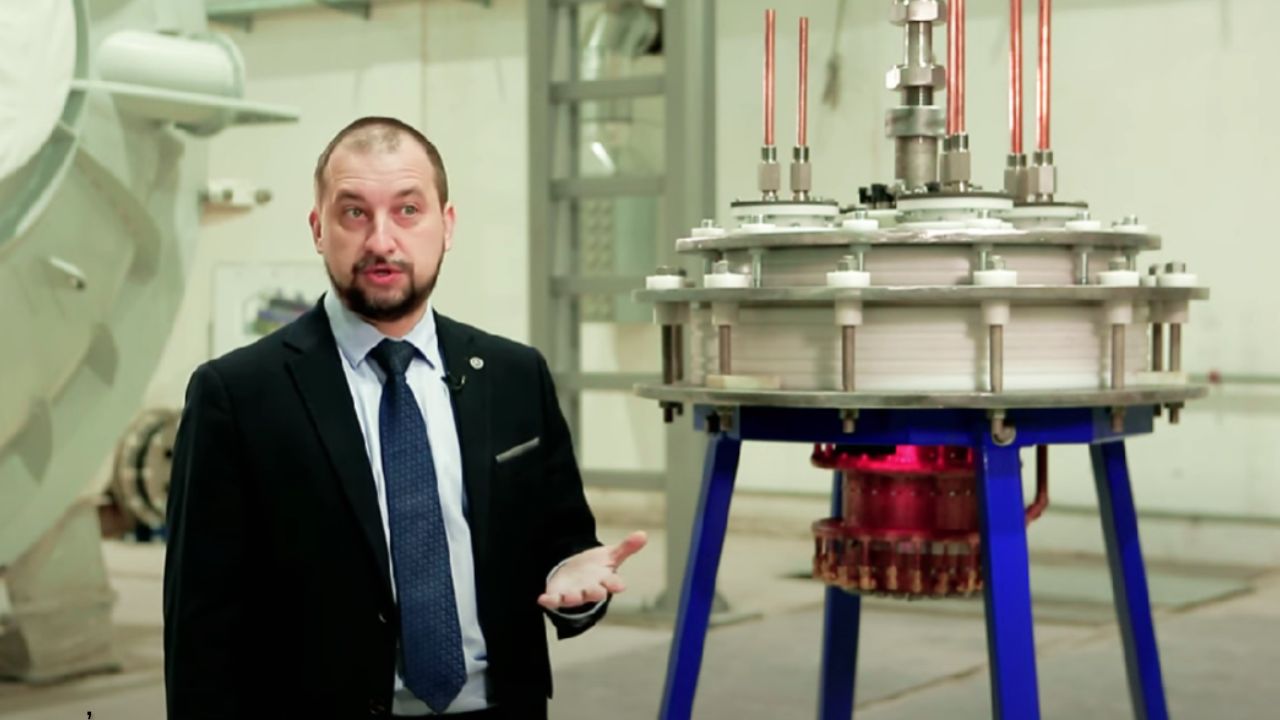


The Russian Company Rosatom Revealed an Advance That Could Transform Space Travel: a Prototype of a New Electric Plasma Engine Capable of Reaching a Rocket to Mars in Just 30 Days. Currently, Interplanetary Missions Take Almost a Year to Reach the Red Planet, Exposing Astronauts to Dangers Such as Cosmic Radiation and Supply Limitations.
But what makes this new engine so special? Instead of relying on traditional combustion of chemical fuels, it uses propellants that generate immediate thrust through an electromagnetic field. This means much greater acceleration, with extremely efficient fuel usage.
A Faster and Safer Interplanetary Journey
The major differential of this new engine is its ability to drastically reduce travel time to Mars, making manned missions much safer. According to the Deputy Director of Science at Rosatom Research Institute, Aleksei Voronov, “plasma engines can reduce this time to 30 to 60 days, allowing round-trip missions with less exposure to cosmic radiation.”
This innovation is crucial, as astronauts who remain in space for long periods face serious physiological challenges. Radiation can cause cellular damage, increase the risk of cancer, and impair the immune system. With the new engine, these threats are considerably reduced.
-
Something is happening around the Earth: Inside the huge explosion of fireballs in 2026

-
A hot air bubble coming from Argentina expands over Brazil, causing thermometers to exceed 38 degrees with a thermal sensation of 40 degrees in late March, affecting 6 states at once.

-
The radish leaf that almost everyone throws away has more polyphenols, flavonoids, and fiber than the consumed root, and a 2025 study showed that the leaf contains compounds that protect the intestine, combat inflammation, and may inhibit the growth of cancer cells.

-
A planet that seemed to defy the laws of physics has intrigued scientists for decades, until the James Webb revealed what is really affecting Saturn’s rotation.

The Power of the New Plasma Engine
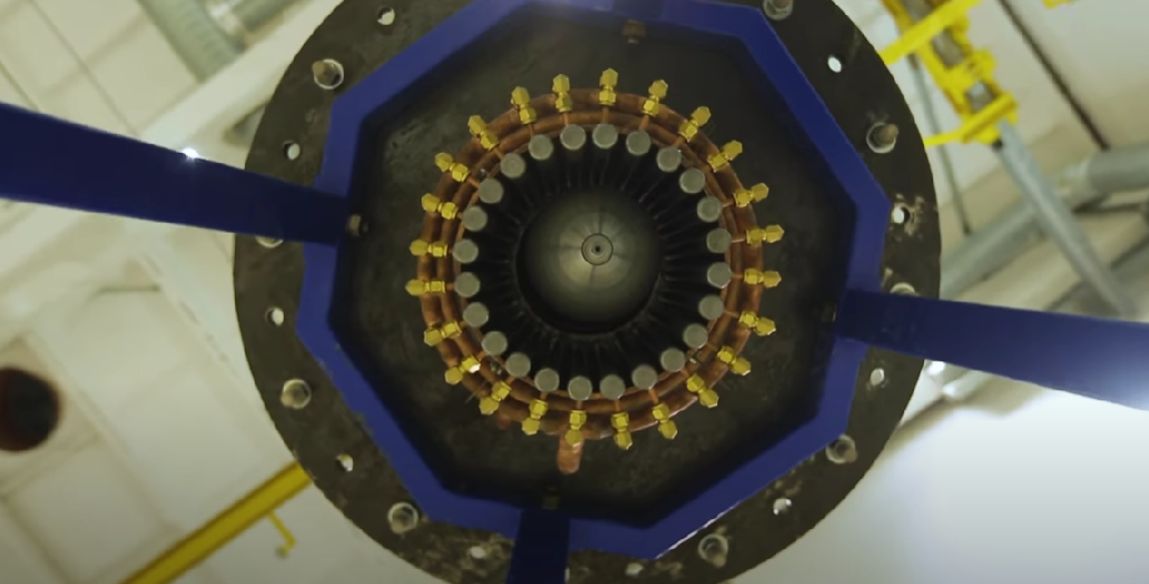
The new plasma engine from Rosatom works similarly, but in space. Instead of burning fuel, it uses electricity to create an electromagnetic field that accelerates charged particles to absurd speeds, as if they were tiny jets of ultra-fast gas. Thus, instead of a strong and short explosion like in a traditional rocket, the engine generates a continuous and efficient thrust, allowing the spacecraft to accelerate progressively until reaching much higher speeds, shortening the travel time to Mars.
The engine developed by Rosatom has an average power of 300 kW, a value well above what is found in current space technologies. In traditional engines, the maximum speed of the material flow is approximately 4.5 km/s, while Rosatom’s new system allows for acceleration greater than 100 km/s.
This happens because, instead of burning fuel to generate thrust, the plasma engine accelerates charged particles through an electromagnetic field. This approach ensures a fuel efficiency up to ten times higher compared to conventional chemical engines, making space travel more sustainable and viable in the long term.
Rosatom’s Success in the Global Scenario
Rosatom is no newcomer to the development of advanced technologies. In 2024, the company registered an international order volume exceeding US$ 200 billion, with exports reaching US$ 18 billion. Its main focus has been on building nuclear power plants and providing cutting-edge technologies, with ongoing projects in countries such as Turkey, China, Egypt, Hungary, India, and Bangladesh.
The advance in the space sector with the new plasma engine further reinforces the company’s dominance in technological innovations. The combination of nuclear energy with efficient space engines could redefine the future of space exploration and open doors to new possibilities, such as permanent bases on other planets.






Os países poderiam se unir para alcançar novas tecnologias e colonizar o espaço, mas preferem ficar em brigas bobas por pedaços de terra
JA.NAO AGUENTO ESSE PLANETA COM OS BOSAISNARISTA QUERO MUDAR.
Os foguetes voarão como uma flecha lançada.