





 Portuguese
  English
  Spanish
  4 min of reading
  1 comment


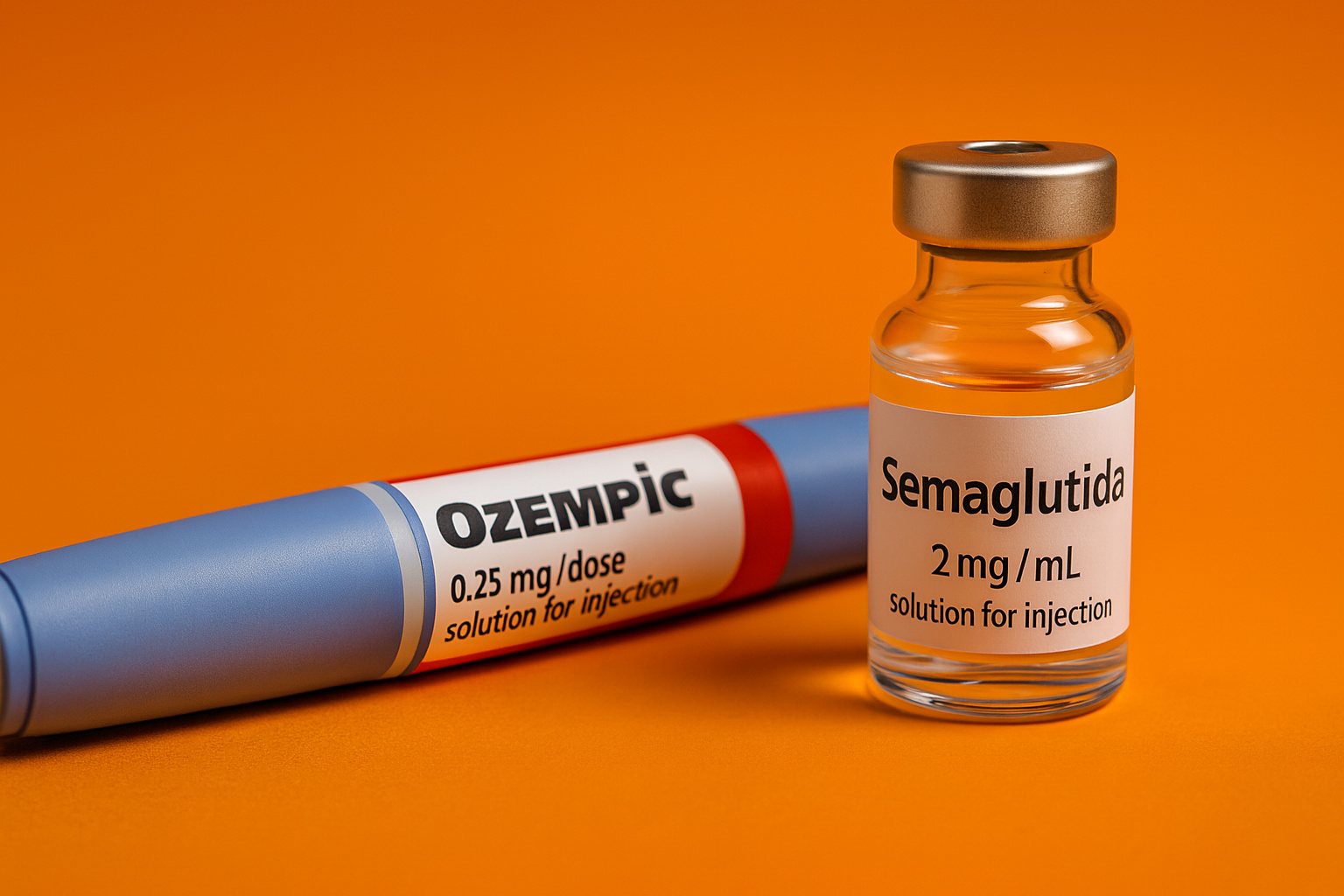

Poviztra and Extensior, the New Products from the Danish Pharmaceutical Company with Local Production and Distribution, Are Set to Arrive at Brazilian Pharmacies Still in October, with Prices Up to 10% Lower
The search for medications that help in managing type 2 diabetes and treating obesity has just gained new chapters in Brazil.
After forming a partnership with Eurofarma, the Danish giant Novo Nordisk is preparing to launch two new brands of injectable semaglutide, promising to enhance access to therapies that are already a global reference under the names Ozempic and Wegovy.
The new products, named Poviztra and Extensior, are expected to start arriving on the shelves still this month of October, initially in large pharmacy chains and later in clinics and hospitals throughout the country.
The sector’s expectation is that the new medications will cost at least 10% less than the reference versions — a reduction made possible by local production and distribution through Eurofarma, which should lower logistical and tax costs.
-
India announces a plan of $3.06 billion to bring aviation to forgotten regions: 100 new airports, $1.07 billion in subsidies, and regional routes guaranteed for 10 years, from 2026 to 2036, away from the centers.

-
Brazil blocked a proposal from the United States at the WTO that would make the exemption from tariffs on digital products like streaming and ebooks permanent, favoring American tech giants at the expense of developing countries.

-
IPTU exemption for seniors in 2026: see how to secure the benefit.

-
The institute that trained the greatest aerospace engineers in Brazil has just opened its first campus outside São Paulo after 75 years: ITA Ceará will have R$ 445 million, new courses in energy and systems, and classes are expected to start in 2027.

Strategic Partnership to Make Treatment More Accessible
The alliance between Novo Nordisk and Eurofarma has a clear objective: to popularize semaglutide in the Brazilian market.
While the European company remains responsible for the innovation and production of the molecule, the Brazilian company takes on distribution and commercial promotion, which could allow for more competitive prices and a stronger presence at points of sale.
“The proposal is to maintain the same standard of quality and clinical efficacy as the original medications,” executives from both companies affirm. “The doses of Poviztra and Extensior will follow the same standard as Novo Nordisk.”
With a revenue of R$ 11 billion in 2024 and a production of 600 million units of medications in the same period, Eurofarma consolidates itself as one of the main national partners for the global pharmaceutical industry. This cooperation is seen as an important step to reduce access inequalities in a market still concentrated in large urban centers.
Price Differences May Vary by State and Tax Policy
Despite the expectation of a drop in final prices, medication costs in Brazil tend to vary according to statewide tax burdens and the discount policies of pharmacy networks.
States with lower ICMS rates, such as Santa Catarina and Espírito Santo, tend to register lower prices. Regions with high taxation may feel less of the impact of the proposed reduction.
Additionally, loyalty programs and agreements with pharmacy chains are expected to directly influence the cost to the end consumer. In other words, the same product may have different prices depending on the location and the chain selling it.
In practice, what Novo Nordisk and Eurofarma seek is to create a sustainable access model that combines competitiveness with quality, something essential in a country where spending on medications still weighs heavily on household budgets.
The “Ozempic Economy” and the Billion-Dollar Battle in the GLP-1 Market
The launch of the new products comes at a time of intense global competition. The market for GLP-1-based therapies, a group that includes semaglutide, moves billions of dollars and has turned Ozempic into a global phenomenon.
The so-called “Ozempic economy” is currently dominated by two giants: Novo Nordisk, the creator of the original medication, and Eli Lilly, responsible for competitors like Mounjaro and Zepbound.
However, new pharmaceutical companies have challenged this duopoly. In August, EMS entered the game by launching versions with liraglutide — a similar compound — with prices starting at R$ 307.26, further pressuring the competition.
This movement has intensified a trade war that has even affected the largest corporations in the sector. In just 12 months, Novo Nordisk’s market value has plummeted by more than 60%, impacted by both competition and the proliferation of manipulated versions and counterfeit products.
Challenges and Opportunities for Novo Nordisk in Brazil
In Brazil, the scenario is even more competitive. Since June, Mounjaro from Eli Lilly has been available in pharmacies, increasing pressure on doctors and prescriptions.
Novo Nordisk itself, which was once the most valuable company in Europe during the height of Ozempic, now faces the challenge of redefining its global strategy.
Amid the turbulence, the pharmaceutical company has reduced its revenue projections and initiated a change in CEO. For analysts, what is at stake goes far beyond illegal copies: it is a global race for market share in one of the most promising segments of the modern pharmaceutical industry.
By betting on local production and distribution via Eurofarma, Novo Nordisk aims to strengthen its position in Brazil, one of the fastest-growing markets in Latin America for the consumption of medications for metabolic control and weight loss.
The partnership is therefore not just commercial: it is strategic. It represents an attempt to balance costs, increase geographic reach, and maintain consumer trust.
A New Chapter in Health and the Pharmaceutical Industry
If plans materialize, the “new Ozempics” are set to represent one of the biggest moves in the pharmaceutical industry in Brazil in 2025.
More than just a pricing issue, this dispute reveals how innovation, access, and commercial strategy are shaping the future of metabolic disease treatment.
The fact is that, whether due to medical necessity or consumption trends, the demand for semaglutide and similar medications shows no signs of slowing down.









I must say this article is extremely well written, insightful, and packed with valuable knowledge that shows the author’s deep expertise on the subject, and I truly appreciate the time and effort that has gone into creating such high-quality content because it is not only helpful but also inspiring for readers like me who are always looking for trustworthy resources online. Keep up the good work and write more. i am a follower.