





 Portuguese
  English
  Spanish
  3 min of reading
  0 comments


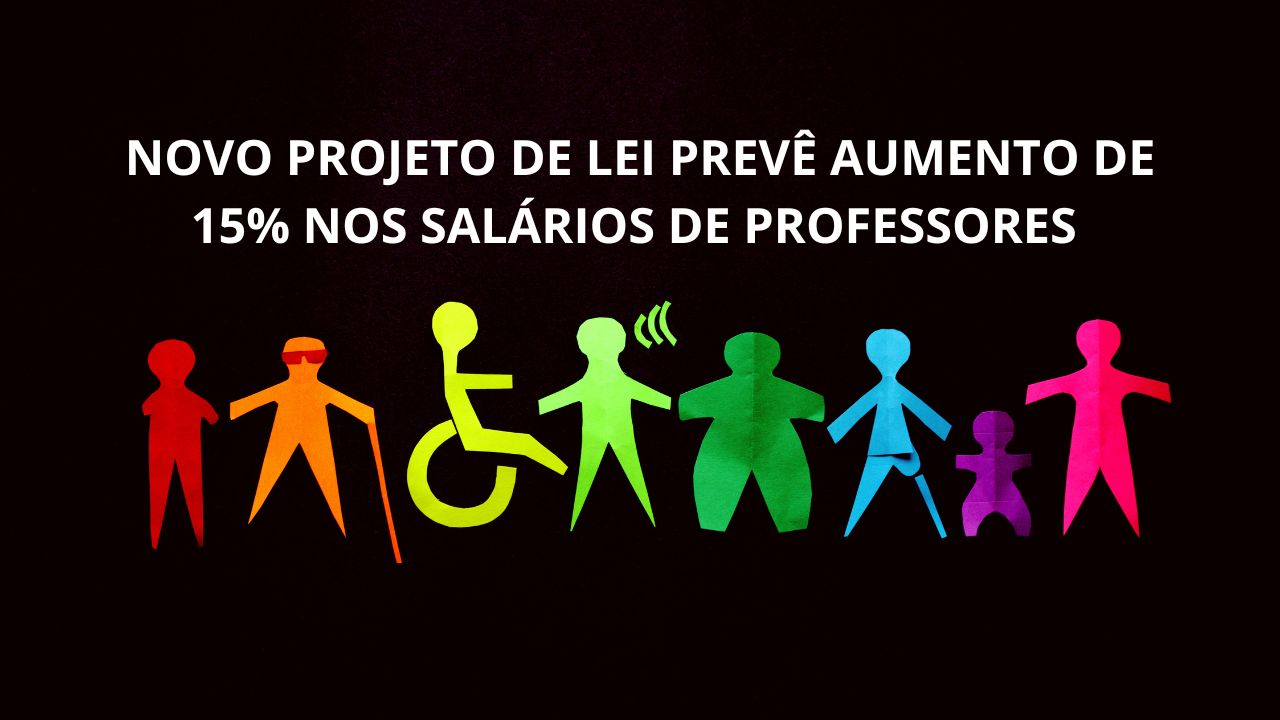
Public School Teachers Can Receive Salary Bonus for Inclusion. See Who is Eligible, Expected Values, Rules, and How the Proposal is Progressing in Congress.
The Commission for the Defense of the Rights of Persons with Disabilities of the Chamber of Deputies approved the Bill 4622/25 that establishes the National Bonus for Educational Inclusion — aimed at public school teachers working with students with disabilities.
The measure provides for a minimum bonus of 12% on the salary for those performing general inclusion activities, and 15% for those working in specialized care (AEE), recognizing the extra effort these roles entail.
The proposal applies to both teachers assigned to resource and support rooms and those in regular classes who receive students with disabilities — as long as they can demonstrate adequate training or qualification.
-
The noise law will no longer be in effect at 10 PM starting in June with a new rule valid during the 2026 World Cup.

-
The Chamber opens a debate on driver’s licenses at 16 years old as part of a reform that includes around 270 proposals to change the Brazilian Traffic Code and may redesign rules for licensing, enforcement, and circulation in the country.

-
The new Civil Code could revolutionize marriages in Brazil with “express divorce” and changes that could exclude spouses from inheritance.
-
Banco do Brasil sues famous influencer for million-dollar debt and intensifies debate on delinquency, risks of seizure, and direct impact on Gkay’s credibility.


Thus, it could represent a real gain for many professionals in public education in the country.
What the Bonus Provides for Public School Teachers
The bonus is defined as percentages of the base salary:
- 12% for general inclusion activities;
- 15% for those working directly in Specialized Educational Service (AEE) or in multifunctional resource rooms.
Additionally, states and municipalities will have the freedom to offer higher percentages, as long as they adhere to the minimum wage standards for compensation.
The benefit also extends to teachers in regular classes that enroll students with disabilities — proportionally to the time they provide that support.
Who Can Benefit and What Are the Criteria
To be entitled to the bonus, the teacher must prove compatible training with the inclusion role — such as a bachelor’s degree with a specialization in special education, specialization, or technical training indicated by law.
This way, the proposal aims to value specialized professionals, recognizing the complexity and extra effort involved in pedagogical adaptation, continuous assessment of students, and individualized support.
As stated by the project reporter:
“Teaching students with disabilities involves flexibility in pedagogical action, continuous assessment of learning, and concern for the necessary support. This requires an additional effort from these teachers.”
It is also important to highlight that the bonus cannot be used as a justification to reduce or limit the provision of inclusion in regular classes — in other words, the benefit should not compromise the right of students with disabilities to inclusive education.
Current Situation and Next Steps in Congress
The responsible committee approved the text of the National Bonus for Educational Inclusion.
Now, the project moves on to the Committees on Education; on Finance and Taxation; and on Constitution, Justice, and Citizenship, before being voted on by the plenary.
If approved in full, the measure could benefit millions of public school teachers engaged in inclusion — and promises to formally recognize a work often invisible.
For many teachers, the project brings more than just money: it represents recognition.
Including students with disabilities requires specialized preparation, material adaptation, individualized planning, and patience — in other words, an effort beyond the conventional classroom.
With this bonus, it is also hoped to attract and retain qualified professionals for special education, reducing turnover and improving support for students with disabilities.
Furthermore, by encouraging the training and valuing of these teachers, the proposal reinforces the commitment to a more inclusive and fair education, benefiting society as a whole.

Common Questions About the Bonus and How It Will Be Applied
Is the bonus applicable to any public school teacher?
Only if they work with students with disabilities or in specialized care, and prove the required training.
Can the percentage vary by locality?
Yes — states and municipalities can adopt higher percentages to the salary, respecting national minimums.
Can the benefit reduce the inclusion of students with disabilities?
No — the proposal prohibits the bonus from being used as an argument to decrease inclusion in regular classrooms.
Source: Chamber










-

Uma pessoa reagiu a isso.