





 Portuguese
  English
  Spanish
  3 min of reading
  0 comments


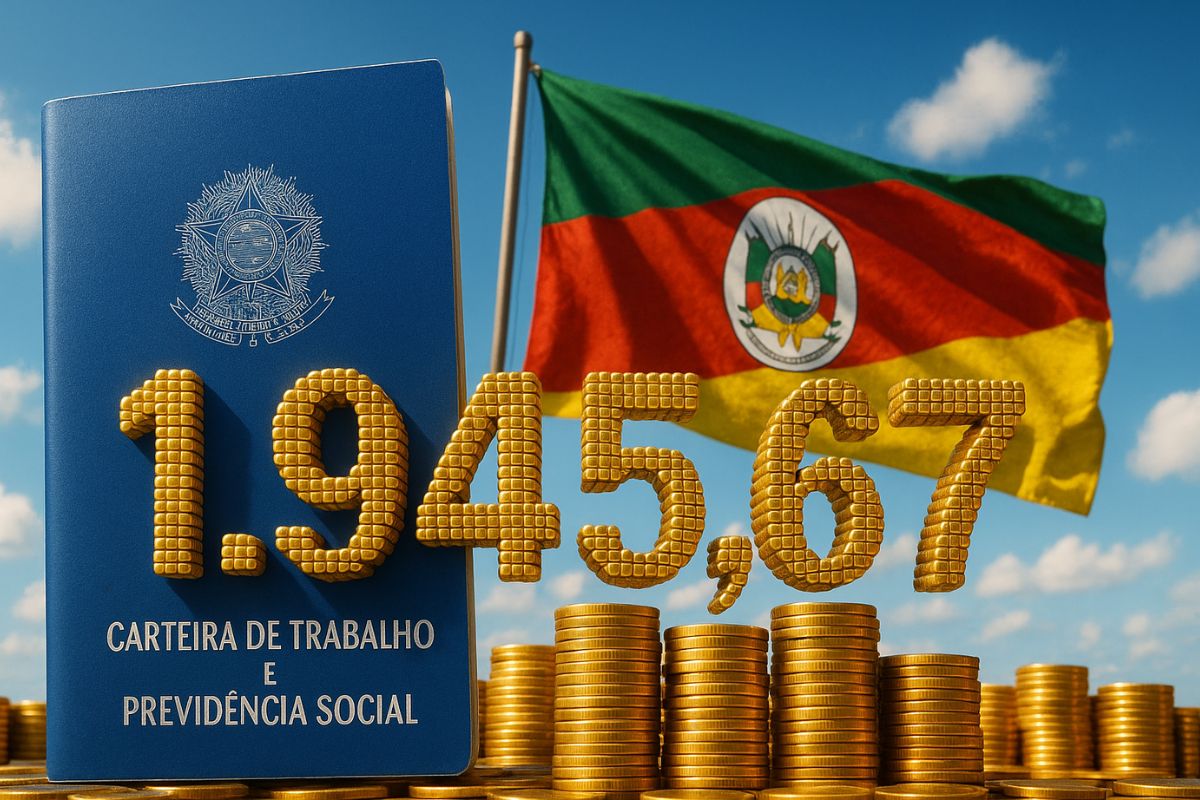
Is The New Minimum Wage Of R$ 1,945.67 True? See Where The Value Is Really In Effect. The New Minimum Wage Of R$ 1,945.67 Is Not The National Floor, But Rather A Value Paid In A Regional Range In Rio Grande Do Sul.
In recent days, information has circulated on social media that Brazil would already have a new minimum wage of R$ 1,945.67. The news caught the attention of millions of workers who are awaiting the annual adjustment of the national floor.
But in practice, this amount does not correspond to the minimum wage valid throughout the country. It is a salary range defined in Rio Grande do Sul, within the regional floor, approved for specific categories of workers.
What Is The New Minimum Wage Of R$ 1,945.67?
The new minimum wage of R$ 1,945.67 refers to one of the five salary ranges established by the government of Rio Grande do Sul. This amount does not apply to all workers in Brazil, but only to certain categories in the state.
-
A new Brazilian shopping center worth R$ 400 million will be built in an area equivalent to more than 4 football fields, featuring 90 stores, 5 cinemas, a supermarket, a college, and parking for 1,700 cars, potentially generating 3,000 jobs.

-
Larger than entire cities in Brazil: BYD is building a 4.6 km² complex in Bahia with a capacity for 600,000 vehicles per year, but the discovery of 163 workers in conditions analogous to slavery has shaken the entire project.

-
With an investment of R$ 612 million, a capacity to process 1.2 million liters of milk per day, Piracanjuba inaugurates a mega cheese factory that increases national production, reduces dependence on imports, and repositions Brazil on the global dairy map.

-
Brazilian city gains industrial hub for 85 companies that is equivalent to 55 football fields.


The adjustment represents an increase of about 8% and was created to acknowledge differences between economic sectors, taking into account the complexity and qualification required for each professional activity.
Where Is The Value Paid?
The new minimum wage of R$ 1,945.67 is paid in Rio Grande do Sul, within the so-called Range 4 of the regional floor. Among the workers covered are professionals from metalworking industries, printing, jewelry, shipping agency offices, as well as security guards and employees of buildings and condominiums.
This means that, while the national minimum wage remains at another level, some categories in Rio Grande do Sul already receive this amount as a guaranteed floor in regional agreements.
What Are The Other Ranges Of The Regional Floor?
In Rio Grande do Sul, the floor is divided into five ranges:
- Range 1: R$ 1,789.04 — includes workers in agriculture, livestock, civil construction, and tourism services.
- Range 2: R$ 1,830.23 — covers professionals in clothing, health, telecommunications, and cleaning services.
- Range 3: R$ 1,871.75 — for employees in commerce, food, and transportation of goods.
- Range 4: R$ 1,945.67 — intended for metalworking industries, security guards, river sailors, among others.
- Range 5: R$ 2,267.21 — aimed at medium-level technicians.
These differences show that the minimum wage in Brazil is not uniform across all states, and some have regional floors above the national value.
What Are The Impacts Of The New Minimum Wage?
The adoption of the new minimum wage of R$ 1,945.67 brings significant effects:
- Economic Relief: gives more purchasing power to categories that historically received less.
- Inflationary Pressure: may lead to increased prices for some products and services, as companies tend to pass on costs.
- Challenges For Small Businesses: smaller employers may have difficulties covering the adjustment.
Still, the regional floor is considered an advancement for workers in Rio Grande do Sul, especially in a scenario of rising cost of living.
The new minimum wage of R$ 1,945.67 is not national, but regional, applied only in Rio Grande do Sul for specific categories. For the other Brazilian states, the minimum wage defined by the federal government still applies.
And you, do you think Brazil should adopt higher regional floors to balance the cost of living in each state? Or would it be ideal to have a higher national minimum wage? Share your opinion in the comments!







-

Uma pessoa reagiu a isso.