





 Portuguese
  English
  Spanish
  6 min of reading
  0 comments


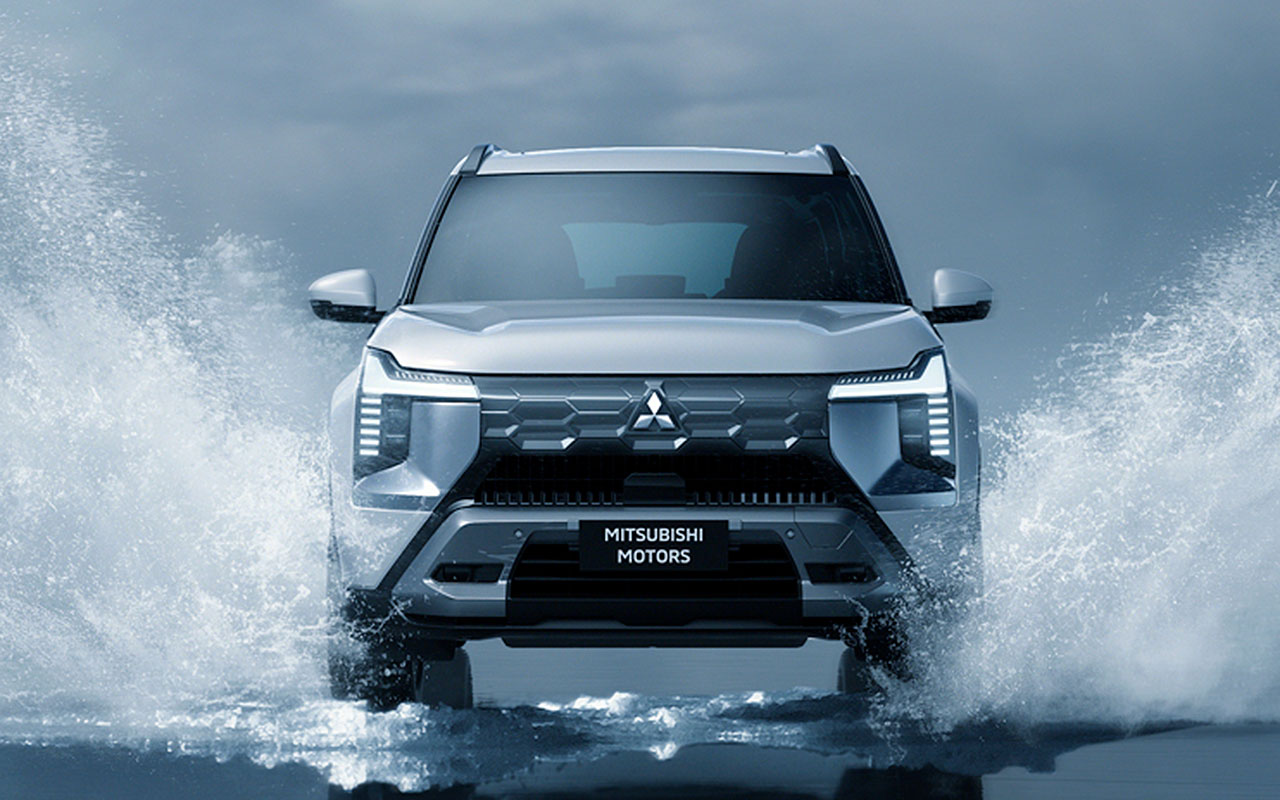
Mitsubishi Destinator Is The New 7-Seater SUV With A 1.5 Turbo Engine Premiering In Indonesia, Already Attracting Attention In The Latin American Automotive Market. Find Out If Brazil Is On Mitsubishi’s Radar To Launch This Versatile And Technological Model.
The new Mitsubishi SUV, named Mitsubishi Destinator, has officially debuted in Indonesia. With capacity for up to seven occupants, a 1.5 turbo direct injection engine, and a robust look featuring the new design language of the Japanese brand, the model is already generating interest in markets outside Asia — especially in Latin America. And the question remains: is Brazil among the future destinations for this new SUV?
The answer, although not yet officially confirmed, seems promising. The project has a global focus, and Mitsubishi has shown interest in enhancing its portfolio in emerging countries. Experts assess that the Destinator has the potential to replace or complement the Outlander, increasing the brand’s competitiveness in the medium SUV segment.
Mitsubishi Destinator: New SUV Premieres Focused On Versatility And Space
The official presentation of the Mitsubishi Destinator occurred during the Mitsubishi Motors Anniversary event in Jakarta, Indonesia, where the model shared the spotlight with the 2025 Triton pickup. The new SUV draws attention with its muscular design, striking horizontal lines, and an elevated front with a glossy black trapezoidal grille, following the manufacturer’s “Dynamic Shield” style.
-
The car stored for 38 years: when opening the barn door, what appears is breathtaking and looks like a scene from a movie!

-
Fiat works miracles in the Brazilian market, lowers the price of its 0 km hatch to R$ 69,990, reestablishes the model as the cheapest car in the country, and reignites the battle against Kwid and C3.
-
Chevette with cooking gas: How the gas cylinder ends up being used in cars clandestinely and why this makeshift solution can result in leaks, explosions, damaged engines, and seized vehicles.

-
Fiat launches the new 2027 Toro hybrid with 48V, 176 hp, an electric motor of 15.5 hp, a 0.85 kWh battery, up to 7% fuel savings, 8% fewer emissions, and possible exemption from IPVA.



Developed on Mitsubishi’s modular platform, the Destinator offers the unique feature of a seven-seat configuration, ideal for families and consumers looking for space without sacrificing urban drivability. According to the manufacturer, the model provides comfort in the last two seats — something that is often scarce in compact or medium SUVs.
1.5 Turbo Engine With Direct Injection: Performance And Efficiency
Under the hood, Mitsubishi’s new SUV features a 1.5 turbo four-cylinder engine, with direct fuel injection. This engine is similar to that used in the new generation of the Triton pickup and promises an efficient combination of performance and fuel consumption.
While official power data has yet to be released, it is likely that the mechanical setup approaches 163 hp and 25 kgfm of torque, as these are the figures for the brand’s 4A91T engine used in similar models. The transmission will be a CVT automatic, and traction may vary by market — with front-wheel drive or all-wheel drive options.
Besides the modern engine, the SUV will feature selectable driving modes for different types of terrain, reinforcing its appeal as a versatile vehicle for urban, highway, and even light off-road use.
Technological Interior Focused On Connectivity
The cabin of the Mitsubishi Destinator has also been redesigned to reflect the brand’s new positioning. The dashboard is horizontal, featuring a floating multimedia center and a digital instrument cluster, combining modernity and ergonomics. There are physical controls for climate control, stylish air vents, and materials that simulate leather with visible stitching.
Mitsubishi promises that the SUV will have connectivity with Apple CarPlay and Android Auto, a wireless induction charging system, and driver assistance features. Depending on the market, the model may offer adaptive cruise control, automatic emergency braking, blind-spot monitoring, and 360-degree cameras.
With a wheelbase of over 2.70 meters, the model is expected to offer good space for second and third-row passengers. The trunk, with all seats occupied, should have around 250 liters — but can reach over 800 liters with the seats folded down.
Specifications Of The Mitsubishi Destinator
| Item | Specification |
| Model | Mitsubishi Destinator |
| Type | 7-Seater SUV |
| Engine | 1.5 Turbo MIVEC 4-Cylinder, Atkinson Cycle |
| Power | Approximately 163 hp (120 kW) |
| Torque | 250 Nm (25.5 kgfm) |
| Transmission | CVT (Continuously Variable Transmission) |
| Traction | Front-Wheel Drive |
| Driving Modes | Normal, Tarmac, Wet, Gravel, Mud |
| Length | 4,680 mm |
| Width | 1,840 mm |
| Height | 1,780 mm |
| Wheelbase | 2,815 mm |
| Ground Clearance | 214 mm (244 mm without underbody protection) |
| Front Suspension | Independent MacPherson Type |
| Rear Suspension | Torsion Bar |
| Seating Capacity | 7 (2-3-2 configuration) |
| Trunk | About 250 liters (seats in position), up to 800+ liters (seats folded) |
| Internal Equipment | 8” digital cluster, 12.3” multimedia system, Yamaha sound system with 8 speakers, panoramic sunroof, tri-zone air conditioning, multiple USB ports |
| Safety | 6 airbags, adaptive cruise control, autonomous emergency braking, blind spot monitor, rear cross-traffic alert, automatic high beams, 360º camera with sensors |
| Extras | Automatic emergency call, cabin pre-conditioning, remote monitoring |
New Mitsubishi SUV May Strengthen The Brand’s Global Presence
The debut of the Destinator is strategic for Mitsubishi. The brand seeks to regain market share in the global automotive market, particularly in Latin America and Southeast Asia, where there is strong demand for multifunctional utility vehicles.
According to company executives, the new SUV will be positioned below the Outlander, occupying a space between compact and medium models, focusing on consumers who want seven seats at an affordable price. The goal is to compete against rivals such as the Toyota Rush, Honda BR-V, and models from Chinese brands such as Chery Tiggo 8 and JAC T80.
In Indonesia, where the model is already homologated, sales are expected to begin in the second half of 2025. Production will take place at the Bekasi plant, which already exports models to various countries in Latin America.
Could Brazil Receive The Mitsubishi Destinator In The Coming Years?
The big question revolves around Brazil. Although Mitsubishi has not officially confirmed the arrival of the Destinator in the country, there are several indications that the model may indeed be launched here in the coming years.
First, the Brazilian market has shown significant growth in the seven-seater SUV segment, driven by models such as the Jeep Commander, Caoa Chery Tiggo 8, Toyota SW4, and Chevrolet Trailblazer. The Destinator would arrive to fill a more affordable price range, competing directly with medium SUVs priced between R$ 160 thousand and R$ 200 thousand.
Second, Mitsubishi has a factory in Catalão (GO), which has been responsible for many years for the production of the L200 Triton pickup and the ASX SUV. Depending on the brand’s strategy, it is possible that the Destinator will be locally assembled or imported from Southeast Asia, leveraging trade agreements with Mercosur and ASEAN.
Furthermore, the demand for vehicles with more seating is growing not only among families but also in the ride-hailing and tourism sectors. An SUV with seven seats and an efficient engine could be quite appealing to this audience.
Expectations Of The Automotive Market For The New Mitsubishi SUV
The launch of the Destinator is a bold bet by Mitsubishi in one of the most competitive segments of the global automotive market. The model arrives with interesting credentials: seven seats, a modern turbo engine, a connected interior, and a robust look. But its acceptance will heavily depend on the price positioning and marketing strategy of the brand.
If launched in Brazil, Mitsubishi’s new SUV could fill an important gap left by older models like the Outlander, which no longer meets current demands for engine performance and connectivity. It may also attract consumers seeking alternatives to Chinese SUVs, offering Japanese reliability and a more established after-sales history.
Brazil, in turn, has shown a hunger for family-oriented SUVs, and the Destinator could be a valuable reinforcement in this scenario — as long as it is competitive against already established rivals. The expectation is that if the brand confirms the launch, it will occur between 2026 and 2027.
What To Expect From The Future Of The Mitsubishi Destinator?
The Mitsubishi Destinator is a global project with potential for success in emerging markets like Brazil. Its launch in Indonesia is the first step to test the public’s receptivity and adjust the model to meet regional demands.
Mitsubishi is right to bet on an SUV with seven seats, an efficient engine, and a connected interior. If it brings the model to Brazil with a competitive price, the brand could regain its space in a segment where it was once a leader. The Brazilian public, increasingly demanding, values interior space, safety, and performance — and the Destinator seems to bring these characteristics together.
Confirmation of the launch in Brazil still depends on market assessments, logistical costs, and trade agreements. But one thing is certain: the model is already on the radar of those following the automotive market, and it could soon become a reality on Brazilian streets.








-

-

7 pessoas reagiram a isso.