





 Portuguese
  English
  Spanish
  3 min of reading
  0 comments


New Type Of Solar Panel Could Make The Current Ones Obsolete? 3D Technology Promises Up To Three Times More Efficiency Than Conventional Models, But Experts Raise Questions About The Numbers
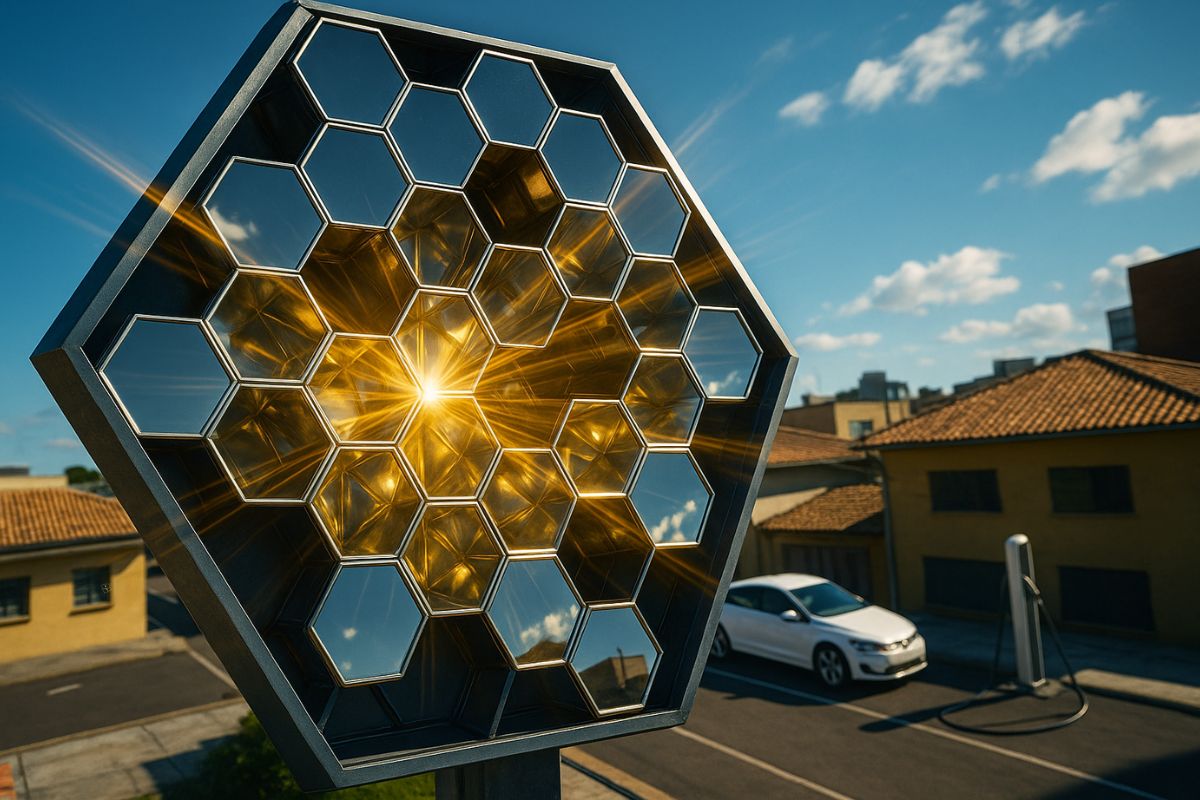
A new type of solar panel is attracting attention in the renewable energy sector. Named TIPA technology, this 3D structure promises to generate up to three times more energy than a conventional panel, capturing light from all sides and taking up less space. The proposal, initially presented in Europe, has already received investment from the UK government and sparked interest in applications ranging from solar farms to charging stations for electric cars. However, along with the enthusiasm, questions have arisen about the real viability of the results.
The innovation is based on maximizing solar light capture: in addition to capturing rays from different angles, the design includes internal mirrors to reflect unused light and direct it to other modules. In theory, this could raise the combined efficiency to around 60%. However, experts warn that the physics behind this promise is not so simple and that most of the unconverted energy is dissipated as heat.
How The New Type Of Solar Panel Works
The new type of solar panel features a transparent lens on top that captures light from any direction without the need for mechanical tracking. This light is directed by internal steps to six solar modules arranged in a hexagonal pattern. The internal reflective mirror serves to redirect unabsorbed light on the first pass, providing a “second chance” for conversion into energy.
-
Billion-dollar partnership in clean energy: The advancement of decarbonization in Japan opens doors for Brazil to become the world’s largest supplier of green hydrogen and ammonia.

-
Understand how thermal security has become a key element in the energy transition by ensuring a balance between intermittent renewable energies and thermal sources capable of sustaining the electrical system during critical moments.
-
Billion-dollar investment for the forest: World Bank releases funds to expand renewable energy and create thousands of new green jobs in the Amazon region.

-
Switzerland invested over $2.3 billion and bet on water, altitude, and solid rock to create a battery in the Alps capable of powering more than 1 million homes.

This modular structure, according to the company, facilitates assembly and maintenance, is resistant to dust and moisture, and can be installed in various settings — from residential rooftops to vessels. The difference, the developers assure, is not in the materials, as the solar cells are made of conventional silicon, but in how light is utilized and reused within the panel.
Questions About Real Efficiency
Despite the visual and conceptual appeal, the new type of solar panel faces technical criticisms. Researchers claim that solar panels reflect only a small fraction of incident light — about 5% when finished with anti-reflective coatings. The remainder is absorbed and largely converted into heat, which would limit the potential for the promised reuse.
Specialized channels in Germany have recommended caution with investments in the project, arguing that, if the extra efficiency were truly viable, the sector would already be adopting the technology on a large scale. So far, there is no independent evidence to support the leap to 60% efficiency.
Public Investment And The Future Of The Project
The new type of solar panel has already received a grant of £560,000 from the UK government for the development of large-scale prototypes. Despite the criticisms, the company remains active and is announcing updates in 2025, suggesting that improvements may be underway.
Experts emphasize that new solar technologies undergo a long testing cycle before being validated. This means that, even if the concept does not reach the promised level, parts of the innovation — such as the modular design or the utilization of light from multiple angles — may still bring relevant advancements.
Is It Worth Investing In This Technology?
For consumers and investors, the new type of solar panel represents a tempting promise, but one that requires caution. Above-average efficiency, if confirmed, could reduce costs, optimize space, and accelerate the adoption of solar energy in urban and industrial areas. On the other hand, the risk of inflated expectations and underperformance cannot be ignored.
Do you believe that this technology can truly revolutionize solar energy, or do you think it is just another exaggerated promise? Share your opinion in the comments — we want to hear from those closely following the sector.









Seja o primeiro a reagir!