





 Portuguese
  English
  Spanish
  5 min of reading
  3 comments


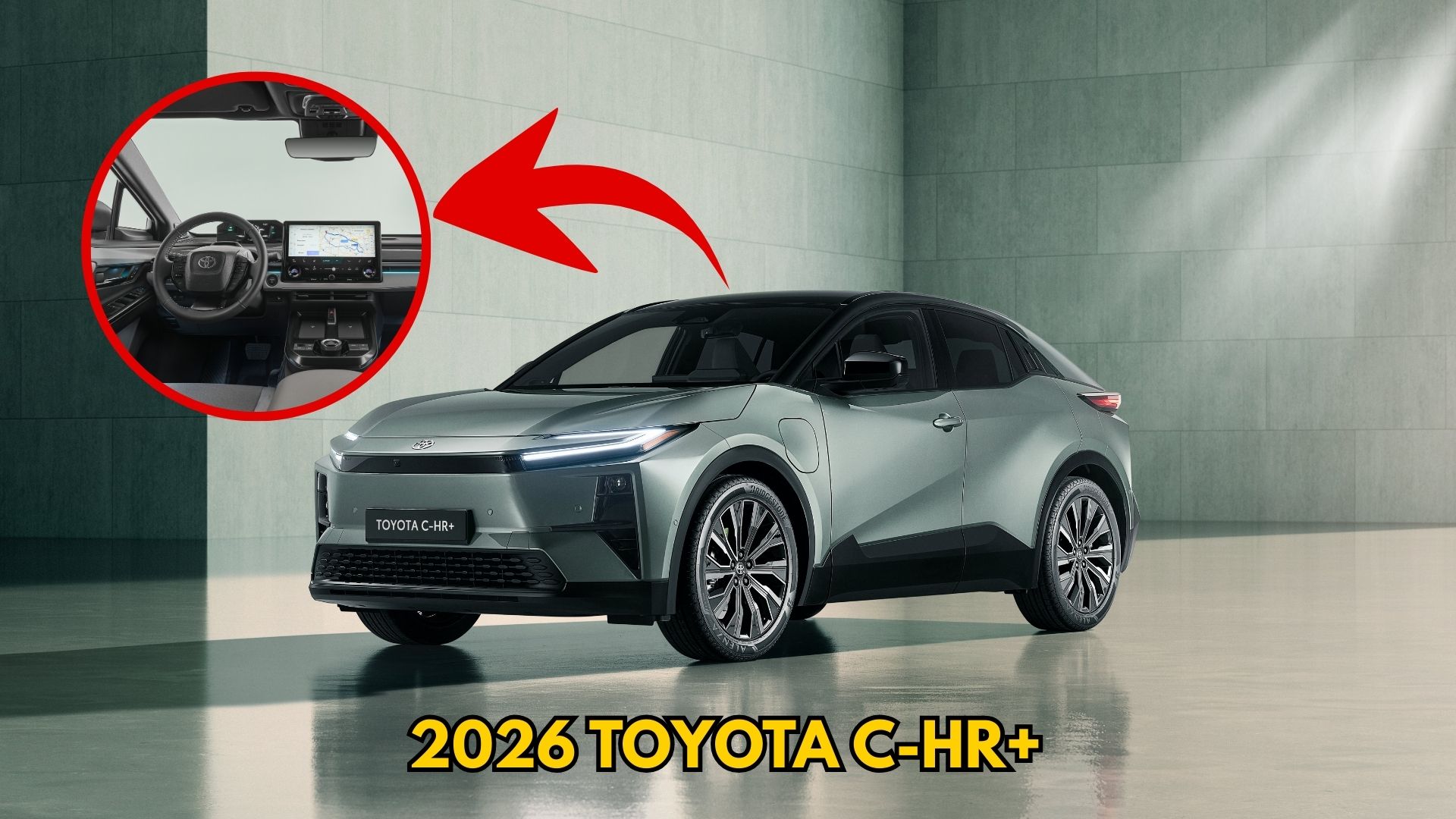


New Toyota C-HR+ 2026 Will Have Electric Motor of Up to 338 HP, AWD and Range of 600 KM to Face Rivals Like Volvo EX30 and BYD Yuan Plus in the Electric SUV Segment.
Toyota has confirmed the launch of the C-HR+ 2026, an electric SUV that raises the standard of the C-HR line by integrating the bZ platform with high performance, futuristic design, and a range of up to 600 km in the WLTP cycle. With front-wheel and AWD versions with 338 HP, the model will initially be launched in Europe, China, and Japan, but may reach other strategic markets throughout 2026.
The Toyota C-HR+ positions itself as a 100% electric compact SUV, with dimensions close to those of the current hybrid C-HR, but with a completely new powertrain and a total focus on emission-free mobility. The proposal is clear: to face models like the Volvo EX30, Hyundai Kona EV, Peugeot e-3008, and the new electric Jeep Avenger, offering more range, power, and sophistication.
With bold design, complete connectivity, and one of the best ranges in the category, the C-HR+ 2026 represents Toyota’s definitive transition from hybrids to electric in more popular segments.
-
The Toyota Hilux is R$ 75.5 thousand cheaper and bets on the 2.8 turbodiesel engine with up to 204 hp and 50.9 kgfm to catch up with the VW Saveiro, which leads with 4,472 sales.
-
The new Renault Koleos has a screen exclusively for the passenger that is invisible to the driver, heated rear seats, and 29 assistance systems, but its Chinese competitors cost R$ 40,000 less and deliver more power.
-
The car stored for 38 years: when opening the barn door, what appears is breathtaking and looks like a scene from a movie!

-
Fiat works miracles in the Brazilian market, lowers the price of its 0 km hatch to R$ 69,990, reestablishes the model as the cheapest car in the country, and reignites the battle against Kwid and C3.

Toyota C-HR+ 2026 Is Built on New Electric Platform of the Brand
The new electric Toyota C-HR will be built on the e-TNGA platform, developed exclusively for battery electric vehicles. This architecture already serves as the basis for the bZ4X and will be shared with other models in the bZ family, such as the future bZ3X and the bZ5 sedan.
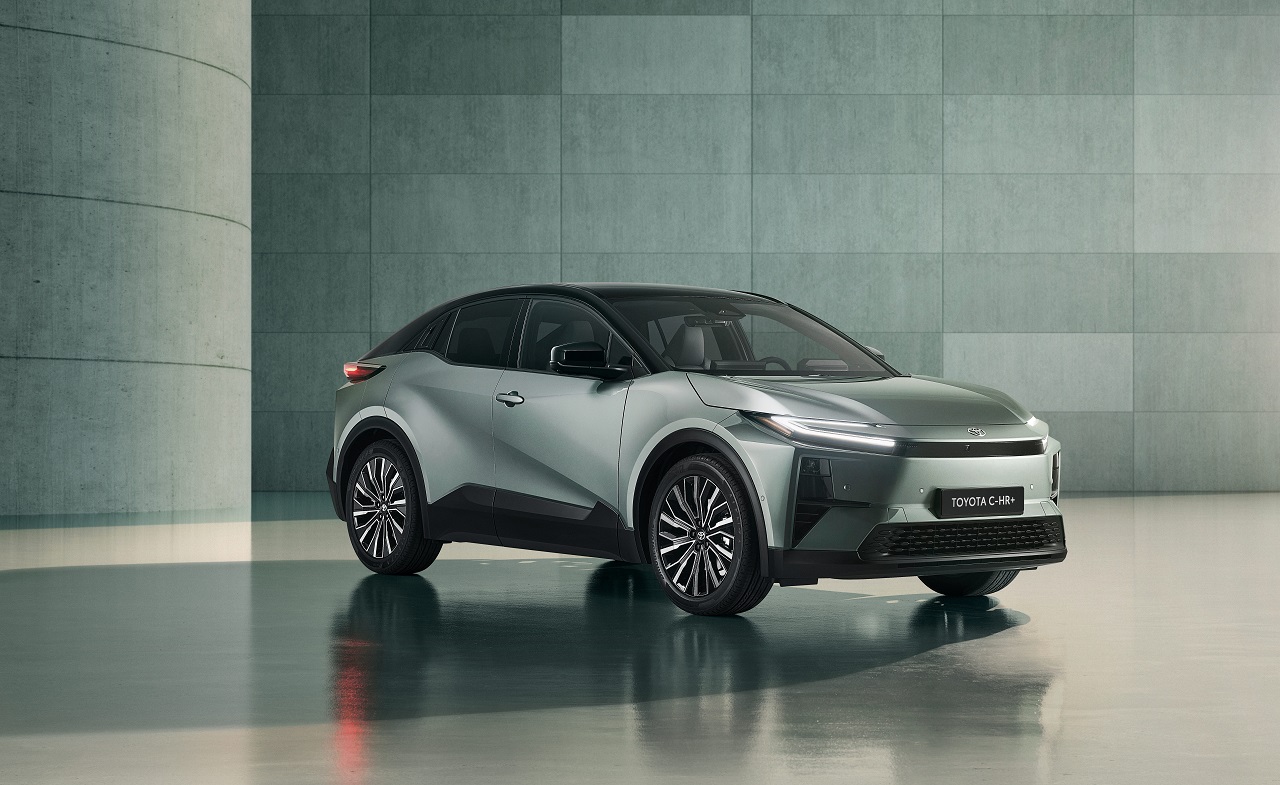
The major advantage of the platform is its modularity: it allows variations in wheelbase, battery sizes, drivetrain configurations, and the application of different electric motors. In the case of the C-HR+, the model will have front-wheel and all-wheel (AWD) versions, with a power of up to 252 kW (338 HP) in the most complete versions.
The battery system will be of next-generation, with improved chemistry for greater energy density, lower thermal losses, and faster recharging. Toyota promises 80% recharging in about 30 minutes at 150 kW fast charging stations.
Electric SUV Toyota C-HR+ Has Range of Up to 600 KM in the European Cycle
One of the main strengths of the Toyota C-HR+ 2026 will be its range. The top-of-the-line version, equipped with an 82 kWh net battery, can achieve up to 600 km of range in the WLTP cycle, a European standard that simulates real driving conditions.


The mid-range version, with front-wheel drive and a 64 kWh battery, will have an estimated range between 450 and 480 km, sufficient for several days of city driving without the need for recharging.
The energy regeneration during braking will be adjustable by the driver, with driving modes that vary between more dynamic and more efficient. The model may also feature solar panels integrated into the roof, like the bZ4X, to recover energy even when the car is turned off.
C-HR+ Design Mixes Aggressive Lines with Futuristic Touch
In design, the Toyota C-HR+ 2026 is a marked evolution of the current C-HR. The angular lines and striking cuts have been preserved, but now with a more technological and clean air. The front features full-LED headlights in a horizontal shape with daytime running lights in the shape of a “C,” in addition to a lower hood and aerodynamic profile.
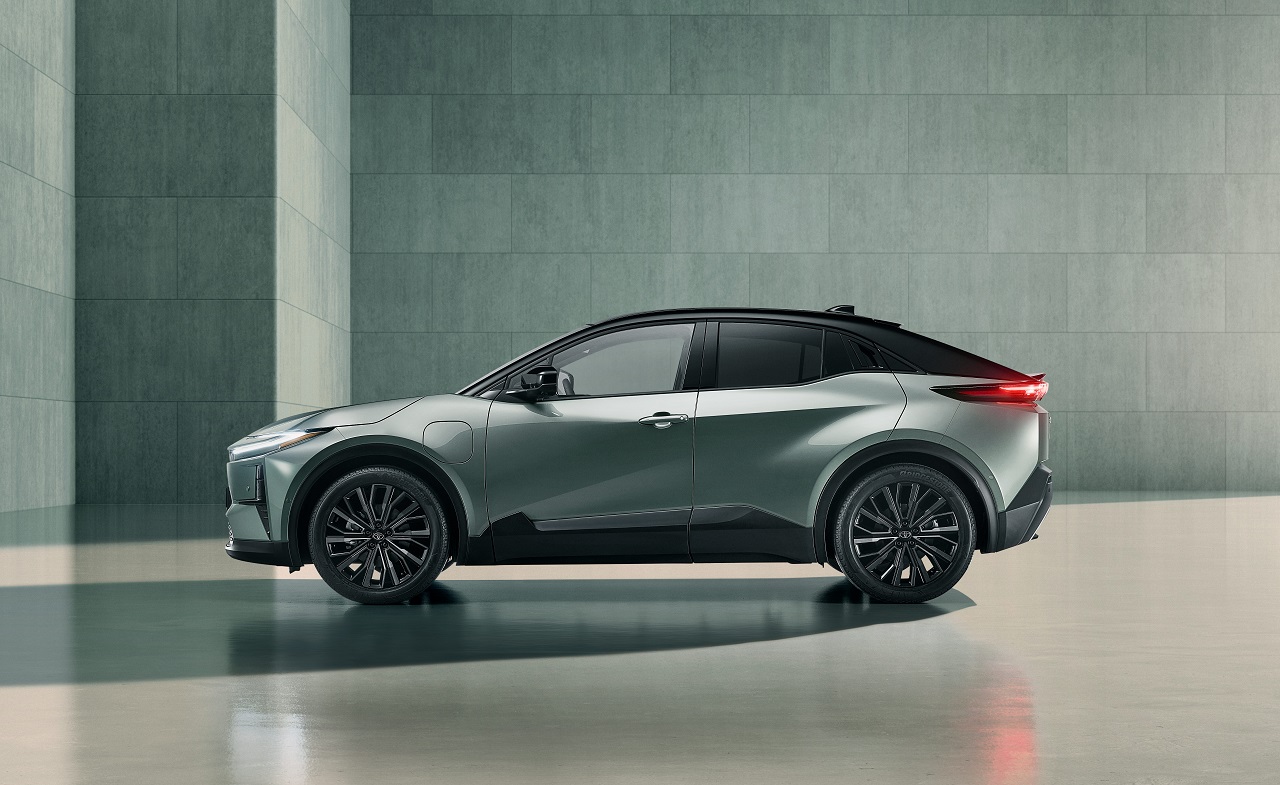
The wheels range from 18 to 21 inches, depending on the version, with a closed design to enhance aerodynamics. The rear features integrated lights in a single illuminated bar, as well as sculpted bumpers with a matte finish.
The model will have two trim levels: one more urban, with elegant visuals and smaller wheels, and another with a sporty look, glossy black design, and blue or red details to highlight its electric identity.
Digital Interior of the New Electric C-HR Will Have Curved Screen and Voice Commands with AI
The interior of the Toyota C-HR+ 2026 follows the standard of the brand’s new generation of electric vehicles. The dashboard is minimalist, highlighting a 14-inch curved screen, oriented towards the driver, and a digital instrument panel with high resolution and customizable layout. Among the confirmed features:
- Integration with Android Automotive and Wireless Apple CarPlay
- Voice commands with artificial intelligence and virtual assistant
- Remote updates via OTA (over-the-air)
- Navigation system with augmented reality
- Head-up display in top-of-the-line versions
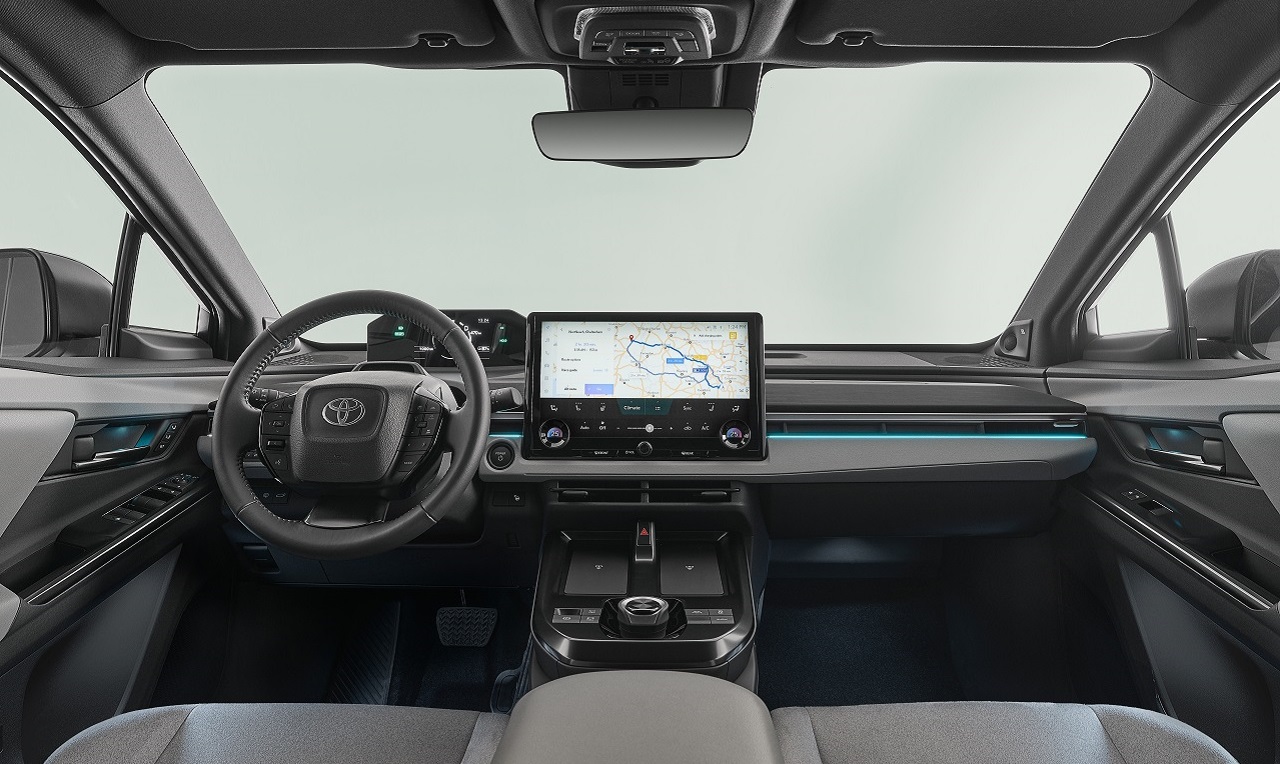
The multifunction steering wheel will have premium finish and backlit controls. The seats will be covered with recyclable materials, with the option of vegan leather and electric adjustments with memory.
The interior space has also been optimized: the battery under the floor ensures a flat surface, improving comfort for rear passengers and increasing the trunk volume, estimated at around 410 liters.
Safety and Semi-Autonomous Driving Complete the Package of the AWD Electric Crossover
Like all modern Toyotas, the C-HR+ 2026 will be equipped with the next-generation Toyota Safety Sense package, including level 2+ semi-autonomous driving functions in some markets. Among the expected features:
- Automatic braking with pedestrian and cyclist detection
- Adaptive cruise control with intelligent cornering based on GPS
- Active lane change and maintenance assist
- Front and rear cross-traffic alert
- Automatic parking with remote control via app
- 360° cameras with transparent mode and panoramic view
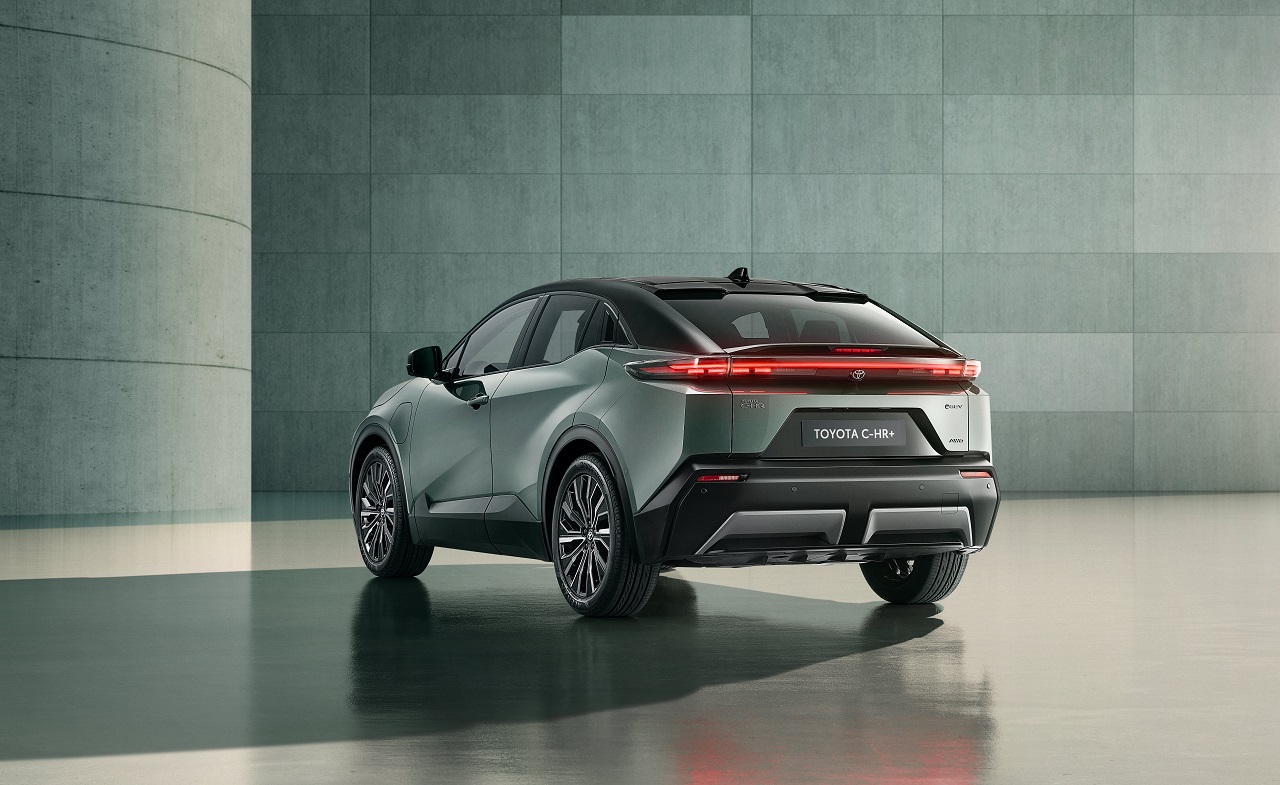
The body will use aluminum alloys and ultra-high-strength steels to maintain low weight and maximum safety in collisions. The model is expected to achieve 5 stars in both Euro NCAP and Asian tests.
Toyota Positions the C-HR+ as a Key Piece in the Global Electrification Plan
The launch of the Toyota C-HR+ is part of a larger strategy of the brand, which intends to sell more than 3.5 million electric vehicles per year by 2030. The bZ line (Beyond Zero) will be the pillar of this transition, with models like the bZ4X, bZ3, bZ5, and now the C-HR+, which will act as the gateway to the Toyota electric world.
As electrification advances in markets like Europe, Japan, and Oceania, the C-HR+ will play an essential role in attracting a young, urban, and connected audience, but one that demands design, performance, and range in a compact and functional package.
C-HR+ 2026 May Arrive in Brazil? Possibility Is Still Under Analysis
Although confirmed for Europe, the Toyota C-HR+ electric still has no date to debut in Brazil. However, with the arrival of direct rivals such as the Volvo EX30, BYD Yuan Plus, Kia Niro EV, and the new Peugeot e-3008, the pressure is increasing for Toyota to bring its electric SUV to the country.
If it comes, the model is expected to be positioned above the Corolla Cross Hybrid Flex, with an estimated price between R$ 250,000 and R$ 320,000, depending on the package and traction configuration. State incentives, reduced IPVA, and lower operating costs may make the model competitive even with import taxation.









Na Europa, o CHR é mais barato que o Corolla! Poderia ser o mesmo aqui no Brasil.
Só um preço absurdo não compatível com o salário do brasileiro.
É TOYOTA. Dispensa comentários!