





 Portuguese
  English
  Spanish
  5 min of reading
  1 comment


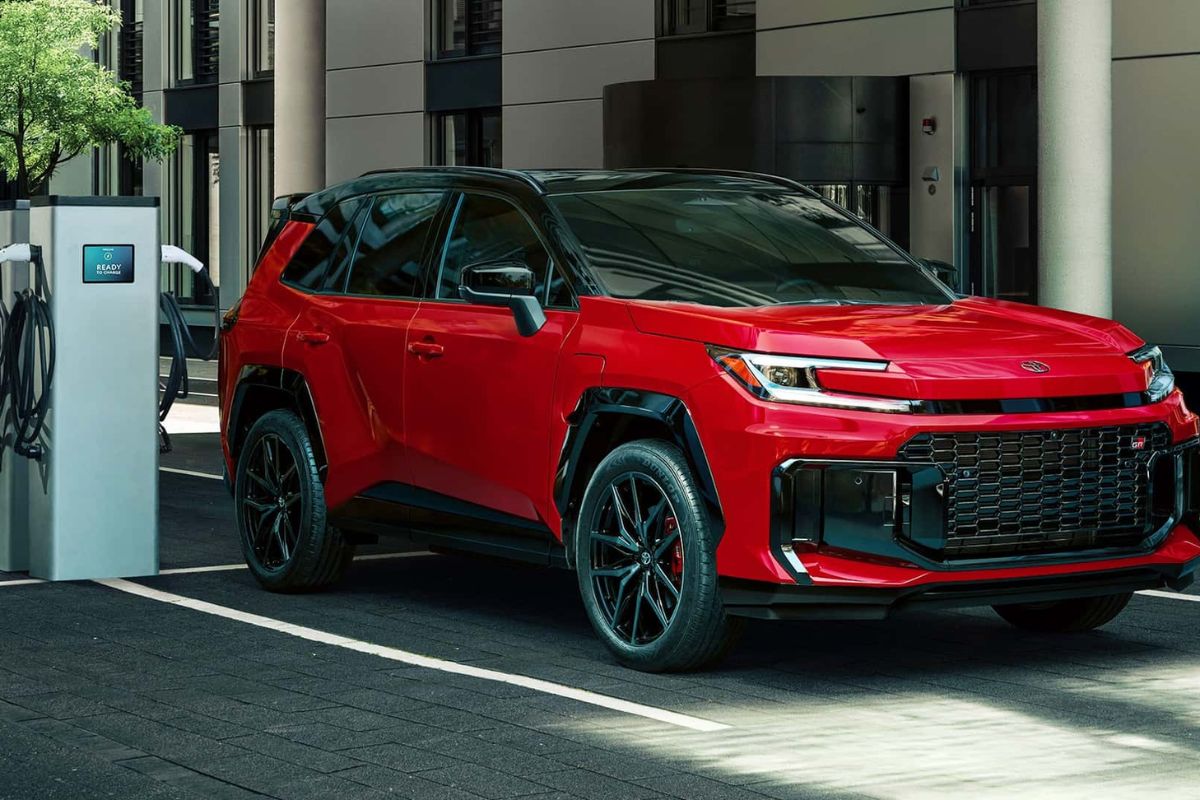


Focusing on Electrification, the Toyota RAV4 Plug-in Hybrid Gains a Usable 22.7 kWh Battery, Electric Range of Up to 100 Kilometers, 270 and 300 Versions with Up to 304 hp and Lower Prices Than Before in Europe in 2025, Along with Front or All-Wheel Drive to Compete with Electrified Rivals
In 2025, the Toyota RAV4 Plug-in Hybrid inaugurates a new phase in the brand’s strategy in Europe by fully retiring the purely combustion versions and forming a range made exclusively of medium plug-in hybrid SUVs. The commercial debut begins in markets such as the Netherlands, focusing on urban electric use and reduced dependence on gasoline in daily life.
By adopting a declared electric range of up to 100 kilometers, compared to about 75 kilometers of the previous generation, the Toyota RAV4 Plug-in Hybrid can travel entire routines without starting the gasoline engine, reducing local emissions and cost per kilometer driven. The idea is to bring the model closer to the experience of a pure electric vehicle, but retaining the 2.5 gasoline engine as a backup against range anxiety for longer trips.
What Changes in the Toyota RAV4 Plug-in Hybrid Compared to the Previous Version

The structural change is the full electrification of the lineup.
-
5 cheapest used cars than a Honda CG 160 Titan 0 km, with options starting at R$ 13,000 for those who want to trade their motorcycle for a car and escape the rain, sun, and risks of riding.

-
Around R$ 24,000: 4 used Ford SUVs with up to 253 hp, V6 engine, all-wheel drive, 7 airbags, panoramic sunroof, and a complete package that surprises with its price and performance in Brazil.
-
A brand new car starts at around R$ 75,000 in Brazil, but what stands out the most is seeing streets filled with SUVs and expensive sedans in a country where millions remain in debt.

-
For R$ 32,000, a brand new Hyundai car is a rival to the Kwid with a 1.2 engine producing 82 hp, 6 airbags as standard, multimedia with wireless Android Auto, up to 391 liters in the trunk, and a refreshed look for 2026 in India.
The mix of combustion and hybrid versions is out, and a dedicated family of Toyota RAV4 Plug-in Hybrids is in.
The priority becomes to run as much as possible in electric mode, using the gasoline engine as support.
The electric range of up to 100 kilometers represents a significant leap over the previous level and allows many daily commutes to be made solely on electricity, especially in European urban centers with established charging infrastructure.
In practice, the Toyota RAV4 Plug-in Hybrid becomes a medium SUV designed to operate as an electric vehicle during the week and hybrid on longer trips.
Additionally, the lineup gains more differentiation among versions.
The buyer can choose between front or all-wheel drive without giving up the plug-in hybrid setup, which affects both on-road dynamics in wet conditions and the ability to tackle snowy or icy roads in specific regions of Europe.
Versions, Power and Prices of the Toyota RAV4 Plug-in Hybrid
The Toyota RAV4 Plug-in Hybrid initially arrives in two main configurations, both combining a 2.5-liter four-cylinder gasoline engine, operating on the Atkinson cycle, with an electric system designed for intensive use in zero local emission mode.
The basic outline is as follows:
Plug-in Hybrid 270
2.5-liter gasoline engine coupled with an electric system
Combined power of about 268 hp
Front-wheel drive
Price in the range of €49,795 in the Dutch market in 2025
Plug-in Hybrid 300
Same 2.5-liter gasoline engine, but with an additional electric motor
Combined power of approximately 304 hp
All-wheel drive
Price starting at around €52,795
Even positioned at the high end among electrified medium SUVs, the Toyota RAV4 Plug-in Hybrid now has a lower entry price than the previous generation, which started directly from the most powerful configuration with all-wheel drive. This narrows the gap compared to electrified rival SUVs and makes the plug-in version the natural entry point for the lineup in Europe.
Electric Range, Battery and Charging
The Toyota RAV4 Plug-in Hybrid uses a battery with approximately 22.7 kWh usable, sufficient to deliver around 100 kilometers in electric mode within the measurement cycles adopted in Europe.
The maximum speed remains limited to 180 km/h, but the 300 version, more powerful and with all-wheel drive, accelerates from 0 to 100 km/h in less time than the 270, taking advantage of the extra power from the additional electric motors.
The charging system has been set up to adapt to different infrastructure realities:
AC Charging
Power of up to 11 kW across the range
Suitable for home use in wallboxes or lower-powered public charging points
DC Charging
Available in the higher-end versions
Power of up to 50 kW, allowing recovery of a good portion of the electric range during short stops on highways
With this arrangement, the Toyota RAV4 Plug-in Hybrid can be charged overnight in a residential garage and supplemented on the go with fast charges, reinforcing the proposal to use gasoline only as support.
For those who charge daily, fuel consumption tends to drop significantly in everyday use.
Standard Features and Safety Technologies
Even in the base configuration, the Toyota RAV4 Plug-in Hybrid maintains a package of comfort and safety items aligned with expectations for a medium European SUV.
Standard features include alloy wheels, LED headlights, electric tailgate, and dual-zone automatic climate control.
In terms of active safety, the model comes with the Toyota Safety Sense package, which includes driver assistance features such as automatic emergency braking, lane departure warning, and adaptive cruise control, according to the equipment level approved for each market.
The idea is that the Toyota RAV4 Plug-in Hybrid does not rely solely on technical specifications for battery and powertrain to stand out, but also on a set of state-of-the-art electronic assists.
In intermediate and higher versions, Toyota adds more sophisticated upholstery, extra assists, sunroof options, and more sporty visual details.
The hybrid plug-in technological base, however, is retained in all versions, reinforcing the electrification identity of the lineup.
Toyota RAV4 Plug-in Hybrid Against Rivals in Europe
In the European market, the Toyota RAV4 Plug-in Hybrid competes with other medium plug-in hybrid SUVs.
One of the main rivals mentioned is the BYD Seal U Plug-in Hybrid, which uses a battery of around 26.6 kWh, promises up to 125 kilometers of electric range, and starts at just over €41,000 in markets like the Netherlands.
In this scenario, BYD bets on a larger battery and lower entry price, while the Toyota RAV4 Plug-in Hybrid responds with some specific advantages.
The Japanese brand leverages its reputation for mechanical reliability, broader assistance network, and a well-established technology and safety package in the region.
For the customer prioritizing after-sales history and durability perception, the Toyota RAV4 Plug-in Hybrid is likely to appear as a more conservative and predictable option in the long run.
On the other hand, customers more sensitive to raw electric range and purchase price may lean towards rival SUVs, which reinforces the need for the Toyota RAV4 Plug-in Hybrid to negotiate well on features, commercial conditions, and total ownership costs to sustain its position in the segment.
In your opinion, in light of this accelerated electrification scenario, do you believe the Toyota RAV4 Plug-in Hybrid, with 100 kilometers of electric range and a reduced entry price, is still the best choice against rival electric and plug-in hybrid SUVs that already offer more battery and lower initial value in Europe?









Esta é uma opção inviável para o Brasil, pois não temos pontos de carregamentos suficiente em todo território brasileiro; a opção de híbrido sem ser plugin é mais lógico e real para o Brasil.