





 Portuguese
  English
  Spanish
  6 min of reading
  0 comments


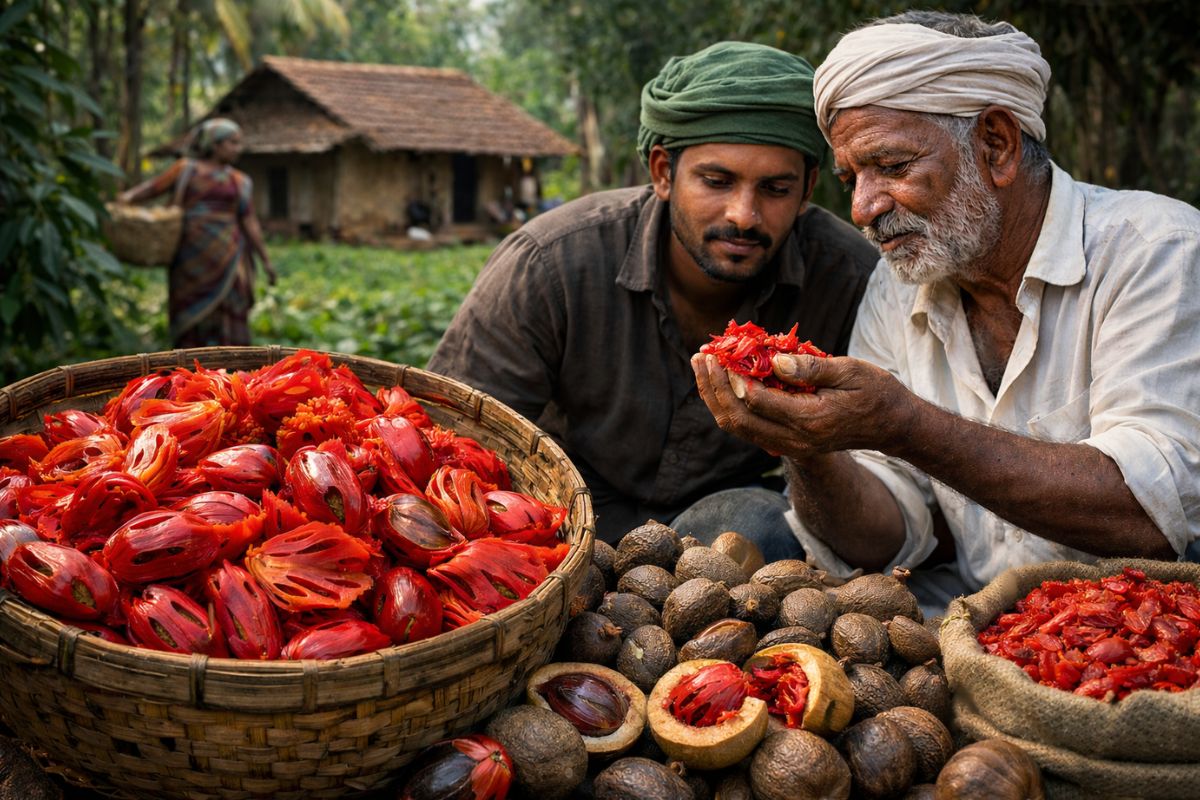
In Pollachi, Producers Transformed Nutmeg and Mace into a High-Value Business by Mastering Hybrid Genetics, Post-Harvest Management, and Direct International Sales. The Result Was Record Prices, Less Dependence on Major Centers, and an Unprecedented Redistribution of Income for Those Who Cultivate, Select, and Process in the Producing Region.
The nutmeg supply chain in Pollachi, in southern India, has ceased to operate as a provider of cheap raw material and has started to function with the logic of a premium product. Local farmers combined agronomic technique, harvest discipline, and quality standardization to reposition mace at the top of the price range, reaching US$ 50 per kilogram.
The movement gained momentum when producers realized that it was not enough to harvest well: they needed to control grading, processing, and negotiation. By reducing reliance on intermediaries and selling directly to external buyers, the region converted a traditional crop into a more profitable, predictable operation connected to the international spice market.
What Changed in Pollachi to Increase the Value of the Spice

The turning point did not come from a single discovery, but from a sum of productive and commercial decisions. In Pollachi, the red aril mace surrounding the nutmeg seed began to be treated as a sensitive item, with a separation and drying protocol designed to preserve physical integrity, aroma, and oil content. This technical care is what supports the high price, not just the fame of the origin.
-
The water that almost everyone throws away after cooking potatoes carries nutrients released during the preparation and can be reused to help in the development of plants when used correctly at the base of gardens and pots, at no additional cost and without changing the routine.

-
The sea water temperature rose from 28 to 34 degrees in Santa Catarina and killed up to 90% of the oysters: producers who planted over 1 million seeds lost practically everything and say that if it happens again, production is doomed to end.

-
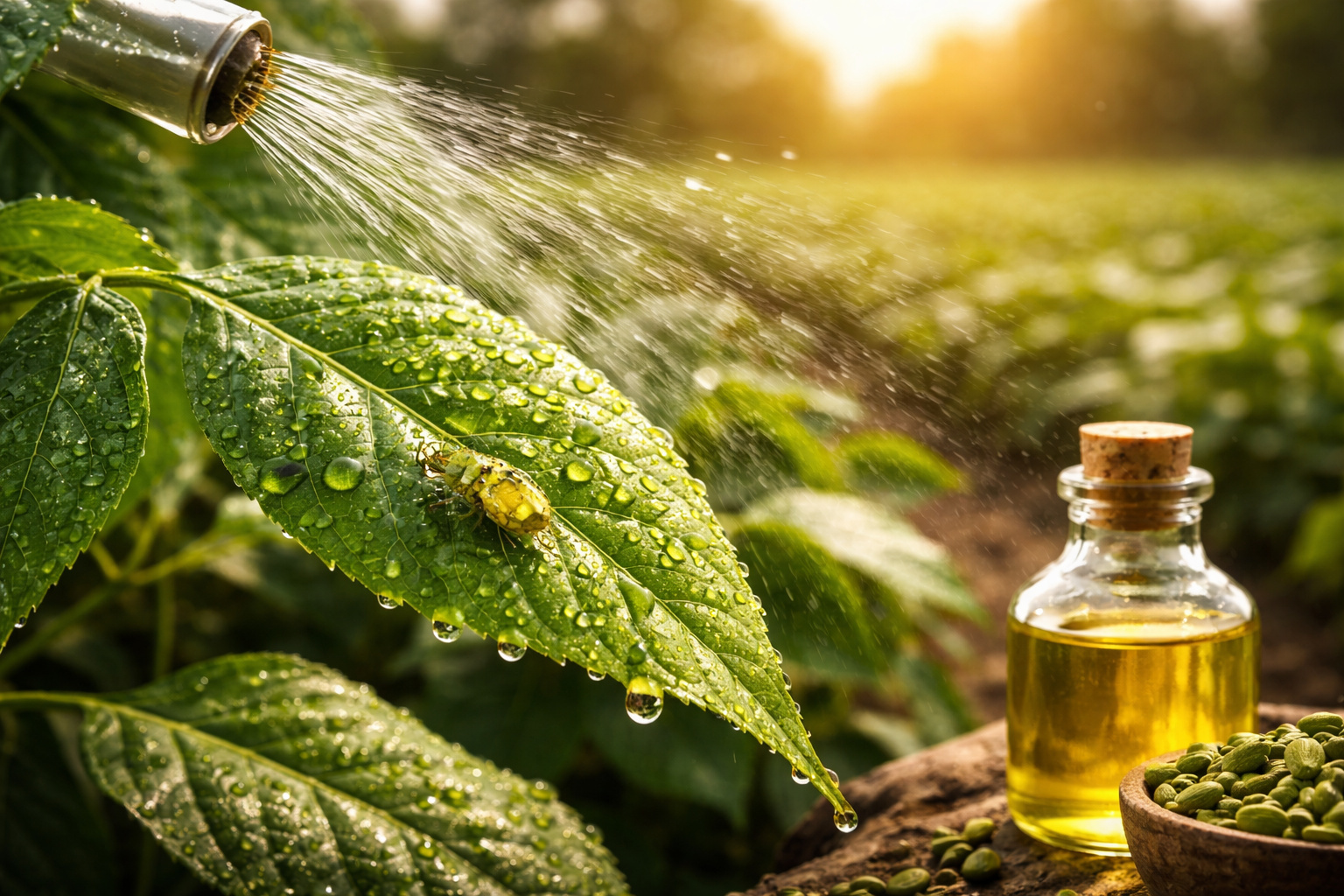
An Indian tree that grows in the Brazilian Northeast produces an oil capable of acting against more than 200 species of pests and interrupting the insect cycle, gaining ground as a natural alternative in soybean, cotton, and vegetable crops.
-
The rise in oil prices in the Middle East is already affecting Brazilian sugar: mills in the Central-South are seeing their margins shrink just as ethanol gains strength.

At the same time, the region stopped accepting passive pricing dictated by larger centers. While market references indicated mace at about US$ 35 per kilogram in Kerala and around US$ 9 per kilogram in the United States, Pollachi established a higher benchmark for selected batches. In practice, the price differential began to reflect consistency of quality and delivery capability, not just scarcity.
Harvesting at the Limit of Time: The Technical Cost of Quality

The nutmeg harvest window is short and has little tolerance for error. When the yellow fruit opens, it reaches the ideal point; delaying by even a day can accelerate fungal growth and lower the commercial classification to second tier, often dropping the value to nearly half. The harvest clock here translates into money.
This daily control requires trained labor and intense physical routine. During the monsoon period, teams start early to avoid heavy afternoon rain; on larger farms, the harvest may involve four to ten people during peak times. With trees that can reach 50 feet, using aluminum and bamboo poles increases productivity but also imposes strain on necks, shoulders, and arms, while elevating operational risk.
Biological Risks and Rigorous Selection: Where the Price Is Decided
The pressure for quality does not end with the removal of the fruit. In the selection stage, each batch needs to be separated between intact material and material compromised by fungi or mechanical damage. Fruits with deterioration do not disappear from the chain, but enter lower value classes, generating a direct revenue difference. In high-standard spices, visual defects are also financial defects.
There is also the risk of aggressive pests in the trees themselves, such as red ants, which slow down and complicate operations. In low trees, nest control is simpler; in high canopies, management becomes complicated and can compromise the harvesting rhythm. The result is a scenario where productivity, workplace safety, and final quality go hand in hand, with no room for improvisation.
Washing, Separation, and Drying: Processing That Protects Value

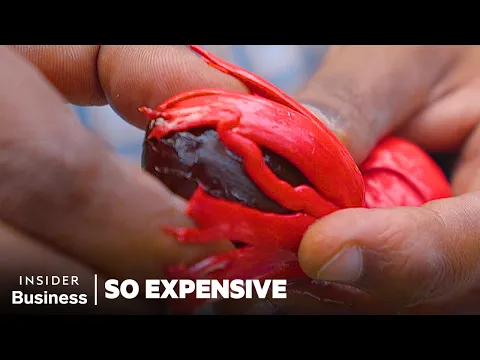
After the outer shell is removed, the fruits undergo washing and a minimum immersion of about 15 minutes to facilitate the separation of mace from nutmeg. This step reduces membrane resistance and makes removal less aggressive. Separation is manual, done with light twisting and pressure control, as broken mace loses value immediately.

The yield from this phase explains why the process is considered delicate: a team can take about four hours to process batches equivalent to 100 fruits per hour at a careful pace. Next comes the drying: first in the sun, then in the shade, to avoid cracking the nut and preserve aroma. In Pollachi, some producers avoid drying in an oven to reduce thermal stress and maintain a more stable sensory structure.
Why the “East Indian” Origin Matters in the Market
In global trade, not all nutmeg competes at the same level. Varieties classified as “East Indian” tend to have a higher oil content and a more intense aromatic profile, which tends to raise prices compared to materials with a milder profile. Pollachi and Kerala fall into this higher valuation range, but with different strategies for standardization and positioning.
The central difference is that Pollachi focused efforts on uniform quality per batch and visually stronger products, with reports of thicker mace larger than common standards in the country. When the perception of quality meets regularity of delivery, the international buyer is willing to pay a premium. This premium, however, can only be maintained if the post-harvest protocol is consistent from harvest to harvest.
Hybrids and Intercropping: Advantage Built in the Field
Part of Pollachi’s competitive advantage has been associated with the development of local hybrids over the years, focusing on agronomic performance and the final quality of the spice. Instead of relying exclusively on standardized commercial genetic material, producers invested in their own selection and seedlings adapted to local conditions, creating a technical barrier against immediate competitors.
In management, intercropping with coconut was used to improve soil moisture retention and provide adequate shading for nutmeg trees. This microclimatic adjustment is important because excess heat or continuous moisture affects both fruit health and subsequent drying. It is not just about “planting and harvesting”; it is about designing the production environment to reduce losses and increase quality.
Cooperative and End of Intermediaries: The Shift of Power in the Chain
The commercial leap occurred when local farmers aligned techniques, collectively graded quality, and began to set prices based on their own standard. About two years ago, the creation of a cooperative consolidated this process on a regional scale, bringing together approximately 500 acres of nutmeg and mace cultivation.
With volume and consistency, the cooperative gained access to external buyers and increased producers’ margins. A milestone was the sale of mace for 3,200 rupees per kilogram to an Australian buyer, about 14% above the rate practiced by aggregators. Another indicator was the recent negotiation of 12 tons of nutmeg and mace for a Dutch company. When the producer controls quality and sales channel, the price is no longer imposed but negotiated.
Local Impact: Income, Work, and Predictability

The transformation of the supply chain does not mean the absence of challenges. The work remains manual at critical stages, climatic seasonality continues to pose risks, and maintaining premium standards requires daily discipline. But the local economic impact has changed: with greater value retention, farms can provide better remuneration, plan purchases, and reduce vulnerability to sharp market fluctuations.
For harvest and processing workers, the effect appears in the stability of demand and the growing importance of specific skills. In traditional chains, those executing the more delicate stages tend to receive a smaller share of the income; in Pollachi, the logic began to change because premium quality depends precisely on those stages. The technique of those in the field began to be recognized as an economic asset, not just an operational detail.
The case of Pollachi shows that the valuation of nutmeg does not arise from a single isolated factor, but from the combination of genetics, harvest timing, careful processing, and collective commercial strategy. The region did not “discover” just a high price: it reorganized the chain to bring the value of the spice closer to those who produce, select, and deliver real quality.
If you work in agriculture, food, or foreign trade, which link in the chain captures the most value today in your reality: production, mediation, or retail? And, in your consumption, would you pay more for a traceable spice with proven technical standards and cooperative origin? I want to read concrete examples from those who have experienced this contrast in practice.








-

-

-

-

-

24 pessoas reagiram a isso.