





 Portuguese
  English
  Spanish
  4 min of reading
  0 comments


For Less Than R$ 200, It Is Possible to Transform a Regular Fan into an Evaporative Cooler Capable of Reducing Ambient Temperature by Up to 8 °C — and with Almost No Electric Consumption. Understand How It Works.
Amid increasingly frequent heat waves, finding a way to cool down without blowing up the energy bill has become a national obsession. Portable air conditioner? It consumes too much. Traditional cooler? Not very efficient. But a quiet and inexpensive alternative is starting to stand out: an accessory that transforms your regular fan into a powerful evaporative cooler, using an old, simple — and ingenious — principle. With an investment that can range from R$ 200 to R$ 2,000, the so-called “evaporative fan” promises to lower the ambient temperature by up to 8 °C, depending on humidity conditions, all with the same electric consumption as a regular fan.
How Does This Accessory Work?
The answer lies in an ancient physical principle: evaporative cooling. The same phenomenon that causes your sweat to evaporate and cool your body is behind the technology of these accessories.
Known as “swamp coolers” or passive coolers, these adapters basically consist of:
-
China is testing a train that will operate at 400 km/h in daily service, which is 80 km/h faster than the French TGV, and uses carbon fiber, magnesium alloys, and more than 4,000 sensors to become the fastest commercial train on the planet.

-
Forget about having an air fryer, electric oven, and steam pot taking up space in your kitchen because a 30-liter smart oven combines all these functions, automatically selects the ideal temperature, and even turns off by itself when cooking is done.

-
Engineers rewrote all the apps from scratch and bet everything on a buttonless screen: now the creator of the iPhone says that Apple needs to make the same revolution again because of AI.

-
Researchers in the U.S. have created a flying robot that transforms into a land vehicle while still in the air. The technology, based on aerodynamic transition, converts landing into a scene worthy of Transformers and redefines mobility between sky and ground.




- A water or ice compartment
- A cellulose or absorbent foam filter
- A support that directs the fan’s airflow through the moistened filter
As the air passes through this wet barrier, the hot air loses heat to the evaporating water. The result? A cooler, more humid breeze that can lower the ambient temperature by 4 to 8 degrees Celsius — especially in dry climate regions.
Who Is Using It and What Do Tests Say?
Models of this type of accessory are already popular in countries like the United States, Mexico, and Australia, especially in arid regions or in the interior of states, where the relative humidity is below 50%.
Reviews on sites like Home Depot and Lowe’s show users reporting average drops of 8 to 10 °F (~5 °C), even when using regular fans. Some portable models even come with a compartment for ice, enhancing the cooling effect.
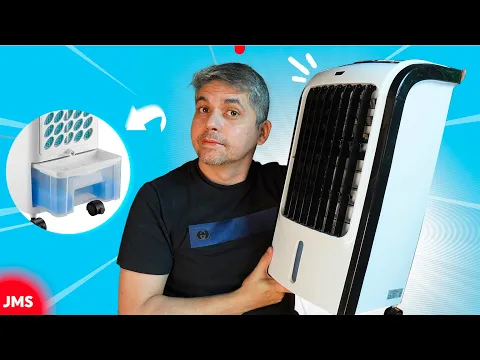
Here in Brazil, technology influencers, do-it-yourself channels, and Facebook groups are already sharing experiences with imported kits, national versions, and even homemade adaptations using PET bottles, wet cloths, and computer fans.
Is It Worth It?
Let’s get to the facts:
- Average price: between R$ 150 and R$ 220, depending on the model
- Energy savings: the consumption is the same as a regular fan (~50W)
- Ease of use: just attach the accessory to the fan and fill it with water
- Recommended areas: spaces up to 20 m² (bedroom, living room, office)
- Limitations: works best in dry climates. In very humid regions, the efficiency of evaporative cooling decreases
In other words: it is not an air conditioner, but it is a much more efficient alternative than a fan alone, especially in places where the air is dry — such as in the interior of SP, Goiás, DF, MG, or parts of the Northeast.
How to Choose a Good Model?
Not all “fan accessories” are the same. To ensure good performance, pay attention to:
Compatibility:
Some models are universal, while others require fans with specific grilles.
Reservoir Capacity:
The larger it is, the longer the accessory will operate without needing a refill. The best ones have 1 to 2 liters.
Ease of Installation:
Prefer models that fit without tools and have good lateral sealing to avoid leaks.
Removable Filter:
Models with washable or replaceable filters last longer and keep the air cleaner.
An Eco-Friendly and Portable Solution
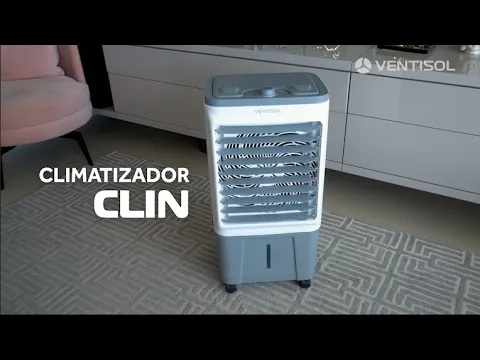
Another great advantage of evaporative accessories is that they do not use refrigerants, nor generate waste or high energy consumption. They are ideal for:
- Small apartments
- Offices without air conditioning
- Pet environments
- Camping areas or balconies
- People sensitive to very dry air
And more: they can be used in places without conventional power supply, with the fan connected to a battery or power bank, becoming an emergency solution in case of blackouts or power outages.
Can It Be Made at Home?
For the more skilled, yes. There are dozens of tutorials on YouTube teaching how to turn a table fan into an evaporative cooler using:
- Cut PET bottle
- Cotton or cellulose cloth
- Water reservoir with regulated holes
- Wire or double-sided tape support
Homemade results are not as efficient as commercial models, but they show how passive cooling is simple, sustainable, and powerful when applied correctly.
The Era of Affordable Cooling
As the cost of electricity continues to rise and temperatures hit historic records, solutions like the accessory that transforms a fan into a cooler represent a new paradigm in climate comfort: low cost, low environmental impact, and high efficiency in what they propose.
This is not about replacing air conditioning in large or humid environments. But rather to provide real thermal relief to millions of people who do not have access to expensive, noisy, and energy-hungry systems.
The physical principle of evaporative cooling has been used for millennia in the deserts of Persia and constructions in North Africa. The novelty is that it is now within reach of any fan, for less than R$ 200 — and with surprising results.
If you live in a hot and dry region, it is worth a try. Sometimes the answer to a more comfortable summer lies in a simple accessory fitted to the front of your old table fan.







Seja o primeiro a reagir!