





 Portuguese
  English
  Spanish
  6 min of reading
  2 comments


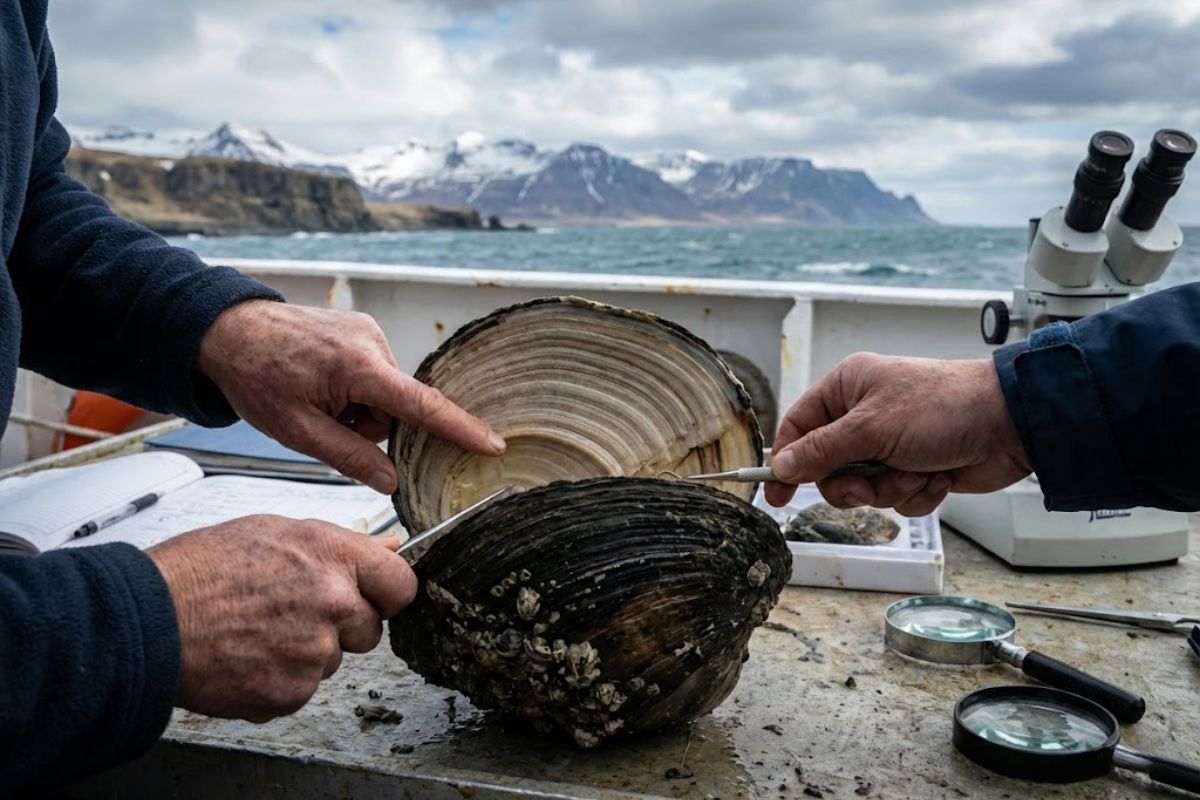


Called the Oldest Animal Ever Recorded, the Mollusk Ming, Arctica Islandica, Had Its Shell Opened in 2006 During an Expedition in Iceland. Born in 1499, It Validated 507 Years. Its Death Closed an Archive of the North Atlantic That Recorded Climatic Variations for Centuries and Raised Alerts About Modern Protocols and Ethics.
In 2006, researchers on an expedition in Iceland opened Ming’s shell to determine its age and, in the process, killed the oldest animal ever recorded. Born in 1499, the mollusk entered scientific and public debate as a rare time marker and as a warning about research limits.
The story returned to the debate on January 2, 2026, because it summarizes a recurring dilemma: how far can science go when the object of study is both a living individual and a historical record? In Ming’s case, the measurement that confirmed 507 years closed an archive of the North Atlantic and broadened the discussion on protocols, risk and responsibility.
What Happened in 2006 in Iceland
The episode described in the base is straightforward.
-
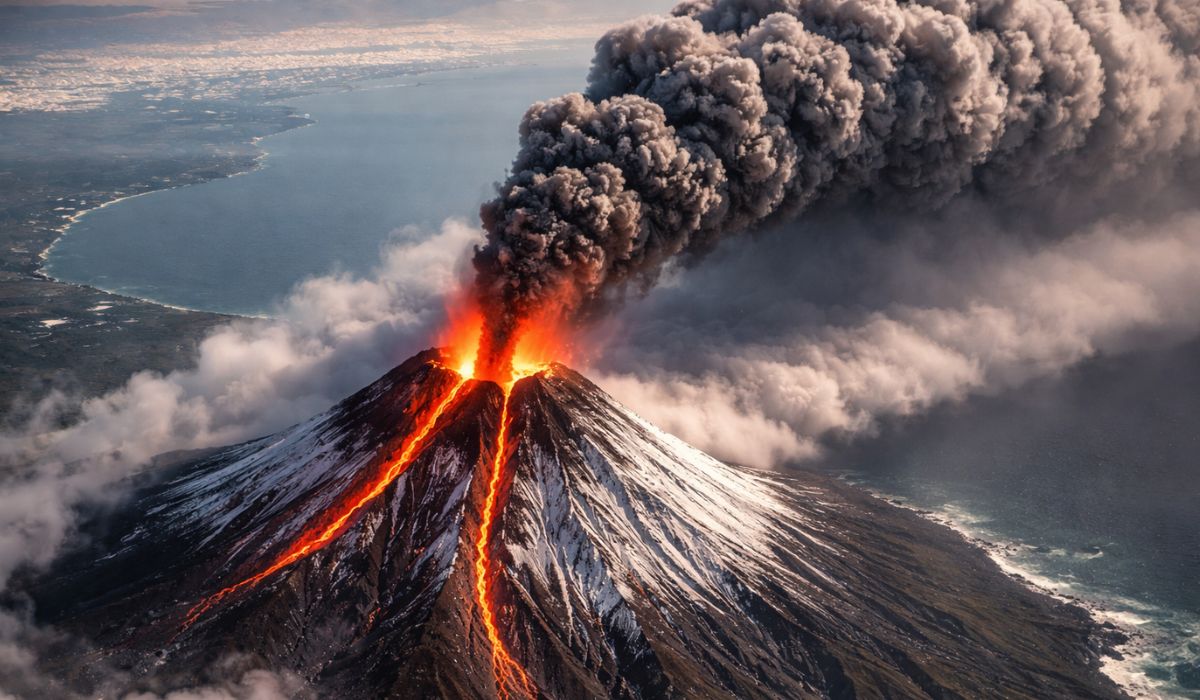
Seen from space, a colossal volcano nearly 5,000 meters high in Russia has released 1,600 km of smoke over the Pacific, forming “devil’s horns” of lava and revealing the brutal force of the Ring of Fire.
-
Expedition 501: Scientists drill into the ocean floor and discover a giant reserve of fresh water hidden beneath the sea, extracting nearly 50,000 liters and revealing an invisible system that could reshape the map of water scarcity.

-
Archaeologists find an intact tomb over 2,500 years old, with more than 100 preserved objects, weapons, jewelry, and human remains never touched.

-
Volcanic lava transforms into threads as fine as human hair that travel over 30 kilometers by wind and fall like cutting rain on roofs and backyards in Hawaii and Iceland.


In 2006, during a scientific expedition, researchers found the mollusk Arctica islandica nicknamed Ming and opened its shell to determine its age.
The intervention, made to obtain an accurate measurement, resulted in the immediate death of the animal.
This outcome is the crux of the case because it transforms a research step into a negative milestone.
The oldest animal ever recorded did not die of natural causes described in the base, but through human contact in a research environment.
The location cited is Iceland, in the cold waters of the North Atlantic, where the species is found and where the episode occurred.
How Ming Became a Reference for Extreme Longevity
Ming is presented as an individual of the species Arctica islandica, recognized for its unusual longevity.
The base points out that this type of mollusk functions as a natural record of climatic changes over the centuries, precisely because it lives a long time in the North Atlantic.
The historical dimension is reinforced by two dates that structure the case.
The mollusk was born in 1499 and had its life interrupted in 2006, crossing human and environmental changes while remaining in the ocean.
The oldest animal ever recorded became a symbol because it condensed, in a single organism, a timeline that rarely exists in individuals.
From 405 to 507 Years: The Adjustment That Confirmed the Record
The base informs that the first reading indicated 405 years.
This number would already be extraordinary, but subsequent analyses confirmed 507 years, solidifying Ming as the oldest animal ever recorded among non-colonial animals documented by science.
The revision is relevant for two reasons.
First, it shows that age can be underestimated in initial readings.
Second, it highlights the paradox of the case: the final confirmation, which gave precision to the record, was obtained by a method that eliminated the individual that carried the record.
The nickname Ming is associated in the base with a historical milestone, the Ming Dynasty in China, cited as a temporal reference.
Even as a comparison tool, the central point remains: 507 years of life place the animal in an outlier category.
The Shell as a Time Capsule of the North Atlantic
The technical point that supports the relevance of Ming is how Arctica islandica records its history.
The base describes these mollusks as a time capsule: the shells store information about ancient oceanographic variations and allow for reconstructing environmental signals over many centuries.
When the base states that Ming held a “living archive of the climate of the North Atlantic,” it describes a rare combination.
The archive was “living” because it grew with the animal. And it was an archive of the North Atlantic because it was anchored in the cold waters of that region, where the mollusk remained for centuries.
This type of record has value for climate research for a simple reason: the larger the time window, the greater the ability to compare changes.
By losing the oldest animal ever recorded, science also lost the continuation of that archive, even if part of the data was already in the shell.
What Ming’s Death Exposed About Research and Ethics
The base explicitly states that the incident raised questions about research practices and that death created the need for more ethical and careful protocols.
The case is not just a story of longevity, but an example of how collecting can produce irreversible loss when there is no margin for error.
The discussion is organized into two layers.
The first is technical: research needs reliable measurements to support conclusions.
The second is ethical: when the object of study is the oldest animal ever recorded, the individual’s value is not only biological but historical.
This increases the cost of a poorly calibrated decision and changes the standard of responsibility.
The base also states that, after the case, other specimens of Arctica islandica began to be under strict monitoring to prevent similar errors.
The lesson, in practice, is to transform exceptions into care priorities, reducing the chance of repeating losses with rare individuals.
What the Data Means for the Climate of the North Atlantic
The base describes Ming as a natural record of climatic changes over the centuries and states that the collected data helps understand changes in the Earth’s climate over the last 500 years.
This passage explains why the story does not end with the 2006 episode: it connects to a larger research agenda on climate and ocean in the North Atlantic.
At the same time, the case exposes a limit: if the record depends on a living being, the search for information may shorten the record itself.
This tension appears more strongly when the object of study is the oldest animal ever recorded, because the value of continuity is a central part of scientific interest.
Arctica Islandica and the Comparison With Other Long-Lived Species
The base places Arctica islandica as a long-lived species that surpasses many other known animals, such as Greenland whales and Galápagos tortoises.
The comparison positions the mollusk in an intuitive ranking and reinforces that this is not just “an old individual,” but a boundary case of biology.
This framing is important because it takes the story out of folklore and places it in applied science. When a North Atlantic mollusk lives for centuries, it becomes a reference for longevity studies and for environmental reading.
That is why the death of the oldest animal ever recorded is treated as a loss of a record that could have continued to grow.
What Changes After 2006: Monitoring and Caution
The base states that today, other specimens are under strict monitoring to avoid similar errors. This indicates a change in posture: the focus is not just on collecting, but on preserving the possibility of observation with caution.
In practice, this means recognizing that the oldest animal ever recorded cannot be treated as a common case.
When there is a chance of an individual being exceptional, the methodological choice needs to reduce risk and increase guarantees, because the loss is irreversible and the impact goes beyond the laboratory.
Ming’s death in 2006, in Iceland, after the shell was opened to determine age, consolidated an emblematic case about science and limits.
Born in 1499 and confirmed with 507 years, the mollusk became known as the oldest animal ever recorded and as an archive of the North Atlantic that recorded climatic changes over centuries.
If you follow science and the environment, the most useful step is to demand transparency regarding methods and protocols in research with exceptional organisms.
Well-informed public debate improves science because it pressures for rigor and for choices that minimize irreversible losses.
Do you think measuring the age of the oldest recorded animal justifies opening the shell, or should science prioritize methods that do not put the individual at risk?








É só o homem “descobrir” que vai de Vasco “,”vida que segue”!
What a juvenile screw up, no matter how they try to address the need for knowledge. Science is full of Self-centered idiots.