





 English
  Francês
  Alemão
  Italiano
  Japonês
  Norueguês
  Portuguese
  Spanish
  8 min of reading
  0 comments


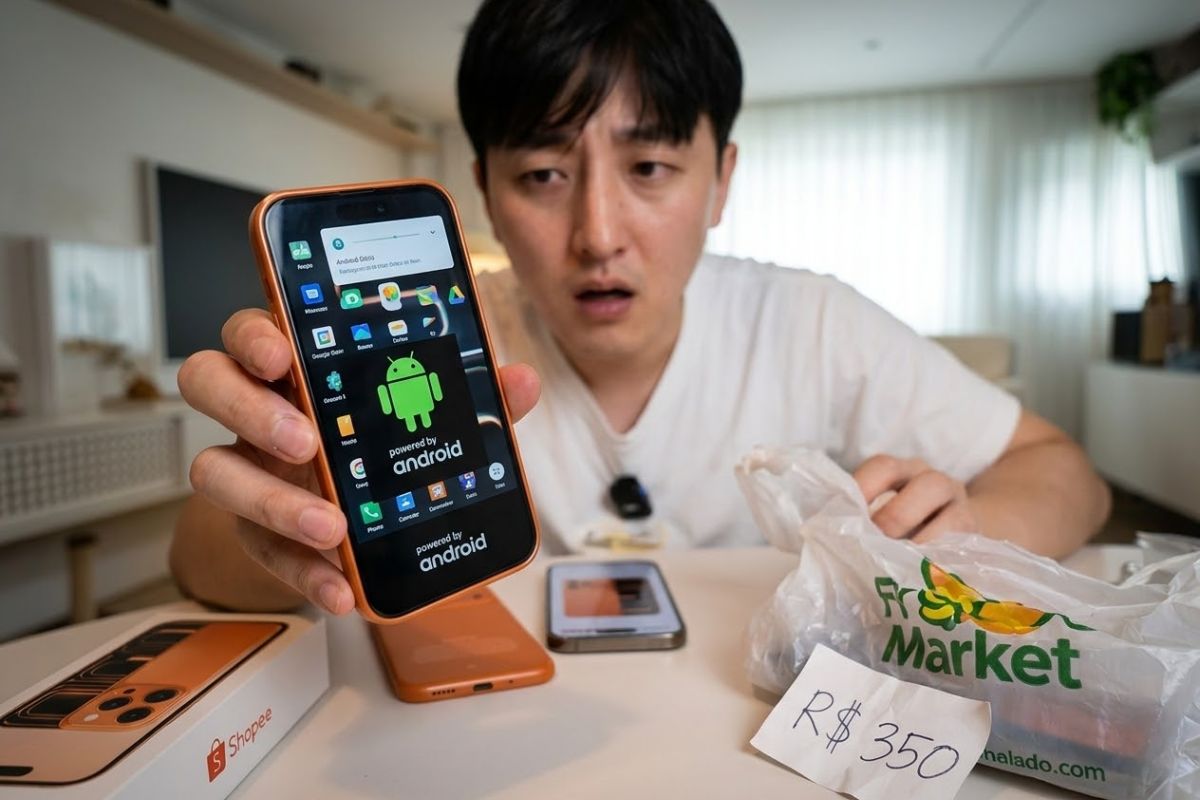
Disguised Android, Convincing Packaging, Extra Accessories, and a Design Almost Identical to a Premium Phone Transform a R$ 350 Offer Into a Warning About Copies Sold Online, Additional Shipping and Tax Charges, and Practical Signs That Reveal the Fraud Within the First Minutes of Use.
The Android Hidden Under iPhone Appearance is the center of a test that starts with curiosity and ends as a warning for those who are swayed by flashy photos and unrealistic prices. The ad promised an “iPhone 17 Pro Max” for just R$ 350, but the very presentation of the device raised suspicions: absence of the Apple logo, packaging without an official seal, and identification as “i17 Pro Max,” along with a direct mention of the Android system on the box.
The verification is led by YouTuber Jong Chul Lee, who shows from the start that the price made no sense for a product associated with Apple. Suspicion increases because the device came from China, with a carefully crafted look to replicate the color, shape, and camera set of a premium model. The logic of the scam is simple and effective: use the image of a desired phone, drastically lower the price, and bet that many buyers will only notice the difference when the product is already in hand.
The First Impression Is Convincing, But the Details Start to Undermine the Promise
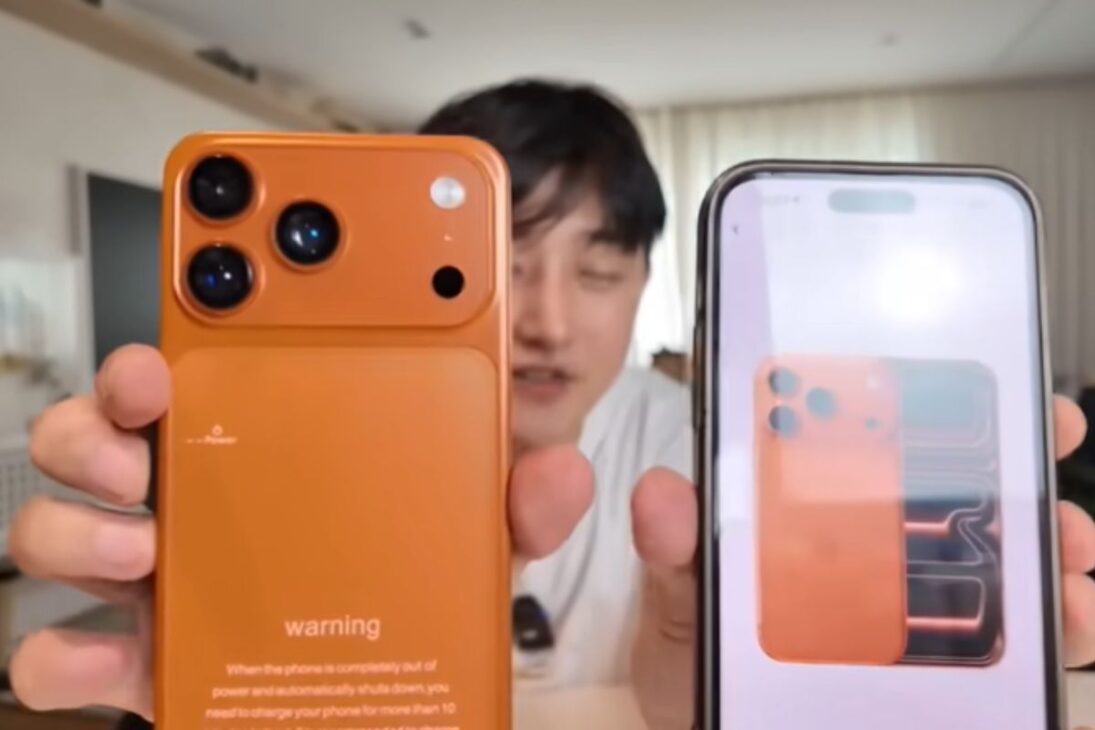
image: video
At the moment the box is opened, the device manages to make an impact. The packaging is protected, the phone’s body has a flashy finish, and the back closely resembles the style of an iPhone Pro Max. The color, the camera block, and even the overall visual feel were designed to create instant recognition. For someone looking quickly, the copy does its job of looking more expensive than it really is.
-
New technology with lights is being tested in the most dangerous stretch of Serra do Mar in Paraná to alert drivers, reduce delayed reactions, and try to curb the rise in deaths on the highway.

-
The Perseverance rover’s radar reveals a river buried 35 meters beneath Mars, pushing the presence of liquid water back to 4.2 billion years and increasing the chances of signs of life on the planet.

-
The climate in 2026 may surprise with extremes even more intense than in 2025, with heatwaves, out-of-season cold, and irregular rainfall in Brazil.

-
Astronomers identify 45 rocky planets that could harbor life, and one of them is just 4.2 light-years from Earth, making it the closest neighbor with the potential to have liquid water on its surface.


But this similarity begins to crumble with elements that often reveal cloned products. There is no Apple logo anywhere on the original device set, the box does not feature the expected seal pattern, and the displayed nomenclature replaces the product’s identity with something generic. Instead of an official iPhone, it shows an “i17 Pro Max,” accompanied by unclear information about memory, features, and system. Even before turning it on, it’s clear that the appearance was treated as a priority, while authenticity was left aside.
Another point that stands out is the attempt to artificially reinforce the sense of advantage. Unlike the latest models from Apple, the package includes a charger, cable, headphones, and even a sticker with an apple to stick on the device. This excess of accessories acts almost as a psychological compensation, trying to turn a questionable purchase into an apparent bargain. However, in this case, the extra content does not confirm quality; it only reinforces that the product follows a logic parallel to that of the official market.
When the Screen Lights Up, the Android Reveals What the Shell Tried to Hide

The most revealing phase of the test begins when the device is turned on. Instead of any behavior compatible with an iPhone, the startup already indicates another origin.
The interface tries to imitate iOS, but some signals appear almost immediately: icons that mimic apps from the Apple ecosystem, inconsistent navigation, and a visual structure that doesn’t hold up once the user starts interacting for real. It’s the kind of imitation that works better when still than in real use.

The browser case is one of the clearest examples. The Safari icon appears on the screen, but does not function as Safari. When activated, the shortcut redirects to Google Chrome. This detail, seemingly minor, dismantles the entire staging because it shows that the device tries to look one way while operating as another.
The same applies to the bottom of the interface, the internal menus, and the call area, which expose typical Android traits beneath the iPhone-inspired visual façade.
In the settings, the confirmation becomes explicit: the listed system is Android, with advertised memory of 8 GB RAM and 256 GB storage. The promise, therefore, was not just exaggerated; it was structurally false.
This is not a cheap iPhone, but an Android dressed as an iPhone. This difference is decisive because the buyer is not taking home an affordable version of a premium product, but rather a different device, a different experience, and a different performance standard.
The Low Price Catches Attention, But the Real Cost Completely Changes the Purchase Perception
The price of R$ 350 is the big lure of this offer. It works because it speaks directly to the desire to consume a device known for being expensive, without paying what would normally be required for it. The problem is that, in the report itself, the final cost rises significantly when shipping and taxes come into play. At one point, the total is described as almost R$ 500; at another, as R$ 550. In other words, the advertised price does not represent the actual outlay.
This difference greatly changes the purchase reading. A product presented as an extraordinary opportunity ceases to seem so advantageous when the cost practically doubles at checkout. This helps explain why so many consumers become frustrated with this type of purchase: they are drawn in by the advertisement of a very low number and only later understand that the final bill is higher, while the product received remains far from what was promised. The feeling of a smart deal is gradually replaced by regret.
There is also an important element in how this type of sale is presented online. The images used in the ad reproduce the imagery of the original product, which reduces the perception of risk. Many people are not just buying a phone; they are buying the idea of status, modernity, and quality associated with that model. When the ad explores this desire and omits the true nature of the device, the purchase ceases to be merely impulsive and becomes induced by visual confusion and distorted expectation.
Camera, Video, Audio, and Fluidity Show That Imitation Stops at Appearance
After the unboxing stage and the revelation of the Android, the practical test delves deeper into the problem. The camera seems acceptable at first glance, but loses strength when compared to an iPhone 14 Pro Max used as a reference. When zooming in on images or recording video, the quality drops, the processing does not keep up, and the overall feel is of a phone significantly below the standard suggested by the name displayed in the ad. The gap between looking premium and functioning premium becomes evident at this point.
The visual assessment made during the recording indicates that the result resembles older devices, with performance far below what one would expect from a supposedly advanced model.
When the product delivers a merely decorative or limited module, it destroys exactly one of the expectations that helped convince the buyer. The shell tries to sell modernity, but the image capture reveals the opposite.
The media consumption experience follows the same logic. The device connects to Wi-Fi and opens websites, which shows that it functions as a basic phone.
However, the use on YouTube already shows stuttering, slowness, and the need to lower video quality to attempt to maintain playback. The system responds with a delay, navigation does not convey stability, and the overall performance is described as weak. It is not an unusable device, but it is far from the promise created by the ad and the visual designed to impress.
Extra Features Exist, But They Do Not Transform the Copy into a Safe Alternative

Some functions do operate. Face unlock, for example, appears on the device and can be set up. However, this also comes with an important difference: the feature does not emerge as an organic part of a refined system, but as a separate app within the device. This distinction shows that the phone can replicate popular market functions, but without the same level of integration. It delivers an appearance of sophistication, not necessarily true sophistication.
The battery, during the short period of the test, did not turn out to be disastrous, and this may lead some people to think the purchase is still worth it for basic use.
There is even the observation that, for those who only want a cheap device or intend to provide a simple phone for a child, this type of product may seem appealing. However, this conclusion must be viewed with great caution because the main issue is not just the price or minimal functioning: it is the difference between what was promised and what was effectively delivered.
When an advertisement sells the image of an iPhone and delivers a generic frozen Android, the problem is not just technical. It is also commercial and informational.
The buyer is not clearly choosing between two distinct categories of devices; they are being pushed into a purchase based on visual similarity, suggestive naming, and artificial expectation.
Cloning does not try to compete on performance; it tries to win through confusion. And that is precisely why this market continues to attract inattentive consumers.
What This Case Reveals About Cloned Phones Sold Online
The test clearly shows how the engineering of deception works in these ads. First comes the flashy name, then the image very close to the original, followed by the low price low enough to sound irresistible, and finally the delivery of a product that tries to sustain the illusion for a few minutes. The buyer sees an “iPhone 17 Pro Max,” receives something visually similar, and only discovers the full truth when they start using it. The fraud does not depend on perfection, just on enough time to convince at first glance.
This case also makes clear why so many people still fall for this type of offer. The phone arrives, powers on, connects, opens apps, takes photos, and even offers some sort of face unlock. For those who do not know technical details or do not immediately compare with an original device, the counterfeiting may seem like just a cheaper version. However, in practice, what exists there is a camouflaged Android, with limited performance, improvised interface, and marketing based on misleading association.
In the end, the biggest warning lies not just in the tested device but in the standard it represents. Prices far below normal, visuals excessively similar to the original, and ambiguous descriptions almost always indicate high risk. When the offer relies more on external similarity than on clear product identification, the consumer should already start from suspicion, not enthusiasm.
And you, have you seen or even bought a phone that promised one thing and delivered something completely different? Share in the comments if this type of ad still deceives many people or if the signs of cloning have become easy to spot.








-

Uma pessoa reagiu a isso.