





 Portuguese
  English
  Spanish
  4 min of reading
  0 comments



The Incredible Story Of The Norwegian Student Who, Out Of Academic Curiosity, Invested The Equivalent Of $27 In 5,000 Bitcoins, Forgot The Password For Four Years, And Rediscovered A Fortune Of Nearly $1 Million.
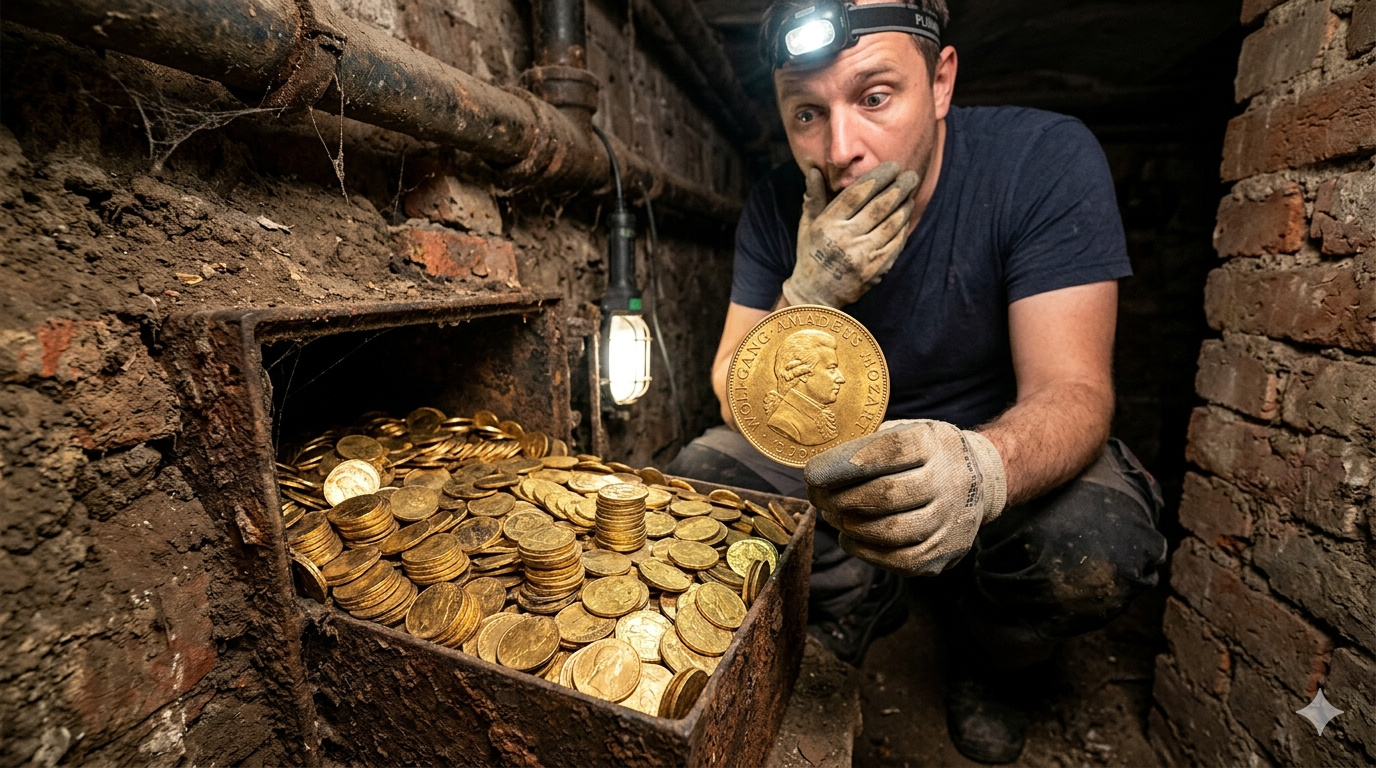
In 2009, when Bitcoin was an obscure concept known to a small circle of cryptocurrency enthusiasts, Norwegian student Kristoffer Koch unknowingly became the protagonist of one of the most emblematic stories in the cryptocurrency market. The man who forgot his bitcoins made an experimental purchase of 5,000 units of the digital currency for about 150 Norwegian kroner, or $27. The investment, seen as a “toy expense” related to his master’s thesis, was quickly abandoned in a digital wallet whose password was lost to time.
Four years later, in 2013, the explosion of Bitcoin in global media sparked a vague memory in Koch. After an effort to recover the forgotten password, he accessed his wallet and discovered that the modest amount had transformed into a fortune of approximately $886,000. His first action, turning the digital asset into reality, was to sell a fraction of the coins to buy an apartment in an upscale area of Oslo, the capital of Norway, in a move that validated the wealth that, until then, existed only as code on his computer.
From Academic Experiment To A Forgotten Digital Treasure
Kristoffer Koch’s journey began purely intellectually, in a world where “investing in Bitcoin” was not a known expression.
-
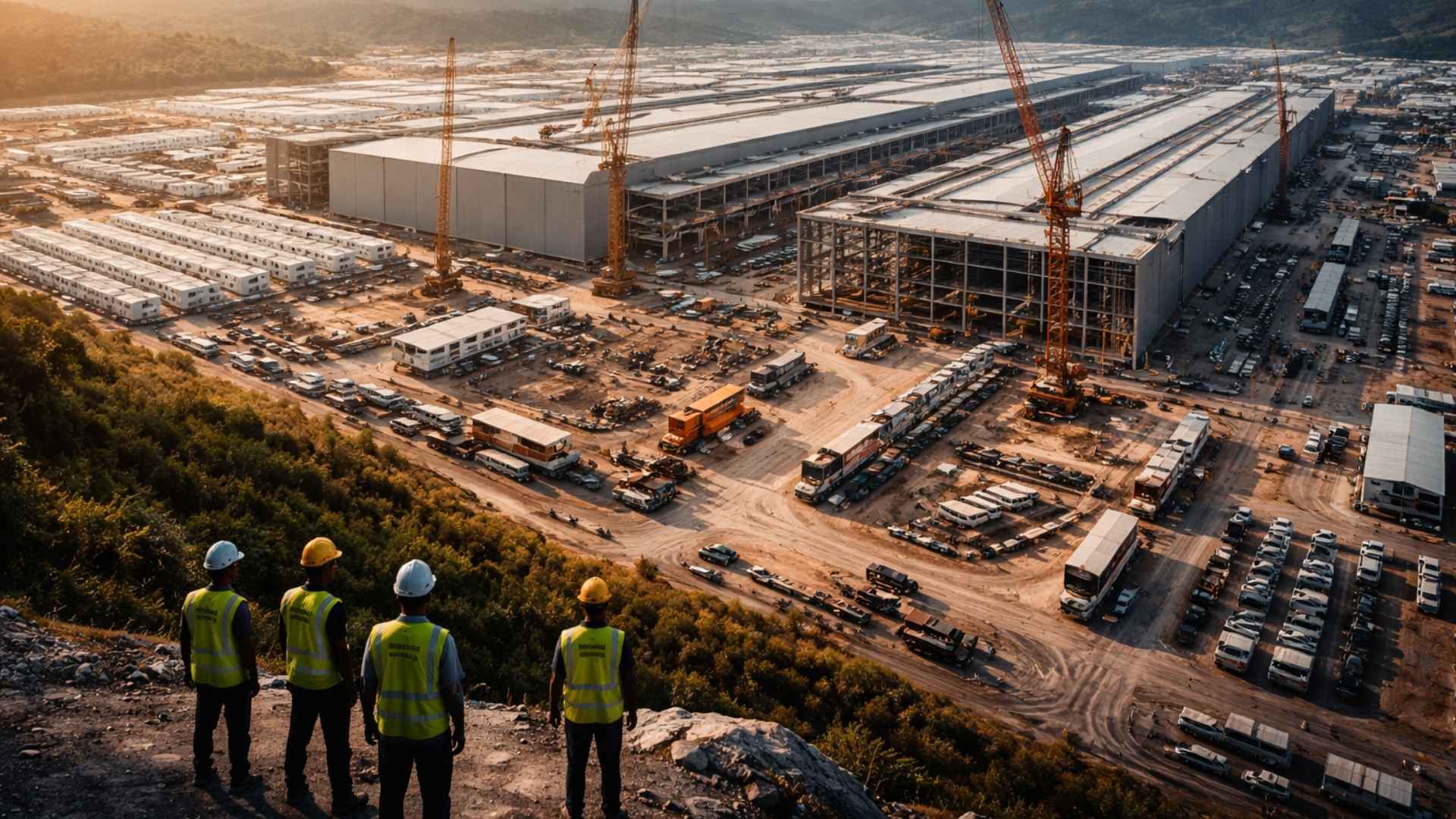
China is building a city in Brazil: a complex with an investment of R$ 5.5 billion comes to light, but allegations involving workers draw attention.
-
While Argentina buys old war equipment, Brazil is keeping an eye open and joins the select group of nations with advanced military technology by investing $5.2 billion, producing 36 Gripen fighters in the country, and reducing operational costs.

-
Brazil on alert? Why invading Brazil is a NIGHTMARE for the USA: 8.5 million km², 213 million inhabitants, Amazon covering 60% of the territory, trillion-dollar war, and resistance that even 13,000 aircraft could not control.

-
How to build a floating island from scratch with reeds, giant blocks, and stakes in the lake in a process that needs to be repeated almost every day.


While preparing his master’s thesis on cryptography, he came across the white paper by Satoshi Nakamoto, the document that gave rise to Bitcoin.
Intrigued by the practical application of the technology, he decided to make the minimum purchase he could at the time, acquiring 5,000 bitcoins as a simple exercise of curiosity.
The transaction was so insignificant in his budget that he hardly bothered to securely store the password, and over time, both the password and the very existence of the investment were completely forgotten.
The investment remained dormant for four years, a period in which Bitcoin rose from complete obscurity to becoming a volatile and widely discussed financial asset.
While Koch focused on his career, his 5,000 digital coins appreciated exponentially.
The rediscovery only happened in April 2013, when news about Bitcoin reaching record values made him vaguely remember his old purchase.
The biggest challenge, then, became a digital treasure hunt on his own computer, a process of digital archaeology that involved rummaging through old files and his own memory, trying countless combinations of passwords he used until finally finding the correct one and revealing the million-dollar value he possessed.
The Rediscovery And The Practical Consequences Of The Fortune
Upon accessing the wallet, the shock was immediate: the $27 invested in 2009 was now worth the equivalent of 5 million Norwegian kroner, or $886,000.
Koch’s decision was pragmatic and immediate, selling only one-fifth of his holdings, about 1,000 bitcoins, to realize a gain of approximately $177,000.
This amount was enough to buy an apartment in Tøyen, a central and valued area of Oslo.
The act of buying the property was crucial not only financially but psychologically, solidifying part of the digital wealth into a physical, tangible, and stable asset.
However, the newly discovered fortune brought with it the complexities of the real world.
At that time, the legal and tax status of cryptocurrencies was a complete void, a “wild west” of regulation.
In December 2013, Norway’s tax authority (Skatteetaten), partly motivated by high-profile cases like Koch’s, determined that Bitcoin would not be treated as currency but as an asset.
This meant his profits were classified as capital gains, forcing him to pay the corresponding tax, which in Norway was 28% in 2013, on the amount he had sold.
The decision was a landmark, setting a precedent for the taxation of crypto assets in the country.
What Happened Next: Career And The Remaining Fortune
Afar from retiring or becoming a passing celebrity, Kristoffer Koch used the experience and knowledge gained to fully immerse himself in the sector that made him rich.
He became a co-founder of Kaspara AS, a Norwegian technology company focused on infrastructure and custody services for digital assets.
Instead of simply spending the fortune, he reinvested it to build a solid and respected career in the European crypto ecosystem, choosing a discreet profile and working behind the scenes of the industry.
After the initial sale, Koch still held 4,000 bitcoins, the fate of which he never publicly revealed.
It is only possible to speculate about the potential of this remaining fortune.
If he had held onto those 4,000 BTC until Bitcoin’s all-time high in November 2021, when the currency reached around $69,000, the value of his forgotten investment would have reached an astonishing $276 million, an amount that would place him among the great entrepreneurs.
His story remains one of the greatest examples of Bitcoin’s appreciation potential and a lesson about the importance of securely storing passwords.
The saga of Kristoffer Koch, the man who forgot his bitcoins, is more than just a lucky story; it is a portrait of the birth of a new asset class and the fine line between a curious experiment and a fortune that changes a life.
The decision to turn part of the gains into a real asset and the subsequent obligation to pay taxes illustrate the complex transition of digital assets from the virtual world to the traditional financial system, a process that continues to evolve to this day.
If you were in his place in 2013, with nearly $1 million in bitcoins, what would have been your strategy: sell everything, buy an asset like he did, or keep 100% of the asset hoping for an even higher appreciation in the future? Share your opinion in the comments.





Seja o primeiro a reagir!