





 Portuguese
  English
  Spanish
  5 min of reading
  2 comments


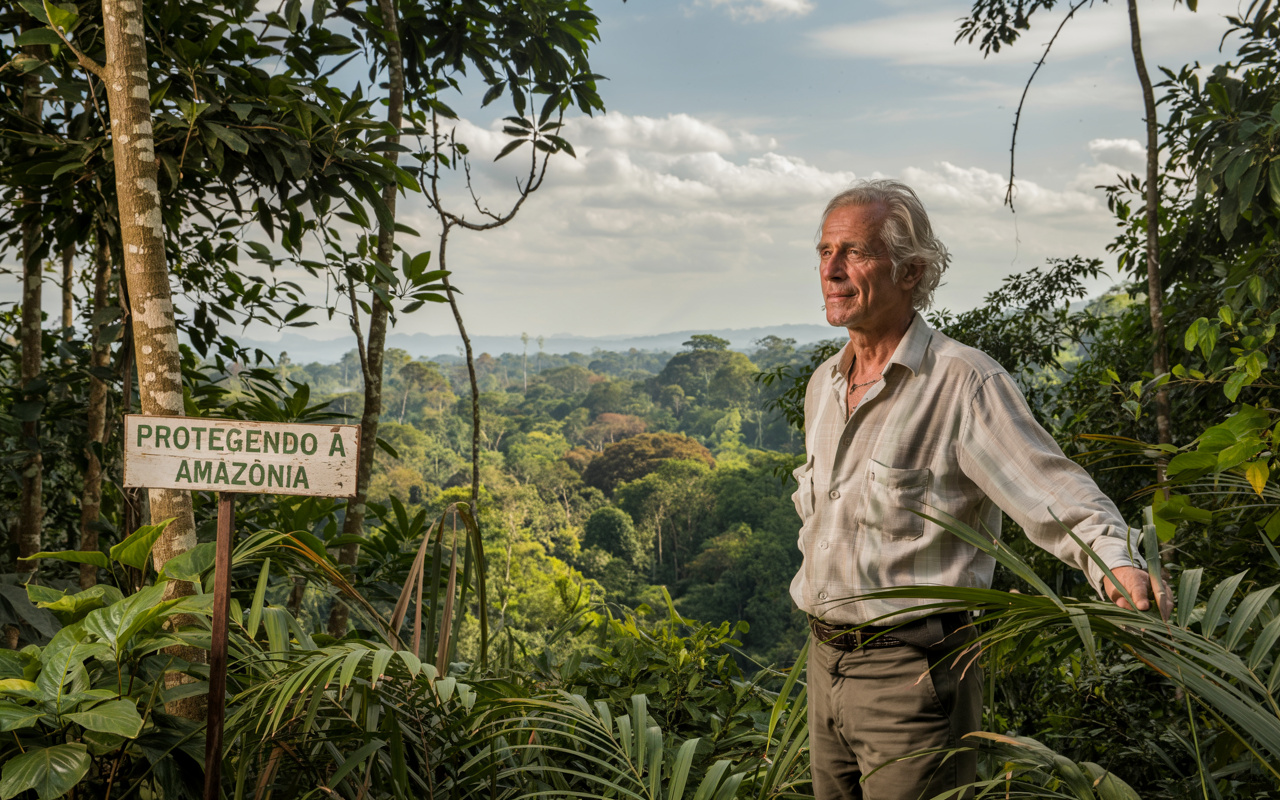


Swedish Billionaire Acquires 160 Thousand Hectares In The Amazon To Promote Forest Preservation In Brazil, Transforming The Region Into A Protected Area. Understand The Impacts, Challenges, And Debates On The Purchase Of Land In The Amazon By Foreigners
A Swedish billionaire surprised the world by acquiring around 160 thousand hectares of forest in the Brazilian Amazon. The unprecedented initiative, both in scale and purpose, was carried out with a single aim: to ensure the preservation of forest in Brazil without any profit intention. Entrepreneur Johan Eliasch, who leads the environmental NGO Cool Earth, purchased the area in 2005, ended predatory activities, and transformed the region into an ecological sanctuary. This article details who the buyer is, how the purchase of land in the Amazon took place, the environmental and social impacts, legal controversies, and what this case can teach us about conservation and sovereignty.
Who Is Swedish Billionaire Johan Eliasch
Johan Eliasch is a Swedish-British businessman, president of the sports equipment brand Head, and an active figure in global environmental issues. He was a climate advisor to the UK and founded the Cool Earth NGO, focused on protecting threatened tropical forests.
In 2005, he decided to take direct action in environmental defense and acquired a vast area of the Brazilian Amazon, becoming the foreign owner of one of the largest private forest areas in the country.
-
He started running at 66 years old, broke records at 82, and is now a subject of study for having a metabolic age comparable to that of a 20-year-old, in a case that is intriguing scientists and inspiring the world.

-
Oldest tree on the planet reappears after 130 years of searches: Wattieza, 385 million years old, was 10 meters tall and had no leaves or seeds; Gilboa fossils in New York solved the mystery in 2007.

-
A 48-square-meter house assembled in hours with 4,000 bricks made of recycled plastic that does not absorb moisture, has natural thermal insulation, and costs less than 90,000 reais in a complete kit.

-
Luciano Hang revealed that Havan’s air fleet has already accumulated more than 20,000 landings, 10,000 flight hours, and 6 million kilometers traveled, and he says that without the planes, the company would never have grown so quickly.


Details Of The Purchase Of Land In The Amazon

The acquisition involved approximately 160 thousand hectares of forest in the Amazon municipalities of Itacoatiara, Manicoré, and Lábrea. Eliasch paid around US$ 10 million for the property, which included the lumber company Gethal Amazonas. Shortly after the purchase, the company ceased operations, marking the end of commercial exploitation of the area.
According to the billionaire, the purchase aimed at no type of financial return. The area has remained untouched, with the sole goal of conservation. No production or economic activity has been initiated on-site since the acquisition, transforming the region into a private environmental reserve.
Environmental Impacts And Protected Area In The Amazon
The end of logging activities prevented the destruction of thousands of trees. Estimates indicate that Eliasch’s initiative prevented the emission of about 80 million tons of CO₂ into the atmosphere, representing a significant contribution to combating climate change.
The Cool Earth NGO also supports local communities with sustainable forest management projects, expanding environmental benefits beyond the purchased property. This collaborative model has contributed to strengthening the concept of protected area in the Amazon and attracted international donations for the continuation of protective actions.
Social Reactions And Challenges To Forest Preservation In Brazil
Despite environmental benefits, the initiative caused social impacts. The closure of the Gethal lumber company directly affected around a thousand workers. There were promises of professional retraining and transition to sustainable activities, such as harvesting nuts and Amazonian fruits, but many of these plans did not fully materialize.
Project critics warn of the absence of inclusion policies for traditional communities in managing the area. The preservation of forest in Brazil needs to integrate the knowledge and rights of local populations, who often depend on the forest for their livelihoods. Without this, even well-intentioned actions can generate social tensions and questions about their legitimacy.
When A Foreigner Buys The Amazon: Controversies And Legality
The purchase of such a large area by a foreigner sparked controversies in Brazil. Federal agencies investigated the legality of the transaction, as part of the land acquired overlapped with Union-owned lands, military areas, and even state parks.
Furthermore, the Gethal Amazonas company, before being acquired by Eliasch, had accumulated environmental fines exceeding R$ 200 million. Although the new owner put an end to illegal activities, the situation reinforced the debate on land conflicts and the need for stricter rules for large transactions in sensitive regions like the Amazon.
Private Conservation Model And Its Possibilities
Eliasch’s actions created a precedent in Brazil regarding the role of private initiatives in environmental conservation. The Cool Earth NGO operates in countries like Peru, Papua New Guinea, and Congo, using the same model: purchasing land or working with local communities to ensure its protection.
With support from the European Union, celebrities, and individual donors, Eliasch’s project demonstrates that the purchase of land in the Amazon can have legitimate environmental motivations. However, experts warn that this model is only effective when it respects national legislation, involves local communities, and integrates with public preservation policies.
Limits And Risks Of The Model Based On Foreigners
The presence of foreigners in the ownership of large areas of the Amazon raises concerns about risks of internationalization. When a foreigner buys the Amazon, many fear that national control over strategic resources and sensitive territories may be lost. The Brazilian Constitution prohibits, for example, the ownership of land by foreigners in border areas, but there are legal loopholes that facilitate indirect transactions.
Another challenge is economic sustainability. Without public support and promotion policies, private initiatives can become unsustainable in the long term. Even environmentally responsible projects require maintenance, oversight, and integration with the surroundings to avoid becoming isolated conservation islands.
What This Case Teaches Us About Amazon Protection?
The story of Johan Eliasch, the Swedish billionaire who acquired a vast portion of the Amazon, serves as a reflection on the future of the forest. His actions demonstrate that private capital can play an important role in protecting threatened biomes. The creation of a vast protected area in the Amazon, without commercial intentions, shows an alternative path to the predatory practices common in the region.
However, the case also reveals limitations. The preservation of forest in Brazil cannot rely exclusively on individuals or foreigners. It needs to be anchored in effective public policies, involvement of local populations, strict oversight, and long-term planning.
The future of the Amazon depends on the ability to align economic, social, and environmental interests. The purchase of land in the Amazon by individuals or organizations can be part of the solution, provided it is embedded in a context of responsibility, legality, and social and environmental justice. Eliasch set a bold and provocative example — it is now up to Brazil and the world to reflect on how to transform isolated initiatives into lasting conservation strategies.









The title and first Image title say 160 hectares, but the article says 160 thousand hectares!
Other news articles say 400,000 acres, which is over 160,000 hectares
Concordo que à intenção seja conservar à Amazônia. Mas que não devemos esquecer os povos que dependem dela, pois sem a floresta eles morrem.