





 English
  Francês
  Alemão
  Italiano
  Japonês
  Norueguês
  Portuguese
  Spanish
  7 min of reading



Would Abandoning Oil Be One of the Inevitable Actions in the Energy Transition Process in Brazil? Understand the Perspectives of Experts
Energy sector experts debated the energy transition and the future of the oil, gas, and their derivatives market in Brazil. The clash of ideas about whether Brazil will abandon oil took place during a virtual meeting on Monday night (07), organized by the SPE Brazil Section.
With the intention of disseminating technical knowledge to the different demographics of its members and audience, on one side were the Executive President of the Brazilian Association of Biopolymers Composting and Composting (ABICOM), Sérgio Araújo, and the Country Manager of NORWEP, Adhemar Freire; and on the other side, the researcher from FGV Energia, Fernanda Delgado, and oil and gas specialist, Marcelo Gauto.
The debate, which was broadcast live on YouTube, was moderated by the director of IC&P, Mauro Destri. We brought all the details in this complete report. However, if you prefer, you can check the full event by clicking here.
-
Brazilian giant expands borders in the Southeast: Petrobras confirms new oil discovery in ultra-deep waters in the pre-salt of the Campos Basin.

-
Alert in the global energy market: Severe tropical cyclone hits the coast and disrupts gas production at major plants in Australia, threatening global supply.

-
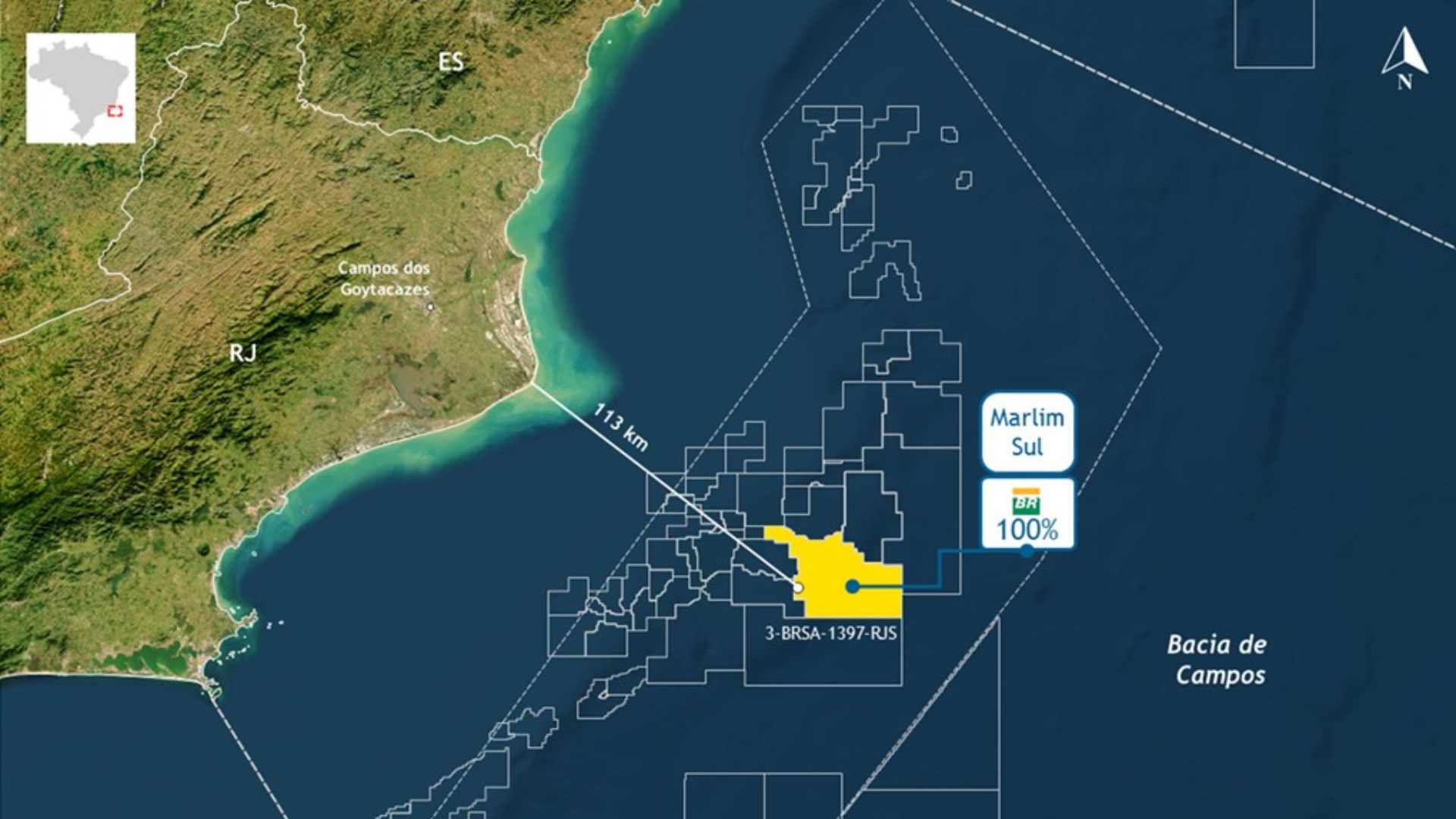
Petrobras finds high-quality oil in the pre-salt at 113 km from RJ and reignites expectations about strategic reserves in the Campos Basin.

-
Ocyan opens registrations for startups focused on innovation in the oil and gas sector and will select projects for Innovation Day with the support of Nexio.


What Are the Two Biggest Challenges for the Creation and Education of Decarbonization Policies in Brazil?
If Brazil will abandon oil, in search of reducing and eventually eliminating carbon emissions, public actions and policies from the sectors involved are crucial.
Decarbonization, however, is a process that faces challenges in creating renewable energies and educating society as a whole.
Fernanda Delgado argued that it is necessary to reduce Brazil’s dependence on oil by taking advantage of natural resources for energy production. She mentioned the Amazon as a significant potential in generating carbon credits. But she noted that the energy transition does not happen overnight and that the values must be consistent with the purchasing power of Brazilians.
Sérgio Araújo followed the same reasoning without opposing it. But he added that the biggest challenge is the costs of new fuel sources. That is, the capacity of Brazilian society to bear the costs and the balance needed to avoid high prices.
Last week, the National Agency of Petroleum (ANP) informed that the maximum reference price for diesel oil in the next auction will be R$8 per liter (about three times the value of fossil diesel from the refinery).
Araújo also raised a question: What to do with the reserves and the contracts that the country has?
“We are a surplus in oil and gas production. We just hit another record with almost 13 million cubic meters of oil (produced). Will we continue to stimulate investments?”, said Sérgio Araújo.

Read Also:
- Gas Market in Brazil Has Success Prospects, Evaluate Experts at Rio Energy
- Solution for Climate Change? Study Proposes Using Sea Water to Extract Billions of Tons of CO2 from the Atmosphere
- Wind Energy Aims to Generate 3.3 Million New Jobs in the Brazilian Renewable Energy Market in the Next Five Years
Should Brazil Abandon Recent Oil Discoveries in Favor of World Neutrality?
With this topic in the midst of the question of whether Brazil should abandon this oil discovery, Marcelo Gauto and Adhemar Freire conflicted their ideas regarding the Repetro investments.
“Brazil should abandon any type of subsidy to fossil fuels. One of them is the Repetro, which we renewed until 2040. We continue to ‘cover the sun with a sieve’. The problem is Brazil’s fiscal structure. We need to rethink it.”, stated Gauto, who also emphasized how against he is concerning price interference in petroleum derivatives. “This type of subsidy should be condemned; abandon any idea of fossil fuel subsidies”.
In Brazil, the average daily oil consumption is 2.2 million barrels.
In contrast, Adhemar Freire defended the continuation of investments in revitalizing ‘mature points’ of oil (fields that have produced more than expected).
“I believe that Repetro should exist. Because it is a way to make projects more attractive with lower and viable costs. I am enthusiastic about renewable energies, but I think that this transition will continue to walk alongside fossil energies towards decarbonization,” commented Freire.
Adhemar Freire is also an advocate for executing investment plans, such as oil and gas block auctions, while these resources still have value and demand.

Counterpoint to the International Energy Agency
This also contrasts with the International Energy Agency, which aims to achieve zero-emission goals by 2050.
Freire believes that maintaining investments can benefit society in terms of jobs and income, as demand may remain attractive for up to the next 30 years.
However, investors must be attentive to market movements. But investments in decarbonization (energy transition) must continue heavily.
What is Repetro?
The pre-salt, with enormous carbon chains, is one of the most important oil discoveries. It is defined as sedimentary rocks formed over 100 million years ago on the floor of the Atlantic Ocean.
Repetro is the customs regime aimed at the export and import of goods related to oil and natural gas exploration and production in Brazil. The regulation is based on the Decree No. 6759.
Should Brazil Worry About Carbon Emission Neutrality More Than Other Economies?
At this moment, the pairs of debaters were reversed. And the conflict of ideals continued to be technical and rich in information.
Considering that the energy transition is a global objective and may involve abandoning oil, Sérgio Araújo said that everyone must be concerned about emission neutrality.
“If we look at Brazil’s history, we will see that in the 70s, (Brazil) was a pioneer with great success on emissions issues. We had biodiesel launched in 2007, and our energy matrix is 44% renewable, while the average for other countries is 14%. So I don’t see a need to worry about other countries,” said Araújo.
Marcelo Gauto disagreed. He claimed that Brazil should indeed worry more than other economies but approaching the challenges as economic opportunities rather than a burden. He referred to it as Brazil’s “moral duty” to lead the depollution process due to natural resources.
“We have a moral obligation to seek emission neutrality even more than other countries, even though they are much more polluting. And we can do this by generating wealth and income. There are many countries that do not have the same natural conditions but will invest heavily,” argued Gauto.

Is Carbon Neutrality by 2050 Viable for Countries Like Brazil?
The carbon neutrality proposal is a global goal to be achieved by 2050. Each country has its own challenges to meet this objective, due to historical economic factors, climatic conditions, geography, and financial resources.
At the center of this issue, concluding the SPE Versus Series, Adhemar Freire and Fernanda Delgado shared their evaluations.
From the beginning to the end of this issue, Freire was skeptical in his remarks and raised questions about abandoning oil:
“Is it possible that in thirty years all fleets of airplanes, ships, and urban mobility transport will be 100% powered by clean energy? We have an unequal society with different demands; I find it unlikely in Brazil for electric vehicles to be implemented as long as there is no technology that provides access to consumers from different social classes,” said Freire.
For Fernanda Delgado, what needs to be consolidated is how viable it can be for Brazil to become an exporter of clean energy solutions. She reflected on the goal of 2050 for the planet to be free from fossil fuels.
“You cannot make respirators or medicine from sun and wind. So there is a temporal, spatial, and physical-chemical gap that will not be compensated for so quickly. 2050 is ‘the day after tomorrow’. Our projects take seven years to yield the first oil. Instead of discussing whether our investments will dwindle or not, we should think about how to profit from our expertise in biofuels. Brazil can be an exporter of solutions,” she concluded.

Investments in Clean Energy Are Set to Rise Again Worldwide in 2021
Investments in the clean energy sector are expected to grow by about 10%, reaching around US$ 1.9 trillion in 2021, after declines due to the pandemic.
However, these investments are still insufficient for the clean energy transition to meet the climate goals of the Paris Agreement. The aim is to keep global warming below 1.5°C.
The estimates come from a report by the International Energy Agency published last Wednesday (2) and discussed by experts in the SPE Versus Series.
According to the World Energy Investment 2021, investments in the electrical sector are expected to increase by about 5% this year, to over US$ 820 billion.
Watch






Seja o primeiro a reagir!