





 Portuguese
  English
  Spanish
  4 min of reading
  0 comments


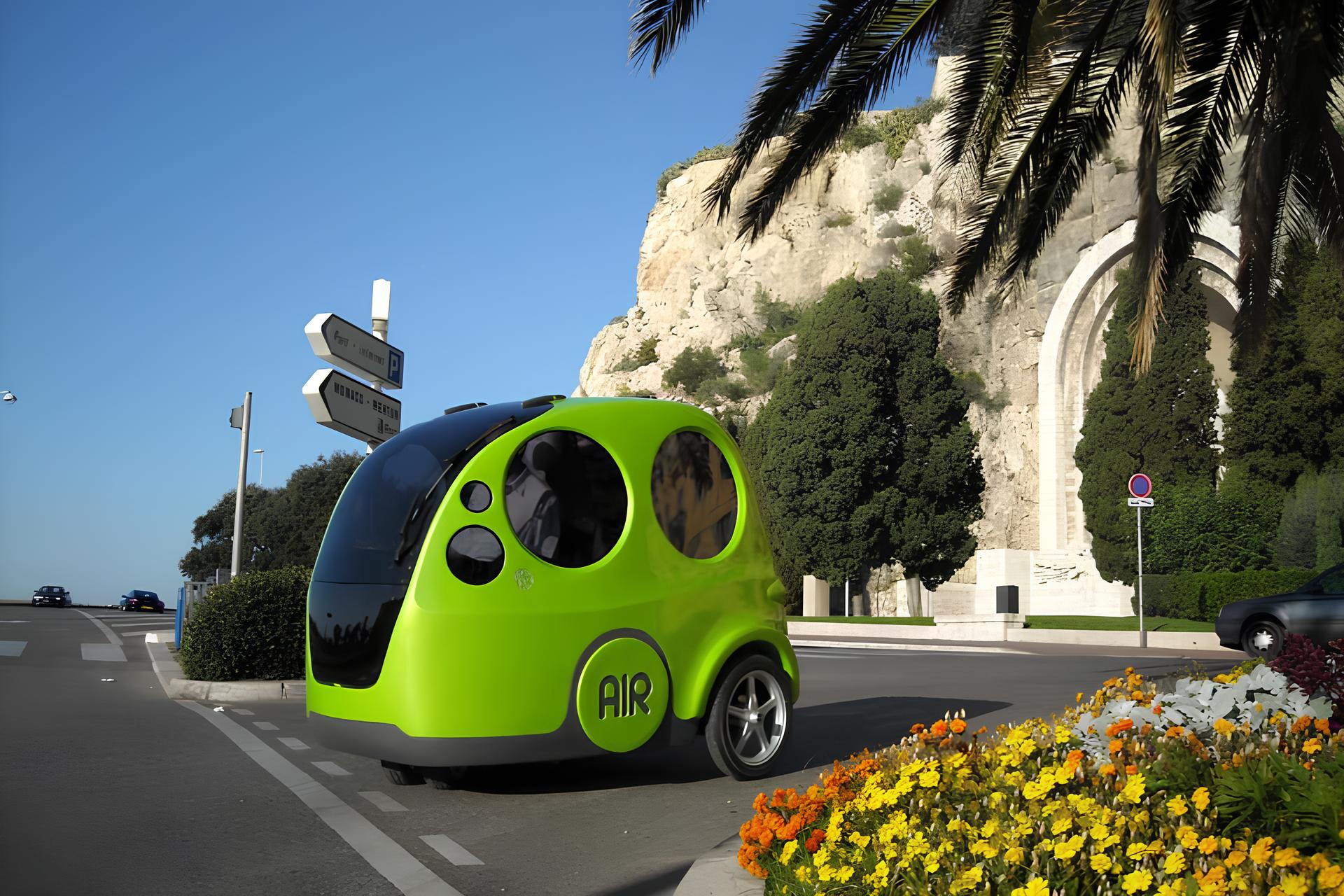
The AIRPod, Compressed Air Car Created by MDI, Promises a Range of 120 Km and a Speed of 80 Km/h Without Using Gasoline or Electricity, but It Has Not Yet Reached Commercial Production.
The dream of a car that does not rely on either fossil fuel or heavy electric batteries gained momentum in the early 2000s, when French engineer Guy Nègre introduced to the world the AIRPod, a small urban vehicle powered exclusively by compressed air. Developed by Motor Development International (MDI), the prototype promised a clean and affordable future, with a range of up to 120 kilometers and a top speed of 80 km/h, emitting not a gram of CO₂.
The idea seemed revolutionary: using the air we breathe as a source of energy. The concept of the AIRPod sparked interest among car manufacturers, environmentalists, and even governments, who saw the technology as a viable alternative to oil and mass electrification. However, even after two decades of announcements and tests, the model has never reached commercial production, becoming one of the most curious and promising projects the automotive market has ever seen.
A Compressed Air Engine
The operation of the AIRPod is simple and ingenious. Instead of burning fuel or relying on lithium-ion batteries, the vehicle uses compressed air tanks at 350 bar (approximately 5,000 psi). When the air is released, it moves the pistons of a small pneumatic engine that converts the pressure into mechanical energy.
-
The car stored for 38 years: when opening the barn door, what appears is breathtaking and looks like a scene from a movie!

-
Fiat works miracles in the Brazilian market, lowers the price of its 0 km hatch to R$ 69,990, reestablishes the model as the cheapest car in the country, and reignites the battle against Kwid and C3.
-
Chevette with cooking gas: How the gas cylinder ends up being used in cars clandestinely and why this makeshift solution can result in leaks, explosions, damaged engines, and seized vehicles.

-
Fiat launches the new 2027 Toro hybrid with 48V, 176 hp, an electric motor of 15.5 hp, a 0.85 kWh battery, up to 7% fuel savings, 8% fewer emissions, and possible exemption from IPVA.


The system is completely clean: the only “exhaust gas” is the air itself, which exits cold and dry. This simplicity makes the vehicle lightweight, cheap to maintain, and extremely efficient for short trips.
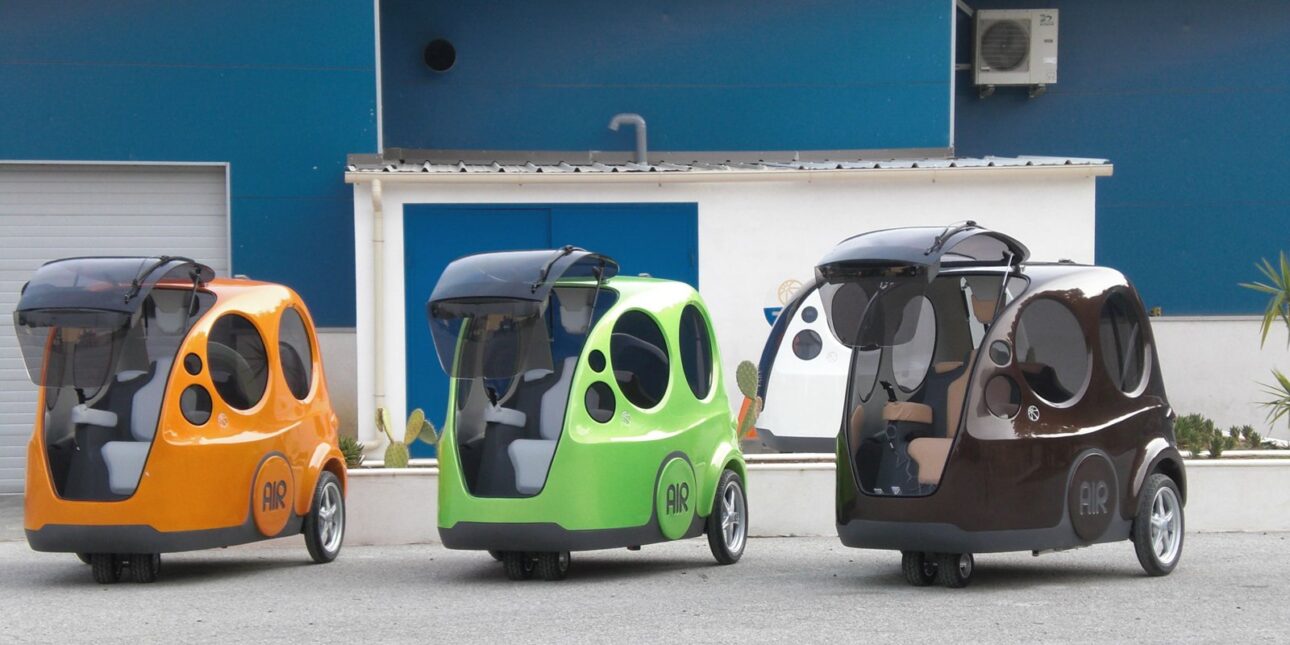
According to MDI, an air tank can be recharged in just 3 to 4 minutes at a compression station or in about 3 hours using a small home compressor plugged into the outlet.
The range claimed by the company is 100 to 120 kilometers, enough for urban travel. And with a speed limited to 80 km/h, the AIRPod would fit into the category of compact urban vehicles, ideal for congested cities and short trips.
A Compact Design for Urban Traffic
The AIRPod was designed as an ultralight three-wheeler, with a fiberglass structure and a futuristic design resembling a capsule. It measures just 2.1 meters long and 1.6 meters wide, and its interior accommodates up to three people, including the driver.


The traditional steering wheel has been replaced with side joysticks, which enhances the modern appeal and reduces the number of mechanical components. The cabin is fully enclosed, and the digital dashboard displays information such as air pressure, range, and speed.
The total weight of the vehicle is less than 300 kg, contributing to its energy efficiency and ease of movement.
Partnership with Tata Motors and Unfulfilled Promises
The project gained worldwide attention in 2007, when the Indian giant Tata Motors entered into a partnership with MDI to develop the technology and adapt it for mass production.
The expectation was to launch the AIRPod commercially in India and Europe between 2012 and 2015, as part of a line of eco-friendly urban vehicles.
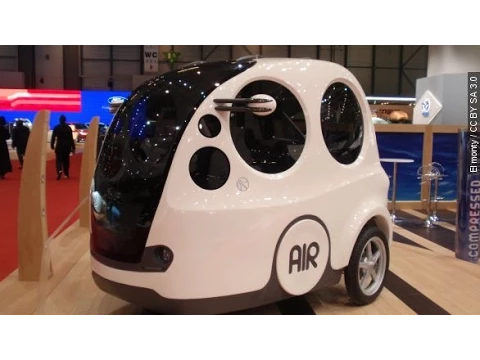
The idea excited the market: a car that could be fueled with compressed air, costing a fraction of an electric vehicle and without the need for expensive batteries. However, technical difficulties soon became evident.
Problems related to energy efficiency, tank durability, and compression costs repeatedly delayed the launch.
In 2018, reports from IEEE Spectrum and Wikipedia confirmed that no AIRPod had been delivered to the public, and that the project remained in experimental development. Even with new prototypes presented by MDI, commercial production never started.
A Concept Still Alive
Despite the disappointments, compressed air technology is still being studied by companies and universities. The founder of MDI, Guy Nègre, who passed away in 2016, believed that the biggest obstacle was economic, not technical. Producing tanks capable of safely and affordably storing air at high pressure is still a challenge, but the idea remains alive.
In recent years, MDI has resumed the project in partnership with Air Future Group, which seeks to adapt the concept to new materials and hybrid systems, combining compressed air and electric motors. The goal is to launch a new generation of the AIRPod, more efficient and with expanded range, by the end of the decade.
If this plan finally comes to fruition, the air-powered car could become a real alternative to electric mobility — especially in developing countries, where the cost of charging infrastructure is a barrier.
A Promise That Still Captivates
Even without reaching the streets, the AIRPod remains a symbol of the search for creative and sustainable solutions in the automotive sector. Its appeal lies precisely in its simplicity: a lightweight, inexpensive vehicle that literally uses air as fuel.
Although it has never been launched commercially, it represents an important chapter in the history of automotive innovation — a reminder that the future can be written in many ways, and that even the air we breathe can one day move the world.









-

-

-

6 pessoas reagiram a isso.