





 English
  Francês
  Alemão
  Italiano
  Japonês
  Norueguês
  Portuguese
  Spanish
  3 min of reading
  0 comments


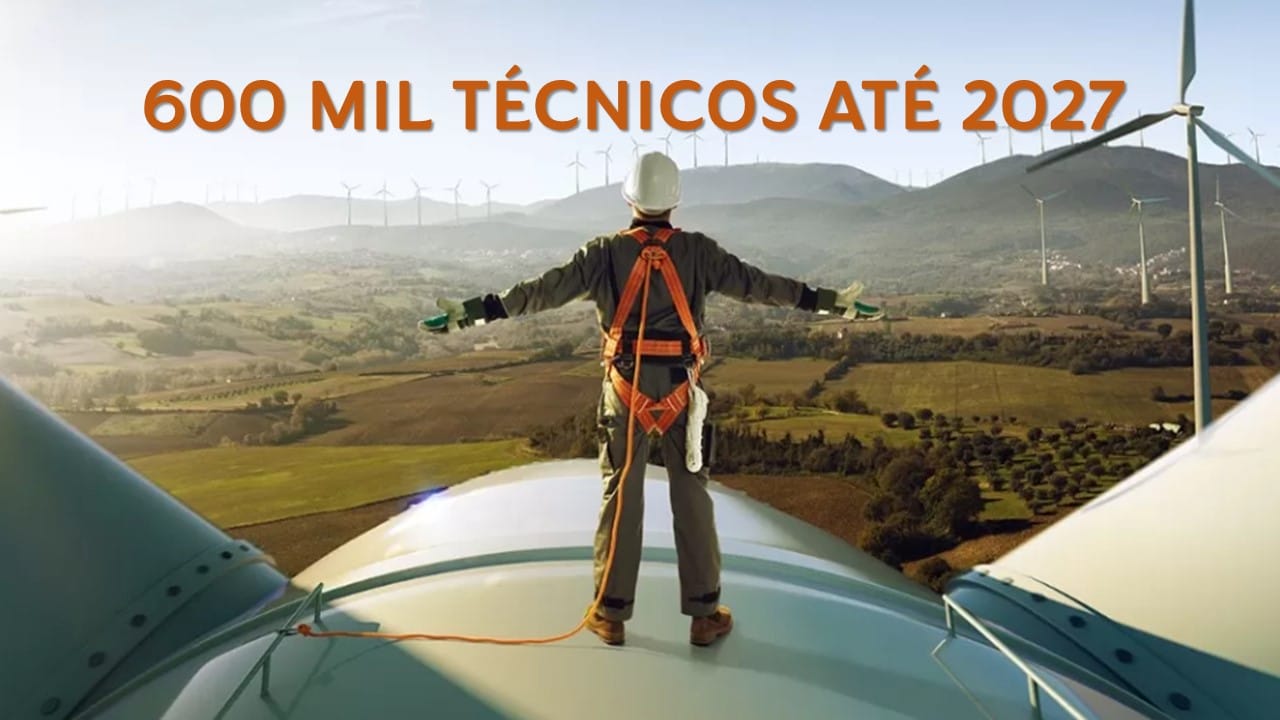
The Challenge of the Wind Industry: Training 600 Thousand Technicians by 2027
The wind industry is one of the fastest-growing sectors in the world, driven by the search for clean and sustainable energy sources. However, this exponential growth brings a significant challenge: the need for 600 thousand qualified technicians by 2027. Below, learn about the growing demand for professionals in the wind sector and the implications for training and the job market.
Wind Market on the Rise: The Awakening of the Industry
The annual “Wind Workforce Outlook,” conducted by GWEC and Global Wind Organisation (GWO), projects that the wind industry will require more than 240,000 new hires by 2027. However, this number is only partially aligned with the real global need. According to the report, the sector will need an impressive 600 thousand technicians to build, install, operate, and maintain wind projects worldwide by 2027.
This scenario offers exceptional opportunities for local and national governments, which can leverage the expansion of renewable energy, focusing on wind energy, to direct investments into specialized workforce training, according to the energy portal. The energy transition depends on highly qualified technicians to drive the sustainable growth of the industry.
-
Rio Grande do Sul accelerates energy transition: State invests in renewable technologies and consolidates decarbonization strategies and pathways to attract billions in new industrial investments.

-
With 160,000 m² of collectors, an area larger than 20 football fields, Silkeborg, in Denmark, hosts a solar thermal plant that heats 19,500 homes and could become the largest solar heating plant in the world.

-
A study reveals the expansion of renewable energy procurement in Brazil and shows how companies are taking advantage of opportunities to reduce expenses, ensure energy efficiency, and strengthen strategic environmental commitments.

-
Mato Grosso do Sul excels in the sugar-energy sector: the state reaches a milestone of 22 operating mills and accelerates the production of clean energy in MS with a focus on sustainability.


The Numbers and Projections of the Wind Industry
The Global Wind Workforce Outlook 2023-2027 highlights the need for 574 thousand technicians for construction, installation, operation, and maintenance. However, about 43% of this number will represent new technicians in the industry. They will need to undergo a rigorous training and qualification process or migrate from other industrial sectors, such as oil or offshore gas.
The explosive growth of the sector is remarkable, with an expected jump from 78 GW in 2022 to 155 GW in 2027, surpassing 1,500 GW of wind capacity worldwide. The growth of the offshore wind sector will increase the demand for technicians by 17%.
The Challenge of Renewal and the Ongoing Need
Growth is not the only challenge the wind industry faces. With a technician attrition rate of 6% per year, more than 159 thousand new professionals need to be hired between 2023-2027 to replace those who will naturally leave the sector. This will add another 85 thousand technicians to meet the increased wind capacity.
These projections point to numerous opportunities for integrating talent from full-time education and other sectors, including the conventional. The wind industry must adapt quickly to ensure that its workforce needs are met.
The Future of the Wind Industry and the Energy Transition
The need to hire 243 thousand new technicians in the next five years highlights the urgency for faster growth in technical training and safety measures. This evolution is crucial to filling the projected gaps in the supply chain and supporting the energy transition away from fossil fuels.
The Global Wind Workforce Outlook 2023-2027 Identifies the Importance of Wind Energy Both Onshore and Offshore and the Need for Qualified Labor in Ten Countries, Including:
- Australia
- Brazil
- China
- Colombia
- EgyptIndia
- Japan
- Kenya
- South Korea
- United States
The growth of professional needs in these countries is evident, but it also requires a strong culture of health and safety, along with investments in technical training. This is essential to ensure that the wind industry continues to play a crucial role in achieving climate and energy goals, contributing to modern and sustainable economies worldwide.






Seja o primeiro a reagir!