





 Portuguese
  English
  Spanish
  4 min of reading
  4 comments


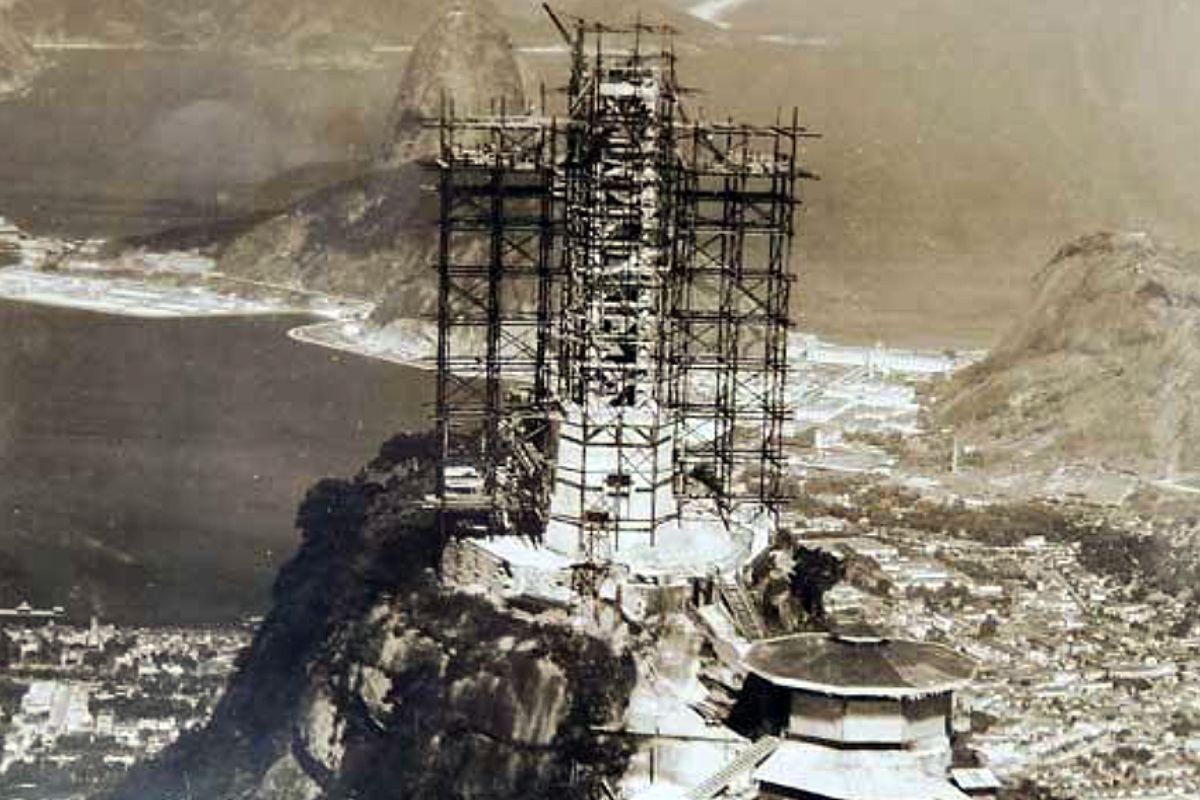

With 30 Meters in Height and Arms Extending 28 Meters, This Concrete and Soapstone Sculpture Was Erected Over 700 Meters Above Sea Level. One of the 7 Wonders of the Modern World Is in Brazil.
At the top of Morro do Corcovado, over 700 meters above sea level, stands one of the most powerful symbols of Brazil and Christian faith in the world: the Christ the Redeemer. With arms open in a welcoming gesture, this colossal sculpture represents not only a religious icon but also a feat of modern engineering and a grand expression of 20th-century monumental art.
Since 2007, Christ the Redeemer has officially been on the list of the New Seven Wonders of the World, after being elected in a global vote organized by the Swiss foundation New7Wonders. Today, the monument receives millions of visitors every year and remains the epicenter of tourism in Brazil, symbolizing hope, peace, and hospitality.

A Dream Fueled by Faith and Engineering
The idea of building a religious statue on top of Corcovado emerged in the early 20th century, but it only began to take shape in 1921, when the Catholic Circle of Rio de Janeiro proposed the project as part of a campaign to reaffirm Christian values in the country. The winning project was by Brazilian engineer Heitor da Silva Costa.
-
He started running at 66 years old, broke records at 82, and is now a subject of study for having a metabolic age comparable to that of a 20-year-old, in a case that is intriguing scientists and inspiring the world.

-
Oldest tree on the planet reappears after 130 years of searches: Wattieza, 385 million years old, was 10 meters tall and had no leaves or seeds; Gilboa fossils in New York solved the mystery in 2007.

-
A 48-square-meter house assembled in hours with 4,000 bricks made of recycled plastic that does not absorb moisture, has natural thermal insulation, and costs less than 90,000 reais in a complete kit.

-
Luciano Hang revealed that Havan’s air fleet has already accumulated more than 20,000 landings, 10,000 flight hours, and 6 million kilometers traveled, and he says that without the planes, the company would never have grown so quickly.

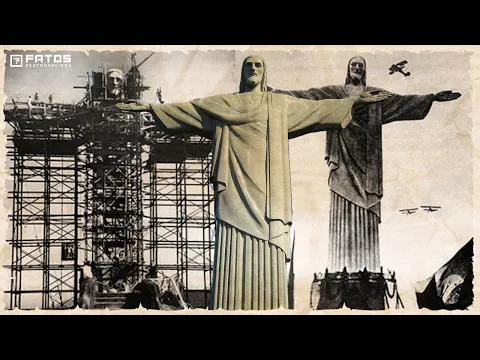
Construction officially began in 1926 and lasted for five years. The sculpture was shaped by French artist Paul Landowski, while the structural system was developed by engineer Albert Caquot, one of the brightest of his time. The face of Christ was sculpted by Romanian artist Gheorghe Leonida.
Constructed with reinforced concrete and clad in soapstone, a material resistant to tropical weather conditions, the monument stands 30 meters tall, with a pedestal of 8 meters, and its outstretched arms extend 28 meters wide. In total, the structure weighs about 1,145 tons.
Challenges of Building at the Top of Corcovado
Carrying out a work of this magnitude at the top of a mountain surrounded by the Atlantic Forest was a huge challenge for the engineering of the time. All materials had to be transported by train along the historic Corcovado Train, which still takes tourists to the viewpoint today.
The rugged terrain, unstable weather, and lack of modern equipment required creative solutions from engineers and workers. The use of reinforced concrete in a monumental sculpture was a novelty, and its durability is impressive even today: Christ has withstood the elements for over 90 years without serious structural damage.

International Recognition and Restorations
In 2006, the Vatican declared Christ the Redeemer as the official Catholic sanctuary, making it the highest pilgrimage site in the world. The following year, in 2007, it was elected as one of the New Seven Wonders of the World, alongside works such as the Great Wall of China and Machu Picchu.
The monument has undergone significant restorations over the years, especially in 2010 and 2021. The works included cleaning of the cladding, repairs of cracks, and modernization of the lighting with LED technology. The last restoration celebrated the 90th anniversary of Christ, reaffirming its value as a cultural heritage of Brazil and an icon of national identity.
Cultural and Tourist Impact
Christ the Redeemer is one of the most visited tourist spots in Brazil, receiving over 2 million tourists a year, according to the Brazilian Institute of Tourism (Embratur). Its image is widely reproduced in films, postcards, video games, and advertising campaigns, establishing itself as a visual symbol of the country.
In addition to tourism, the monument serves as a stage for religious celebrations, cultural events, and commemorative dates. In 2020, during the COVID-19 pandemic, Christ was illuminated with flags from affected countries and messages of hope, reinforcing its role as a symbol of global unity and solidarity.
An Eternal Wonder
Since its inauguration on October 12, 1931, Christ the Redeemer remains a testament to the union of art, faith, and technology. More than a landmark of the Carioca landscape, it represents the spirit of the Brazilian people and their ability to convey a message of peace, resilience, and welcome to the world.
Its imposing silhouette, between the Tijuca Forest and the Atlantic sky, reminds the world that the greatness of a nation is measured not only by its resources but also by its symbols and its works that transcend generations.









O autor se esqueceu de citar Carlos Oswald, artista ítalo-brasileiro, que foi quem desenhou a figura do Cristo, do Trono de Fátima, em Petrópolis, dos vitrais da catedral de Petrópolis, além de várias outras obras de arte da igreja da Lagoa e na PUC do Rio de Janeiro.
Meu avô Amândio Soares foi chefe da estação do corcovado nesta época e foi responsável por toda a logística de levar as peças só Cristo para a montagem e escreveu um livro chamado Rio Maravilhoso onde conta a história sobre o Cristo e a minha mãe Alzira Soares nasceu na Estação do Corcovado.
isso nunca vai ser Jesus cristo isto ai é uma pedra imagem de escultura que agradar a Deus? afasta da idolatria de todo pecado e creiam no evangelho de Jesus Cristo, vocês são adoradores de pedra e nunca de cristo
Crentes continuam adulterando, desviando dizimos e matando. Deus certamente vai cobrar um preco. Sao santos de fachada. Fariseus enganadores.