





 Portuguese
  English
  Spanish
  4 min of reading
  0 comments



Record Deficit of State-Owned Companies Surpasses R$ 13.7 Billion and Triggers Alert in Government, Increasing Pressure for Urgent Reforms.
Record Deficit of State-Owned Companies Under Lula 3 Extends Fiscal Alert and Pressures Government for Restructuring
What is happening with federal state-owned companies? Those monitoring the country’s fiscal situation received a new warning sign after the Central Bank revealed this week that public companies accumulated a deficit of R$ 6.35 billion between January and October 2025.
The data, released in Brasília, shows a 42.7% increase compared to the previous year and places the government in front of a crisis that demands quick responses.
The shortfall is not isolated. Since the beginning of Lula’s third term, the deficit of state-owned companies has already reached R$ 13.7 billion, surpassing — in less than three years — the total losses recorded during the Lula 1, Lula 2, Dilma 1, and Dilma 2 administrations, which amounted to R$ 10.2 billion over more than a decade.
-
Larger than entire cities in Brazil: BYD is building a 4.6 km² complex in Bahia with a capacity for 600,000 vehicles per year, but the discovery of 163 workers in conditions analogous to slavery has shaken the entire project.

-
With an investment of R$ 612 million, a capacity to process 1.2 million liters of milk per day, Piracanjuba inaugurates a mega cheese factory that increases national production, reduces dependence on imports, and repositions Brazil on the global dairy map.

-
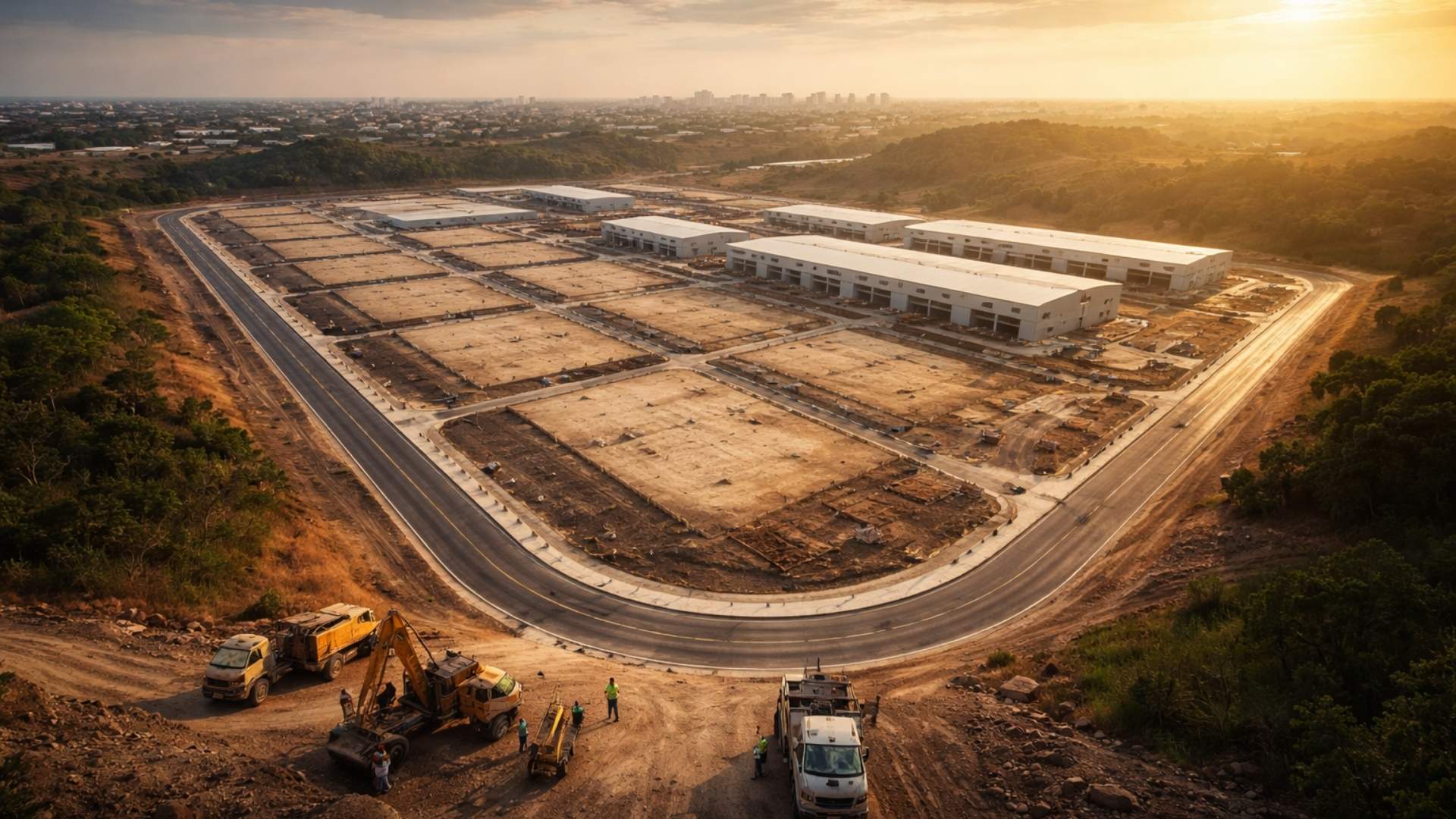
Brazilian city gains industrial hub for 85 companies that is equivalent to 55 football fields.
-
Peugeot and Citroën factory in Argentina cuts production by half and opens a layoff program for more than 2,000 employees after Brazil drastically reduced purchases of Argentine vehicles.


The figures refer to state-owned companies dependent on the Treasury, such as Correios, Serpro, Dataprev, Infraero, and Casa da Moeda, but exclude Petrobras, Eletrobras, and public banks. Nevertheless, the result has sparked an urgent debate about financial sustainability and sector reform.
Correios Faces Worst Crisis in History and Pulls State-Owned Companies Down
The most severe case is that of the Correios, which are facing the greatest crisis in their existence. In the first half of 2025 alone, the state-owned enterprise reported a loss of R$ 4.37 billion. The projection for the year exceeds R$ 6 billion, representing an unprecedented impact on public accounts.
To try to contain the collapse, the company’s board approved a loan of R$ 20 billion, still pending approval from the Treasury. The operation could generate R$ 2 billion annually in interest, further increasing the burden on public finances.
The restructuring plan includes closing branches, selling properties, and a new voluntary dismissal program.
Experts remind us that the problem is structural: Correios has lost market share to private logistics companies, experienced a drastic decline in revenue from mail services, and accumulated years of underinvestment.
Crisis of State-Owned Companies Exposes Fragilities of Current Model
On the other hand, economists argue that the crisis goes far beyond Correios. According to them, the negative result reveals management failures, low productivity, and a system that no longer keeps pace with market transformations.
The 2026 Budget Guidelines Law (LDO) included a rule that flexibilizes the allowed deficit, accepting shortfalls of up to R$ 10 billion next year. For specialists, this change acts as an admission of fiscal fragility, reinforcing the difficulty of rebalancing the sector without deep reforms.
They argue that the government needs to define which state-owned companies should be privatized, which should receive management adjustments, and which truly require subsidies, but with complete transparency. Otherwise, the cost of inefficiency will continue to fall on the Treasury — and, indirectly, on the population.
Government Responds and Highlights Positive Economic Indicators
Despite the increasing pressure on state-owned companies, the Lula government has emphasized positive economic data. The Planalto Palace claims that Lula 3 is expected to register the 3rd highest average GDP growth since the Real Plan, along with the lowest average inflation in the historical series.
The government also highlights that:
- Unemployment is at the lowest level in history
- 4.8 million formal jobs have been created
- Average income reached a record
- Poverty and extreme poverty have fallen to the lowest levels
- Inequality showed unprecedented decline
These indicators, according to the Planalto, show that the country is experiencing a cycle of economic expansion, even though accompanied by specific challenges — such as the financial imbalance of state-owned companies.
What to Expect Going Forward
Experts warn that the government will need to act quickly to prevent the deficit of state-owned companies from putting even more pressure on fiscal matters in 2026. Without a clear strategy, the shortfall is likely to grow at a speed that exceeds the capacity for correction.
Moreover, the need for investments in strategic companies like Serpro and Dataprev indicates that the discussion on modernization, governance, and operational efficiency will be inevitable next year.
In the meantime, the debate around privatizations, internal restructuring, and renegotiation of liabilities returns to the forefront of government and Congress decisions.








-

-

-

-

5 pessoas reagiram a isso.