





 Portuguese
  English
  Spanish
  5 min of reading
  1 comment


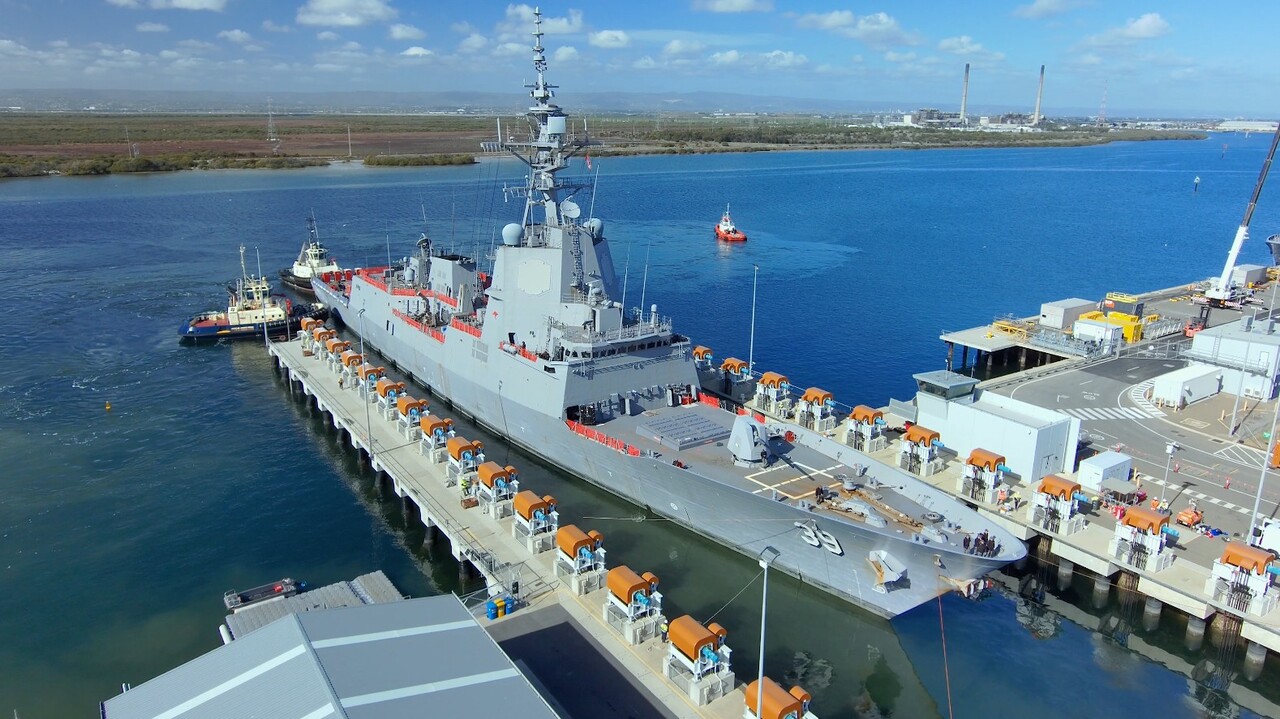


Hobart Class Destroyers Equipped With Aegis System, AESA SPY-1D(V) Radar, and 48 Missiles Put Australia Among the Navies With the Most Advanced Naval Air Defense in the World.
The entry into service of the Hobart Class destroyers marked a profound transformation in Australia’s naval capability. Equipped with long-range sensors, advanced combat systems, and modern air defense missiles, these ships placed the country among a select group of navies capable of operating integrated next-generation naval air defense systems. Built for the Royal Australian Navy, the Hobart destroyers are designed to protect entire fleets against aerial threats including fighter jets, anti-ship missiles, and other modern threats. The design combines advanced naval engineering with the Aegis combat system, a technology also used by navies such as those of the United States, Japan, and South Korea.
Weighing around 7,000 tons, with radars capable of tracking hundreds of targets simultaneously and a vertical launch system for guided missiles, these ships represent a significant technological leap in Australian maritime defense.
According to data from the Royal Australian Navy and the Australian Department of Defence, the Hobart Class was conceived to ensure superiority in naval air defense and operate as a protection core for allied ship groups in international operations.
-
Few people know, but “mega burst” attacks from the A-10 in the Middle East are intriguing analysts and even experienced former pilots of the U.S. Air Force.

-
Manufactured in Brazil and exported to Saudi Arabia and Malaysia, the ASTROS system is renamed as Fogos in 2026, gaining AI, cruise missiles with a range of 300 km, and air defense costing R$ 3.4 billion, transforming a launcher from the 1980s into the most ambitious multidomain platform in Latin America.
-
The largest military aircraft ever produced in Brazil, the KC-390 Millennium can carry up to 26 tons, refuel fighter jets in flight, and has already been exported to Europe and Asia, placing the country in the select group that designs and sells large military aircraft worldwide.

-
FAB loses Hermes 900 drone during multinational exercise in Mato Grosso do Sul and is left with only one active aircraft, raising concerns about operational fragility and strategic response capability.

The Project That Transformed Australian Naval Capability
The creation of the Hobart Class arose from Australia’s need to modernize its fleet and replace older destroyers that no longer met the demands of contemporary naval warfare. The program was named the Air Warfare Destroyer Program (AWD), developed to create ships specialized in fleet air defense.
The project was based on the design of the Álvaro de Bazán Class from the Spanish Navy, considered one of the most efficient platforms for integrating the Aegis system. Construction took place at Australian shipyards with the involvement of various international companies. Among the main companies involved were:
- Navantia from Spain
- BAE Systems
- ASC Shipbuilding
The goal was to develop a modern ship capable of operating alongside allied naval forces and integrating high-complexity air defense systems. The result was a destroyer designed to confront the most advanced threats of modern naval warfare.
Dimensions and Ocean Operating Capacity
The Hobart Class destroyers have dimensions that allow them to operate on long missions in open ocean. Among their main features are:
- approximate displacement of 7,000 tons
- length of about 147 meters
- approximate width of 18.6 meters
- autonomy exceeding 5,000 nautical miles
The propulsion is based on a combined gas turbine and diesel engine system, allowing speeds over 28 knots, equivalent to more than 50 km/h at sea. This configuration allows the ship to keep up with task groups comprised of aircraft carriers or large amphibious ships.

Moreover, each destroyer has the capacity to operate naval helicopters, extending surveillance and anti-submarine warfare reach. These features make the Hobart versatile platforms capable of operating in various military missions.
The Aegis Naval Warfare System
One of the most important elements of the Hobart Class is the Aegis combat system, considered one of the most sophisticated naval defense systems ever developed.
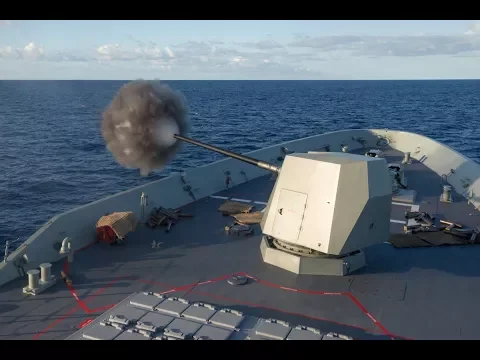

The Aegis integrates sensors, radars, and weaponry into a single automated combat system.
It enables the ship to:
- detect threats at great distances
- track multiple targets simultaneously
- coordinate intercepts with guided missiles
The heart of this system is the SPY-1D(V) radar, an electronically scanned radar capable of monitoring airspace and maritime space in real-time. This radar can track hundreds of targets simultaneously, including aircraft and missiles. This capability transforms the destroyer into a true command center for air defense at sea.
Vertical Launch System for Missiles
Another essential component of the Hobart Class is the Mk 41 Vertical Launch System (VLS). The system consists of 48 vertical launch cells, capable of firing different types of missiles.
Among the weaponry used are:
- SM-2 Standard Missile, used for long-range air defense
- ESSM (Evolved Sea Sparrow Missile), intended for defense against anti-ship missiles
- missiles for anti-submarine warfare
The vertical launch allows missiles to be fired quickly in any direction without the need to maneuver the ship. This technology is considered a modern standard in air defense destroyers. Combined with the Aegis radar, the system allows interception of aerial threats at great distances.
Integrated Sensors and Combat Systems
In addition to the main radar, the Hobart destroyers feature a series of advanced sensors and electronic systems. Among them are:
- navigation and surface surveillance radars
- sonars for submarine detection
- electronic warfare systems
- naval guns and close-in weaponry
One of the main surface armaments is the 127 mm naval gun, capable of hitting maritime and land targets. There are also automated close-in defense systems used to intercept missiles or hostile vessels.
These features enable the ship to face threats coming from the air, the surface, or underwater.
The Ships of the Hobart Class
The Royal Australian Navy currently operates three Hobart Class destroyers.
They are:
- HMAS Hobart
- HMAS Brisbane
- HMAS Sydney
Each of these ships represents one of the most advanced platforms ever built for the Australian Navy. Since their entry into service, they have played a central role in the country’s naval operations.
International Operations and Military Cooperation
The Hobart destroyers are also designed to operate alongside allied naval forces. Australia maintains close military cooperation with countries such as:
- United States
- Japan
- South Korea
- United Kingdom
As the Aegis system is widely used by allied navies, the Australian ships can integrate into multinational air defense networks. This allows for the sharing of radar data and coordination of threat interceptions in real-time. This interoperability is considered an essential element of modern defense strategies.
A New Level for the Australian Navy
The introduction of the Hobart Class destroyers placed Australia in a select group of countries with advanced naval air defense capability.
With radars capable of tracking hundreds of targets, vertical launch systems, and integration with international military networks, these ships represent one of the most important projects in the naval history of the country.
In addition to enhancing Australia’s defensive capacity, the Hobart’s also strengthen the country’s strategic role in international operations in the Indo-Pacific.
With advanced sensors, integrated combat systems, and modern armaments, the Hobart Class destroyers have become one of the main naval defense platforms in the region.









Mais um país que sempre esteve do lado certo. Parabéns Austrália. Continue no caminho do bem.