





 Portuguese
  English
  Spanish
  4 min of reading
  0 comments


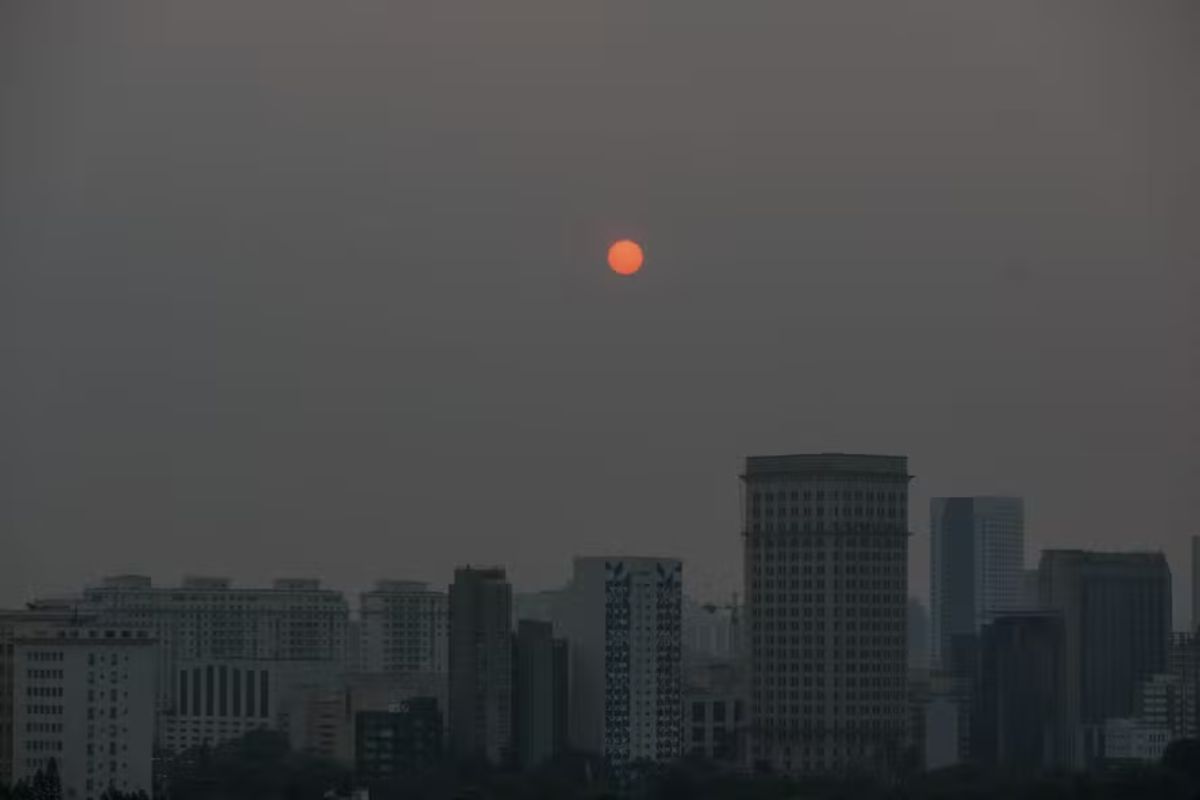
On August 19, 2019, a rare combination of cold fronts and smoke from fires in the Amazon caused the day the sky in São Paulo darkened, an event that still intrigues and serves as an environmental alert.
It was three o’clock in the afternoon on a Monday, August 19, 2019, when an astonishing phenomenon engulfed Brazil’s largest city. The day suddenly turned into night. The sky in São Paulo took on a sepia color and plunged into such deep darkness that streetlights turned on automatically, as if the sun had disappeared from the sky. It was not an eclipse, nor a common storm.
What millions of São Paulo residents witnessed was an extreme and almost unbelievable meteorological event, the origins of which were over 2,700 kilometers away. It was the smoke from massive wildfires in the Amazon and Pantanal, which, carried by winds at altitude, encountered a cold front and plummeted over the metropolis, leaving a trail of perplexity and a rain of black soot.
The Perfect Storm: How Did The Smoke Travel 2,700 Km To São Paulo?
The arrival of Amazon smoke in São Paulo was not a coincidence, but rather a “perfect storm” of meteorological conditions. The lightweight particulate matter generated by the fires in states like Rondônia and Acre rose to the upper atmosphere. There, it encountered strong wind currents, commonly known as “flying rivers,” which act as aerial corridors transporting moisture and, in this case, pollution across the continent.
-
NASA published a photo taken from space of a mountain range in the interior of Goiás, and the whole world wanted to know what it was: beneath it lies the largest hot water spring on the planet, with temperatures reaching 70 degrees in the middle of the Cerrado.
-
A thermal block costing only R$ 0.40 catches attention by reducing heat by up to 80% using recycled styrofoam, a common kitchen ingredient, and a manual technique capable of producing 50 blocks from a single bag of cement.

-
The item in the house that consumes the most water is not in the kitchen; it is in the smallest room of the house and can account for up to 30% of the expenditure on its own.

-
While Argentina relies on the USA to provide communications, data transmission, and electronic warfare for the F-16, Brazil is accelerating with the Gripen and integrating the Link-BR2, a national technology that strengthens air defense.

For days, this plume of smoke traveled southeast. The decisive factor, according to meteorologists from Climatempo at the time, was the arrival of a powerful cold front coming from the south of the country. This mass of cold, dense air acted as a barrier, forcing the warm smoke-laden air to descend abruptly over the São Paulo metropolitan region. The combination of the smoke’s density with the heavy clouds from the cold front dramatically blocked sunlight.
What Did The INPE Satellites And Meteorologists Say?
The confirmation that the darkness was caused by smoke came quickly from technology. Satellite images from the National Institute for Space Research (INPE) were categorical, showing a massive corridor of smoke extending from the northern part of the country to the state of São Paulo. It was clearly visible how the plume was being diverted by the winds and channeled to the southeast.
Meteorological models had already predicted the meeting of air masses, but the intensity of the darkening surprised everyone. The explanation for the total darkness lies in the composition of the cloud. The fine particulate matter of the smoke, the soot, served as “condensation nuclei.” This means that the water droplets from the cold front clung to these smoke particles, creating a cloud much denser and darker than a normal rain cloud, which enhanced the blockage of sunlight.
What Was The Black Rain? The Chemical Analysis Of The Water That Fell From The Sky
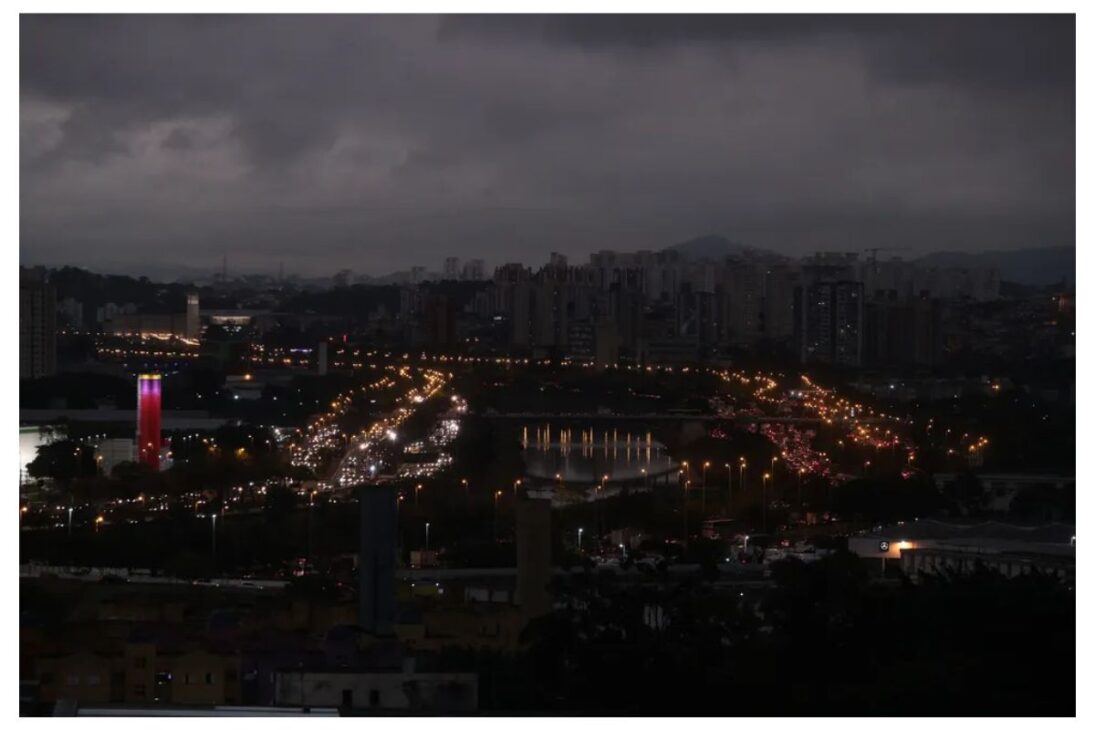
For many, the most concrete and frightening evidence of the phenomenon came in the form of black rain São Paulo 2019. Residents of various areas of the city and coastline reported a dark precipitation, with an oily appearance and smell of smoke, that stained cars, sidewalks, and clothes.
Scientific confirmation came from laboratory analyses. Researchers from the Institute of Chemistry at the University of São Paulo (USP) collected samples of this water and the result was conclusive. The reports detected the presence of retene, a chemical compound that is considered a specific geochemical marker of biomass burning, such as wood and vegetation. This was the irrefutable proof that chemically linked the rain that fell in São Paulo to the fires occurring in the Amazon rainforest.
The Consequences And What We Learned From The Day That Turned Into Night
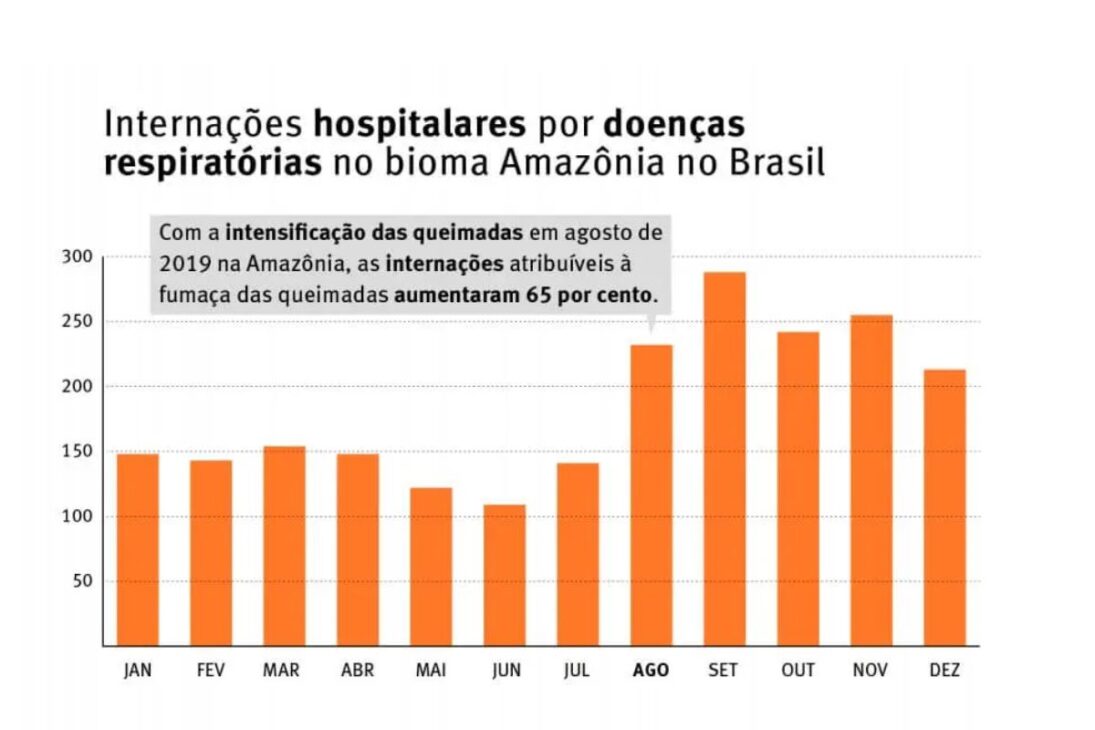
Although it lasted only a few hours, the phenomenon of the day that turned into night became one of the most powerful environmental alerts in Brazil’s recent history. It visibly and undeniably demonstrated how wildfires in the Amazon and their consequences are not an isolated problem and distant, confined to the northern region.
The event proved that environmental degradation in one part of the country has the power to directly impact air quality, climate, and the lives of tens of millions of people in the largest urban centers. The dark sky of São Paulo served as a grim reminder of the interconnectedness of Brazilian ecosystems and the urgency of effective conservation policies for the largest tropical rainforest in the world.
Do you remember that day? Where were you when the sky darkened? Share your memory and your opinion about this landmark event in the comments!









Seja o primeiro a reagir!