





 Portuguese
  English
  Spanish
  4 min of reading
  5 comments


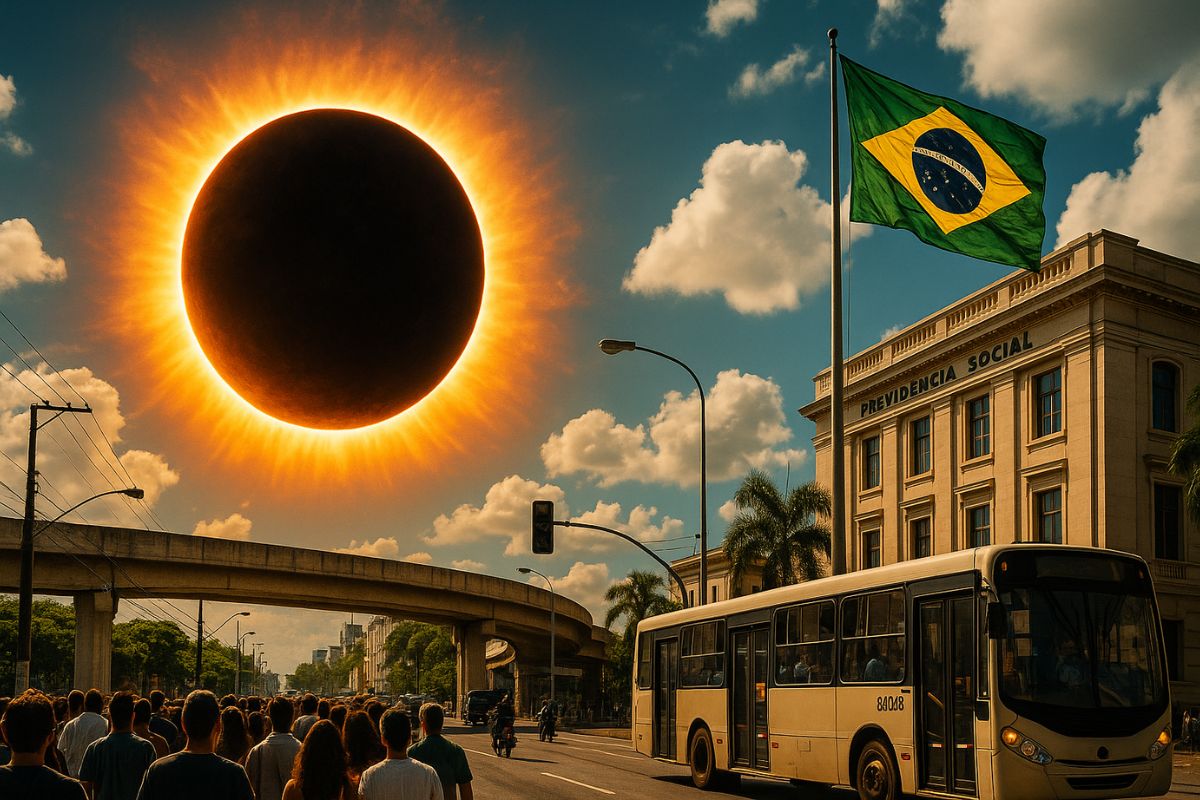


Historical Eclipse Will Have The Longest Duration Ever Recorded And Can Be Observed From Brazil, With A “Night In Broad Daylight”.
A historical eclipse is already marked on the astronomy calendar: in 2186, the perfect alignment between the Sun, Moon, and Earth is expected to plunge the sky into total darkness for 7 minutes and 29 seconds, a rare feat for a total solar eclipse. For Brazil, the expectation is for privileged observation, with areas of the country experiencing totality and others witnessing the partial version of the phenomenon.
More than a spectacle, the event promises to open new windows for studying the solar corona and the dynamics of our star, thanks to the extended darkness. According to Xataka, the longer the totality, the more data can be gathered from a single eclipse, which favors fine measurements of temperature, structure, and winds in the solar upper atmosphere.
What Makes This Eclipse “The Longest” Of The Modern Era
The rarity of the historical eclipse lies in the combination of orbital factors that maximize the duration of the Moon’s shadow over the Earth.
-
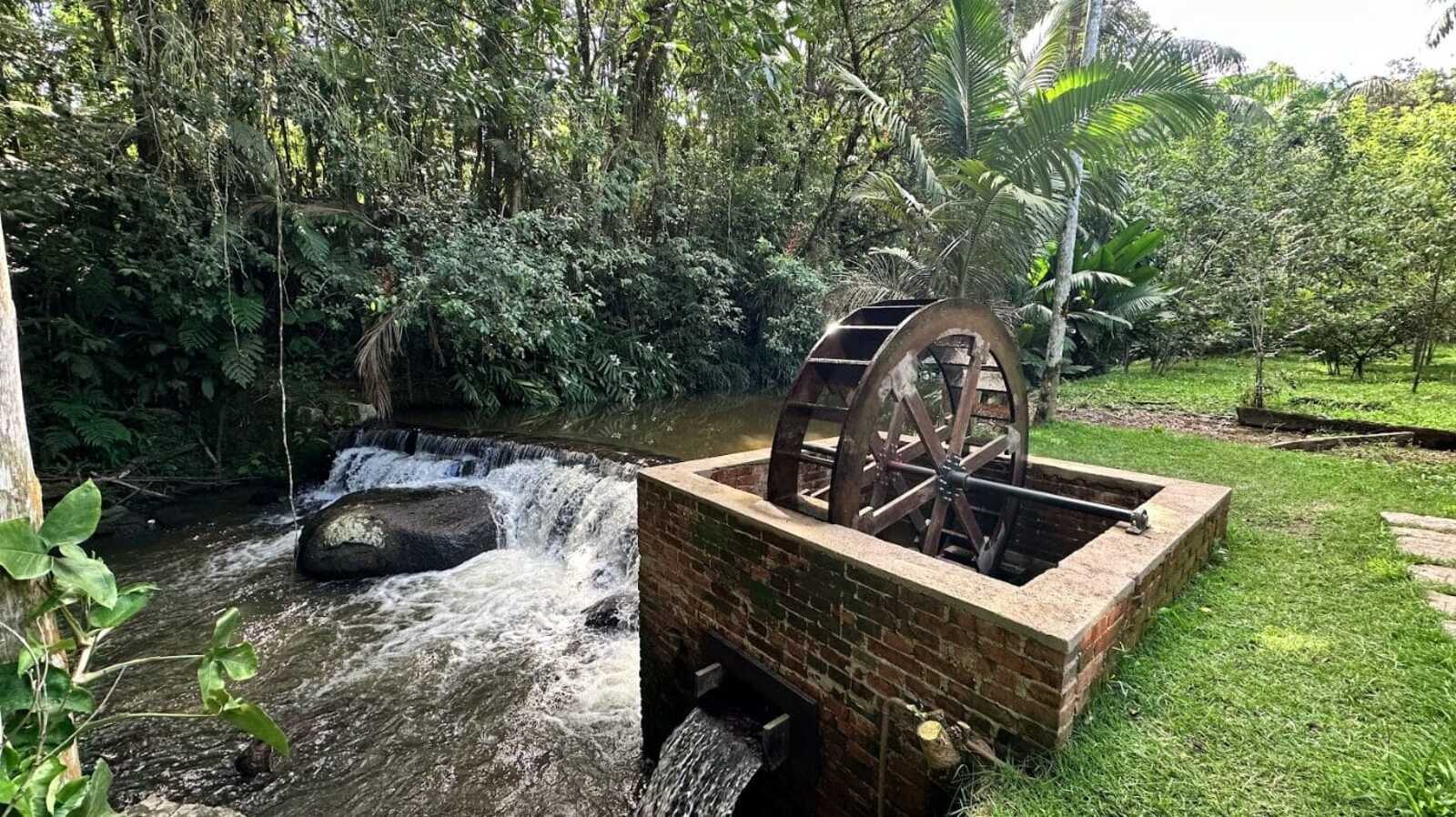
While restoring a historic mansion from 1910, a brick structure with an old turbine that generated energy from the Rio do Testo emerged, along with a hidden door and a rare floor concealed under layers of wax.
-
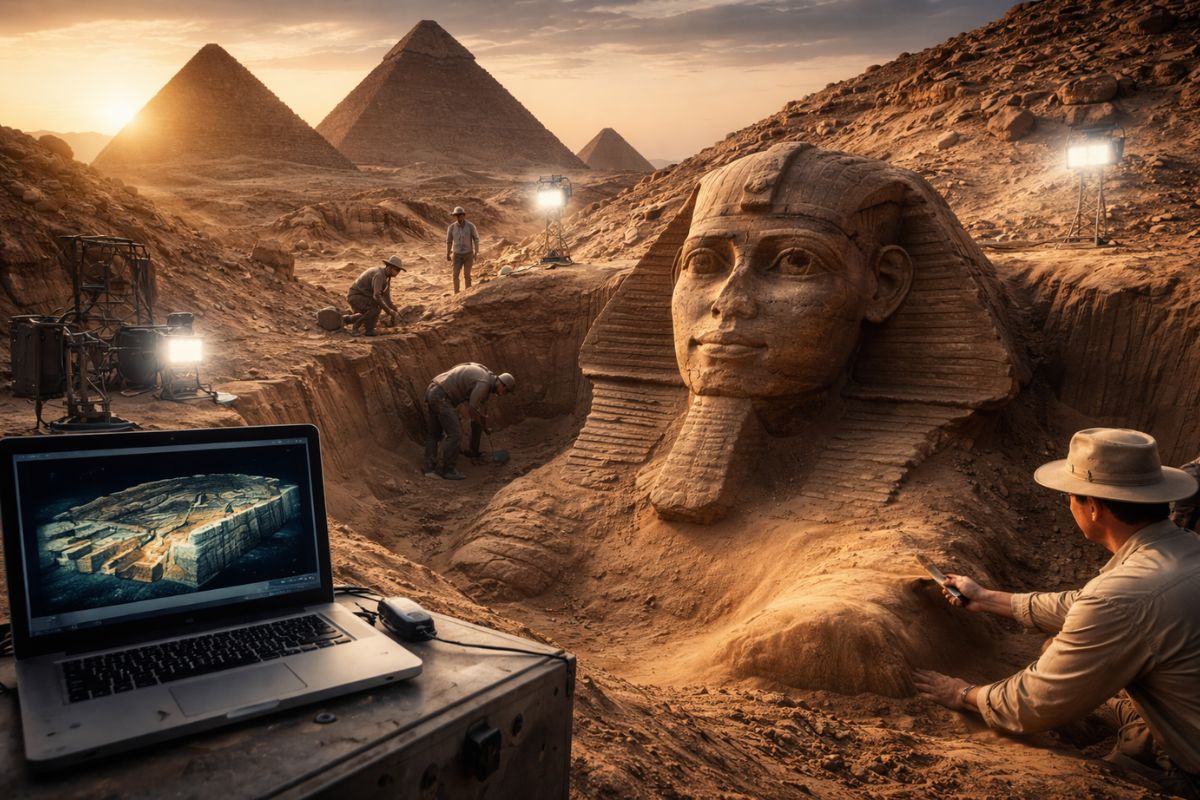
Italian researchers have detected what appears to be a second Sphinx buried under the sands of Egypt, and satellite scans reveal a gigantic underground megastructure hidden beneath the Giza Plateau for over 3,000 years.
-
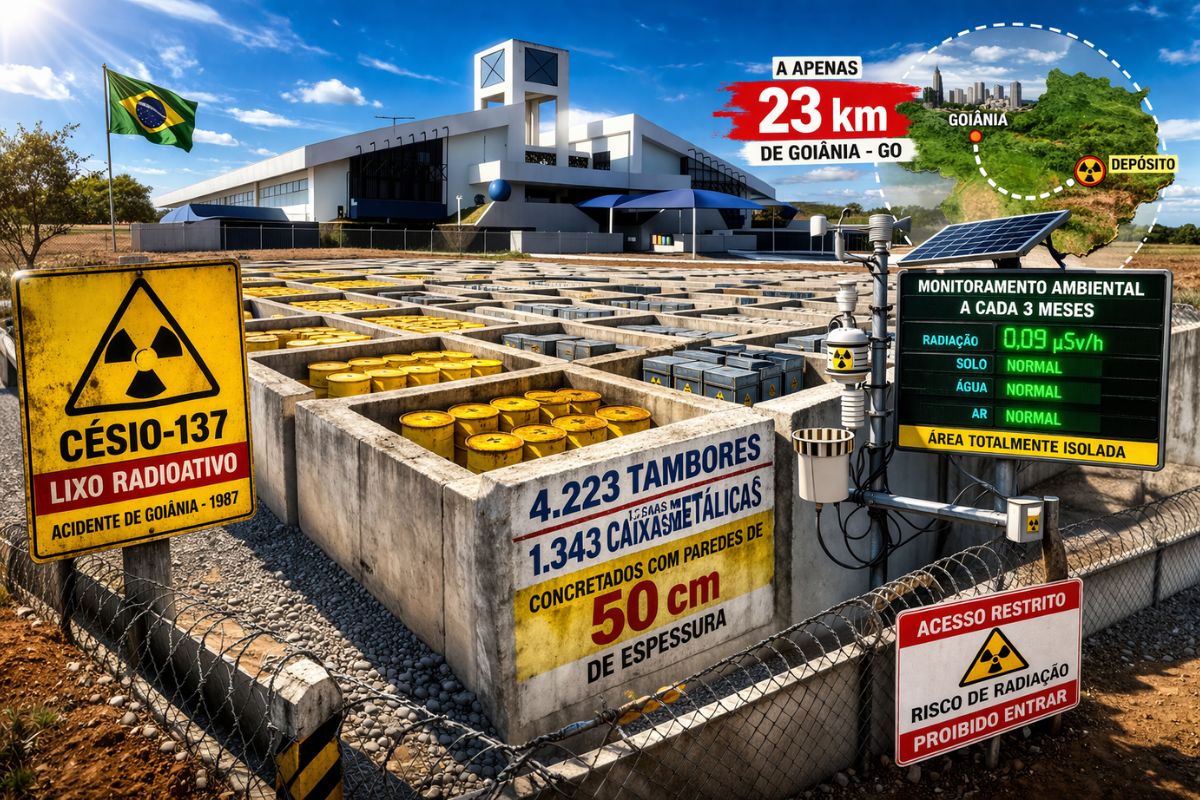
There are 4,223 drums and 1,343 metal boxes concreted with 50-centimeter walls that store the radioactive waste from Cesium-137 in the worst radiological accident in Brazil, just 23 kilometers from Goiânia, with environmental monitoring every three months.
-
Giant Roman treasure found at the bottom of Lake Neuchâtel in Switzerland reveals an advanced trade system, circulation of goods, and armed escort in the Roman Empire about two thousand years ago.


The most precise alignment, the geometry of the shadow’s path, and the relative speeds of the celestial bodies work together to extend totality to nearly unprecedented levels.
Another ingredient is the orbital position that reduces the apparent speed of the shadow on the surface, allowing the “walk” of darkness to last longer.
Result: an observation interval far above the average, enough time for complex scientific campaigns and ultra-high-resolution images of the solar corona.
Where and How To See: Brazil On The Totality Map
The totality path of the historical eclipse is expected to cross vast portions of the Atlantic, segments of South America, and areas of the African continent.
For the Brazilian audience, there is a real chance of observation within national territory, with millions of people following the phenomenon either totally or partially.
Even outside the central path, the partial view of the historical eclipse will still be striking: the solar disk will appear “bitten,” ambient light will decrease, local temperature may drop slightly, and the behavior of birds and insects will change.
All of this in broad daylight, for several minutes, creating a scenario that often moves even those who have never looked up at the sky.
Science In Real-Time: What Researchers Will Measure
During totality, instruments can “switch off” the blinding brightness of the Sun and dissect the corona, the outermost and extremely hot layer where jets, magnetic arcs, and some ejections that affect communications and satellites originate.
Understanding more about this region helps to comprehend the “space weather” and its impacts on our technological daily life.
In addition to the corona, measuring the granulation of the photosphere, the profile of spectral lines, and the dynamics of prominences reveals clues about magnetic fields and atmospheric heating.
In 7 minutes of total darkness, it is possible to repeat sequences, calibrate instruments, and compare filters, increasing the precision of each result.
Timeline: Eclipses That Changed Our Understanding Of The Universe
Long eclipses have always been natural laboratories.
In 1919, for example, measuring the “bent” light from stars caused by the Sun’s gravitational field during a total eclipse helped to confirm predictions of relativity.
The longer the totality window, the more robust the tests — and 7 minutes are gold for science.
For the historical eclipse of 2186, new imaging techniques, sensors, and processing will extract fine details from the corona, creating time series that feed models of the solar cycle.
It’s the opportunity to observe the Sun with “eyes” that didn’t exist during past eclipses, connecting tradition and scientific vanguard.
What To Expect On The Day: Signs That Totality Is Approaching
Even those who do not look directly up will notice the approach of the historical eclipse.
The ambient light turns metallic, the shadows gain sharp edges and “claws”, and the temperature may drop.
Birds gather, the wind changes, and in the final moments before totality, the “Baily’s beads” and the famous “diamond ring” appear. It’s the Sun giving its last shine before the brief night.
After totality passes, everything repeats in reverse, with light returning in seconds and daily life resuming its course.
The record of this before-during-after, with photos and videos from different points in the country, contributes to citizen science and immortalizes the experience.








Acho que nem vai existir mais seres humanos nesse ano aí 🤣, mas se eu tiver descendentes vou deixar eles avisados
Vou até salvar na agenda com um lembrete pra não esquecer.
Literalmente, todos que estão vivos hoje e os que nascerão depois de nós também estarão mortos.