





 Portuguese
  English
  Spanish
  4 min of reading
  1 comment


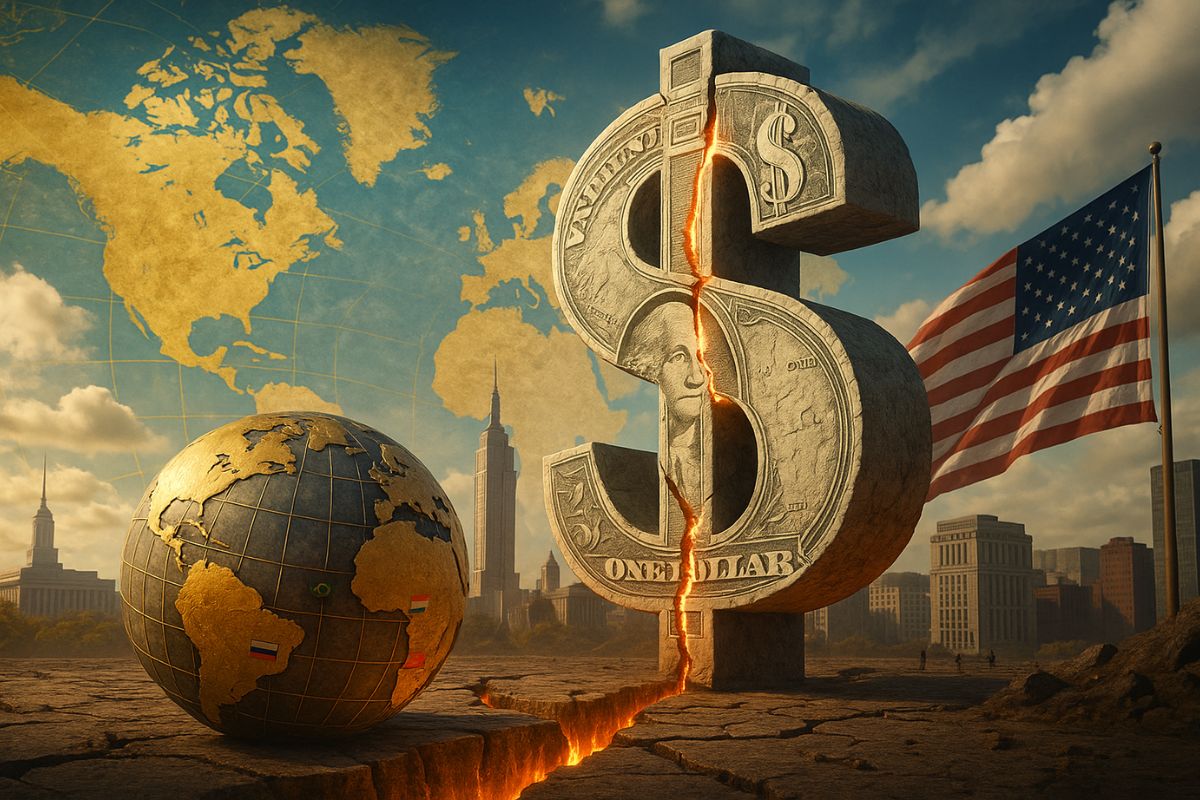


Currency That Has Sustained Global Trade for Eight Decades Faces Unprecedented Pressures, Decline in International Confidence, and a Growing Movement of Countries Seeking Alternatives.
The dollar has always been more than just a currency: it is the cornerstone of the economic and geopolitical power of the United States. Since the Bretton Woods agreement in 1944, it has established itself as the main reference of value in global trade, accounting for over 80% of international transactions and more than half of the world’s foreign exchange reserves. But this hegemony, which seemed unshakeable, is beginning to show deep cracks.
Distrust is growing with the escalation of U.S. public debt, internal deindustrialization, and the advancement of bilateral agreements that replace the dollar in operations between emerging powers. The system that has sustained the world for 80 years is showing signs of fatigue, and even the U.S. itself has expressed concern about the future of its currency.
The Birth of a Monetary Empire
The supremacy of the dollar was born in 1944, when 44 countries gathered in Bretton Woods and accepted the U.S. plan to adopt the American currency as the basis for international reserves.
-
Oil surged to $115 a barrel due to the war in the Middle East, and diesel in Brazil has already risen to R$ 7.45 per liter, while the United States…
-
Brazilian city bets on the business environment to generate jobs and attract investments in the energy sector — secretary reveals strategy at Macaé Energy 2026.

-
50 viaducts, 4 tunnels, 28 bridges, and 40 kilometers of bike paths: BR-262 in Espírito Santo will receive 8.6 billion reais for the largest engineering project in the state’s history, inspired by the Immigrant Highway in São Paulo.

-
Brazil produces too much clean energy and doesn’t know what to do with it: over 20% of solar and wind capacity was wasted in 2025 while investors flee and 509 renewable generation projects were abandoned in the last year.


The argument was simple: stability and backing in gold.
Every 35 dollars was equivalent to one ounce of gold, and this promise of convertibility ensured global confidence.
But this confidence began to crumble in 1971 when President Richard Nixon ended the dollar’s convertibility into gold.
From then on, the currency was valued only by faith in American solidity. It was the start of the so-called fiat dollar, sustained solely by U.S. credibility.
From Gold to Oil: The Agreement That Maintained Power
With the end of the gold backing, the U.S. government found a new pillar to keep the dollar on top: the petrodollar.
In 1973, the United States struck a deal with Saudi Arabia to ensure that all global oil would be sold exclusively in dollars.
This forced the entire planet to need American currency to purchase energy, creating a massive artificial demand.
The system worked for decades.
While the world worked to obtain dollars, the United States could simply issue them, financing deficits, wars, and domestic programs with less risk than other countries.
But this privilege began to come at a cost.
The Crisis of Confidence and the Dollar Dilemma
Economist Robert Triffin already warned in the 1950s that this structure carried a dilemma: for the world to have enough dollars, the U.S. would need to spend more than it collects.
Over time, this would erode the currency’s credibility.
And that is exactly what is happening.
Today, U.S. public debt exceeds 120% of GDP, and interest payments already surpass the annual budget of entire countries.
In 2024, the U.S. fiscal deficit reached nearly US$ 2 trillion, and projections estimate that the debt will reach US$ 56 trillion by 2035.
The trust, which has always been the true backing of the dollar, is being shaken by U.S. politics itself.
The Advance of Alternatives to the Dollar
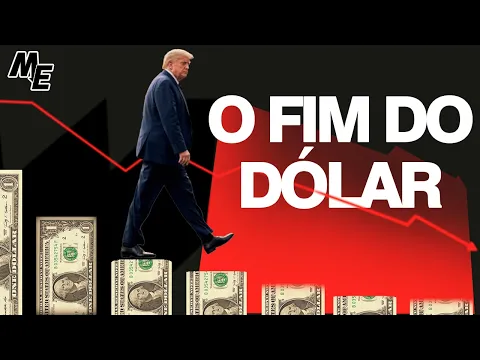

The share of the dollar in global foreign exchange reserves has dropped from 71% in 2000 to around 57% in 2025 — the lowest level in a quarter of a century.
At the same time, blocks like the BRICS are looking to create their own financial mechanisms.
China and Russia already conduct over 90% of their bilateral trade in local currencies, and Middle Eastern countries are experimenting with the use of the petro-yuan in energy contracts.
These movements, while still isolated, create a scenario of slow but steady transition.
Each new agreement reduces global dependence on the American currency, opening the way for a multipolar financial system, where the euro, yuan, and even digital currencies may compete for hegemony.
What is at Stake in the Future of the Dollar
The dollar still dominates, but no longer reigns alone.
The gradual loss of space in reserves, combined with rising debts and geopolitical tensions, exposes what once seemed unthinkable: the real possibility of the American system collapsing under its own weight.
The United States still has an unmatched advantage — the power of issuance and control of the global financial system — but history shows that every hegemony has a cycle.
The challenge now is to know whether the dollar will manage to reinvent itself before the world finds a definitive alternative.
Do you believe the dollar will continue to be the center of the global economy, or are we about to witness the beginning of a new financial era?








Vamos ter uma nova era financeira.