Portuguese
  Spanish


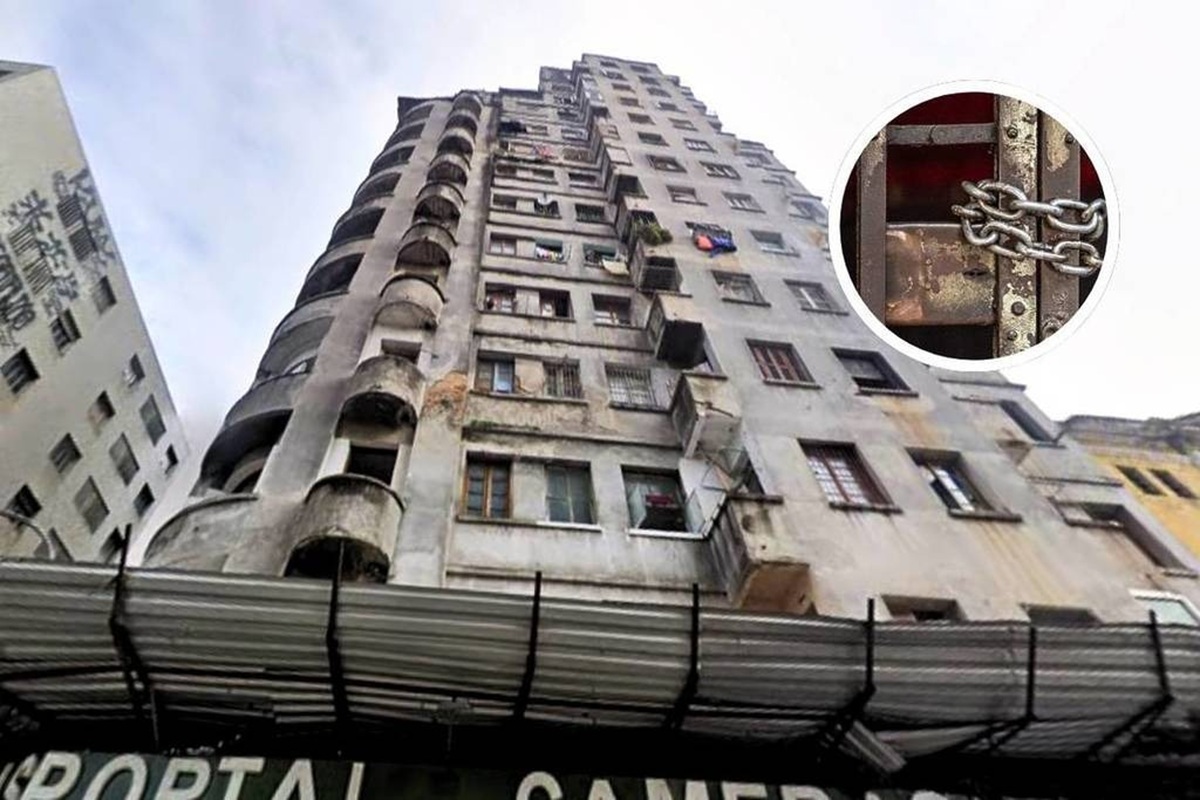


The Ruined Facade, The Risks of Collapse, and The Episodes of Violence Have Turned The Júlia Cristianini Building Into A Symbol of Abandonment, Even Harboring More Than A Thousand Residents Who Daily Coexist With Insecurity and Deterioration.
Those who pass by General Osório Street, in the Santa Ifigênia neighborhood of São Paulo, are shocked by the image of the Júlia Cristianini Building. The deteriorated facade, filled with parts that detach, creates a scene that seems abandoned.


The aspect causes fear because it poses risks of fire and collapse, leading many pedestrians to believe that the building has no residents.
But this impression does not correspond to reality, as more than a thousand people live there facing structural dangers and episodes of violence.
-
Brazilian Students Turn Recycled Plastic Bottles into Synthetic Yarn for Scarves to Aid Needy Families

-
Why the Same Citrus Fruit Has Different Names Across Brazil and How Varieties Differ
-
India Paints Road Red and Uses Smart Asphalt to Slow Drivers and Protect Wildlife in Nature Reserve

-
Yellow vs. White Fat: The Little-Known Difference That Can Impact the Quality and Flavor of Your Barbecue





The condominium has been nicknamed “Sarajevo,” a reference to the Bosnian capital that was left in ruins after armed conflicts.
The comparison arose from the appearance of the building and the sense of abandonment it conveys. Its history, however, shows how the building has been losing vitality over the decades.
The property began to be constructed in the 1940s on the site that housed the old Cine Astoria. The initial proposal pointed to a revolution in residential architecture in São Paulo, but the works were never fully completed.
The owner of the lot, Júlia Cristianini, financed the project and claimed that the lack of cement in the market prevented its completion.
Despite this, other builders continued to erect buildings during a period of real estate expansion in the capital, leading newspapers of the time to speculate that the real reason for the halt was a lack of funds.
The first residents arrived in 1946, still with the building unfinished, and faced several difficulties. The absence of renovations and poor fund management worsened the state of the building.
Today, parts of the facade fall onto the sidewalk, necessitating the installation of a wooden protection between the sidewalk and the first floor to ensure the safety of those passing by.

Insecurity Takes Over The Building
The building poses risks for both residents and neighbors. In addition to the risk of collapse, responsible for the nickname “treme-treme,” the place faces serious problems with violence. Residents report thefts, drug trafficking, torture, and even homicides inside the building.
Therefore, many doors have bars, and some residents say they carry bladed weapons, like knives and daggers, while moving through the hallways.
Discussions about renovations have been prolonged for decades. There are revitalization plans and proposals to improve safety, but high delinquency prevents any progress.
The lack of funds keeps everything on paper. Even so, the 243 apartments continue to be occupied by owners and tenants, who face these challenges daily.

Judicial Action Drags On For A Decade
According to an investigation by UOL, published in April, the safety conditions of the Júlia Cristianini Building are the subject of a lawsuit filed by the Public Prosecutor’s Office of São Paulo (MP-SP) since 2015.
The lawsuit demands that the city hall assess the structure and carry out emergency works, given the risk of collapse and fire indicated by technical reports.
Between 2018 and 2019, three expert reports attached to the case confirmed that the building presents an imminent danger.
In one of the documents, the expert warns that renovation is not recommended, as it would continue to expose residents and visitors to “great risks.” The text, from April 2019, suggests that any attempt at revitalization requires constant and rigorous monitoring of the building.
In the following years, the legal impasse continued. While court decisions diverged between eviction and retention, the residents themselves made structural repairs to prevent the building from closing.
In 2020, an engineer from the City Municipal Infrastructure and Works Secretariat recognized that the condominium had invested R$ 840 thousand in safety works, an amount that, according to the city hall, demonstrated the commitment of the owners to keep the place habitable.
Even with the risks indicated, the court ruled that the city hall should oversee the renovations and provide social housing to the families. However, the residents refused the resettlement and decided to remain in the building. The case also recognized that the residents are not invaders, but rather legal owners and tenants.
Inspections and Impasse Between MP and City Hall
In 2022, the MP-SP again demanded compliance with court rulings, requiring that the municipality oversees the interventions. In April 2024, a new ruling reinforced the city hall’s obligation to inspect the works paid for by the residents and verify the actual structural conditions of the building.
According to UOL, the city hall reported having conducted a technical visit in September 2024 and found that the works were still ongoing. Despite this, the agency did not send a detailed report of the inspection to the press, violating part of the court decision.
The current building manager, identified as Camilo, stated that the works continue “at the pace of financial resources” and assured that recent reports certify the structural stability. According to him, the priority is to complete the fire-fighting system, while the recovery of the facade will occur afterwards.
After the report questioned the municipality, the city hall requested the court for the closure of the case. The MP-SP, however, expressed opposition to the request and advocated for the continuation of the action, arguing that the repairs are still ongoing and that it will be necessary to evaluate at the end of the works whether the risks have truly been eliminated.