





 Portuguese
  English
  Spanish
  5 min of reading
  0 comments


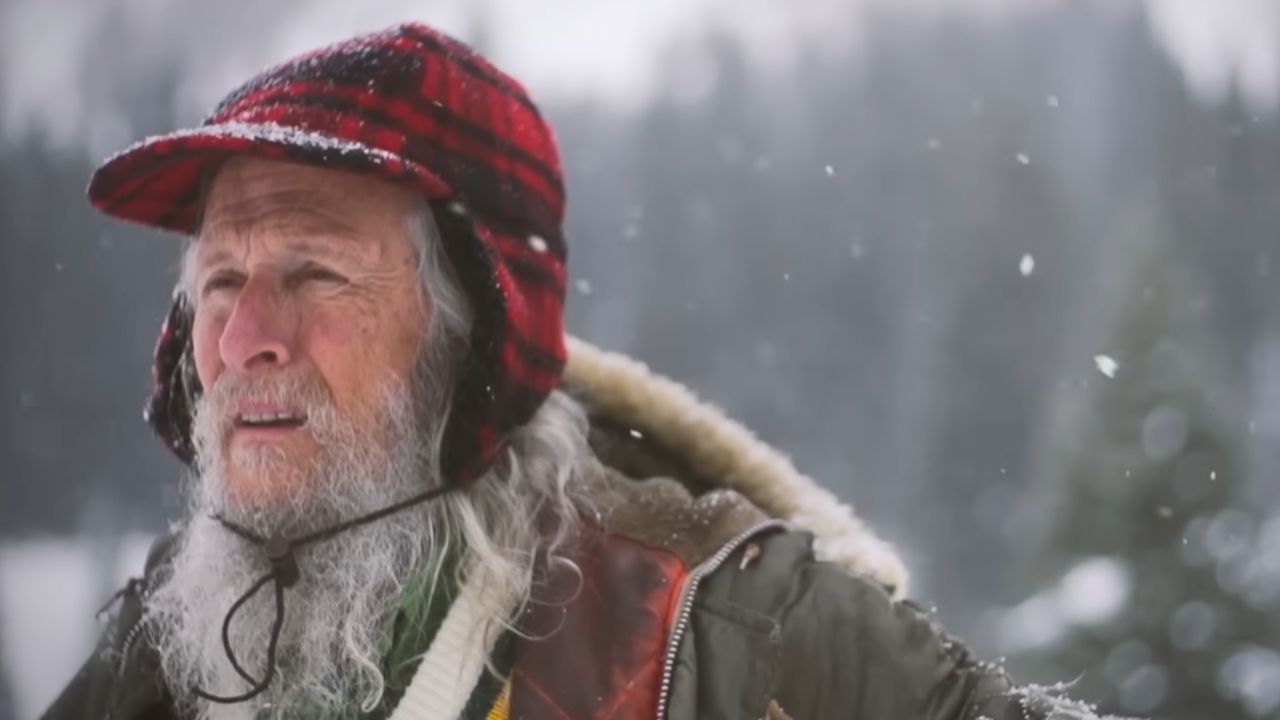
Billy Barr’s Daily Notes, The Hermit Who Became a Scientist, Became One of The Most Important Climate Records in The World, Validated by Formal Scientific Publications.
The story of Billy Barr (who himself writes in lowercase) redefines the concept of “citizen science.” For nearly 50 years, living in isolation in a cabin in the ghost town of Gothic, Colorado, at an altitude of 9,200 feet, he kept a meticulous daily record of snow conditions. What started as a cure for boredom inadvertently became an irreplaceable dataset for the hermit turned scientist, documenting the direct impacts of global warming on a sensitive alpine ecosystem.
This record, once private, is now considered critical evidence of climate change. Its importance was formally recognized when Barr’s data was integrated into top U.S. government agency records, such as NOAA and USGS, as detailed in scientific publications formally indexed in PubMed. Today, the work of the Rocky Mountain Biological Laboratory (RMBL), located in the same area, fundamentally relies on Barr’s observations to understand the effects of climate change on local ecology and to apply those lessons to high-altitude environments worldwide.
The Accidental Scientist of Gothic
Billy Barr does not consider himself a recluse. Born in New Jersey and trained in environmental science, he arrived in Gothic in 1972 and decided to stay, moving into an abandoned cabin and later building his own, miles from the nearest road. While he worked for years as an accountant and business manager for the Rocky Mountain Biological Laboratory (RMBL), he spent the harsh winters essentially alone.
-
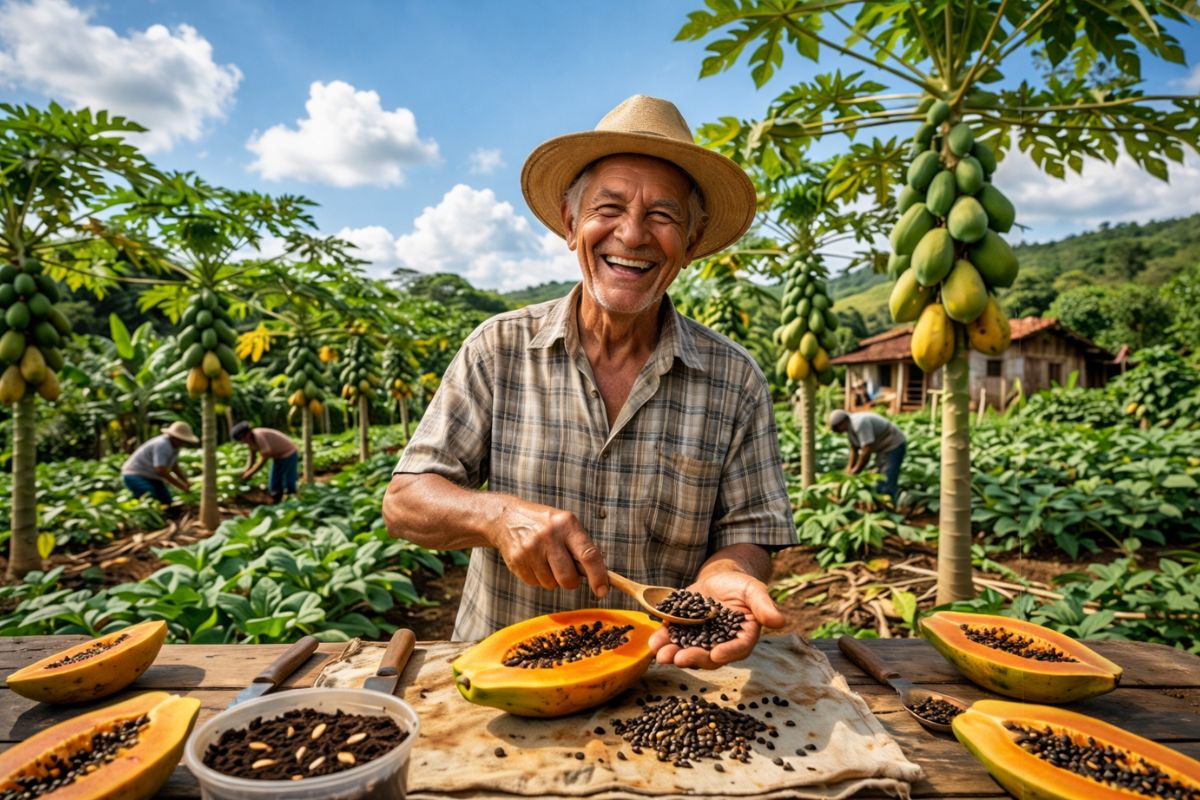
Mr. Mário reveals the technique of the caipira papaya: he cuts the fruit in half, discards the seeds from the tip, and plants the ones from the back to increase the chance of a productive female tree.
-
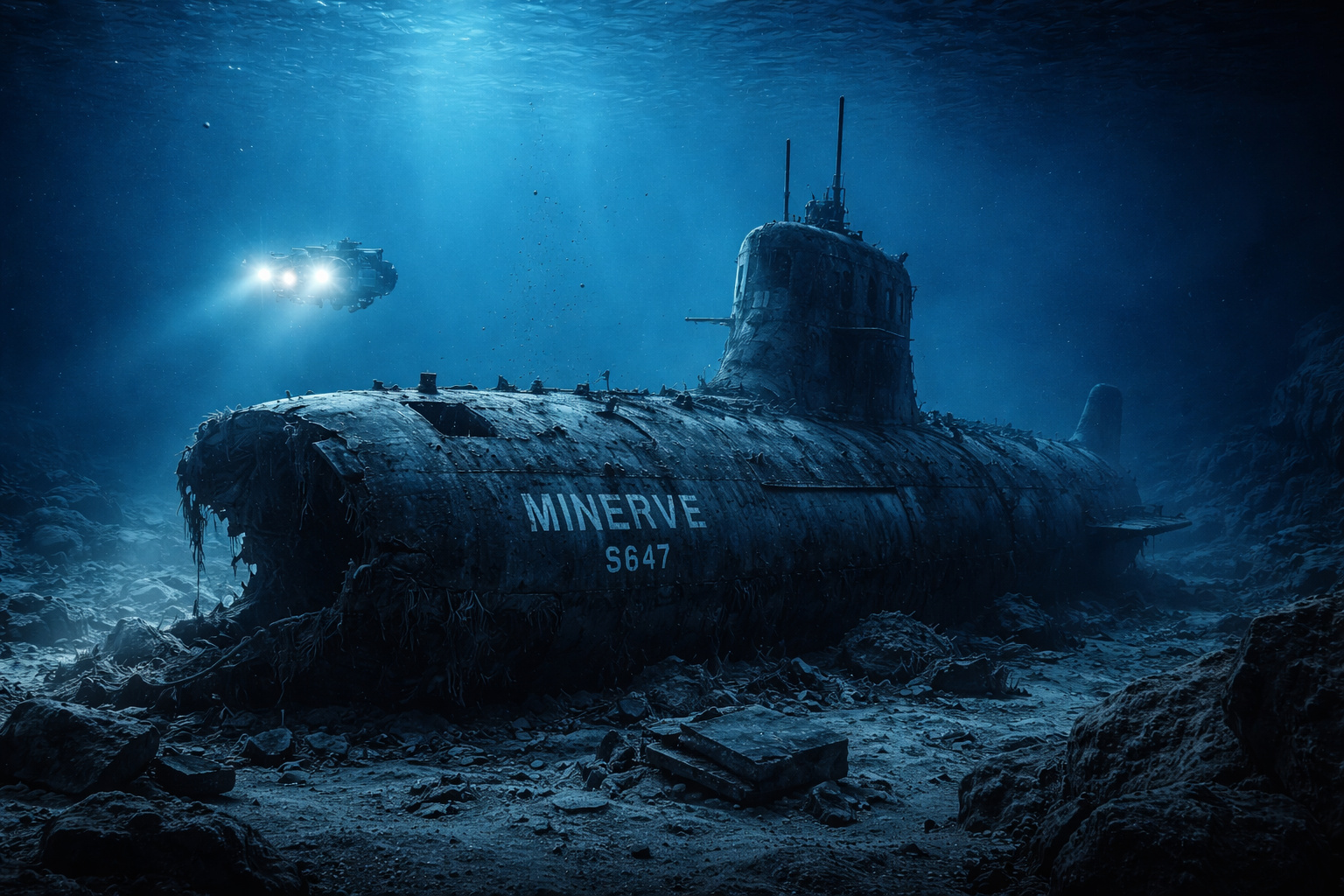
Few remember, but the submarine that disappeared in 1968 with 52 crew members was found after 51 years at the bottom of the sea at more than 2,000 meters, intriguing the entire world.
-
With 1,200 tons suspended, the Japan mega-structure in a grid shape with a floating sphere from Fuji TV features two 25-story towers connected by elevated walkways, titanium panels, and impresses the world with its ability to reduce wind impact.

-
The village where two rivers run side by side without mixing in Santarém and Alter do Chão reveals some of the most beautiful freshwater beaches on the planet.


The motivation for what would become his life’s work was not a scientific hypothesis, but as he himself described in reports to the Associated Press, pure “boredom.” During the long winters, he began to “make his own activity” to occupy his mind, recording everything. Paradoxically, this lack of scientific agenda is what makes his data a “gold standard“: without the aim to prove something, he removed observer bias, creating a pure and impartial record of the environmental changes around him.
An Invaluable Low-Tech Methodology
The scientific value of Barr’s work lies in its consistency. Daily, for five decades, he followed a rigorous method, albeit rudimentary. As documented in profiles and reports, such as a short film by National Geographic, his methodology involved simple equipment: a “snow board” designed to measure the fresh snow accumulation, a ruler to measure depth, and a canister to collect snow and then weigh it, manually calculating the water content (SWE – Snow Water Equivalent).
His notebooks, which were later digitized to Excel, contained much more than just “snow notes.” Barr recorded a complete eco-climatological dataset, including daily maximum and minimum temperatures, and crucial phenological data, the study of seasonal biological events. He noted the first appearance of marmots, animal migrations, and other wildlife sightings, directly connecting climate changes with ecosystem responses.
The Discovery: From Notebooks to PubMed
For decades, these notebooks were a private diary. The turning point came when Dr. David Inouye, an ecologist at the Rocky Mountain Biological Laboratory (RMBL), learned about the records. Inouye, who was researching wildflowers, was observing changes in their flowering patterns but did not have hyper-local climate data to explain why. Upon seeing Barr’s notebooks, he was “shocked” by the detail and breadth, realizing he had the missing variable in hand.
Institutional validation transformed Barr’s hobby into formal science. A scientific article (PMID: 37610797), detailing the creation of a “curated climate dataset” for the region, explicitly identifies “RMBL resident Billy Barr” as one of the top five data sources. His manual observations were formally “blended” with data from agencies such as NOAA, USGS, and USDA, filling critical gaps that automated instruments, located miles away, could not capture in the complex mountainous terrain.
What 50 Years of Snow Really Reveal
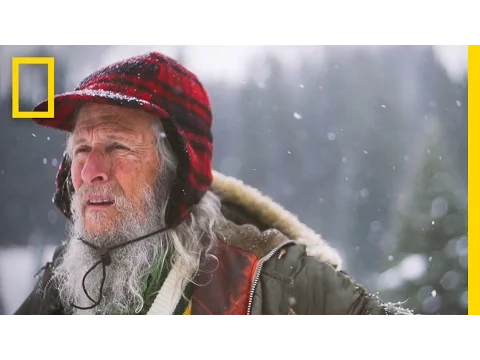

The data from the hermit turned scientist tells a compelling story of a changing climate. The most direct observation from Barr, cited in reports from the Associated Press (AP), is that “snow is coming later and disappearing earlier.” This contraction of the snow blanket, documented day after day, has profound and cascading implications for the American West.
Ecologically, a shorter snow season disrupts the entire alpine ecosystem, creating a mismatch between climate and the life cycles of plants and animals, such as the wildflowers studied by Inouye at the RMBL. Hydrologically, the impact is even broader. The snowpack in the Rocky Mountains acts as a “vital water reservoir.” Earlier melting, proven by Barr’s data, means that water is released before the peak demand in summer, increasing the risks of spring flooding and severe drought late in the season.
Furthermore, Barr observed an “increase in dust blowing onto the snow.” This is not a trivial note; it documents a dangerous albedo feedback cycle. Clean snow (high albedo) reflects sunlight. Dusty snow (low albedo) absorbs heat, causing it to melt much more rapidly, leading to drier conditions, which in turn generate more dust.
The Legacy: Calibrating The Future with The Past
The impact of Billy Barr’s dataset has transcended Gothic. The Rocky Mountain Biological Laboratory (RMBL) is now actively using his 50 years of data not only to understand local ecology but to “scale these learnings to high-altitude environments worldwide.” Many of these alpine ecosystems are “data-poor,” and Barr’s record serves as a high-resolution predictive model of what they will face.
Perhaps the most surprising application is how Barr’s “low-tech” method is validating 21st-century technology. His manual records of snow density and SWE are now used to calibrate sophisticated aerial snow detection tools, such as LiDAR (Light Detection and Ranging). Barr’s canister and ruler provide the “ground truth” essential that multimillion-dollar instruments need to ensure their complex algorithms are correct, ensuring the accuracy of water resource predictions.
The Power of Consistency
Billy Barr’s journey, the hermit turned scientist, is a powerful lesson about the value of consistency in science. What started as a cure for “boredom” evolved into one of the longest and most important high-altitude climate records on the planet, an irreplaceable scientific asset in the Anthropocene era.
Barr’s story proves that, even in the era of satellites and supercomputers, disciplined and impartial human observation can be the most powerful tool we have to understand our changing world.
What do you think of Billy Barr’s story? Do you believe that patient and consistent observation, like his, can be as valuable as or more valuable than modern technology? Or do you have a local example of how the climate has visibly changed in your area over the past decades? Share your real opinion in the comments.






-

Uma pessoa reagiu a isso.