





 Portuguese
  English
  Spanish
  5 min of reading
  0 comments


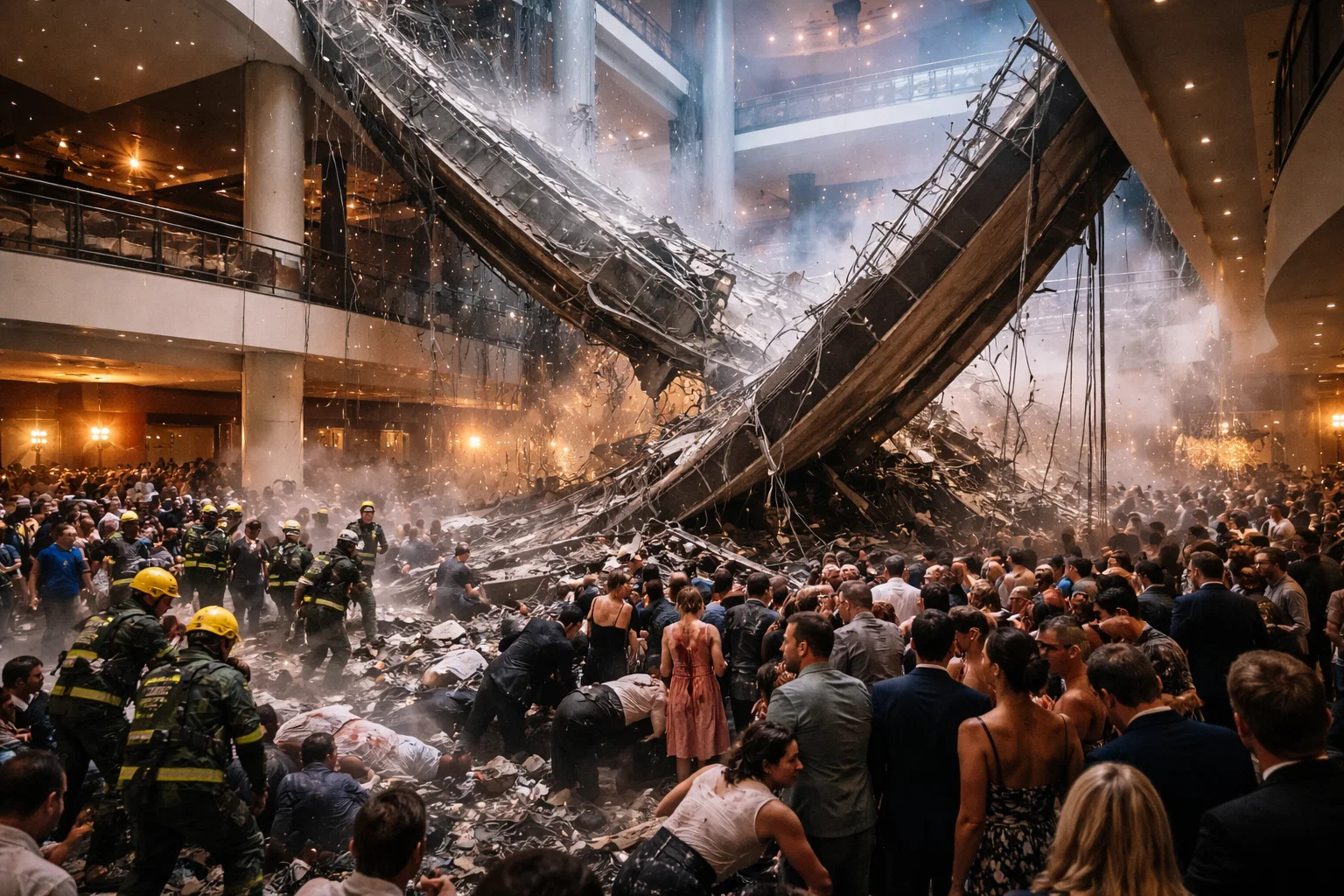
A seemingly Simple Change in the Design of Walkway Supports Inside the Luxury Hyatt Regency Hotel in Kansas City Led to the Collapse of Two Suspended Structures in 1981, Leaving 114 Dead and Over 200 Injured in a Disaster That Changed Structural Engineering Protocols
On the night of July 17, 1981, the atrium of the luxury Hyatt Regency hotel in Kansas City, United States, was full. Live music, guests dressed for a party, and dozens of people observing the movement of suspended walkways cutting through the enormous interior space of the building.
The hotel had been designed as a modern symbol of American urban engineering. A large central atrium with suspended metal walkways connecting different floors gave the environment a futuristic appearance and impressed those entering the building.


But within seconds, that elegant structure transformed into the scene of one of the largest engineering tragedies ever recorded in a building.
-
Attracting around 250,000 people a year, a lighthouse 200 meters from the sea, on a 60-meter high cliff, on the North Sea coast in Denmark, becomes one of the most impressive examples of how nature can threaten historical buildings.

-
The narrowest house in the world is only 63 centimeters wide, but inside it can accommodate a bathroom, kitchen, bedroom, office, and even two staircases.

-
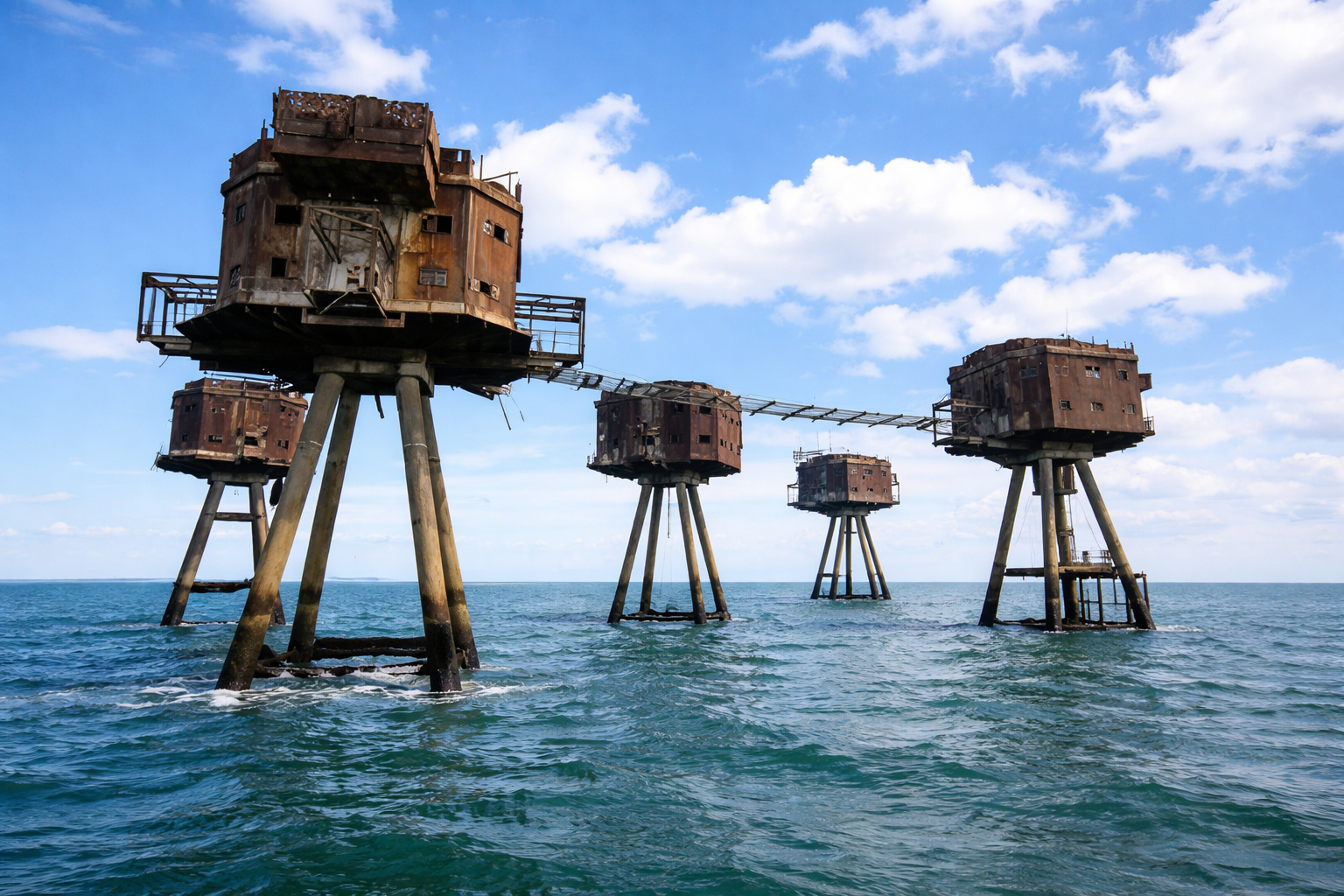
In the middle of the sea, these enormous concrete and steel structures, built by the British Navy to protect strategic maritime routes, look like they came straight out of a Star Wars movie.
-
For years, no one could cross a neighborhood in Tokyo because of the tracks, but an impressive solution changed mobility and completely transformed the local routine.

Two walkways plummeted onto the crowd. What seemed like a solid construction concealed a technical error that, years later, would still be analyzed in engineering universities around the world.
The Gigantic Suspended Atrium That Became a Symbol of Modern Architecture Before the Disaster Exposed an Invisible Flaw in the Structural Design
The luxury Hyatt Regency Kansas City was inaugurated in 1980 and quickly attracted attention for its internal architecture.
The central atrium served as a large open space connecting various floors of the hotel. In the middle of this architectural void were the suspended walkways, metal structures that spanned the space and allowed guests to observe the movement below.
These walkways were positioned at different levels of the building.
Among them were structures located on the second and fourth floors. They were supported by metal rods that descended from the ceiling of the atrium to the walkways.
In practice, all stability depended on these connections.
While the original design provided for a specific support system, a change made during construction modified the way loads would be distributed among the structures.
This seemingly small change created much greater pressure at specific points of the structure.
During the party that night, hundreds of people were scattered throughout the main hall. Many of them also occupied the walkways to watch the dance happening on the lower floor.
The structure was about to reach its limit.
The Change in the Design That Doubled the Load on the Metal Connections and Went Unnoticed During Construction
Subsequent investigations showed that the initial design of the walkways called for a single continuous rod linking the ceiling to the two suspended structures.
This rod would pass through the upper walkway and continue to support the lower walkway.
During the construction, the system was altered.
The rods became divided into two independent parts. One supported the walkway on the fourth floor. The other supported the walkway on the second floor.
This modification completely changed the distribution of forces.
In practice, the metal connections of the upper walkway began to bear a much greater weight than was anticipated in the original design.
According to experts who analyzed the case, the change ended up doubled the load on the structural connections.
The more serious problem was another.
The structural calculations were not redone to account for this new configuration.
The flaw remained hidden within the very structure of the building.
The Moment When Two Walkways Plummeted Over Hundreds of People in Seconds Inside the Luxury Hotel
Around nine o’clock in the evening, the party was still ongoing in the main hall of the hotel.
The event gathered about 1,600 people in the building, according to estimates at the time.
As the band played and guests danced in the hall, many people observed the event from the suspended walkways.
Suddenly, the structure began to give way.
First, the walkway on the fourth floor collapsed. It fell directly onto the second-floor walkway.
Then, the two structures fell together onto the hall.
The impact occurred within seconds.
The huge mass of metal fell upon dozens of people who were on the lower floor.
Rescue teams took hours to remove victims trapped beneath the steel and concrete rubble.
The final toll was devastating.
The disaster left 114 dead and over 200 injured, according to historical records of the case.
Why The Collapse of the Hyatt Regency Became One of the Most Important Studies in Modern Structural Engineering
After the disaster, detailed investigations began examining every step of the design and construction of the hotel.
Structural engineers analyzed technical drawings, metal connections, and load calculations used in the work.
The conclusion revealed that the collapse was directly linked to the alteration in the support system of the walkways.
The modification made during construction created a critical point of tension in the metal connections of the structure.
With the weight of people on the walkways that night, these connections reached a limit that they had not been designed to withstand.
The case sparked strong repercussions in civil engineering.
Technical bodies reinforced rules regarding the review of structural designs and technical responsibility in complex construction projects.
Since then, the Hyatt Regency disaster has been cited in engineering courses as a classic example of how seemingly small changes can have gigantic consequences.
The Technical Legacy That Transformed Safety Protocols in Civil Construction
The Kansas City tragedy did not remain only in the memory of the victims.
The episode led to a more rigorous review of verification processes in structural designs.
Engineering companies began to require more detailed validations whenever a change was made to already approved designs.
Industry specialists assert, therefore, that the case became a landmark reinforcing the importance of communication between designers, engineers, and construction teams.
Today, more than four decades later, the collapse of the Hyatt Regency walkways still appears in structural engineering classes around the world.
The reason is clear.
It brutally demonstrates how a single calculation error can turn a modern work into one of the greatest tragedies in construction history.
This episode continues to draw attention because it reveals something unsettling about large modern structures. Sometimes, a seemingly small change can trigger gigantic consequences when it does not undergo rigorous technical review.
If you’ve heard about this engineering tragedy or know another impressive case of structural failure in the world, share your thoughts in the comments.





Seja o primeiro a reagir!