





 Portuguese
  English
  Spanish
  4 min of reading
  0 comments


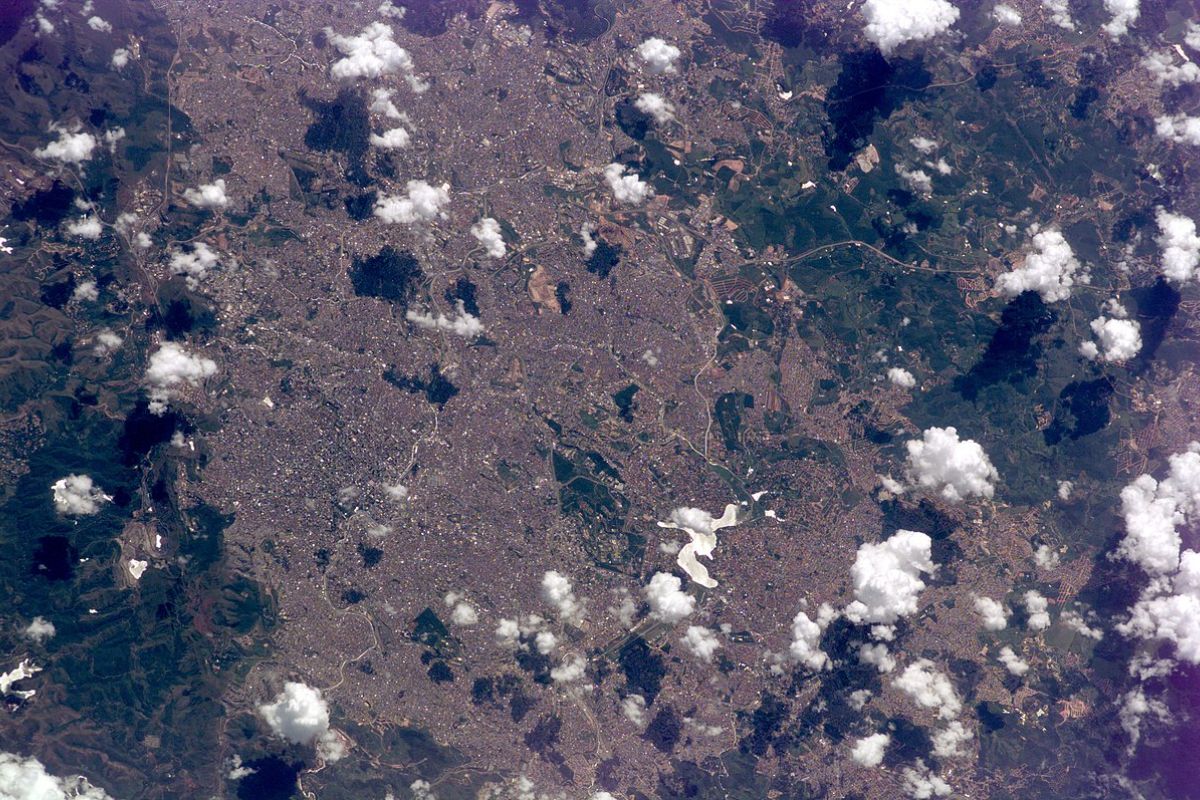
Despite Its Apparent Tectonic Stability, Minas Gerais Coexists With Notable Seismic Activity Linked to Ancient Faults. Understand the Threat That Extends Below This Important Brazilian State and the Scientific Efforts to Monitor It.
The occurrence of earthquakes in Brazil, although less frequent and intense than at tectonic plate boundaries, is a reality, especially due to the reactivation of ancient geological faults. The Brazilian state of Minas Gerais, in particular, stands out for its significant intraplate seismic activity, an “invisible risk” that extends beneath various of its cities and regions.
Historical events, such as the tragic earthquake in Itacarambi in 2007, highlight the real threat posed by these phenomena. This article explores the nature of these faults, monitoring efforts, and the challenges to ensure the safety in this populous Brazilian state.
The Seismic Paradox in Minas Gerais: How This Important Brazilian State, Considered Stable, Registers Tremors
Intraplate seismicity, observed within stable continental plates like the South American plate (where Brazil is located), results from the transmission of stresses that reactivate ancient zones of weakness in the crust. Minas Gerais, within this context, is one of the federal units with the highest frequency of recorded earthquakes and a significant number of identified faults. This apparent contradiction positions this Brazilian state as crucial for studies on intraplate tectonics.
-
For years, no one could cross a neighborhood in Tokyo because of the tracks, but an impressive solution changed mobility and completely transformed the local routine.

-
With 15 floors, an unusual building in Curitiba uses concrete, pilasters, and exposed roofs to create the effect of stacked houses.

-
Archaeologists opened a secret chamber that had been sealed by sand for 40,000 years inside a cave in Gibraltar and found what may be the last place where Neanderthals lived before disappearing from Europe forever.
-
The water that may have gone to the Moon with NASA during the Apollo 11 mission and been consumed by the astronauts springs in a Brazilian city at an altitude of 945 meters, famous for its thermal springs, above-average quality of life, and a natural radioactivity so unusual that it attracted Marie Curie.


The geology of Minas Gerais is dominated by large units such as the São Francisco Craton, the Brasília Belt, and portions of the Paraná Basin. These structures are cut by various types of faults (strike-slip, normal, and reverse), “scars” from ancient geological events that can be reactivated by the current stress field, impacting various areas of the Brazilian state.
Main Fault Systems and Their Impact on This Brazilian State
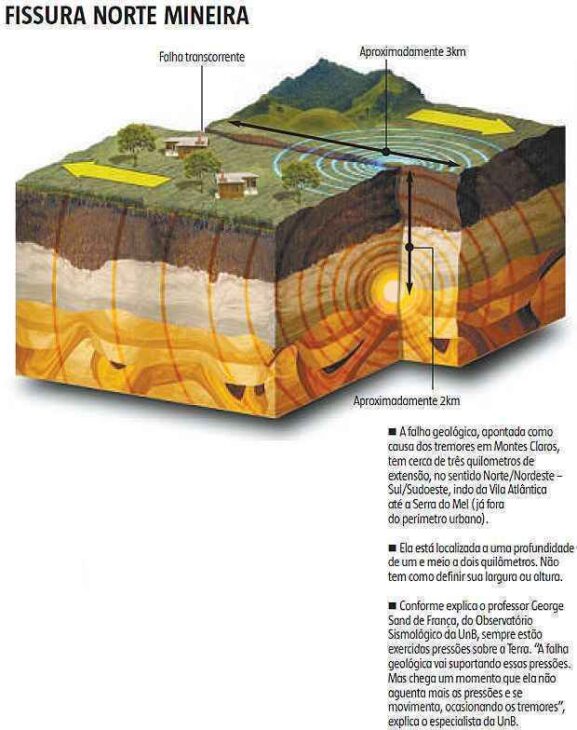
Studies have identified significant fault systems in Minas Gerais, such as those designated BR 24 to BR 29 and BR 47 (Saadi System). The Fault 47, in the northern part of the state, is notable for its association with the Itacarambi earthquake in 2007. Another relevant structure is the Cássia Fault Zone, in southwestern Minas Gerais.
The presence of these faults places various regions and cities in Minas Gerais at potential seismic risk. The North of Minas focuses areas of greater activity, with Itacarambi and Montes Claros being examples of locales with a history of tremors. Municipalities such as Jaíba, Januária, and even points in the Metropolitan Region of Belo Horizonte and the Central-Western part of Minas Gerais have also registered shocks, demonstrating the extent of the phenomenon in this Brazilian state. The Geological Service of Brazil (CPRM/SGB) plays a central role in mapping these structures.
Chronicle of Seismic Activity and Its Consequences for Minas Gerais, a Populous Brazilian State
Minas Gerais has a catalog of earthquakes that demonstrates constant activity. The sismo de Itacarambi/Caraíbas on December 9, 2007 (magnitude 4.9 mb) is the most impactful, causing the first death officially attributed to an earthquake in Brazil and leaving about 300 homeless. This event highlighted the vulnerability of precarious constructions in parts of this Brazilian state.
Other events include recurring tremors in Montes Claros (up to 4.2 Richter), causing concern among the population. Even smaller earthquakes, such as Rubim (2.6 mR) in 2023, are felt and confirm the ongoing seismic activity in different parts of Minas Gerais.
How Brazil Monitors Faults and Seismic Shocks in This Brazilian State


The seismic monitoring in Minas Gerais is a collaborative effort. The Brazilian Seismographic Network (RSBR) is the main system, with about 10 stations in this Brazilian state, operated by institutions such as the National Observatory (ON), USP, UnB, and UFRN, sponsored by CPRM/SGB. The State University of Montes Claros (Unimontes), through its Seismological Studies Center (NES), conducts intensive local monitoring in Northern Minas, collaborating with RSBR.
These networks utilize broadband seismometers and real-time data transmission. However, challenges persist, such as the density of the network (which may be insufficient to accurately locate all smaller earthquakes), the maintenance and modernization of equipment, and the consistency of funding for research and operations in such a vast Brazilian state.
Facing Seismic Risk in Minas Gerais
The presence of active faults poses risks to various communities in Minas Gerais. Buildings, especially older ones or those constructed without seismic-resistant techniques, are vulnerable. Critical infrastructures such as dams (Minas Gerais has a large number, including mining waste), transport networks, and vital lines (energy, water) are also under threat in this important Brazilian state. The historical heritage of Minas’ cities is another concern. The ABNT NBR 15421 standard establishes requirements for seismic-resistant projects, but its application and suitability to intraplate seismicity are debated. Low-income populations are often the most vulnerable.
To increase resilience in Minas Gerais, it is recommended to strengthen monitoring, develop detailed local seismic hazard maps, integrate seismic risk into urban planning, review and rigorously apply building codes, and invest in public education and emergency preparedness. Scientific research on neotectonics, paleoseismology, and crustal stress fields should also be prioritized to protect this Brazilian state.







-

Uma pessoa reagiu a isso.