





 Portuguese
  English
  Spanish
  4 min of reading
  14 comments


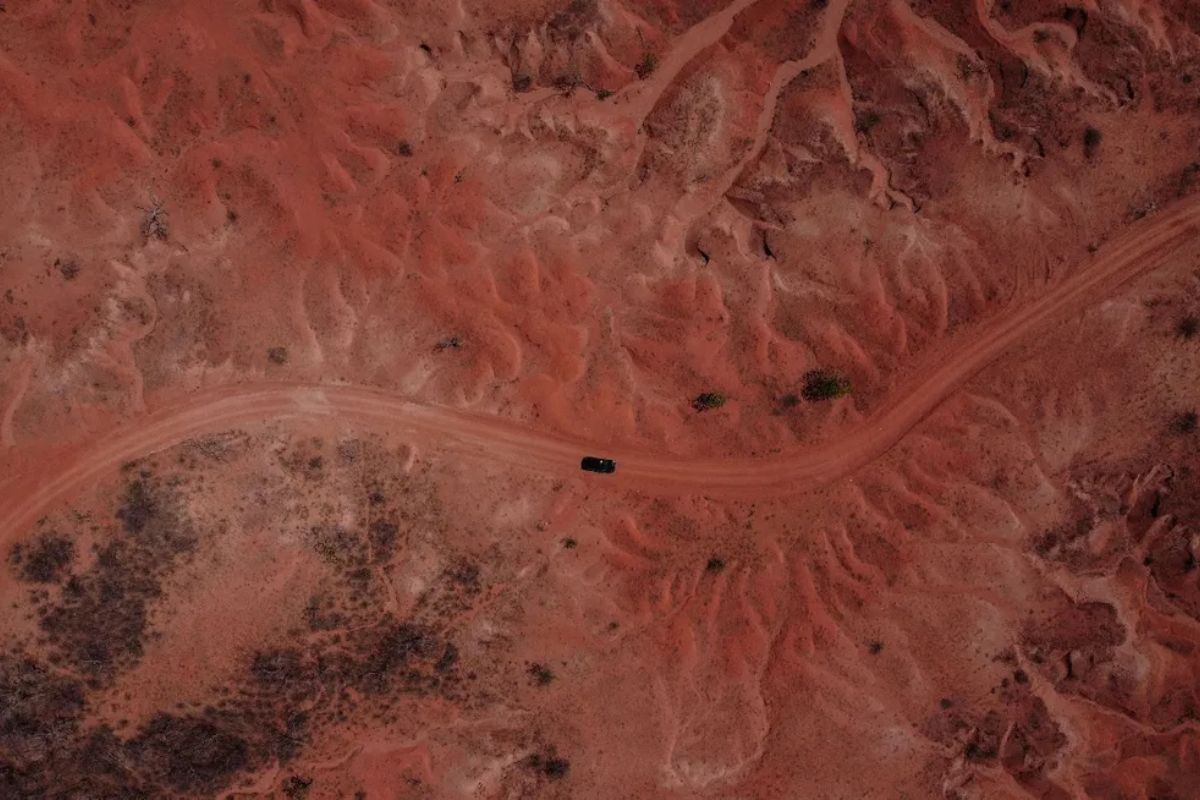

In Southeast Piauí, the Serra da Capivara National Park hosts a spectacular landscape of reddish hues that evokes Mars. Discover this Brazilian state that has a red desert and its geological and archaeological treasures.
At the heart of the Northeast, there is a Brazilian state that has a red desert, a landscape so unique that it appears to have been transported from Mars. Located in Piauí, within the Serra da Capivara National Park, this so-called “Red Desert” is not a mirage, but an impressive geological and ecological reality, a treasure of invaluable worth.
Although it is not a desert in the traditional climatic sense, its vibrant colors and arid rock formations create a scene from another world. Let’s explore the secrets behind this “Martian” appearance in the Brazilian state that has a red desert and its rich human and natural history.
Secret Piauí: Unveiling the “Red Desert” in the Serra da Capivara National Park
In the southeast of Piauí, a landscape of vibrant colors and unique rock formations evokes images of the planet Mars. This location is commonly known as the “Red Desert” and is situated in the Serra da Capivara National Park. It is important to note that, scientifically, the area is part of the Caatinga biome, a semi-arid ecosystem. The designation “Red Desert” derives from the intense reddish-ochre color of the local sandstones and soils, rich in iron oxides.
-
A gigantic dam project in the Himalayas could solve one crisis but silently create another for millions of people.
-
Nikola Tesla said that intelligent people tend to have fewer friends, and now science partially confirms this: a study with over 15,000 people showed that for the more intelligent, socializing too much can even reduce life satisfaction.

-
A superyacht worth US$ 17 million is delivered in impeccable condition, sets out to sail, and hits a bridge in the Bahamas just two hours later.

-
Residents of Australia woke up to a sky completely red like blood before the arrival of Cyclone Narelle, which hit the coast with winds of 250 km/h, tearing off roofs and lifting iron dust in a scene they described as apocalyptic.

The park is located in the transition zone between the Maranhão-Piauí sedimentary basin and the São Francisco River depression, a geological confluence that shaped its dramatic topography.
Why Does This Brazilian State Have a Red Desert and How Was It Formed?

The landscape of the Serra da Capivara is the result of millions of years of geological history. The foundation is a Precambrian crystalline basement, upon which thick layers of sedimentary rocks were deposited during the Paleozoic era, including the sandstones, conglomerates, and siltstones of the Serra Grande and Canindé Groups.
The characteristic red color primarily comes from the sandstones of the Ipu Formation, rich in iron oxides that have oxidized over time. Subsequently, during the Triassic period, tectonic movements uplifted these layers, exposing them to erosion. Since then, the action of water and wind has sculpted deep canyons, plateaus, and iconic formations like Pedra Furada, making Piauí the Brazilian state that has a red desert.
The Biodiversity of the Caatinga and the Millenary History in the “Red Desert”
Despite its arid appearance, the “Red Desert” is home to the Caatinga biome, adapted to water scarcity. The vegetation drastically changes throughout the year: lush after the rains (January to July) and taking on reddish hues and a drier appearance from August to November.
Even more impressive is its archaeological legacy. The Serra da Capivara National Park has been a UNESCO World Heritage Site since 1991, housing the largest concentration of rock art sites in the Americas. Research led by archaeologist Niède Guidon revealed evidence of human occupation that may date back 60,000 years, challenging traditional theories about the peopling of the continent. These discoveries solidify the global importance of the Brazilian state that has a red desert.
Exploring the Trails and Beauties of the Serra da Capivara
Exploring the “Red Desert” is an immersion in geology and archaeology. The park offers various tourist routes, such as the trails of Serra Vermelha and Boqueirão da Pedra Furada, leading to emblematic landscapes and rock art sites. There are trails of different difficulties, some with accessibility.
The best time to visit depends on preference: from January to July, the landscape is greener and the climate mild; from August to November, the appearance is drier, and reddish colors dominate. Hiring accredited guides is highly recommended and, in many areas, mandatory, ensuring a safe, informed exploration with minimal impact.
More Than a Martian Mirage: The Lasting Legacy of the “Red Desert” of Piauí, the Brazilian State That Has a Red Desert
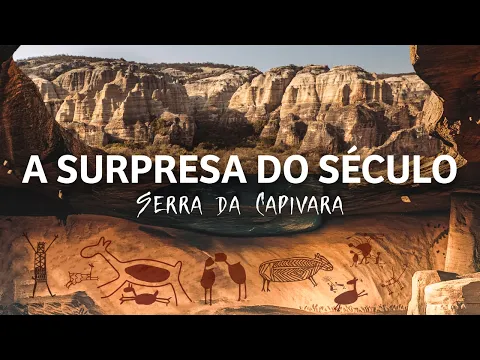

The “Red Desert” of Serra da Capivara is a confluence of wonders: geology that recalls other worlds, a resilient ecosystem, and one of the most important collections of rock art on the planet. The rocks tell the story of the Earth, the vegetation speaks of adaptation, and the paintings echo the voices of the first Americans.
This heritage, located in the Brazilian state that has a red desert, holds immense significance for Brazil and humanity. Visiting Serra da Capivara is a pilgrimage to a cradle of human presence in the Americas, inspiring not only the desire to know but also the commitment to protect this unique legacy.







Muito comum em Brasília
Esse local não fica no parque. Essas voçorocas ficam na região de Gilbués, há quase 500 km da serra da capivara.
Gostaria de fazer uma correção nessa matéria, pois a área que a matéria chama de “deserto vermelho” fica na cidade de Gilbués, no sul do Piauí e é um processo de desertificação ocasionado por mineração de ouro e diamantes no passado.
No Parque Nacional Serra da Capivara temos formações areniticas com grande concentração de **** ferrosos que se oxidam e possuem a tonalidade avermelhada como os arenitos da formação IPU situada na borda da Bacia do Parnaíba.
Essa região do Parque Nacional é conhecida como Serra Vermelha, mas não está em processo de desertificação.
Espero ter esclarecido!
Waltércio Torres
Guia de Turismo Especializado
CADASTUR 13.248.154/0001-49