





 Portuguese
  English
  Spanish
  3 min of reading
  0 comments


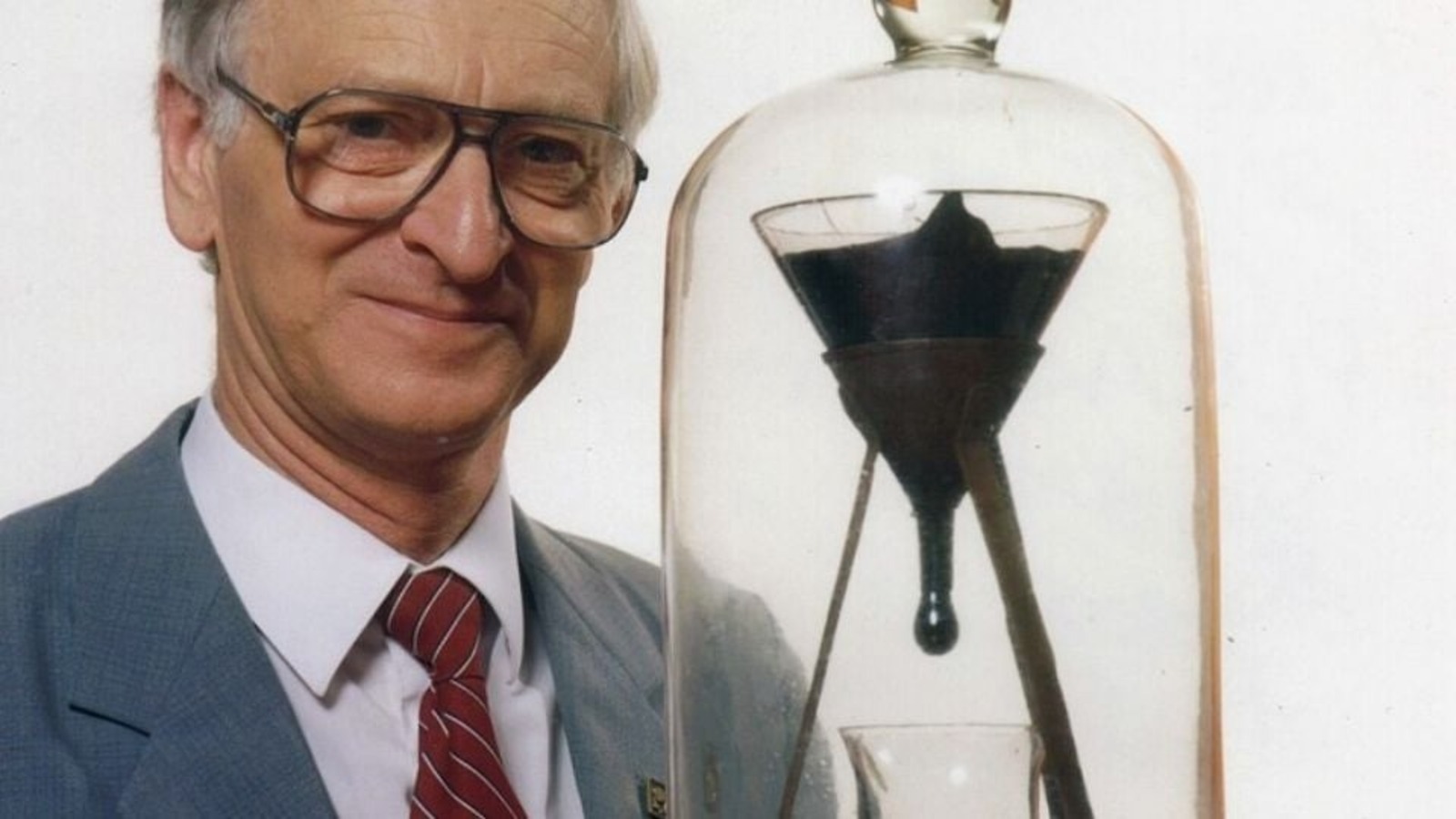
Created in 1927 by Professor Thomas Parnell, the “Pitch Experiment” reveals that even apparently solid substances can flow. After nearly a hundred years, just nine drops have fallen, becoming the longest continuous scientific experiment in the world
In a laboratory at the University of Queensland, Australia, a simple glass funnel hosts one of the longest and most curious experiments in the history of science. Inside it is a black, seemingly motionless substance: pitch, also known as bitumen, a petroleum derivative recognized for its high viscosity.
At first glance, it appears solid, but the experiment demonstrates that it is, in fact, a liquid—albeit an extremely slow one.
The study began in 1927 and is still ongoing, totaling an impressive 98 years of continuous observation.
-
A robot with a silicone face and 26 facial motors learns to move its lips accurately by observing its own reflection like a child, then analyzes hours of videos on YouTube to reproduce how humans speak and sing, now articulating words in several languages, has already recorded a music album generated by AI, and is beginning to cross the uncanny valley that causes people to reject almost human robots.

-
Iron foundry in Senegal reveals a pile of 100 tons of slag, 35 furnace bases, and a rare technique that has remained stable for centuries.

-
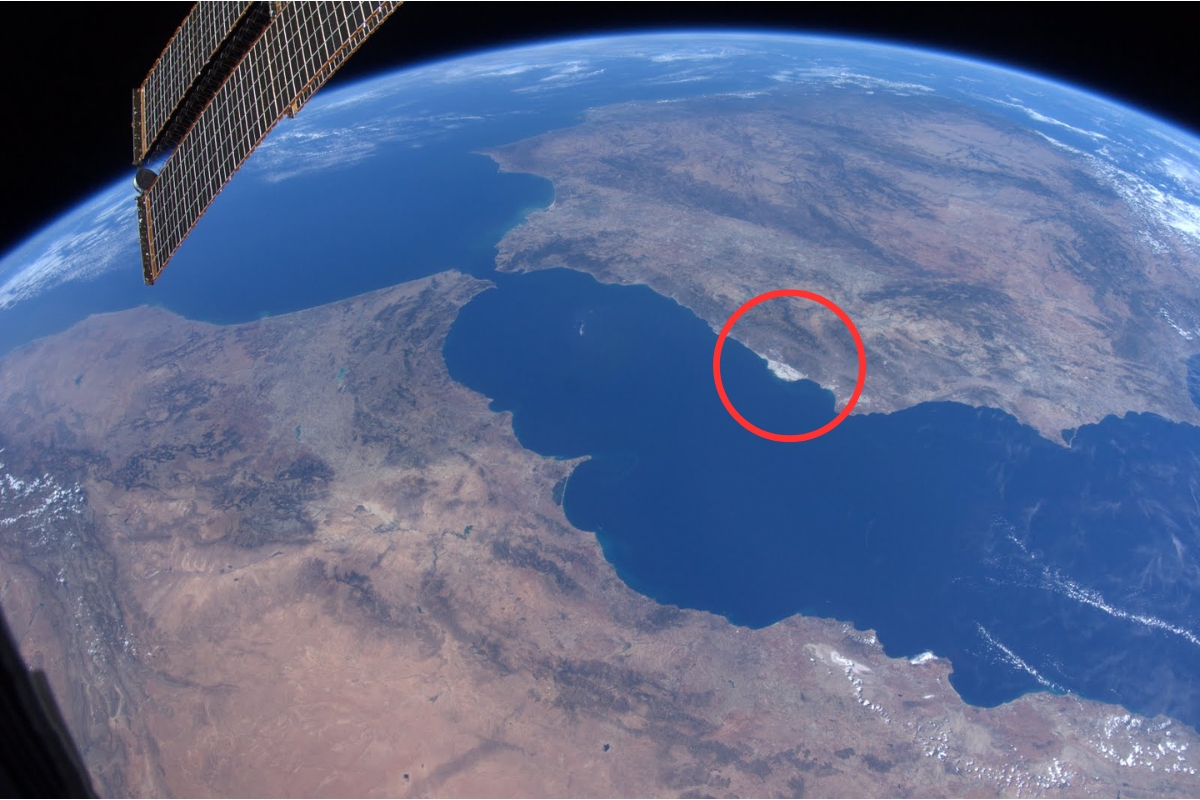
The only man-made structure in the world that can be clearly seen from space is not the pyramids of Egypt nor the Great Wall of China.
-
An analysis by NASA highlighted that the Great Wall of China and the Pyramids of Egypt are not visible to the naked eye from the International Space Station, and only one man-made structure is visible in this way.

The Idea That Became a Scientific Landmark
The experiment was conceived by Professor Thomas Parnell from the Department of Physics at the University of Queensland.
He wanted to demonstrate to his students that the behavior of matter depends on the duration of observation.
To do this, he heated the pitch until it became malleable, poured the material into a glass funnel, and left it to rest for three years, so it could settle completely.
In 1930, Parnell cut the tip of the funnel, marking the official start of the experiment. Since then, the pitch has been slowly dripping into a container positioned just below.
Nine Drops in Almost a Hundred Years
Over nearly a century, only nine drops of pitch have fallen. The tenth is eagerly awaited and is expected to occur, according to estimates, during the 2030s.
Each drop takes years to form, revealing the substance’s impressive level of viscosity.
The comparison helps to understand the phenomenon: pitch is about 230 billion times more viscous than water. This means that although it is a liquid, its movement is virtually imperceptible.
Frustrations and Achievements of the Experiment
Despite its long duration, for a long time no one had seen a drop fall. In 2000, the eighth drop dripped just before the filming system began to operate.
The ninth drop, years later, could not be recorded due to a technical failure.
Only in 2014, at Trinity College in Dublin—where a similar experiment takes place—was a drop of pitch filmed falling. This was the first time this phenomenon was recorded on video.
Longest Experiment: A Legacy That Continues
Today, the original funnel remains protected by an acrylic display case, under constant surveillance from cameras and scientific monitoring.
The person responsible for keeping this tradition alive is Professor Andrew White, the current curator of the experiment.
In 2005, the project received the Ig Nobel Prize in Physics, awarded to curious research that elicits both laughter and reflection.
The “Pitch Experiment” has also entered the Guinness Book as the longest continuous scientific experiment in the world—and has become a symbol of patience and scientific persistence.
With information from Fórum Magazine.




-

Uma pessoa reagiu a isso.