





 Portuguese
  English
  Spanish
  4 min of reading
  0 comments


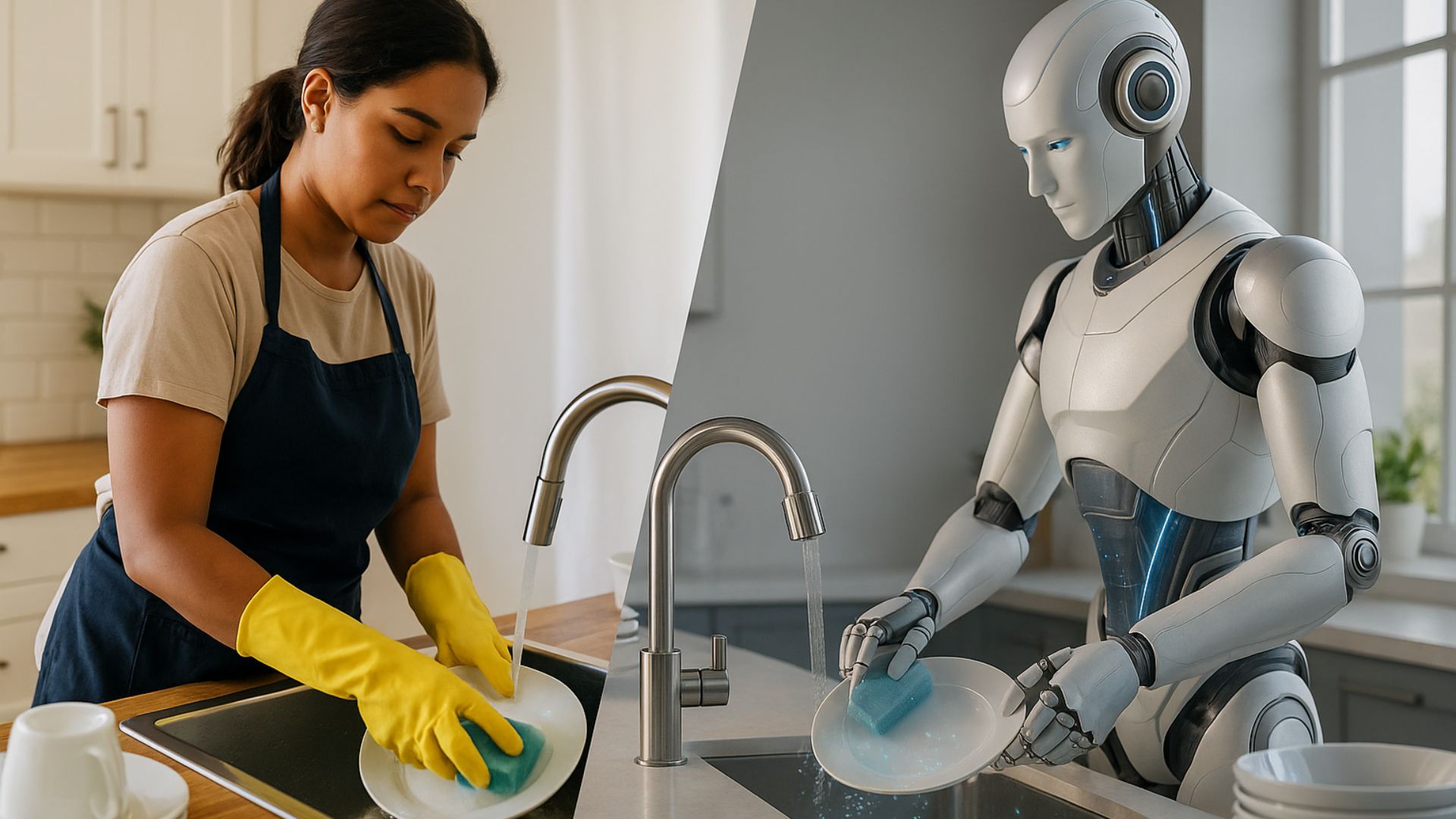
Humanoid Robot With Advanced AI Promises To Transform Household Work By Performing Tasks Like Folding Clothes, Cleaning Surfaces, And Organizing Environments, Attracting Global Attention And Raising Debates About The Impact On Jobs And Daily Life.
An humanoid robot capable of executing complex household tasks is attracting the attention of the tech world and reigniting debates about the future of domestic work.
Developed by the American startup Figure AI, the Figure 03 was officially unveiled on September 9 and is already listed among Time’s Best Innovations of 2025.
The machine, which folds clothes, cleans surfaces, and organizes environments, is considered one of the most advanced projects in the service robotics sector.
-
How the terraforming of Mars can transform the planet: artificial aerosols can increase the temperature by up to 35°C in 15 years, creating conditions for liquid water.

-
Scientists drilled nearly 8,000 meters into the ocean floor above the fault that caused the 2011 tsunami in Japan and discovered that a layer of clay 130 million years old was responsible for making the wave much worse than any model had predicted.

-
Thousands of years after causing the largest eruption of the Holocene, one of the world’s largest supervolcanoes is rebuilding itself beneath the sea south of Japan, receiving new magma and alarming scientists with its transformation.

-
China has activated a magnet 700,000 times more powerful than the Earth’s magnetic field that operates for over 200 consecutive hours while consuming little energy, and now the world wants to know what Beijing plans to do with this technology in 2026.


Integrated Artificial Intelligence And Redesigned Design
The new generation of the robot has been rebuilt from the ground up to work in conjunction with Helix, the company’s proprietary artificial intelligence system that unifies vision, language, and action.
This integration allows the humanoid to recognize objects, understand commands, and respond to interactions more naturally.
The hands of Figure 03 represent one of the biggest advancements of the line: cameras installed in the palms and tactile sensors detect slight variations in pressure — of up to three grams — enabling it to handle fragile materials like eggs or letters.
The exterior structure has also been redesigned for safe household use, featuring fabric and foam coverings of varying densities that reduce contact with metal parts.
The model is 9% lighter than its predecessor and has a battery certified by the UN (UN38.3).
The recharging system is inductive, made by the feet, eliminating visible cables and outlets, enhancing its aesthetic and practical appeal for use in homes and offices.
In-House Manufacturing And Ambitious Goals
With the aim of transforming the humanoid into a mass-produced product, Figure AI has inaugurated BotQ, a manufacturing unit with an initial capacity for 12,000 robots per year.
The company’s plan is to reach 100,000 units produced within four years, marking an unprecedented step in the industrialization of domestic robots.
According to company executives, the goal is to allow robots like the Figure 03 to take over repetitive everyday tasks, both in homes and on production lines.
The company believes that this type of automation could “increase global productivity and free people for creative activities,” but acknowledges that social acceptance is still a challenge.
What The Robot Can Already Do
Recent presentations showcase the robot folding clothes, cleaning tables, organizing closets, and operating appliances.
In controlled demonstrations, it was also seen applying soap in washing machines, separating items, and delivering small objects with precise motor coordination.
Nevertheless, the model still relies on human supervision in some steps, such as initiating wash cycles or picking up items that fall outside of its sensors’ reach.
The engineers explain that while machine learning advances rapidly, full autonomy in unstructured environments — like real homes — remains a technical obstacle.

Intense Competition In The Humanoid Market
The success of Figure AI has attracted heavy investors, including Nvidia, Microsoft, and Jeff Bezos, founder of Amazon.
In 2025, the company raised US$ 1 billion in a funding round, achieving a market valuation of US$ 39 billion, according to data from Reuters.
However, the sector has become one of the most competitive in Silicon Valley.
Tesla, led by Elon Musk, is advancing with the robot Optimus, while Chinese companies like Unitree Robotics are gaining ground with low-cost models targeted at the industry.
Analysts believe that the current race for leadership in humanoid robotics resembles the early years of the competition among smartphone manufacturers.
Safety Issues And Social Impact
With the advancement of these machines, ethical and economic concerns are also emerging.
Researchers warn that the increasing use of robots in roles previously performed by people could directly impact the domestic labor market, especially in countries with high informality.
Experts advocate that governments and businesses create professional retraining policies and clear regulations that define responsibilities in case of failures or accidents.
Figure AI states that Helix was designed with multiple layers of safety, including force restrictions and protocols for automatic shutdown in abnormal situations.
Still, issues regarding data privacy and household surveillance remain under debate, as the robot uses cameras and microphones to map environments and respond to commands.
What To Expect From Here
Despite current limitations, the Figure 03 represents an important milestone in the search for functionally useful humanoid robots.
The model combines advancements in sensors, motors, and machine learning that bring robotics closer to everyday use.
Startup executives state that the next step is to enhance the robot’s cognitive ability, allowing it to understand contexts and make more complex decisions without relying on human operators.
However, industry experts believe that cohabitation between machines and people in domestic environments will require more than efficiency: it will be necessary to gain trust and define clear ethical boundaries.
The arrival of robots capable of cleaning, conversing, and reacting to human stimuli changes the dynamics of home life — but to what extent are we ready to share space with machines that imitate human behavior so well?









-

-

-

-

-

-

22 pessoas reagiram a isso.