





 Portuguese
  English
  Spanish
 5 min of reading
  0 comments


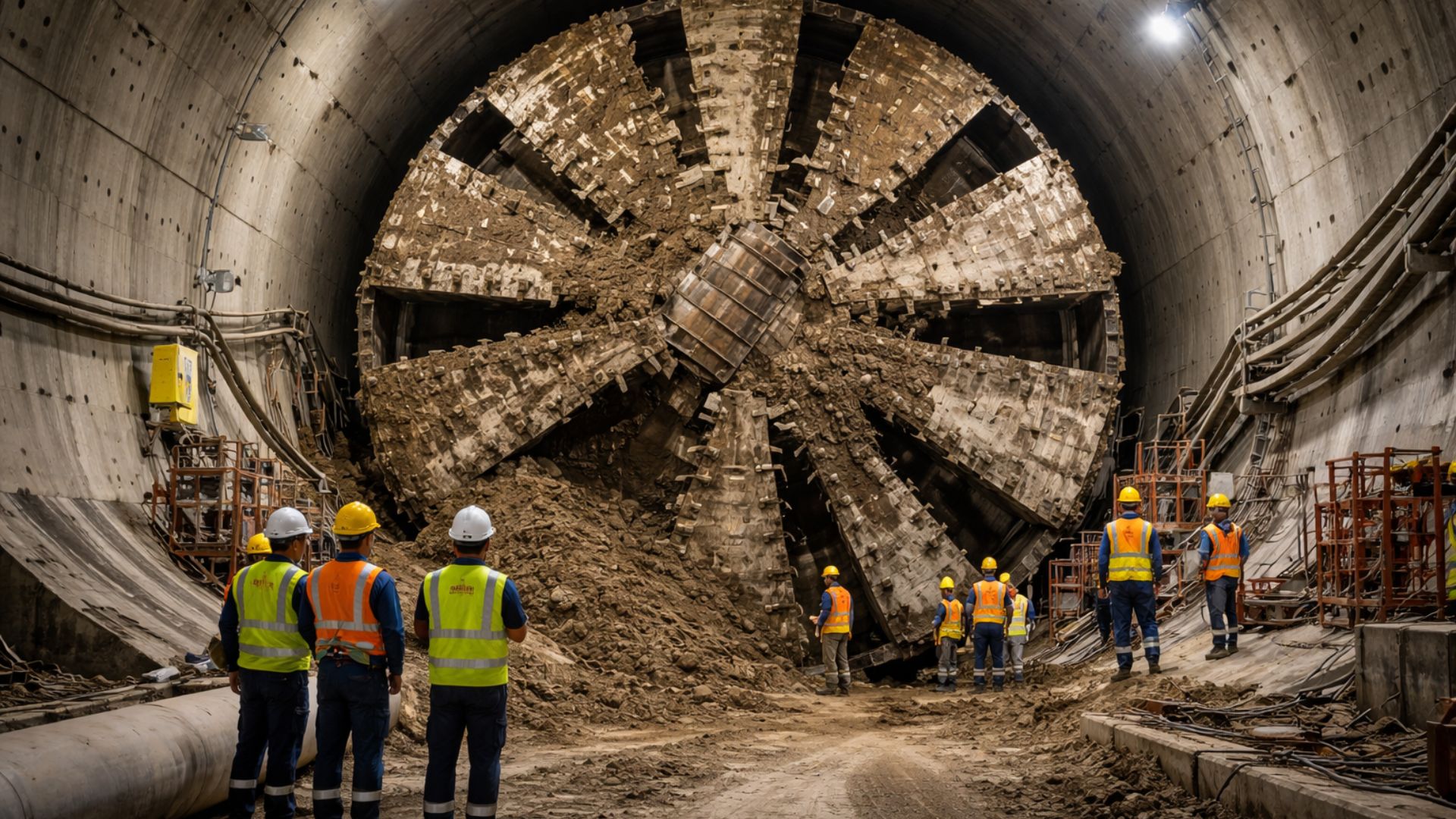
Engineering Giant Arrives Discreetly in Brazil After International Crossing and Prepares to Excavate Kilometers of Subterranean Tunnels in the Expansion of Line 2 Green of the São Paulo Metro, One of the Largest Urban Mobility Projects Underway in the Capital and the Metropolitan Region.
The new boring machine for the expansion of the Green Line of the São Paulo Metro arrived in Brazil on March 6, after disembarking at the Port of São Sebastião, on the northern coast of São Paulo.
Brought dismantled from the port of Taicang, China, the tunneler will be used to excavate about 7 kilometers of tunnels between the future Penha station and the Dutra station, on the border with Guarulhos.
Subterranean Giant Arrives in Brazil for Metro Project
The size of the equipment helps to gauge the operation.
-
While restoring a historic mansion from 1910, a brick structure with an old turbine that generated energy from the Rio do Testo emerged, along with a hidden door and a rare floor concealed under layers of wax.
-
Italian researchers have detected what appears to be a second Sphinx buried under the sands of Egypt, and satellite scans reveal a gigantic underground megastructure hidden beneath the Giza Plateau for over 3,000 years.

-
There are 4,223 drums and 1,343 metal boxes concreted with 50-centimeter walls that store the radioactive waste from Cesium-137 in the worst radiological accident in Brazil, just 23 kilometers from Goiânia, with environmental monitoring every three months.
-
Giant Roman treasure found at the bottom of Lake Neuchâtel in Switzerland reveals an advanced trade system, circulation of goods, and armed escort in the Roman Empire about two thousand years ago.


According to the São Paulo government, the machine is 133 meters long, has a cutting wheel diameter of 11.67 meters, and a total weight of approximately 2,600 tons.
With these dimensions, it has been presented as the largest tunneling machine ever used in metro projects in Brazil and Latin America.
The arrival took place without the type of public exposure common in large infrastructure projects.
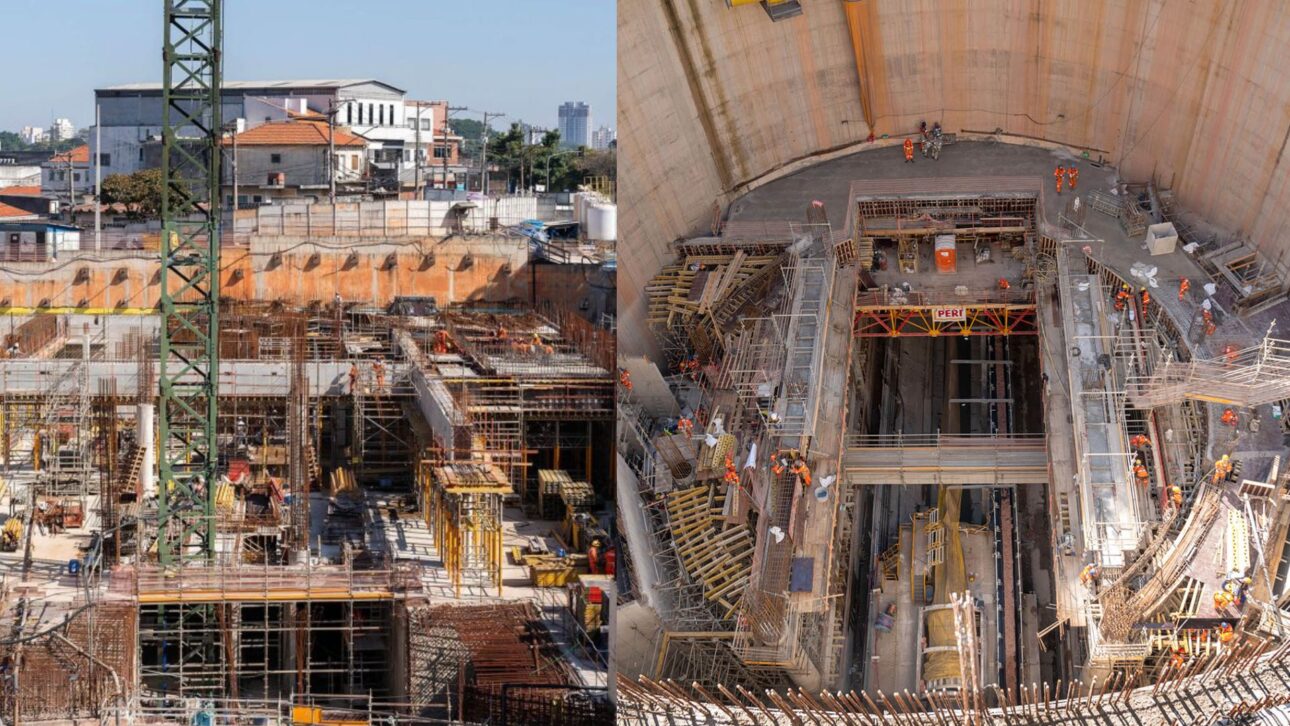
Instead of a launch ceremony or visual spectacle, the disembarkation was treated as a highly complex logistical step.
The equipment arrived in parts, stored for customs procedures, and afterwards will proceed overland to the future Penha station site, where it will be assembled over the coming months.
What Will the Route of the Expansion of Line 2 Green Be
This discreet movement contrasts with the relevance of the machine for the project.
The new boring machine will be responsible for the section that will take Line 2 Green beyond the capital, towards Guarulhos.
On the planned route, the tunneler is expected to pass through the future stations Penha de França, Gabriela Mistral, Fernão Dias, and Ponte Grande before reaching the Dutra area.
Technology and Operation of the Tunneler
The equipment was manufactured by the Chinese company China Railway Engineering Equipment Group (CREG), and is of the Dual Mode type.
In practice, this means that it can operate both in the soil balanced pressure system, which is indicated for more unstable terrains, and in open mode, used in rocky sections.
This versatility is considered strategic in a long subterranean project executed under densely urbanized areas with different geological conditions.
Its operational capacity is also noteworthy.
According to official information disclosed by the state, the average production can reach 15 meters per day in soil and about 10 meters per day in rock.
In addition to the cutting wheel, the structure includes systems for transporting excavated material, ventilation, hyperbaric chamber, and mechanisms for installing the concrete segments that form the tunnel lining.
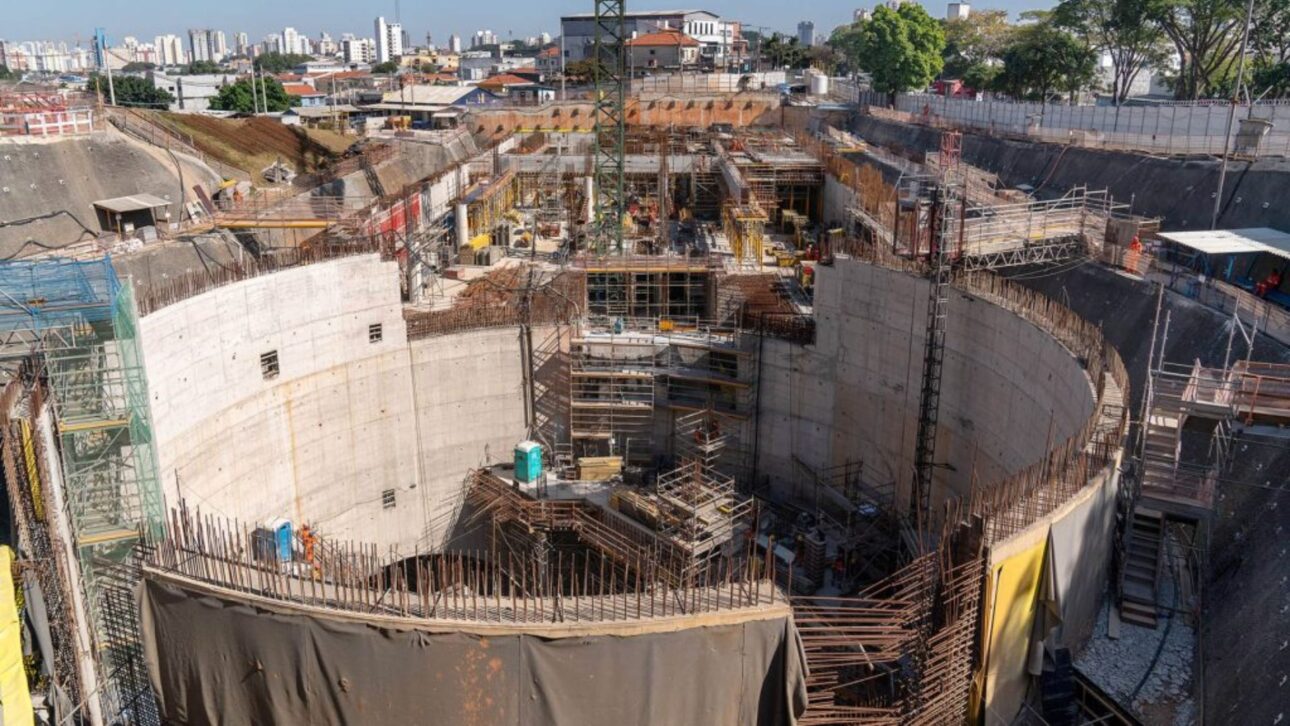
Another Tunneler Is Already Working on the Metro Project
The progress of the project, however, does not depend solely on this new giant.
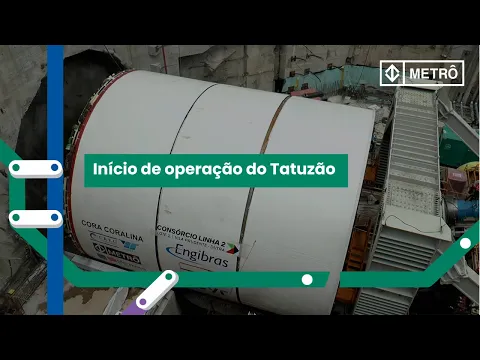
The expansion of Line 2 Green already involves the work of the tunneler Cora Coralina, which completed on May 30, 2025, the first phase of excavations between the Falchi Gianini shaft and the section serving the future stations Orfanato, Santa Clara, Anália Franco, and Vila Formosa.
In this phase, the Metro reported having constructed 3.7 kilometers of tunnels, removed 394,000 cubic meters of earth, and installed 2,456 concrete rings.
After this phase, Cora Coralina began to be dismantled to be transferred to the future Penha station site, where it will continue with the second phase of the expansion up to Penha itself.
The Metro reports that this tunneler is 100 meters long, weighs 2,500 tons, and has a cutting wheel diameter of 11.66 meters, highlighting the scale shift represented by the new equipment just arrived in the country.
Two Machines Digging at the Same Time
The presence of two tunneling machines in the expansion changes the expected pace of the project.
While Cora Coralina is associated with the section between Vila Prudente and Penha, the new boring machine will focus on the front advancing towards Dutra.
Thus, the state government plans to accelerate tunnel openings in distinct fronts, reducing the risk of concentrating the entire schedule on a single piece of equipment.
For the new boring machine, the official forecast is for excavations to start in the second half of the year, after the completion of overland transport, assembly, and the necessary technical procedures for its operation.
The state estimates that around 150 professionals will work directly on the machine’s operation, in three daily shifts.

Impact of the Expansion of Line 2 Green on Mobility
The expansion of Line 2 Green has become one of the main bets of the São Paulo government to redistribute demand on the rail network and increase transportation supply in the eastern zone.
In the ongoing phase between Vila Prudente and Penha, the Metro expects 8.3 kilometers of tracks and eight new stations.
According to the company, this expansion should benefit around 1.2 million people per day, in addition to reinforcing connections with Line 3 Red, Line 11 Coral, and, in the future, Line 16 Violet.
This context helps explain why the arrival of the tunneler, although largely invisible to the majority of the population, is regarded as an operational milestone.
In projects of this size, the machine represents not only brute strength.
It encompasses excavation technology, pressure control, internal material transport, and continuous assembly of tunnel linings, reducing surface disruptions and enhancing safety standards in the process.
That is also why the disembarkation in São Sebastião had logistical weight.
The port received an atypical load, with thousands of tons distributed in components that require specific planning for movement and storage.
The operation was classified by the São Paulo government as strategic for the metro project and for demonstrating the terminal’s capacity to handle large-scale cargo intended for infrastructure projects.
Upon arrival at the Penha site, the equipment will be reassembled piece by piece until it regains its complete configuration.

Only then will underground work begin to clear the physical path for the expansion to Dutra.
When operational, the boring machine will advance under densely occupied neighborhoods, installing tunnel structures as it excavates the soil, in a continuous process that often goes unnoticed by those on the surface.
The work has already altered the map of the Green Line within the capital and now enters a phase that prepares for the metro’s arrival in Guarulhos.
In this scenario, the machine that crossed the ocean dismantled and without fanfare now occupies a central position in one of the largest expansion fronts of the São Paulo rail system.






-

-

3 pessoas reagiram a isso.