





 Portuguese
  English
  Spanish
  4 min of reading
  0 comments


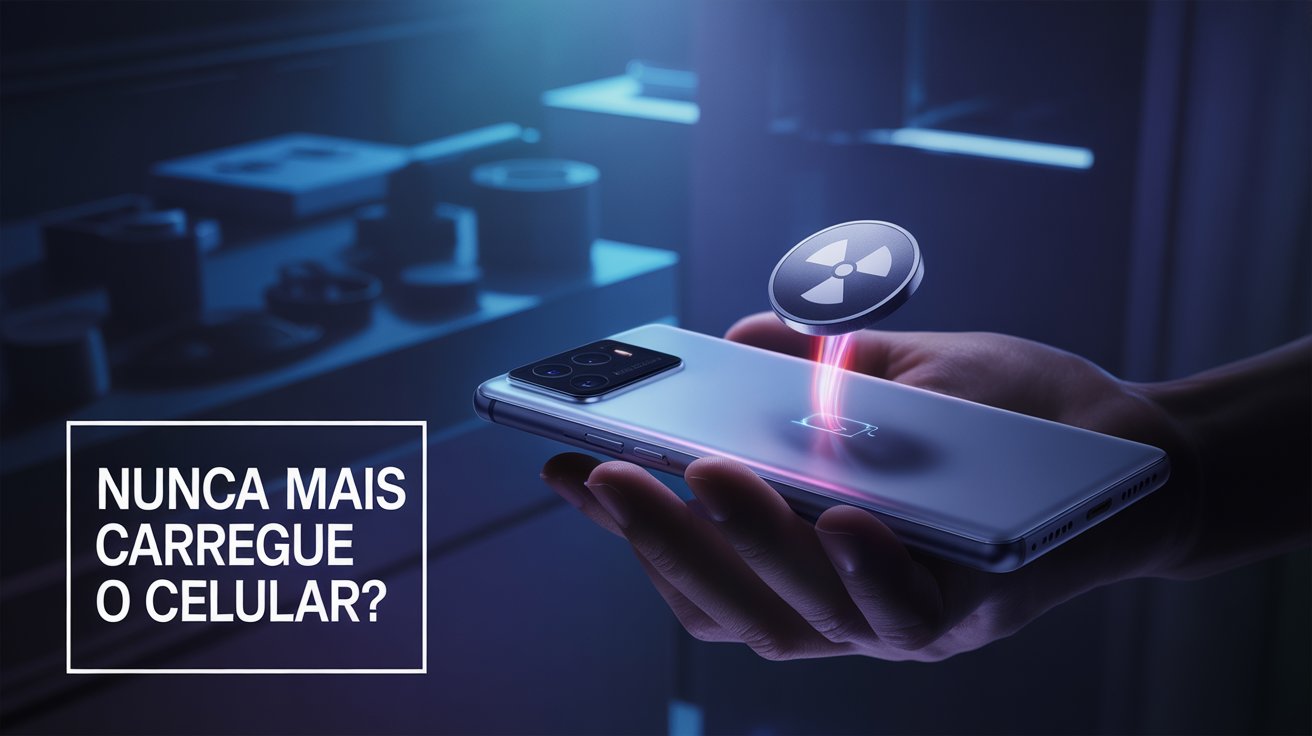
Technology Promises to Eliminate the Need for Outlets and Recharge in Electronic Devices, With a Promise of Uninterrupted Operation for Up to 50 Years.
A nuclear battery the size of a coin could render cell phone chargers obsolete.
Developed by the Chinese company Betavolt New Energy, the technology was officially announced in early 2025, with the promise of keeping electronic devices functioning for up to 50 years without recharging.
Although it is not yet compatible with modern smartphones, the company expects a more powerful version by the end of this year, capable of paving the way for mobile devices that never need to be plugged in.
-
He started running at 66 years old, broke records at 82, and is now a subject of study for having a metabolic age comparable to that of a 20-year-old, in a case that is intriguing scientists and inspiring the world.

-
With a cost per shot close to zero, the DragonFire laser could change naval warfare in 2027 and provide British ships with nearly unlimited defense against drones.

-
A British startup creates tires that generate electricity in electric vehicles when passing over potholes, speed bumps, and cracks.

-
Oldest tree on the planet reappears after 130 years of searches: Wattieza, 385 million years old, was 10 meters tall and had no leaves or seeds; Gilboa fossils in New York solved the mystery in 2007.


How the Nuclear Battery for Cell Phones Works
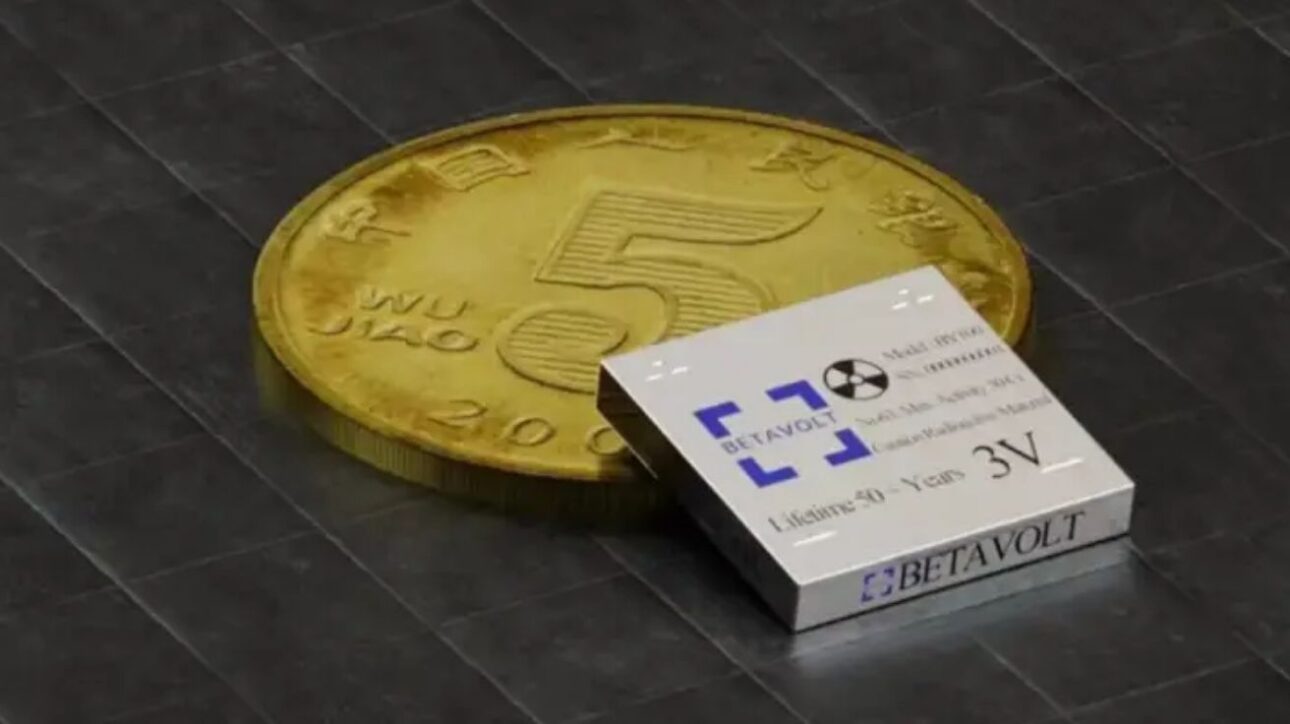
Named BV100, the nuclear battery has only 15 millimeters on each side and 5 millimeters in thickness.
Its operation is based on the conversion of beta radiation emitted by the nickel-63 isotope into electricity, a process known as betavoltaic.
Energy is generated silently as it passes through artificial diamond semiconductor, without producing excess heat or dangerous radiation for the user, according to the manufacturer.
Current Capacity and Forecast for Use in Smartphones
Currently, the BV100 delivers 100 microwatts at 3 volts, enough power only for low-demand equipment, such as sensors and pacemakers.
However, the 1 watt version, expected still in 2025, could be used in more demanding applications, including cell phones, as long as it is combined into modules.
Betavolt states that its goal is to provide viable nuclear batteries for consumer electronics, such as smartphones and tablets, within three years.
Though initially aimed at military or industrial uses, these batteries could revolutionize how mobile devices operate, especially in areas with no access to the electrical grid.
Betavoltaic Technology and Energy Security
The principle behind the technology is similar to that of solar cells, but instead of capturing light, the battery captures beta particles.
Nickel-63, with a half-life of around 100 years, emits these particles continuously and in a controlled manner, converting them into electrical current.
At the end of the process, the material transforms into stable copper, which is harmless and recyclable.
Another distinguishing feature is its environmental resilience: the battery can operate between -60 °C and +120 °C, making it suitable for extreme locations such as space, deserts, polar regions, and even war zones.
Advantages Over Conventional Batteries
Compared to lithium-ion batteries—which last on average two to three years—the BV100 offers a leap in durability and reliability.
According to Betavolt, the energy density of the new battery is up to 10 times greater than that of conventional technologies, without the risk of explosion or fire.
In addition to durability, modularity is another advantage: multiple BV100 units can be grouped together to increase total power.
This allows for adaptation to different types of equipment, including, in the future, smartphones.
Challenges to Implementing Nuclear Batteries That Do Not Need to Be Charged
Still, the use in cell phones depends on overcoming some technical challenges.
A common smartphone consumes between 2 and 6 watts, much beyond the current capacity of the BV100.
Even the 1-watt version will require the use of several combined units, necessitating solutions in miniaturization, thermal insulation, and compatibility with the internal components of devices.
Another hurdle is regulation.
Although the radiation emitted by the battery is minimal, the word “nuclear” still evokes fear in the public and may face restrictive legislation regarding the civilian use of radioactive materials.
Additionally, production costs are still high.
The diamond semiconductors used are difficult to manufacture at scale, although researchers are already developing alternatives to reduce costs.
What Changes If Cell Phones Use Nuclear Batteries
Even with these limitations, the potential impact of the technology is immense.
Devices with decades of autonomy could operate without human intervention, eliminating the dependence on electricity in remote areas, forests, oceans, or conflict zones.
In urban environments, the possibility of a cell phone that never needs to be charged could completely change users’ relationship with technology.
Would you be willing to trade the charger for a nuclear battery embedded in the cell phone, even if it is only available in more expensive or specialized models?






-

-

-

-

11 pessoas reagiram a isso.