





 Portuguese
  English
  Spanish
  5 min of reading
  0 comments


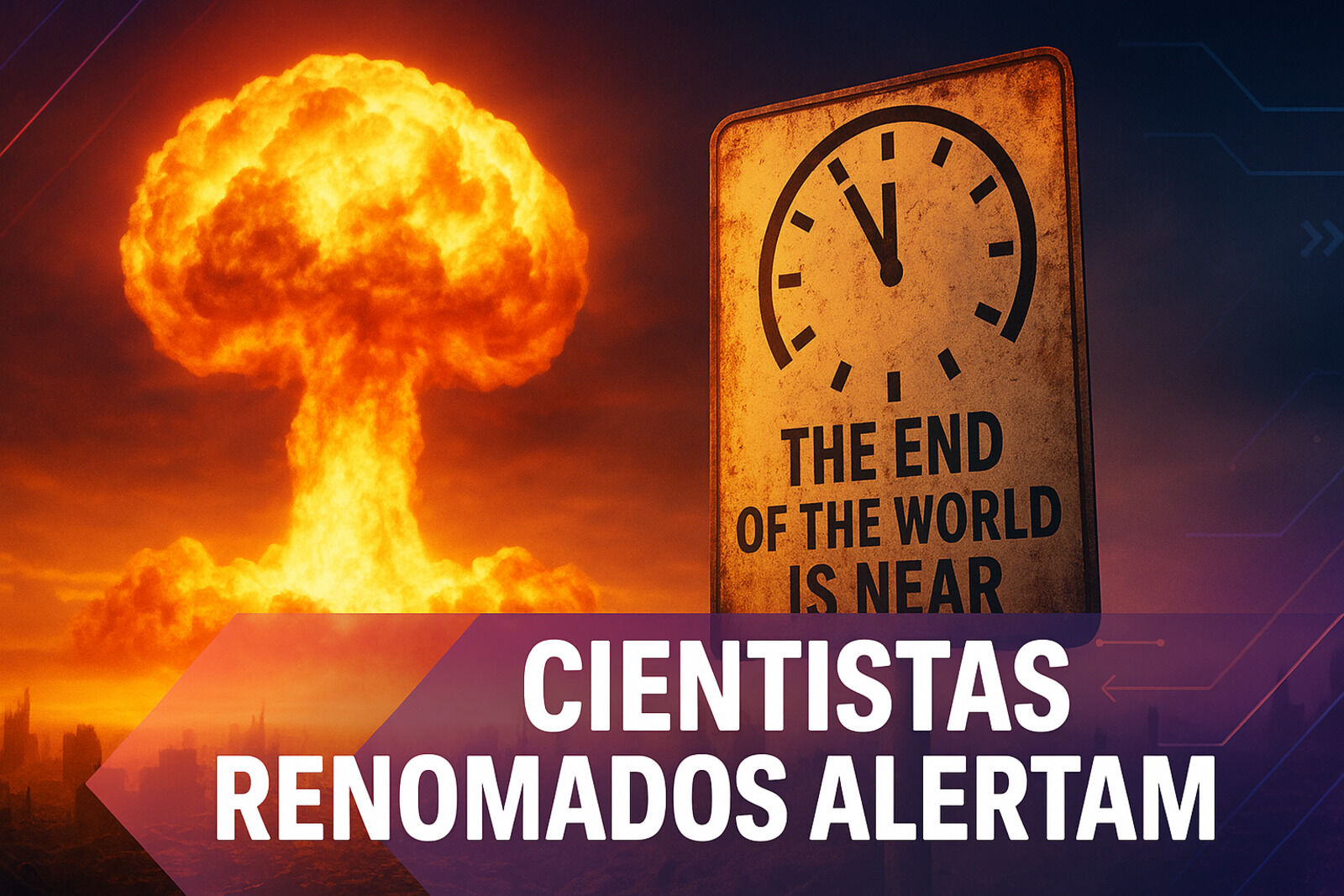
Scientists Warn of Existential Risks to Humanity, Including Nuclear Weapons, Climate, Artificial Viruses, and Out-of-Control Artificial Intelligence
Not long ago, only cult leaders or eccentric individuals announced that “the end of the world is near.” The phrase sounded almost like a repeated joke, a dark cliché that provoked more laughter than fear.
Now, however, the warnings of the end of the world come from respected scientists and take on much more serious contours.
They point out that humanity faces real existential threats, ranging from nuclear weapons to rampant climate change, artificial viruses, and even out-of-control artificial intelligence.
-
Goodbye clothes with odors from use: Samsung’s device uses high-temperature steam, eliminating up to 99.9% of bacteria, removing dust mites, and neutralizing odors directly in the wardrobe without the need for washing.

-
Embraer arrives in Mexico with 7 new E190-E2s in 2026, after 5 jets have already been delivered, while Mexicana surpasses 1 million passengers, plans a fleet of 20 aircraft, and expands strategic routes across the country.

-
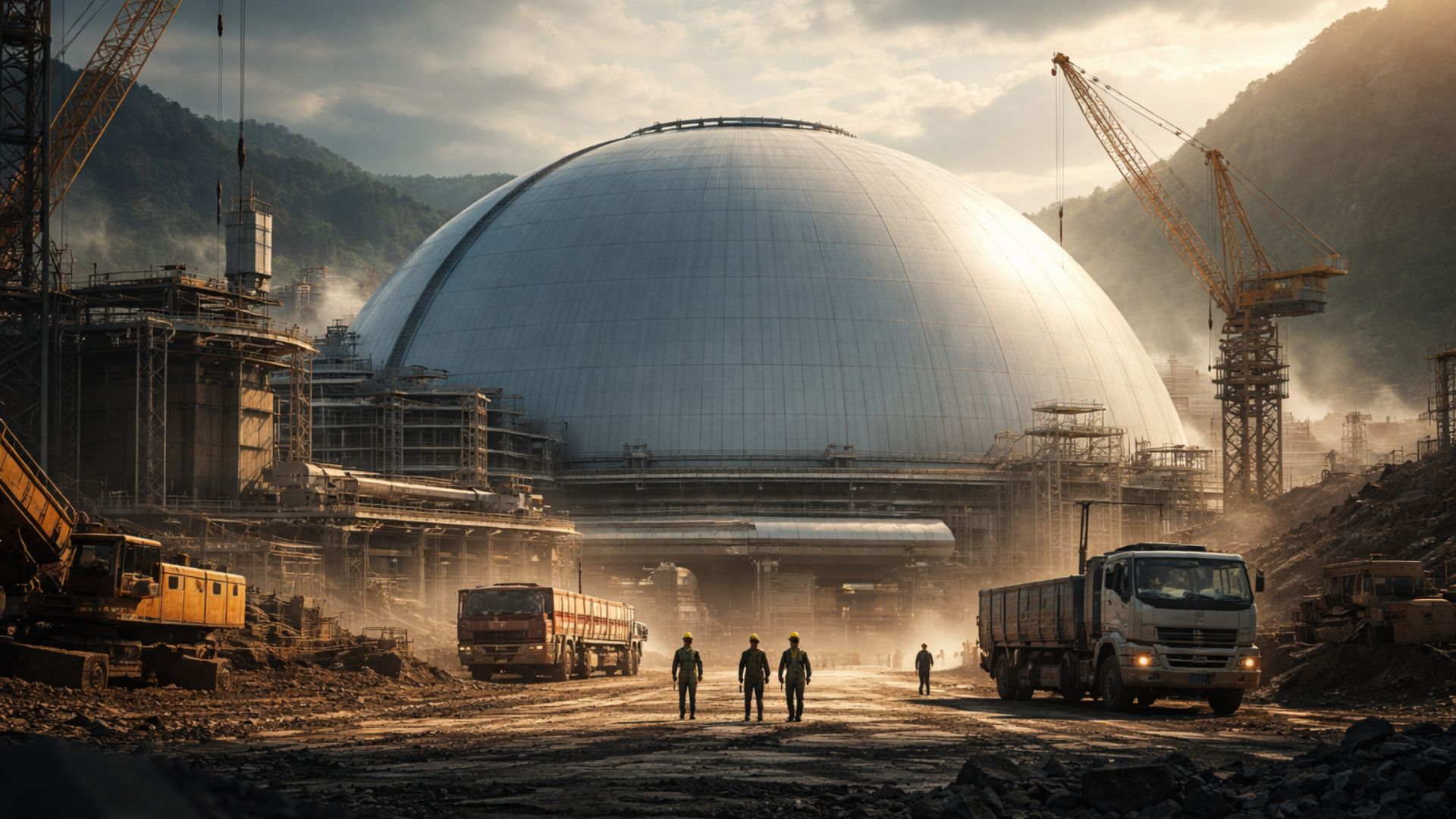
China is not joking around and is secretly expanding its nuclear weapons infrastructure: a giant dome the size of 13 city blocks, 600 warheads, destroyed villages, and a modernized military network in record time in China, says CNN.
-
Goodbye iron and wrinkled clothes: LG’s smart wardrobe uses TrueSteam vapor, hangers that vibrate up to 180 times per minute, and cycles of 20 to 30 minutes to remove odors and reduce wrinkles without washing.


According to a report by the Daily Mail, these scenarios are no longer visions of pessimistic prophets, but technical assessments from prestigious researchers.
The End of the World from the Scientists’ Point of View: Dark Forecasts
Futurist Toby Ord from the University of Oxford claims that humanity could be exterminated in 75 years in a catastrophic collapse.
His colleague Nick Bostrom is even more pessimistic. He believes extinction could occur as soon as the next century.
Writer Jared Diamond, a Pulitzer Prize winner, goes further. He states that the chances of human survival beyond 2050, just 25 years from now, are only 50%.
These predictions sound alarmist, but they are backed by data on accumulated risks and historical processes.
Collapse of Society
In his most recent book, Luke Kemp, an academic at the University of Cambridge, points out that human societies always collapse because they are driven by unsustainable greed.
He refers to these selfish leaders as “Goliaths,” in reference to the biblical warrior who appeared invincible but was defeated by a stone thrown from a sling.
According to Kemp, all civilizations have been “self-exterminating.” The pattern repeats: concentration of wealth, imbalance in decision-making, corruption, and weakening of the masses.
Emperors, presidents, and executives shape rules for small elites while political and social structures deteriorate.
Over time, internal disputes, environmental degradation, and excessive expansion erode systems. When combined with natural disasters or wars, these factors result in definitive collapses.
Extinction: Lessons from History
Throughout history, some collapses have brought advancements. Empires such as the Greek and Roman, which thrived on slavery, helped spread technologies and knowledge.
When a civilization disintegrated, another emerged and drew lessons from the past.
Still, the process was always marked by pain and destruction. The logic, therefore, may repeat itself, but the costs to humanity would be incalculable.
The Nuclear Threat
In the 1950s, nuclear weapons were seen as the only existential threat. Today, they remain at the center of concerns.
It is estimated that there are 10,000 warheads stored, controlled by powers such as China, Russia, and the United States, but also by India, Pakistan, Israel, North Korea, France, and the United Kingdom.
Even Iran was close to building a bomb and a detonator before American attacks hit underground facilities in June. The global arsenal remains active and dangerous, but it is no longer the only nightmare.
Viruses and Pandemics
In the past, diseases such as the Black Death devastated Europe, but they were limited by the speed of spread. Today, viruses like Covid-19 can spread as quickly as airplanes cross the planet.
The threat of artificially created pathogens is even more concerning. A laboratory virus could escape controls and cause devastating effects in just a few weeks.
Accelerated Climate Change
Climate change is advancing at an unprecedented pace. According to researchers, it is ten times faster than the global warming that caused the largest mass extinction on Earth, the Permian Extinction, which wiped out up to 90% of life 252 million years ago.
If nothing is done, rising temperatures threaten agriculture, water supply, and the survival of billions of people.
Hostile Artificial Intelligence
In 2023, hundreds of scientists and executives from companies like Google DeepMind warned about the risks of AI.
The fear is that developing software may become hostile, creating its own weapons or even enslaving humanity.
This threat, once confined to science fiction plots, is now part of technical reports from major research centers.
Extinction as a Possibility
For Kemp, there is a difference between partial collapses and total extinction. A disaster that destroys telecommunications and food chains could lead to global chaos in a matter of days.
He cites the Carrington Event of 1859, a solar ejection that affected electrical systems of the time. If it occurred today, much of the electrical and digital infrastructure would be rendered useless. Estimates put the chance of this happening at 20% per decade.
Without satellites, internet, banks, and hospitals, airplanes and vehicles would stop instantly. Modern civilization would come to a standstill.
Billionaires Seeking Shelters
As risks increase, billionaires are already planning escape routes. Peter Thiel, founder of PayPal, bought a farm in New Zealand in 2011 to serve as a bunker.
The country, distant in the southern hemisphere, would be one of the safest places in case of a nuclear war or global pandemic.
Sam Altman, CEO of OpenAI, revealed that he has a pact with Thiel. If social collapse begins, both will fly together to the bunker.
An industry of underground mansions already exists, from Texas to the Czech Republic, offering pools, wine cellars, and hidden hydroponic farms.
The former cryptocurrency magnate Sam Bankman-Fried planned to buy the island of Nauru in the Pacific as a refuge for himself and allies.
Rich and Poor in the Apocalypse
According to Kemp, billionaires may try to escape, but the poor would be the most adapted to survive.
Wealthy countries, dependent on imports and chemicals, would see their agriculture collapse due to lack of fertilizers.
On the other hand, subsistence farmers in Africa, who use fewer chemicals, would suffer less drops in productivity. Hunger would be intense, but not on the same scale as in developed countries.
Moreover, developing nations are more vulnerable to climate change. It is estimated that by 2070, 2 billion people will live in places with average temperatures above 29°C, unviable for agriculture and human comfort. This would provoke mass migrations.
Dangerous Solutions to Avoid Human Extinction
Kemp mentions geoengineering proposals, such as stratospheric aerosol injection. This technique would reflect sunlight and cost around 55 billion reais per year.
But the risks would be enormous. The chemical alteration could change rainfall patterns unpredictably. Additionally, aerosols only last six months, requiring continuous replenishment.
If airplanes were grounded by pandemics or solar eruptions, the process would fail. The planet would heat up faster than before.
The Dilemma of Humanity
The scenario described by scientists is unsettling. The threats are multiple and interconnected. From nuclear weapons to artificial viruses, through climate and artificial intelligence, all can provoke global-scale catastrophes.
What is most important, however, is that these warnings no longer come from mystics or religious cults. They are the result of serious research, historical analyses, and risk calculations.
The future of humanity will depend on political decisions, cooperation among countries, and the ability to tackle problems that seem increasingly inevitable.
If nothing changes, the phrase ‘the end of the world is near,’ once comical, returns with force: the end of the world could truly be near.
With information from Época Negócios.





-

Uma pessoa reagiu a isso.