





 Portuguese
  English
  Spanish
  5 min of reading
  0 comments


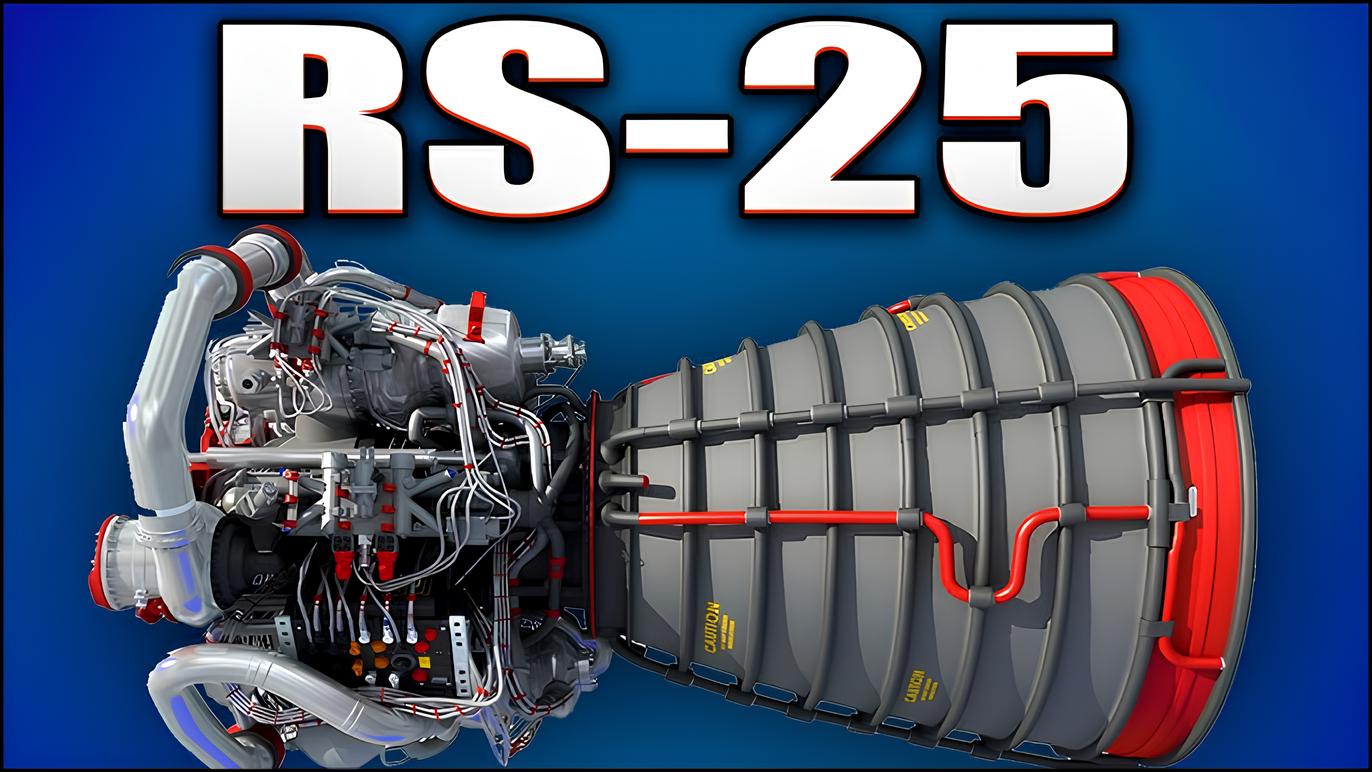
With Advanced Cryogenic Technology, the RS-25 Engines of the SLS Rocket Operate with Liquid Oxygen and Hydrogen at Extreme Temperatures, Ensuring Maximum Performance in NASA Missions with No Margin for Error
At the heart of NASA’s Artemis program is one of the most sophisticated and reliable engines ever developed by aerospace engineering: the RS-25. This is the engine that powers the SLS (Space Launch System) rocket, a rocket fueled by liquid oxygen and hydrogen operating at extreme temperatures of up to -250°C. To withstand such severe conditions, these engines need to operate with absolute precision, generating controlled explosions that cannot fail.
Why Are the RS-25 Engines of the SLS Rocket So Important?
The RS-25 engines, also known as SSME (Space Shuttle Main Engines), are legacies from the space shuttle program and have been repurposed, updated, and adapted for the SLS rocket. They represent a milestone in efficiency and safety, being fundamental to the success of the Artemis missions that aim to take humans back to the Moon and, eventually, to Mars.
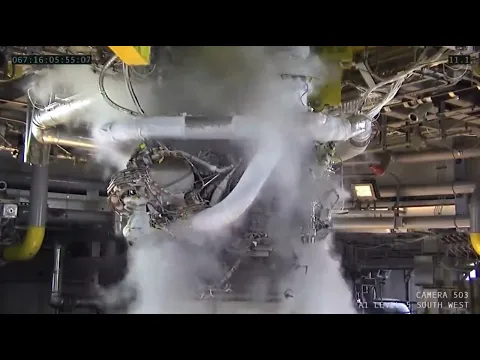

Each RS-25 engine can generate about 512,000 pounds of thrust (about 2.28 MN), and the SLS rocket is equipped with four of these engines in its main configuration. Together, they provide the necessary force to place over 95 tons of payload into low orbit.
-
Airbus and Mercedes take the G-Class to the skies: the ACH145 helicopter priced at R$ 78 million debuts in São Paulo, unit goes to Brazilian, AMG cabin, 5-blade rotor, and a 2-year wait.

-
New material could change everything: it is the thickness of an atom, 200 times stronger than steel, and 100,000 times thinner than a human hair.

-
A new study published in Nature reveals that the SLIT3 protein can increase calorie burning by activating brown fat in the body, functioning as a kind of “biological switch.”

-
New signals detected by NASA suggest that the Moon may hide accessible underground cavities, after data from Mini-RF indicated a conduit over 60 meters beneath a lunar pit.
Cryogenic Fuel in the Rocket Powered by Oxygen and Hydrogen
The rocket is powered by liquid oxygen and hydrogen, stored at extreme cryogenic temperatures: hydrogen at -253°C and oxygen at -183°C. These fuels are chosen for their efficiency and extremely high specific impulse (Isp), over 450 seconds in a vacuum.
However, operating at these temperatures requires materials and components that can withstand extreme thermal contraction, ice formation, and pressure differentials.
Any failure, no matter how small, can compromise the entire mission. The use of pressurized tanks, high-precision cryogenic valves, and specialized thermal insulation is essential.
The Operation of the RS-25 Engines of the SLS Rocket
The RS-25 engines operate in a dual-stage combustion cycle, where part of the hydrogen and oxygen is burned in pre-burners to drive turbopumps that, in turn, feed the main combustion chamber. This system allows for greater efficiency and control of the fuel mixture, optimizing the thrust generated.
This type of engine is highly sophisticated. The control of pressure, temperature, and fuel flow is managed by an integrated digital system called the Engine Controller Unit (ECU), which has been completely redesigned for the SLS rocket. The ECU is responsible for monitoring over 50 parameters in real-time.

Rigorous Testing Ensures Reliability
Before being used on the SLS rocket, the RS-25 engines undergo various tests at the Stennis Space Center in Mississippi. During these campaigns, each engine is subjected to real operational conditions, including long-duration firings and automatic shutdown tests.
In the Artemis I mission, in November 2022, all four RS-25 engines operated flawlessly, sustaining a burn of over 8 minutes without any failure. The reliability of this system is one of the pillars of success for NASA’s future crewed missions, like Artemis II, which will take astronauts to lunar orbit.
Reuse and Modernization of the RS-25 Engines
The RS-25 engines used in the space shuttles were reusable. However, for the SLS rocket, which is expendable, the engines are being produced with a focus on cost efficiency and performance. Aerojet Rocketdyne, the company responsible for manufacturing, is developing new engines with 3D printed components, reducing production time and costs.
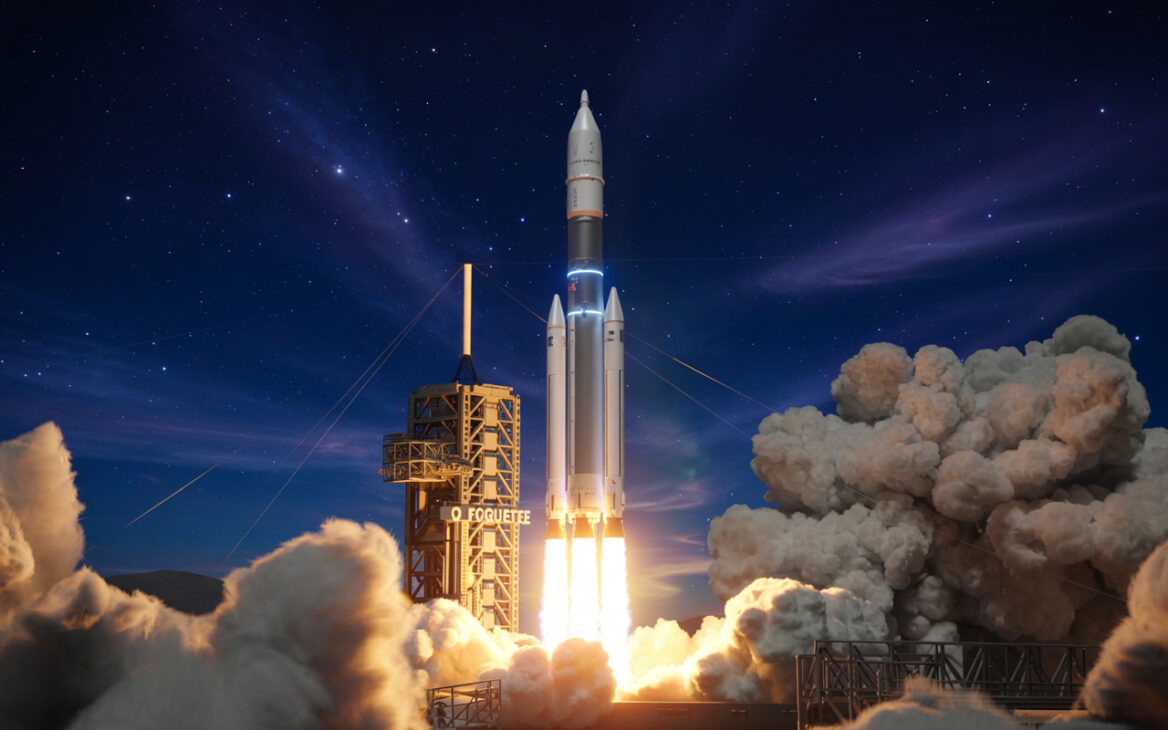
The modernized version of the RS-25 includes improvements in the combustion chamber, injector nozzles, and electronic controls, adapting the technology to the demands of the 21st century. The new engines are optimized to withstand higher chamber pressures and operate with lower tolerance for failure.
Comparison with Modern Engines from Private Companies
While the RS-25 is known for its efficiency, engines like SpaceX’s Raptor and Blue Origin’s BE-4 prioritize other factors, such as reusability and mass production.
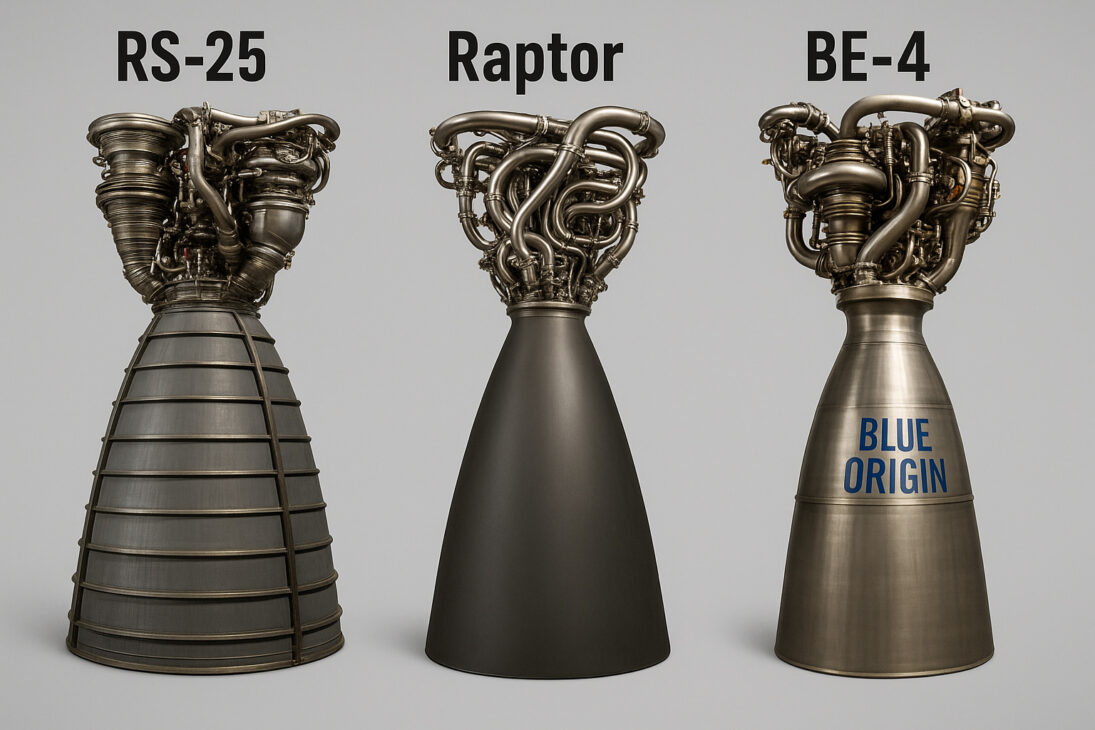
The Raptor, for example, uses methane and liquid oxygen, focusing on reusability for interplanetary travel and vertical landing capabilities.
Even so, the RS-25 is still considered one of the most reliable and efficient engines in operation, being ideal for missions where the margin for error is practically zero. Its precision and performance history continue to be important differentiators in critical missions.
The SLS Rocket and Its Role in the New Space Era
The rocket powered by oxygen and hydrogen represents more than a technological advancement: it is a bridge to the next phase of space exploration.
The RS-25 engines of the SLS rocket ensure that NASA can carry out missions with a high degree of safety, reliability, and performance.
Moreover, the knowledge accumulated in the operation of these engines has been shared with commercial and international partners, expanding the impact of this technology beyond the borders of the United States. Agencies like ESA (European Space Agency) and JAXA (Japan Aerospace Exploration Agency) are following and collaborating on technology testing and development.
Precision Engineering Shaping the Future of Space
The RS-25 engines of the SLS rocket represent the cutting edge of cryogenic space propulsion. Operating at extreme temperatures and requiring controlled explosions with absolute precision, they symbolize the intersection of cutting-edge engineering, reliability, and future vision.
The success of the Artemis I mission and plans for Artemis II and III reinforce the importance of these engines in the resumption of crewed exploration of the Solar System. The combination of liquid hydrogen and oxygen is not just a technical choice: it is a statement that precision is vital when it comes to pushing the limits of what is possible in space.
As humanity prepares to build lunar bases and eventually reach Mars, the RS-25 will remain a central component in the machinery that sustains this ambition. Trust in the SLS rocket engines is, in essence, trust in the success of the next great era of space adventure.









Seja o primeiro a reagir!