





 Portuguese
  English
  Spanish
  2 min of reading


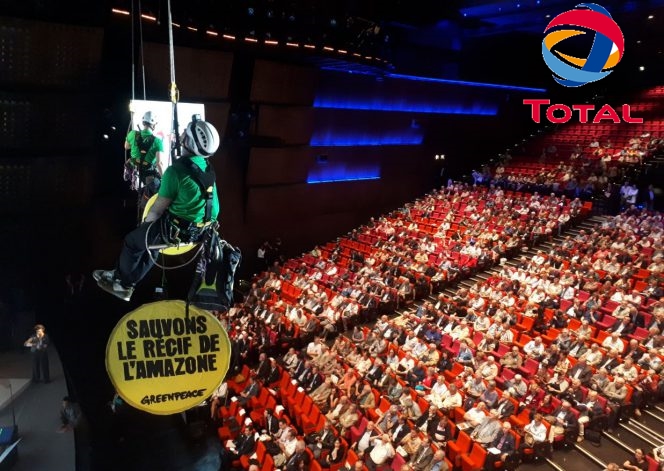
Greenpeace Activists Disrupt Total’s Annual General Meeting in Paris, Protesting Plans in the Amazon Reef off Brazil’s Coast
Several Greenpeace climbers hung banners from the ceiling inside the AGM, reading “Save the Amazon Reef.” According to Greenpeace, the proposed drilling project by Total near the Amazon Reef would risk “irreparable damage” to the reef. Greenpeace stated, “In the event of a spill or leak, not only is the reef threatened, but also the coast of French Guiana and the mangroves where dozens of communities rely on the resources provided by this environment for their livelihood.”
It was reported that Brazil’s environmental agency IBAMA rejected Total’s environmental impact plan for the Amazon Mouth Basin project this week, giving it a new deadline to address the “gaps and inconsistencies” identified.
-
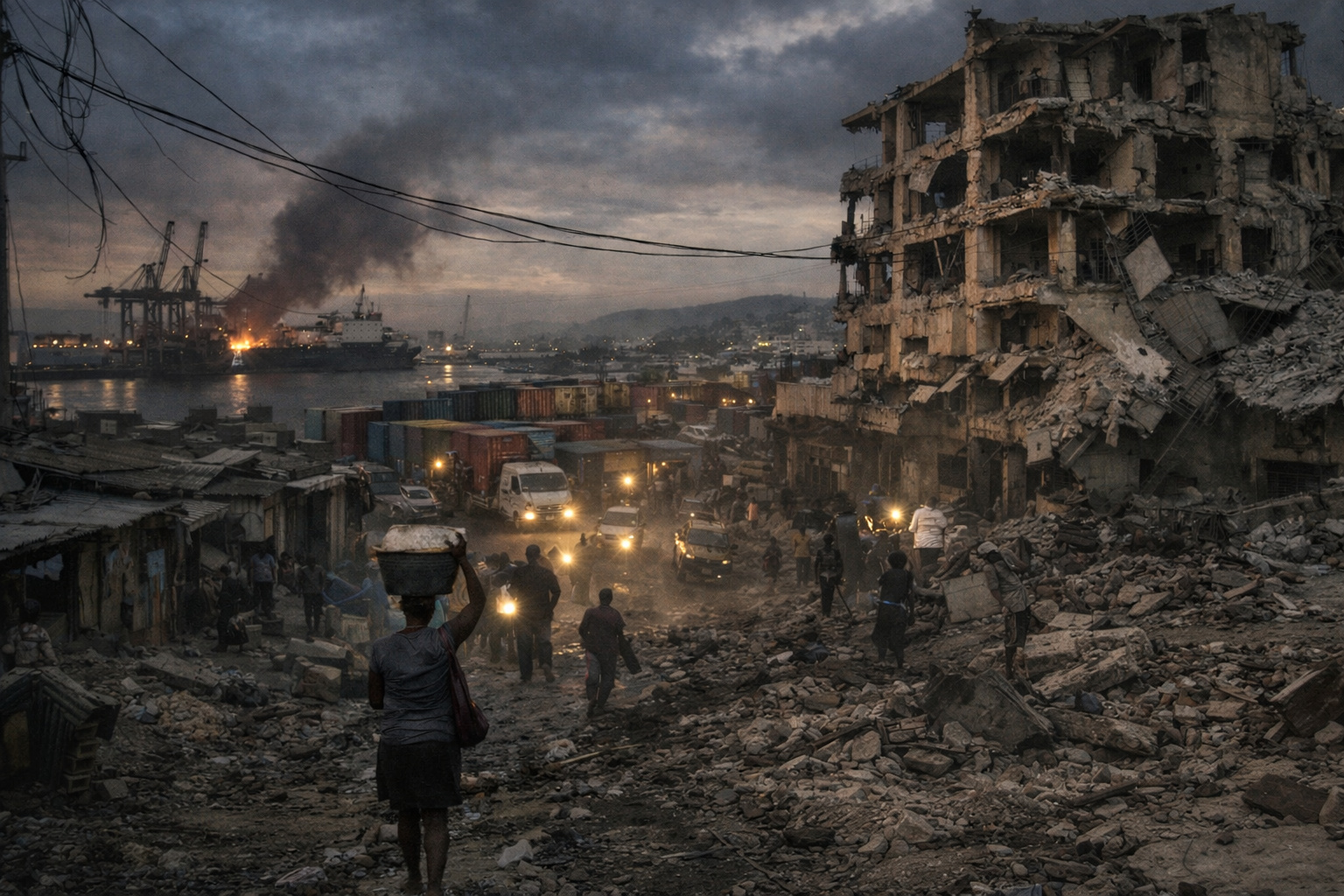
Haiti’s capital is experiencing an energy and construction crisis, facing blackouts, a blocked port, and buildings at risk after years of instability and a significant earthquake.
-
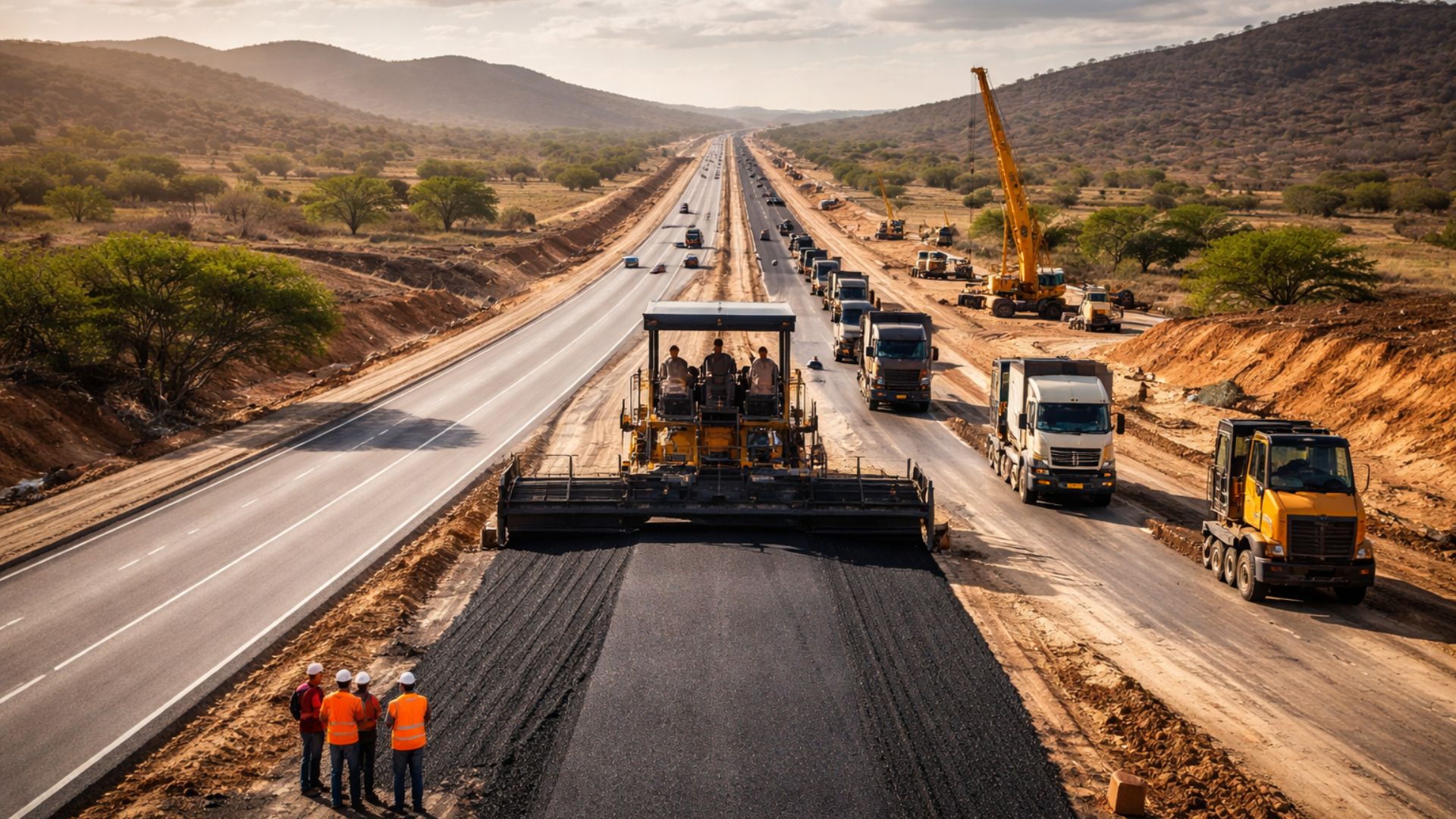
Government unlocks R$ 554 million for a highway that has been requested for decades and accelerates the duplication of BR.
-
Without bricks, without cement, and without endless construction: the cardboard house that is assembled in modules and can be moved.

-
Billions of barrels on the equatorial margin could lead Amapá to double its oil production in Brazil — the state aims to enter the route of companies in the Campos Basin, attract investments, and boost jobs and businesses in the oil and gas sector.


Total Event in Paris with Greenpeace Activists Protesting Above
As previously published, Greenpeace stated in April that its team of scientists aboard the Greenpeace ship Esperanza “documented the existence of a rhodolith field where the French company Total intends to drill for oil, 120 kilometers off Brazil’s northern coast.”
Rhodoliths are calcareous algae that serve as habitat for fish and other reef creatures. Their presence, according to Greenpeace, confirms that the Amazon Reef extends even further than previously expected and could cover an area of 56,000 km2 – almost six times larger than previous scientific estimates.
“The discovery proves the existence of a reef formation in the area and invalidates Total’s Environmental Impact Assessment (EIA), which states that the nearest reef formation is 8 kilometers from one of the oil blocks,” Greenpeace said at the time.
Total Claims There Are No Rhodoliths in Its Block
Responding to Greenpeace’s allegations, Total, which operates five blocks in the area, stated in May: “Total confirms that no biogenic formations have been identified in Block FZA-M-57. The planned exploration well in Block FZA-M-57 (water depth of approximately 1,800m) will be 28 km from the previously identified rhodolith beds and 34 km from the location where the NGO reported finding rhodoliths most recently.”
According to Total, Greenpeace’s vessel went to the boundary limits of block FZA-M-86, where it reported finding rhodolith beds within the area surveyed at a water depth of about 180m.
“Total reaffirms that it operates in strict compliance with applicable laws and applies the best industry practices in E&P regarding safety, well design, drilling, and environmental protection,” said the French oil company. Learn about the Platforms TOTAL Will Hire for Activities in Brazil by Clicking Here.






Seja o primeiro a reagir!