





 Portuguese
  English
  Spanish
  5 min of reading
  0 comments


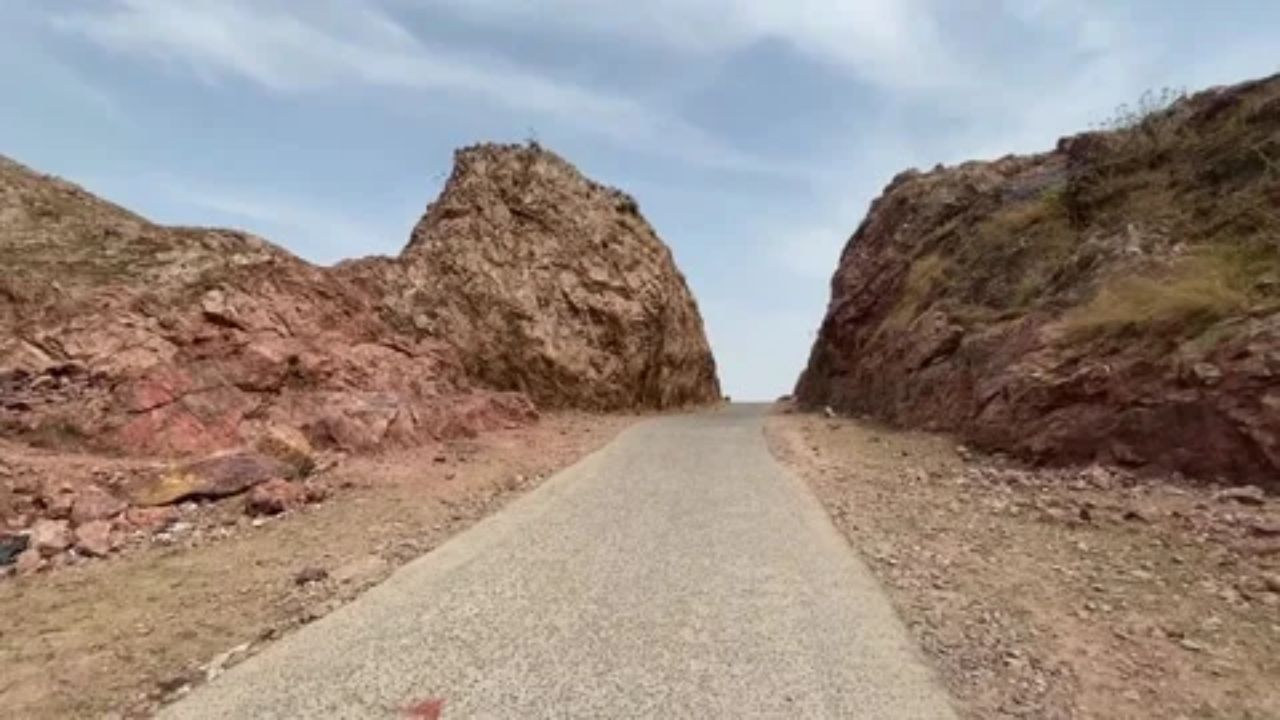
Driven By Grief, He Spent More Than Two Decades Breaking A Mountain Alone, Armed Only With A Hammer And Chisel, To Create A Path For His Village.
The story of Dashrath Manjhi, known as the “Mountain Man” of India, is a testament to determination and grief. In the village of Gehlour, Bihar, as detailed by his main biographical source, Manjhi undertook an apparently impossible task in 1960: to carve a path through a rocky summit. What motivated him was not glory, but a devastating personal tragedy.
<p.His wife, Falguni Devi, died in 1959 for lack of timely medical access, blocked by the mountain that required a detour of miles. In response, Manjhi spent the next 22 years, from 1960 to 1982, working alone. With only a hammer and a chisel, he carved a passage of 110 meters long, 9.1 meters wide, and 7.7 meters deep through solid rock, an achievement documented by his biography.
The Tragedy That Forged A Legend
Life in the village of Gehlour, in Gaya district, was defined by isolation. According to the Biographical Source, a rocky summit separated the community from essential services like hospitals in nearby towns. For the residents, this geographical barrier was a sentence of hardship, forcing journeys that, according to the same source, could range from 55 km to 70 km to access basic care.
-
These living root bridges and ladders are over 700 years old and help indigenous people survive in one of the rainiest regions in the world.

-
From sertanejo star to international investor: Ana Castela invests millions in a mansion in the USA, creates a themed accommodation in Orlando, and shows that the “boiadeira” also wants to grow away from the stage.

-
The 10 most stunning motorhomes in the world: a $3 million trailer with a rooftop nightclub and garage for a Ferrari, “palaces on wheels” with Italian marble, private cinema, and five-star hotel luxury for billionaires.

-
Trump wanted to spend $400 million on the White House, but the courts prohibited the million-dollar construction.


Dashrath Manjhi was not just a poor rural laborer; he belonged to the Musahar caste (Dalit), one of the most marginalized groups in India, as pointed out by an Academic Analysis regarding his feat. This context is crucial: the mountain was a physical barrier, but his caste was a social barrier that rendered him invisible to the government. The state’s neglect in building a road for Dalits was the true root cause of isolation.
In 1959, tragedy struck. Falguni Devi, Manjhi’s wife, suffered a severe fall. The inability to get her to a doctor in time, due to the distance imposed by the mountain, sealed her fate. Her death, as reported by the Biographical Source, was not a mere accident, but a direct result of a relentless geography and social apathy.
22 Years Of Hammer And Chisel
In 1960, driven by pain and anger, Manjhi made a vow: he would break the mountain. His goal was to ensure that no one else in his village would suffer the same loss. To fund his mission, he sold his only possessions, three goats, to buy a hammer and a chisel, according to the Biographical Source.
The work, which lasted from 1960 to 1982, was initially met with scorn. Villagers called him crazy, but Manjhi said this only “reinforced” his determination. Day after day, for 22 years, he struck the stone. Over time, ridicule turned into respect, and some villagers began to help him with food and tools.
In the end, he created the path now known as “Dashrath Manjhi Path“. The impact of this passage on distance is remarkable, although biographical sources show a discrepancy: one more bureaucratic narrative states that the road reduced the distance between the blocks of Atri and Wazirganj from 55 km to 15 km. The other, more legendary and popularized, claims a reduction from 70 km to just 1 km. The second version, while perhaps less precise, captures the symbolic truth of Manjhi’s superhuman feat.
The “Shah Jahan Of The Poor Man” And The Dalit Symbol

The press and filmmakers, as highlighted by News Articles (Times of India, ThePrint), dubbed Manjhi the “Shah Jahan of the Poor Man”. The comparison is poetic: both took 22 years to create a monument to their deceased wives. However, as the reports point out, the paradox is profound. Shah Jahan used the wealth of an empire to build the Taj Mahal, a monument of beauty. Manjhi, with nothing, used only his body to build a monument of pure utility: a road.
Manjhi’s work transcends romance; it is a political act. As the Academic Analysis points out, being a Dalit, his struggle against the mountain became a symbol of resistance against the oppressive caste system. The mountain was a metaphor for the social barrier that separated his Dalit community from the “New India” with hospitals and jobs.
The Academic Analysis argues that Manjhi intervened in Dalit iconography. The very word “Dalit” means “broken” or “crushed”. Manjhi, a man whom the system tried to crush, refused to be broken; instead, he became the “breaker”, smashing the mountain that represented caste oppression.
The Ironic Legacy: Global Fame, Local Poverty
The story gained global fame, especially following the 2015 biographical film, “Manjhi – The Mountain Man”, as cited in News Articles. The Bihar government, which had ignored Manjhi for decades, eventually granted him a state funeral after his death in 2007 and paved the path he opened, according to the Biographical Source.
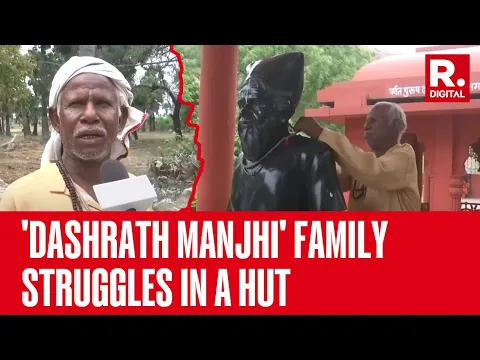
However, the legacy for his family is tragic. Reports from the Times of India and ThePrint are clear: decades after the feat and years after the success of the film, Dashrath Manjhi’s family continues to live in extreme poverty, feeling exploited.
Manjhi’s son, Bhagirath, publicly stated that filmmakers made financial promises that were never fulfilled, despite the film’s profits, according to News Articles. The family that gave the world an inspiring story of resilience remains trapped in the same cycle of poverty and neglect that the “Mountain Man” struggled so desperately to break.
The saga of Dashrath Manjhi is a paradox. He proved that a single individual, driven by love and fury, can literally move mountains. Yet, his legacy also exposes a bitter truth: cultural fame does not always translate into social justice.
Is Manjhi’s story one of triumph or exploitation? What shocked you the most about this 22-year saga: his determination or the irony of how his family ended up? We want to know your genuine opinion on this legacy. Leave your comment.






-

-

-

-

-

-

13 pessoas reagiram a isso.