





 Portuguese
  English
  Spanish
  5 min of reading
  0 comments


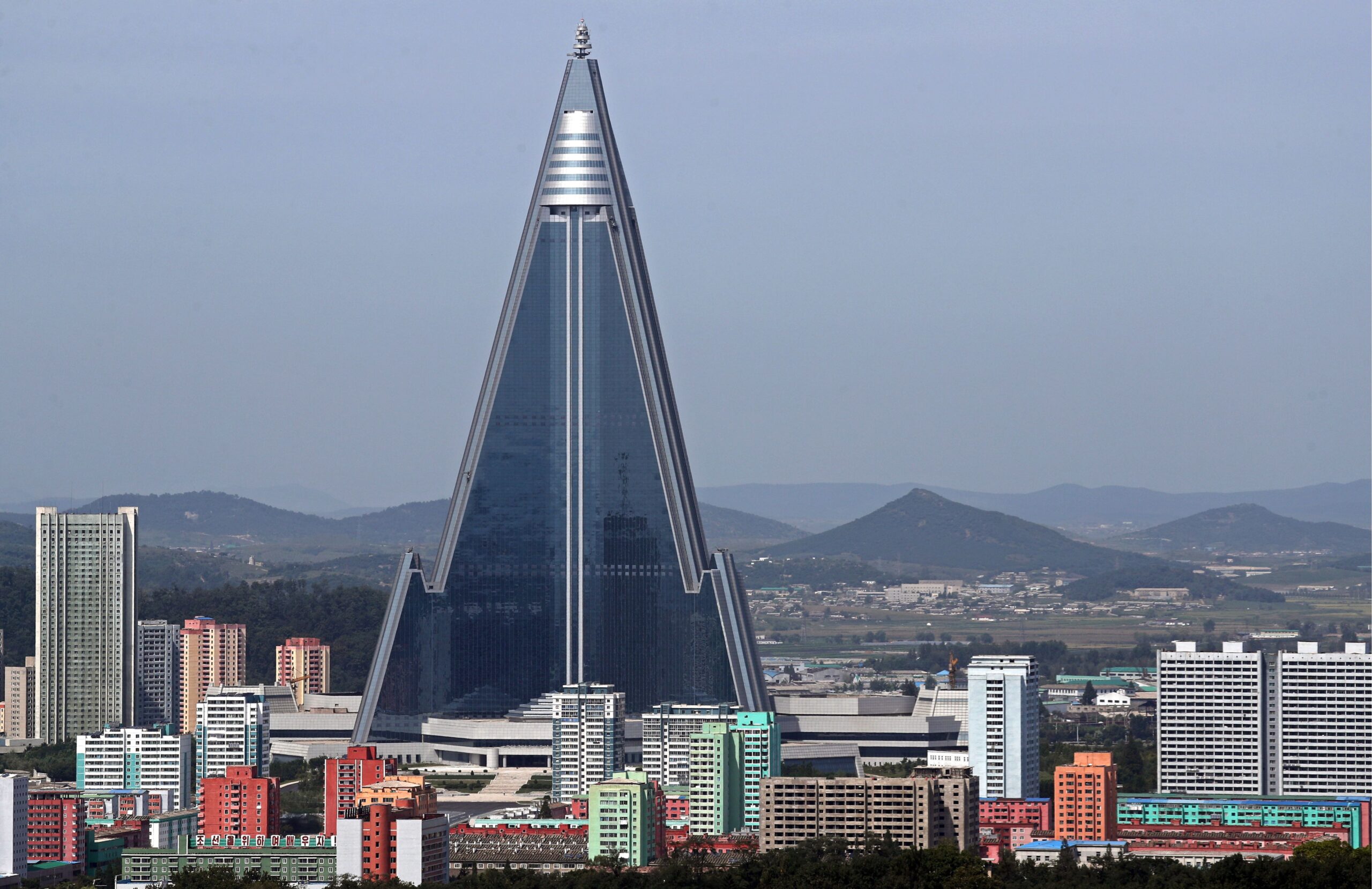
Discover The History Of The Ryugyong Hotel, The Iconic Unfinished Skyscraper Of North Korea That, Despite Having 1,000 Planned Rooms, Has Never Hosted Guests. A Symbol Of Isolation And Frustrated Ambitions That Hangs Over Pyongyang For More Than Three Decades
In the heart of Pyongyang, the capital of North Korea, stands a monumental structure that defies urban and economic logic: the Ryugyong Hotel, known internationally as the Soviet hotel with 1,000 rooms that has never hosted a guest. Standing at 330 meters tall with 105 floors, the building was intended to be the largest hotel in the world when construction began in 1987. However, more than three decades later, it remains closed, never having opened its doors to the public.
Despite its imposing and futuristic appearance, the Ryugyong is a symbol of frustrated ambitions and a regime that prioritized propaganda over functionality. With construction halted several times due to lack of funds and international sanctions, it has become one of the most iconic landmarks of unfinished architecture on the planet.
Ryugyong Hotel: An Ambitious Project Born From The Cold War
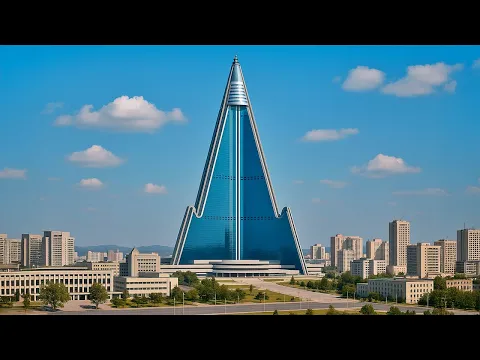

The Ryugyong Hotel was conceived during the height of the Cold War, as North Korea’s response to a South Korean project in Seoul: the Westin Stamford Hotel, built by the Hyundai Group and considered at the time the tallest hotel in Asia. Kim Il-sung’s government wanted to demonstrate technological and architectural superiority, launching the Ryugyong project as a symbol of national power and prosperity.
-
With 1,066 acrylic panels, the building known as the friendly alien is supported by a steel skeleton, has a façade that functions as a giant screen, and impresses the world without any internal columns.
-
Scientists warn that a comet about 1 km in size that has started to release gases may actually change direction in space. It was spotted by NASA and surprises with potential impacts near Earth.
-
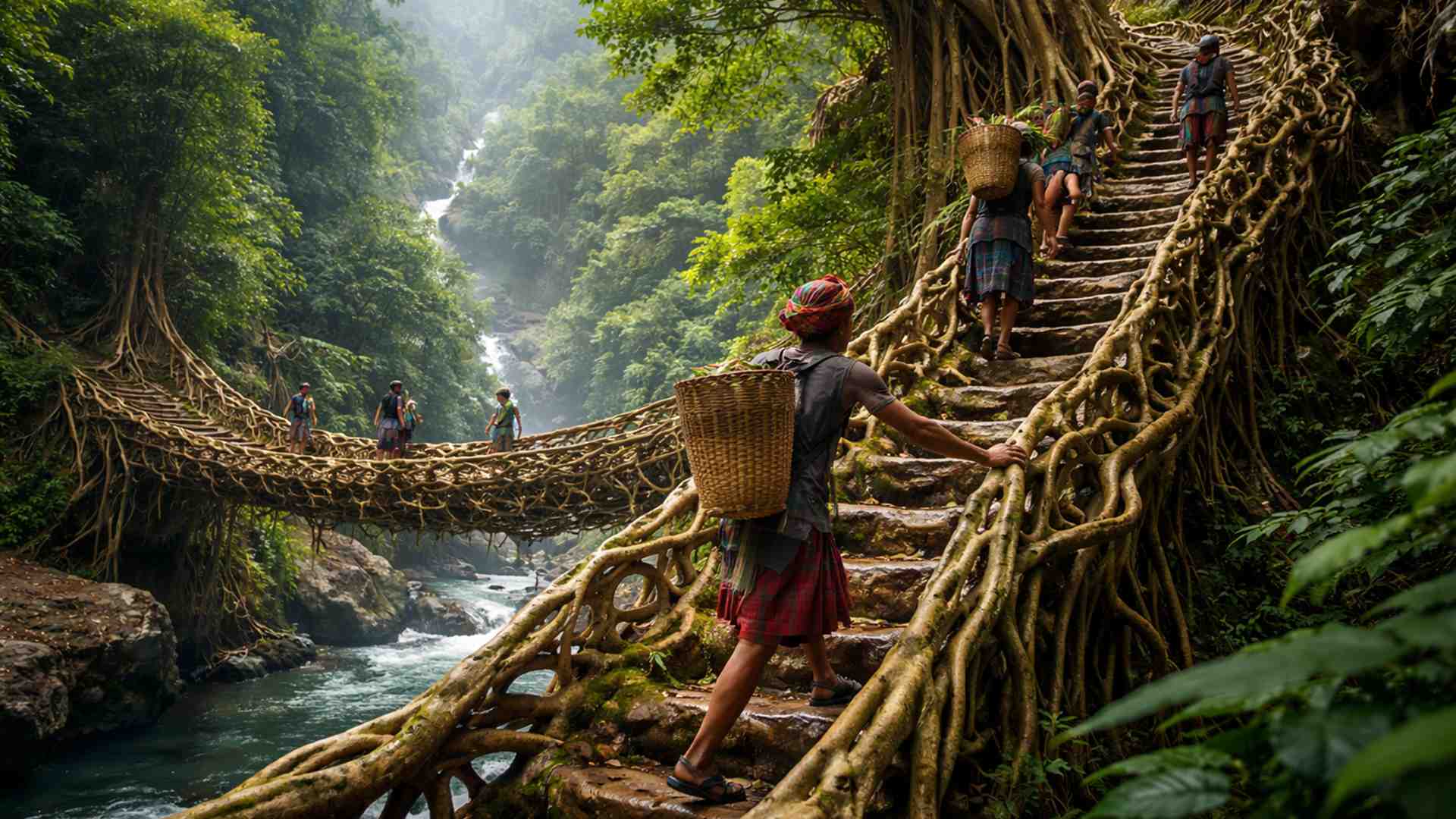
These living root bridges and ladders are over 700 years old and help indigenous people survive in one of the rainiest regions in the world.
-
From sertanejo star to international investor: Ana Castela invests millions in a mansion in the USA, creates a themed accommodation in Orlando, and shows that the “boiadeira” also wants to grow away from the stage.


The name “Ryugyong” means “capital of willows,” an ancient historical name for Pyongyang. The expectation was that the hotel would attract tourists, investors, and foreign businessmen, boosting the national economy and strengthening the international image of the regime.
Impressive Technical Specifications
- Total Height: 330 meters (the tallest building in North Korea to date)
- Number Of Floors: 105
- Projected Capacity: 3,000 guests in more than 1,000 rooms
- Total Built Area: about 360,000 m²
- Estimated Cost: more than US$ 750 million
A Work Paralyzed By The Economic Crisis
In 1992, just five years after construction began, the work was abruptly suspended. The fall of the Soviet Union — North Korea’s main economic ally — caused a severe crisis in the country, known as the “Arduous March”, resulting in food, energy, and investment shortages.
Without external funding and with costs soaring, the hotel that never hosted a guest became an abandoned concrete skeleton. For years, the Ryugyong was omitted from official maps, aerial photographs, and state propaganda, as if its existence embarrassed the regime.
Attempts To Resume: Hope Or Illusion At The Ryugyong Hotel?
The construction of the Soviet hotel with 1,000 rooms that has never hosted a guest was briefly resumed in 2008, when the Egyptian company Orascom Group reached an agreement with the North Korean government. Orascom was involved in installing mobile networks in the country and, in exchange, committed to renovate part of the Ryugyong’s facade.
The exterior coverage was completed in 2011, with the installation of over 100,000 reflective glass panels and an LED display at the top of the building, used for regime propaganda. The hotel’s new appearance caused a stir in international media, with speculation about its imminent inauguration. However, no date was confirmed, and the building remains empty inside.
In 2018, the South Korean telecommunications company Koryo Tours was invited for a special visit to the hotel. They reported that the interior remained unfinished, lacking finishes, proper staircases, and functioning plumbing or electrical systems.
Propaganda And Isolation: The Role Of The Ryugyong Hotel In North Korea
Today, the Ryugyong is one of the most controversial symbols of North Korea. Its imposing presence on the Pyongyang skyline contrasts with the visible poverty in the city streets. Rather than representing innovation or prosperity, it serves as a reminder of the costs of economic isolation and the regime’s questionable priorities.
Architects and urban planners often cite it as a classic example of what is called “megalomania architecture” — grand constructions that have more symbolic value than functional ones. Its triangular and pointed shape has been compared to a spaceship or a futuristic pyramid, which only adds to its global mystique.
The Hotel That Never Hosted A Guest And Its International Reputation
International media and political analysts often refer to the Ryugyong as “the hotel that never hosted a guest”. This nickname has become almost official, being repeated in documentaries, reports from the BBC, CNN, and specialized architecture channels such as Architectural Digest and Dezeen.
Furthermore, the building has been included in lists such as:
- “The 10 Scariest Buildings In The World” (Forbes)
- “The Largest Unfinished Works In History” (National Geographic)
- “The White Elephants Of World Architecture” (The Guardian)
The hotel’s negative fame is fueled by its size, location, and political history. At the same time, it fascinates architects, urban explorers, and foreign tourists who manage to visit North Korea — even without being able to enter the building.
Pyongyang And The Policy Of Large Construction
The capital of North Korea is home to other large-scale constructions, such as the Juche Tower, the Reunification Arch, and the Rungrado 1st May Stadium — the largest football stadium in the world by capacity. All these structures adhere to the logic of grandeur and monumentalism that has characterized North Korean architecture since the 1950s.
However, the Ryugyong surpasses all other constructions in terms of visual impact and controversy. Its persistent disuse raises questions about the real objectives of its maintenance, as keeping a building of this magnitude closed for decades incurs significant costs.
The Future Of The Soviet Hotel With 1,000 Rooms That Never Hosted A Guest
Despite the various promises made over the years, there is no concrete evidence that the hotel will open soon. Experts point out that a billion-dollar investment would be necessary to finish the interior, which remains in raw condition.
With the worsening international economic sanctions against North Korea and the scarcity of tourism in the country, it seems unlikely that the Soviet hotel with 1,000 rooms that has never hosted a guest will become functional in the near future.
The Ryugyong Hotel is much more than an unfinished building. It represents decades of isolationist policies, exaggerated ambitions, and priorities misaligned with the real needs of the population. For the North Korean regime, it may still symbolize an ideal of glory and power; for the world, it is a silent reminder of the consequences of projects that prioritize appearance over functionality.
Although it remains closed, the hotel that never hosted a guest continues to arouse curiosity and generate debates about architecture, politics, and society. And, even without hosting guests, it has already earned its place in history — as one of the most enigmatic and symbolic buildings of the 20th century.





-

Uma pessoa reagiu a isso.