





 Portuguese
  English
  Spanish
  5 min of reading
  4 comments


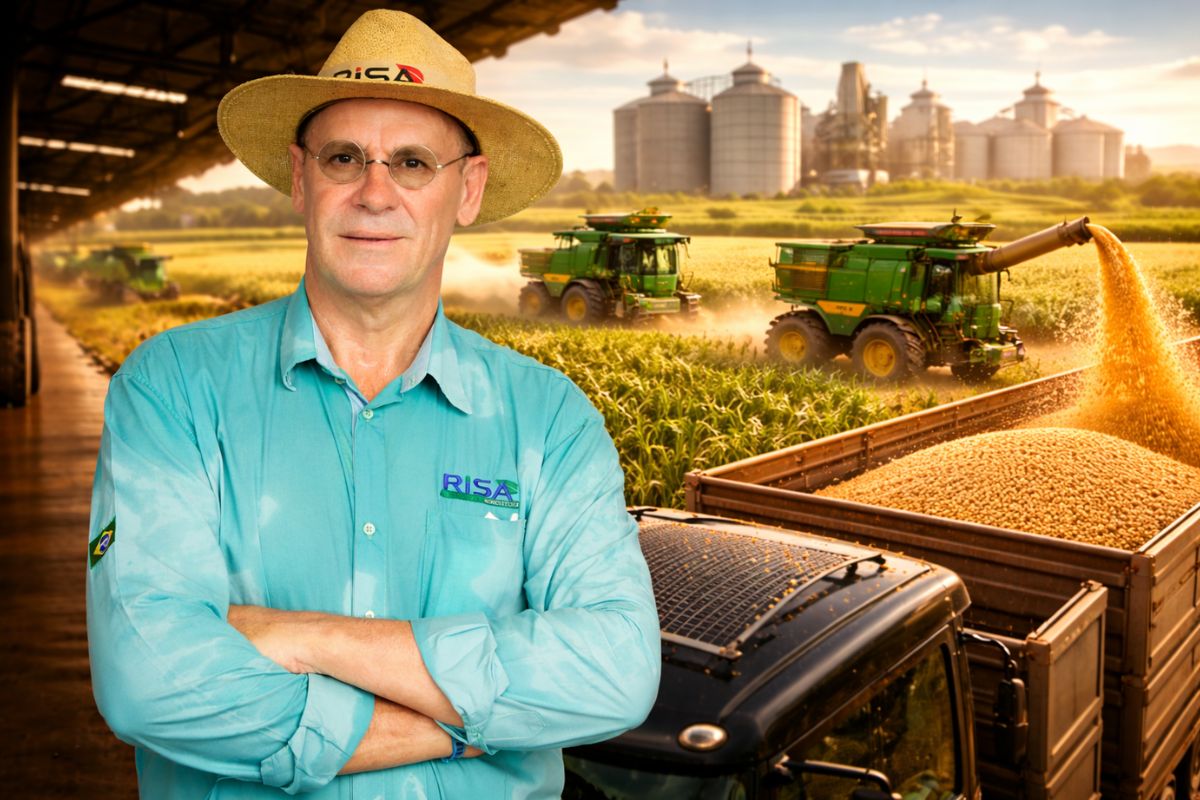


In Southern Maranhão, The Billion-Dollar Empire In Northeastern Agribusiness Attributed To José Antônio Gorgen, Known As Zezão, Grows With Five Farms Between Maranhão And Piauí, Three Fertilizer Mixers, Machinery Resale, Kepler Weber Silos, Irrigation Pivots, And A Fleet Of Over 400 Trucks And Combinations Throughout The Region.
The billion-dollar empire in northeastern agribusiness associated with José Antônio Gorgen, known as Zezão, is presented from a specific point in southern Maranhão, Balsas. In the podcast interview, he describes his arrival in the 1980s, the first land purchase, and the formation of a group that began to integrate farms and services connected to agriculture.
The current structure cited for the company includes five farms between Maranhão and Piauí, three fertilizer mixers, and a logistics operation with a fleet of over 400 vehicles. Over 40 years, expansion appears as a sequence of decisions, focusing on reducing bottlenecks outside of the fields and maintaining operational predictability.
Arrival In Balsas And The First Soil Assessment
In Zezão’s own narrative, Balsas was “all brush” when he arrived in the 1980s, coming from Rio Grande do Sul.
-
The water that almost everyone throws away after cooking potatoes carries nutrients released during the preparation and can be reused to help in the development of plants when used correctly at the base of gardens and pots, at no additional cost and without changing the routine.

-
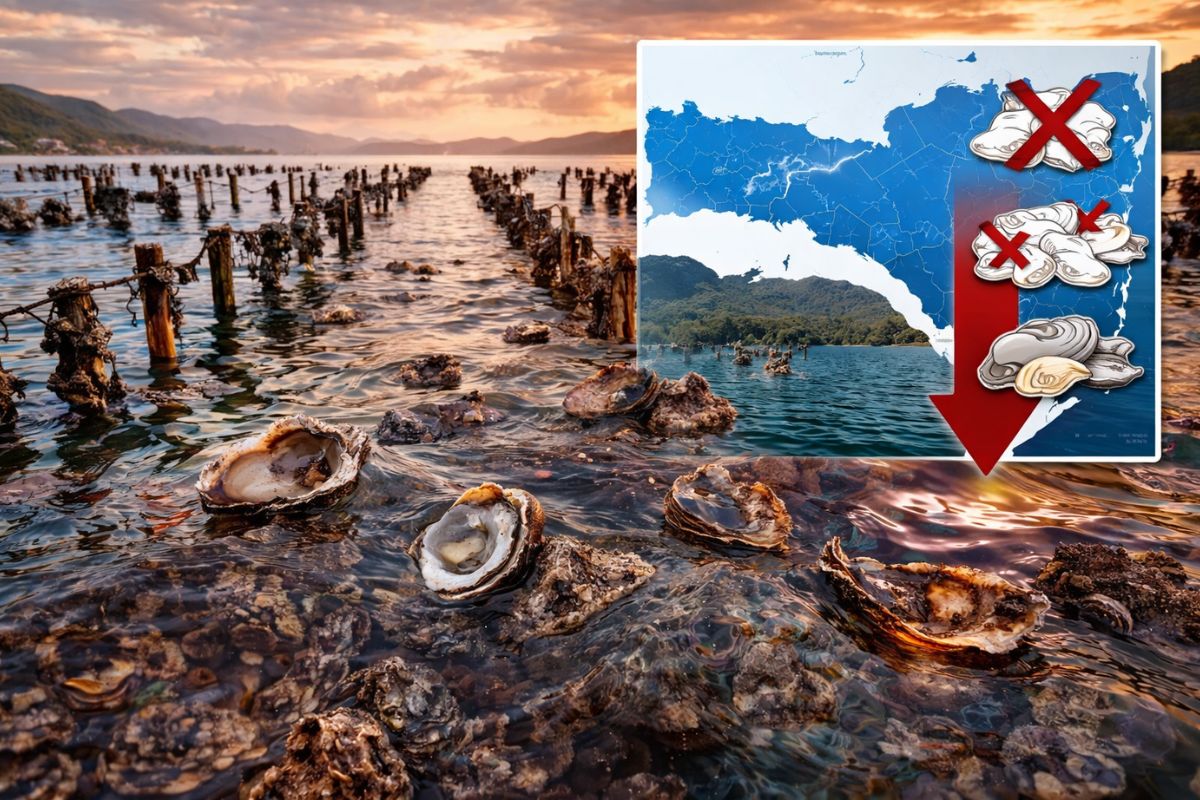
The sea water temperature rose from 28 to 34 degrees in Santa Catarina and killed up to 90% of the oysters: producers who planted over 1 million seeds lost practically everything and say that if it happens again, production is doomed to end.
-
An Indian tree that grows in the Brazilian Northeast produces an oil capable of acting against more than 200 species of pests and interrupting the insect cycle, gaining ground as a natural alternative in soybean, cotton, and vegetable crops.

-
The rise in oil prices in the Middle East is already affecting Brazilian sugar: mills in the Central-South are seeing their margins shrink just as ethanol gains strength.


The first contact with the city happens on the road, upon recognizing the lights of the Bratel tower as a sign that Balsas is nearby.
The first night at Hotel Estrela Dalva is recounted as a detail of the time, with two rooms, one bed, and one hammock, taking turns to rest.
The billion-dollar empire in northeastern agribusiness, in this context, begins with soil assessment and a quick decision, as he points to the purple soil in the island of Balsas as a sign of productive potential.
Expansion In Phases And The Geography Of The Group
The described growth does not appear as a single leap, but as phases.
Zezão cites an increase in area in 1985 and 1986, and then the purchase of a farm in Piauí in early 1991, demonstrating that Maranhão and Piauí joined early in the farm expansion strategy.
With over 40 years of history, the company referred to as Guis is described as headquartered in Maranhão with a presence in other northeastern states, maintaining five farms distributed between Maranhão and Piauí.
For a billion-dollar empire in northeastern agribusiness, geography is not a detail, because it influences logistics, planting windows, access to fertilizers, and transportation costs.
Gate Open To The Outside And Diversification As A Method

The reported turning point came in 1994, after a trip to Rio Grande do Sul for the Expo Inter, when Zezão claims to have attended a lecture by Fernando Homem de Melo.
There he says he understood the difference between operating “from the gate in” and building businesses “from the gate out” of the farm.
From this understanding, he lists activities outside of production that add value to the operation, such as machinery resale, chemical resale, seed production, transportation, and trading.
The billion-dollar empire in northeastern agribusiness is described as a system, where farms, inputs, and logistics work together to reduce external dependence and gain scale from Balsas.
Fertilizers, Machines, Silos, And Irrigation As Infrastructure
In the area of fertilizers, the mentioned structure includes three mixing plants, with one in Piauí cited as the only one in the state and two in Maranhão.
This block of fertilizers tends to influence planting schedules and delivery regularity, as mixing and supply are sensitive processes in large area farms.
Additionally, the cited portfolio includes the sale of agricultural machinery, construction of Kepler Weber silos, resale known as Key, and operation with irrigation pivots.
Storage and irrigation serve as risk management, helping to explain why the billion-dollar empire in northeastern agribusiness is associated not only with farms, but also with infrastructure and technology in the field.
Logistics And Fleet Of Over 400 Vehicles As Operational Advantage
Logistics appears as one of the most measurable pillars of the group.
The fleet is described as having over 400 vehicles, almost entirely made up of Mercedes and Volvo trucks, including rodotrens and tritrens, to accelerate the transportation chain.
In Balsas and southern Maranhão, travel time, traffic, and truck availability can define the pace of output.
A fleet of this size also requires maintenance, driver management, and route planning, which transforms logistics into a management core rather than an ancillary service.
By treating logistics as an asset, the billion-dollar empire in northeastern agribusiness tries to control deadlines, reduce uncertainty, and integrate farms, storage, and distribution.
Profit Sharing, People Management, And Long-Term Discipline
Zezão describes profit sharing as an annual practice, with a PL project structured by a specialized company and rules for accelerators and penalties.
In the cited model, unexcused absences and disciplinary occurrences reduce participation, and tenure can increase outcomes, as in the case of employees with over 10 years.
The stated goal is to reward contribution at all levels, from management to laborers, with calculations linked to salary and compliance with rules.
Even with growth and diversification, he insists on humility and hard work as the foundation, summarizing the view that chasing money makes it “run away,” while focusing on work tends to bring returns over time.
The trajectory in Balsas shows a layered design, with land and mechanization as the foundation, fertilizers, silos, and irrigation as infrastructure, and logistics with a fleet of over 400 vehicles as a tool to reduce bottlenecks.
The billion-dollar empire in northeastern agribusiness, as presented, grows when the gate stops being a limit and becomes a connection between farms, services, and transportation.
If you had to choose a single engine to sustain farms in the Northeast today, would you put your money first in logistics, fertilizers, field technology, or storage? And what personal experience made you believe that, aside from Balsas?







Acompanhei parte da trajetória empreendedora de Zezão. Esse cidadão é exemplo para quem quer produzir e gerar emprego e renda. Extremamente zeloso e com objetivo, por isso está nesse patamar. Parabéns.
Quando este senhor chegou em Balsas, ainda havia uma floresta no município, apesar da Transamazônica. Com ele, o verde natural deu lugar ao verde artificial da soja. Isso não mudou o Maranhão que continua na rabeira do desenvolvimento humano brasileiro.
O Maranhão é um Paraná sem geadas, creio que está faltando gestão política no estado, são décadas nas mãos dos mesmos grupos que não vêem interesse no desenvolvimento do agro!
O povo do Maranhão precisam votar em gente séria. Tenho certeza de que o estado pode decolar.
E você acha que o Maranhão não desenvolveu por causa do cidadão que veio para gerar empregos e trazer desenvolvimento para a região?
E não por causa dos políticos incompetentes e corruptos que dominam o estado a décadas.
Não precisa nem dizer que se trata de um ****…..