





 Portuguese
  English
  Spanish
  3 min of reading
  8 comments





With Revolutionary Technology, The Chinese Supersonic Jet Reaches Speeds of 5,000 Km/h, Promising to Transform Intercontinental Travel and Break Historic Records Like The Concorde’s.
Crossing the Atlantic in under two hours? This dream is closer to reality than ever. China, with its new $13 billion supersonic jet, is leading the revolution in air travel. Promising impressive speeds, this innovation is set to change forever how we travel between continents. But how does this technology work? And how does it compare to rival projects from the United States? Let’s find out together.
China’s Role and Its $13 Billion Jet
China is raising the bar in aviation with its hypersonic jet. Produced by Space Transportation, the aircraft reaches speeds of up to 3,106 mph, four times faster than sound. With a production cost of $13 billion, it represents a milestone in aerospace engineering. The promise? Reduce travel time from eight hours to less than two between London and New York.
Remember the Concorde? It was the pioneer of supersonic travel, but its record of 2 hours and 53 minutes to cross the Atlantic now feels slow. The new Chinese jet promises speeds twice that of the “Son of Concorde,” a U.S. rival, making it clear that the tech competition is heating up.
-
In a flooded well, archaeologists found a 1,700-year-old Roman egg that still contains clear and yolk intact inside the very thin shell.

-
Something is happening around the Earth: Inside the huge explosion of fireballs in 2026

-
A hot air bubble coming from Argentina expands over Brazil, causing thermometers to exceed 38 degrees with a thermal sensation of 40 degrees in late March, affecting 6 states at once.

-
The radish leaf that almost everyone throws away has more polyphenols, flavonoids, and fiber than the consumed root, and a 2025 study showed that the leaf contains compounds that protect the intestine, combat inflammation, and may inhibit the growth of cancer cells.


The Jundouyun Engine and Its Innovation
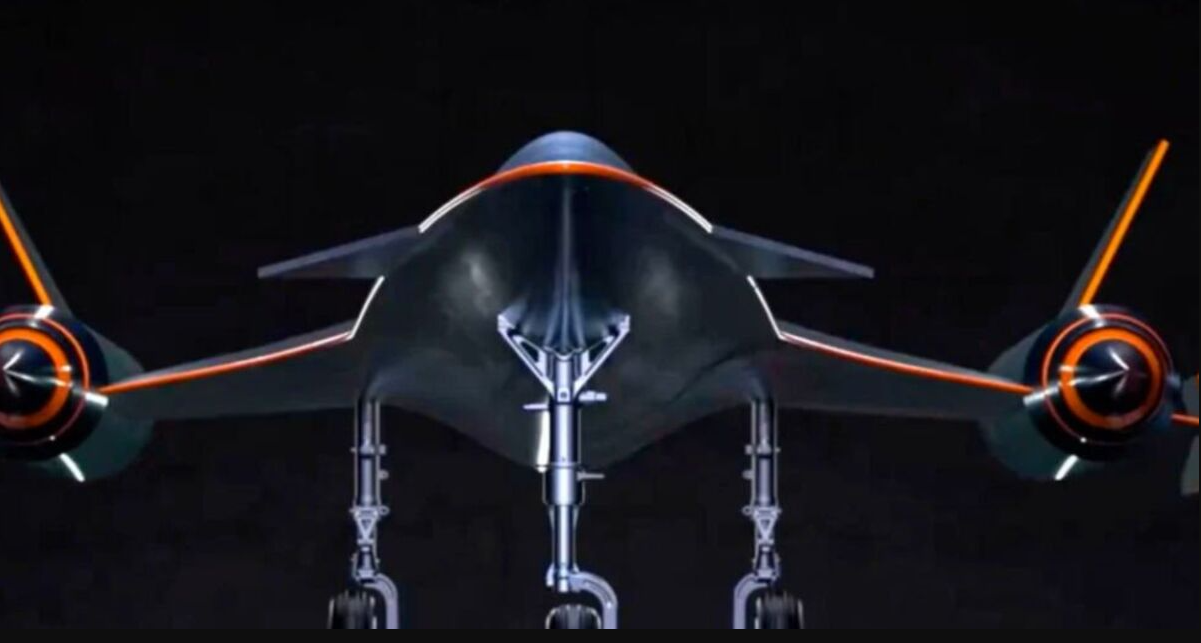
At the heart of this revolutionary jet is the Jundouyun engine. It removes traditional components like turbines and compressors, reaching impressive altitudes of 65,600 feet. During recent tests, the engine showed stability and efficiency, paving the way for high-speed commercial travel.
The key lies in the integration of cutting-edge aerospace technologies. The aerodynamic design and innovative engine allow the jet to break speed barriers without sacrificing safety or comfort.
The Competition Among Nations: The U.S. and The X-59 Quesst
As China advances, the U.S. is not falling behind. The X-59 Quesst, developed by NASA and Lockheed Martin, aims to reduce flight time from London to New York to 3.5 hours. It also utilizes advanced technologies to minimize noise impact, one of the biggest challenges of supersonic jets.
With promising prototypes, the X-59 and the Chinese jet are competing for a future where intercontinental travel is as fast as taking a train. The race is not just for speed, but also for sustainability and accessibility.
When Will We See The First Commercial Flight?
Space Transportation plans to conduct the first commercial flight in 2027. This date marks the beginning of a new era in aviation, where the impossible becomes reality.
Imagine spending less time flying and more time enjoying the destination. On the other hand, concerns about emissions and operational costs raise debates about the sustainability of these aircraft. Still, technological progress offers hope for innovative solutions.
The era of supersonic jets is being reborn, promising faster and more efficient travel. China and the U.S. are leading this new chapter, bringing science fiction dreams into the real world. Who knows, soon crossing the Atlantic in two hours may be as common as taking a bus.









Mach 5 pra meros passageiros? Imaginem a força G !!
Gostaria entrar na fila para comprar uma passagem. Qual seria o preço da passagem.
Esses chineses…