





 Portuguese
  English
  Spanish
 4 min of reading
  0 comments


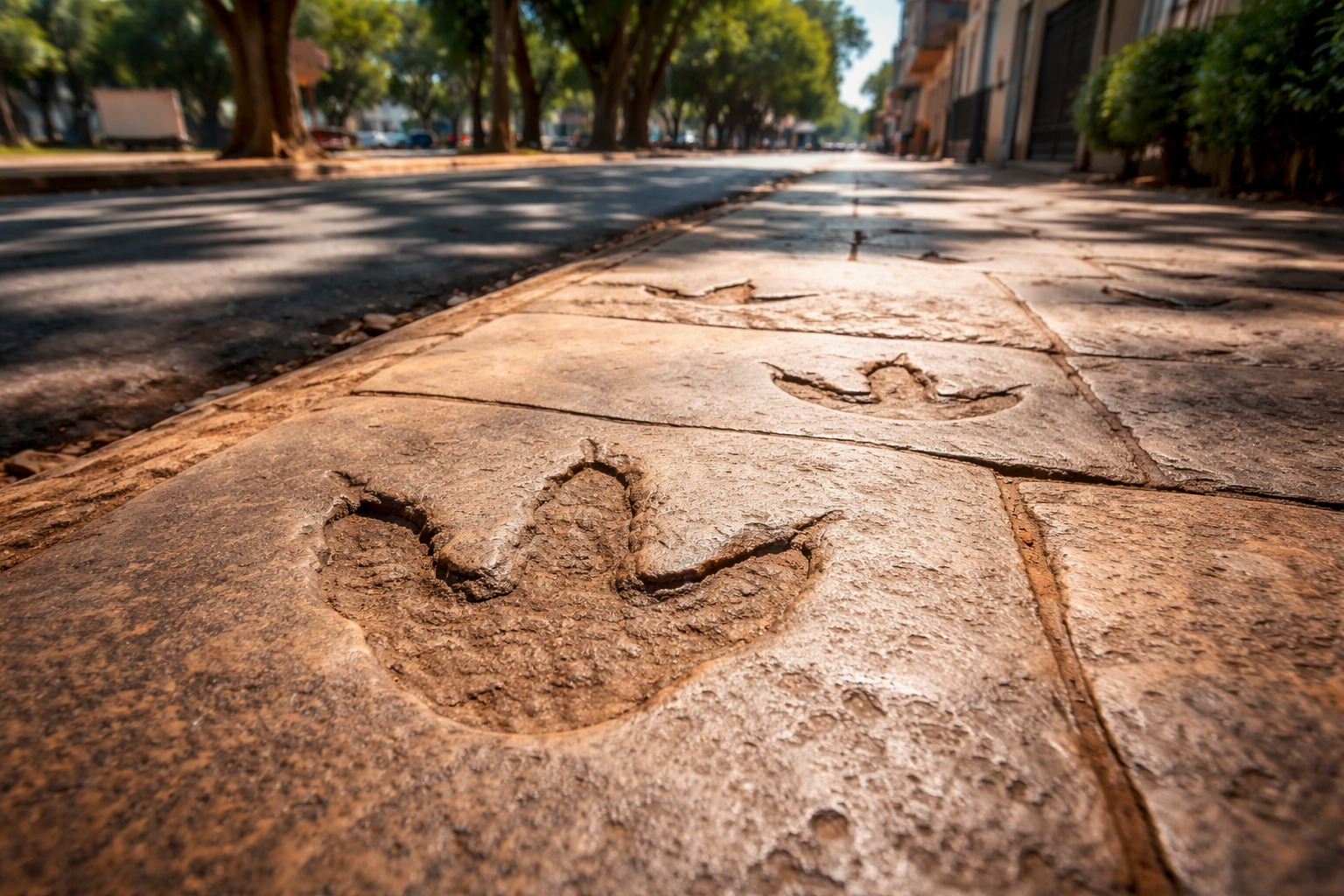
More Than a Thousand Fossilized Footprints About 135 Million Years Old Are Scattered on the Sidewalks of Araraquara, Forming One of the Most Curious Urban Paleontological Records in Brazil
Araraquara, in the interior of São Paulo, holds more than a thousand dinosaur footprints scattered across the sidewalks in the city center. The fossil marks, around 135 million years old, were cataloged by researchers and now comprise a rare urban paleontological record.
The marks are imprinted in sandstone blocks used for paving sidewalks and central streets.
The stones came from a local quarry and belong to the Botucatu Formation, a geological formation known for preserving ancient traces.
-
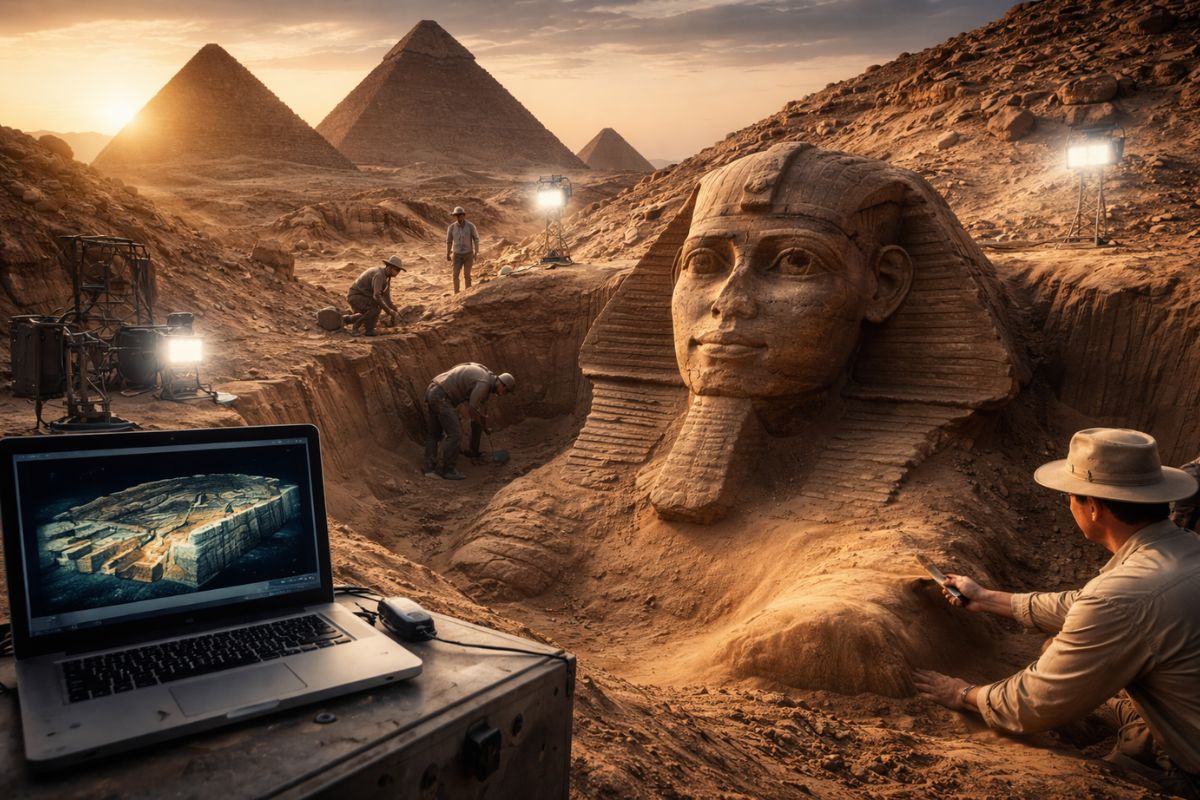
Italian researchers have detected what appears to be a second Sphinx buried under the sands of Egypt, and satellite scans reveal a gigantic underground megastructure hidden beneath the Giza Plateau for over 3,000 years.
-
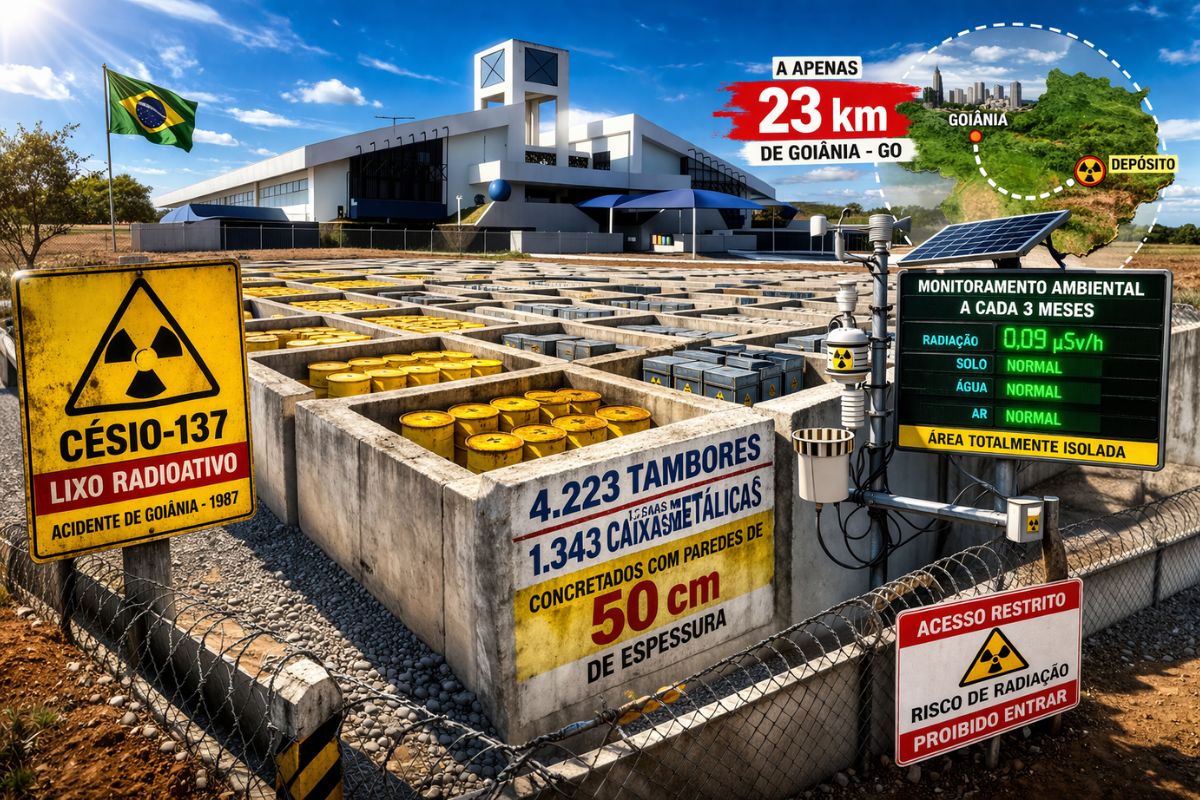
There are 4,223 drums and 1,343 metal boxes concreted with 50-centimeter walls that store the radioactive waste from Cesium-137 in the worst radiological accident in Brazil, just 23 kilometers from Goiânia, with environmental monitoring every three months.
-
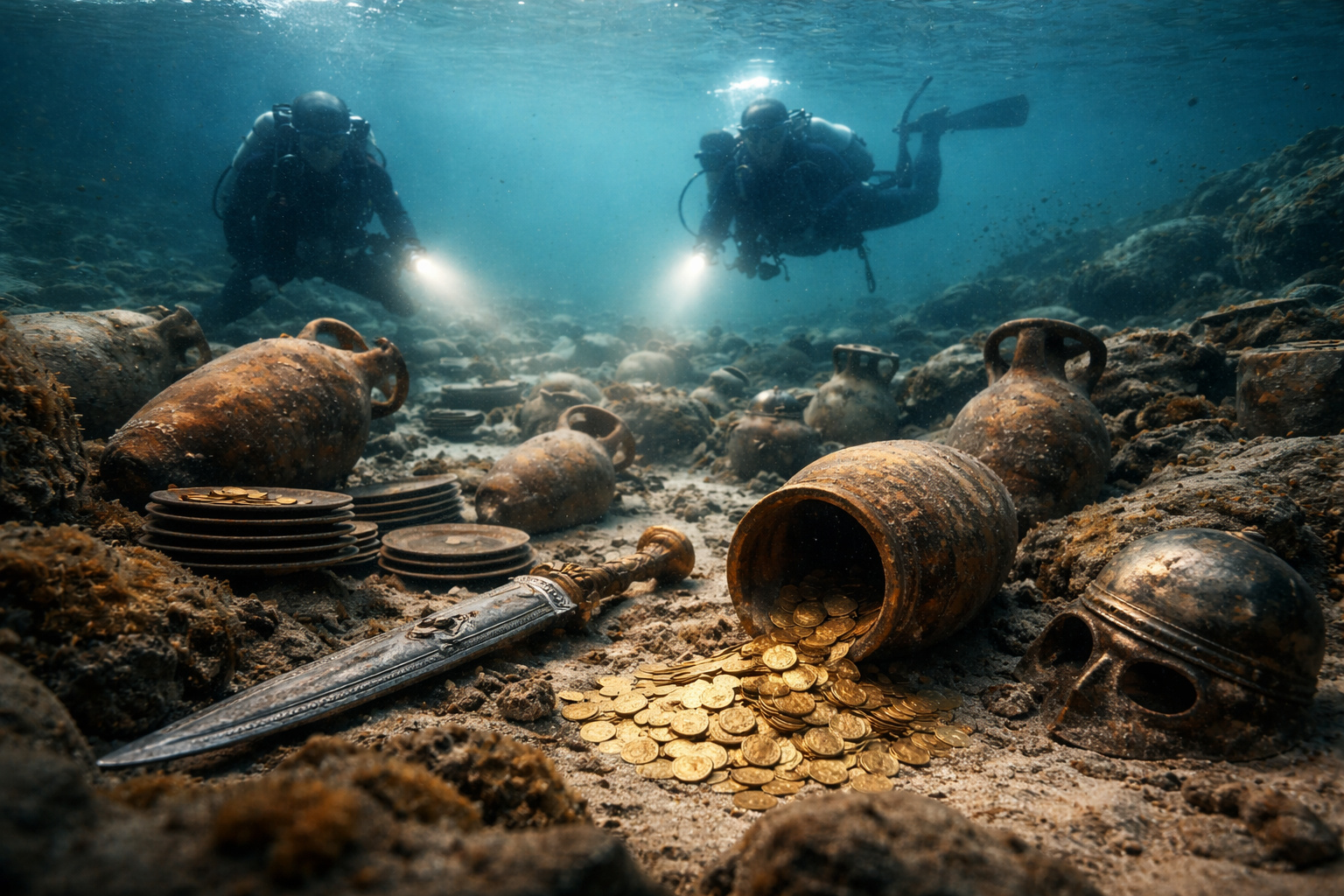
Giant Roman treasure found at the bottom of Lake Neuchâtel in Switzerland reveals an advanced trade system, circulation of goods, and armed escort in the Roman Empire about two thousand years ago.
-
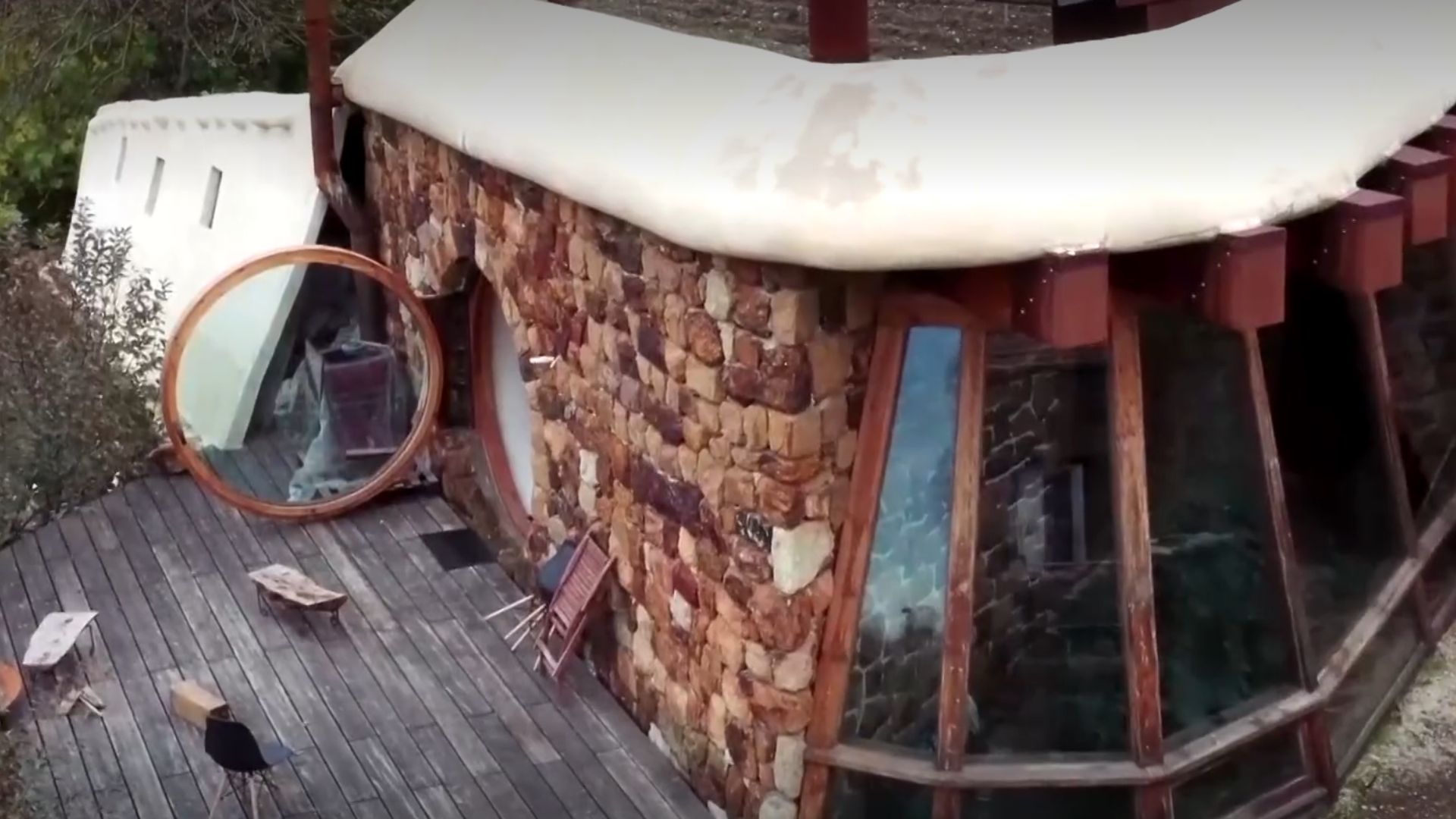
He buried 1,200 old tires in the walls to build his own self-sufficient house in the mountains with glass bottles, rainwater, and an integrated greenhouse.

According to a survey conducted by the Federal University of São Carlos, more than a thousand fossil records have been identified on the city’s public roads.
Many residents walk over these marks daily without realizing their prehistoric origin.


An Ancient Desert That Preserved Traces
According to paleontologist Marcelo Adorna Fernandes, a professor at UFSCar, the region where Araraquara is located was part of a large desert during the Jurassic and Cretaceous periods.
Small oases in that environment allowed animals to traverse the moist sand. The footprints were recorded in that sediment and were eventually preserved after geological processes related to volcanic activity.
Most of the marks found belong to theropods called celurosaurs. These animals were approximately the size of a chicken and left traces that are now part of the scientific heritage of the city.
The Discovery of the Fossil Marks
The identification of the footprints began in 1976 when the Italian priest Giuseppe Leonardi, also a paleontologist, noticed the marks during a walk in the Children’s Park.
From that moment on, researchers began examining the slabs used for the sidewalks in the city.
Many of them displayed fossilized traces preserved since the period when the region was still dominated by dunes.
As research progressed, the presence of dinosaur footprints began to be recognized as one of the most unusual urban paleontological records in Brazil.
The Dinosaur Identified by Researchers
Decades after the initial discovery, scientists from UFSCar and the Federal University of Rio de Janeiro thoroughly analyzed the traces found in the city.
The study identified a new species called Farlowichnus rapidus. The scientific description was published in 2024 in the journal Cretaceous Research.
The animal was approximately 90 centimeters tall and exhibited characteristics indicating great agility. The researchers stated that it was adapted to move quickly in dune-dominated environments.
Dinosaur Footprints Turned into Toys
The impact of the discovery was not limited to the scientific community. The company Mattel included Farlowichnus in a line of toys related to the franchise Jurassic World: Dominion, showcased on Netflix.
As a result, a dinosaur identified from the dinosaur footprints of Araraquara was represented in products sold in different countries.
Even before this international publicity, the city had already approved a municipal law in 2019. The legislation mandates protection for the fossil marks present on the sidewalks.
The law provides for fines for anyone who damages the records. The aim is to preserve the dinosaur footprints that are part of the scientific and historical heritage of the municipality.
Quality of Life and Urban Landscape
Araraquara also exhibits high social indicators. The municipality has a Human Development Index of 0.815, classified as very high by the United Nations Development Program.
This result places the city among the 15 best-positioned municipalities in the country in this indicator. Part of the current urban environment relates to decisions made as far back as the 19th century.
During outbreaks of yellow fever recorded at that time, authorities recommended planting eucalyptus trees to aid in soil drainage. This initiative marked the beginning of the tradition of public greening.
Today, trees such as tipuana, oitis, and flamboyants cover several central areas. Voluntários da Pátria Street, known as Street 5, became famous for the green tunnel formed by the oitis.
The location is called Oitis Boulevard and also houses part of the dinosaur footprints preserved on the sidewalks, transforming the area into an open-air paleontological museum.
Walks and Attractions in the City
Among the visited points is the Araraquara Museum of Archaeology and Paleontology, known as MAPA. The space gathers around 36,000 pieces related to different geological periods.
Another known location is Basalto Park, a former quarry transformed into a leisure area with trails, walls of volcanic rock, and a small waterfall.
The Railway Museum preserves locomotives and wagons related to the history of coffee transportation in the region, recalling the economic importance of railways in the interior of São Paulo.
In the district of Bueno de Andrada, about 20 kilometers from the center, an old train station has become a gastronomic hub known for its popular coxinhas among visitors.
Between science, history, and a tree-lined urban landscape, Araraquara brings together elements that connect the past and present.
On the sidewalks, the dinosaur footprints continue to silently record a remote chapter of Earth’s history.
With information from Tupi.









Seja o primeiro a reagir!