





 Portuguese
  English
  Spanish
 6 min of reading
  0 comments


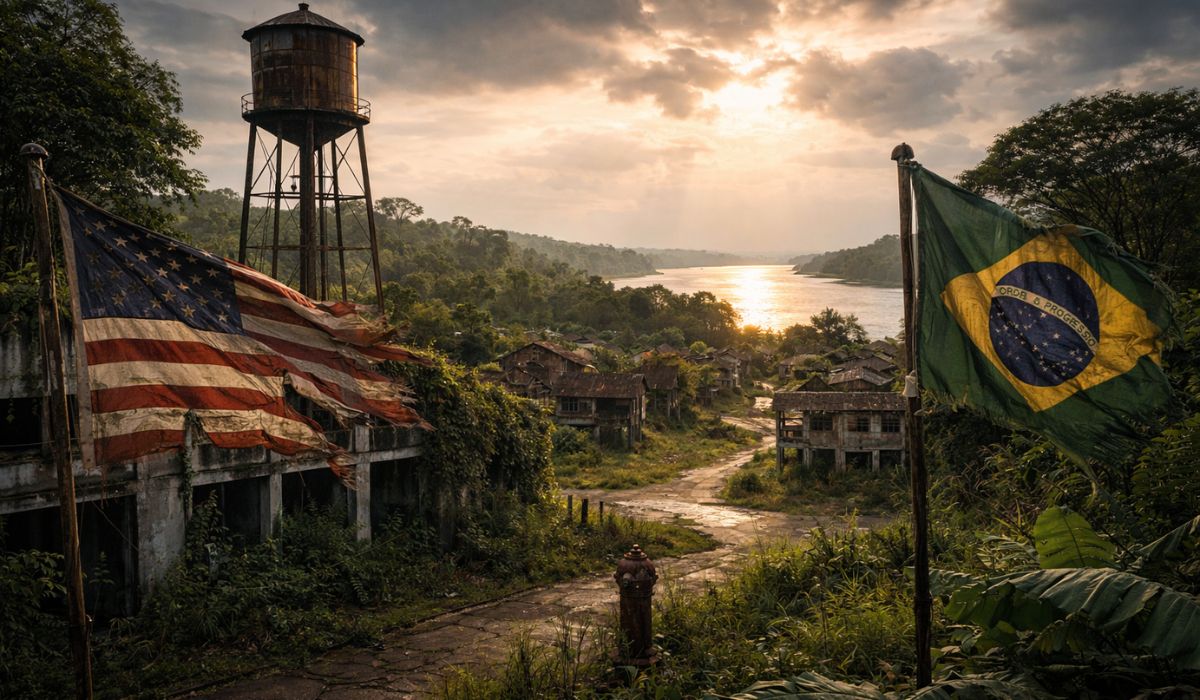
Among Industrial Ruins, American-Style Houses, and a River That Defines Access, Fordlândia Preserves Vestiges of an Enterprise Project in the Amazon and Brings Together Accounts of Cultural Shock, Production Challenges, and Current Debates on Heritage and Conservation.
Fordlândia, now a district of Aveiro in western Pará, brings together industrial ruins, American-style houses, and structures of a planned city on the banks of the Tapajós River.
Conceived to support natural rubber production for the automotive supply chain, the initiative also aimed to replicate routines and urban standards associated with the United States, according to historical records of the project.
Often described as a “ghost town,” Fordlândia is not uninhabited.
-
These living root bridges and ladders are over 700 years old and help indigenous people survive in one of the rainiest regions in the world.

-
From sertanejo star to international investor: Ana Castela invests millions in a mansion in the USA, creates a themed accommodation in Orlando, and shows that the “boiadeira” also wants to grow away from the stage.

-
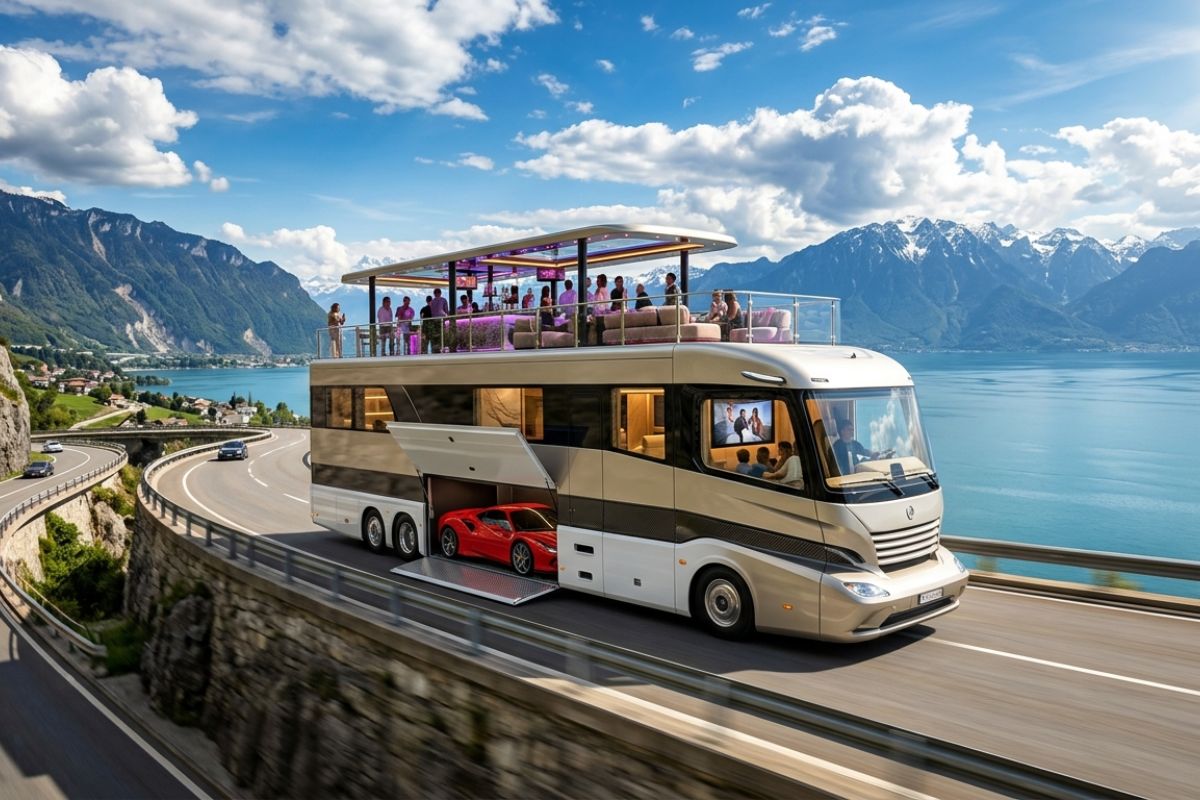
The 10 most stunning motorhomes in the world: a $3 million trailer with a rooftop nightclub and garage for a Ferrari, “palaces on wheels” with Italian marble, private cinema, and five-star hotel luxury for billionaires.
-
Trump wanted to spend $400 million on the White House, but the courts prohibited the million-dollar construction.


The district remained inhabited after the operations ceased, but the current population varies depending on the source and the criteria considered.
Part of the media coverage uses the 2010 Census as a reference for the village, with about 1,200 residents, while estimates cited by locals and tour guides indicate higher numbers, without a consolidated public consensus.
Henry Ford’s Project and the Search for Control of Rubber
The origin of Fordlândia is linked to the dependency, in the early 20th century, on rubber produced in Southeast Asia, an important input for tires and other parts.
To reduce this dependence, Henry Ford’s company acquired a large area in Pará through a concession from the state government and established a worker city in the Tapajós region.

The project was not limited to the cultivation of rubber trees.
The village was designed as an industrial and urban center, with water supply, sanitation, and communal facilities that were uncommon in the Amazon at that time.
In addition, the administration adopted rules for discipline and organization of daily life inspired by corporate practices from the United States, according to historical accounts of the project’s operation.
Why Fordlândia Did Not Become a Latex Production Hub
Latex production did not achieve the expected results.
Research and records about the experience cite, among the factors, agronomic difficulties associated with large-scale planting in a tropical environment, which is more exposed to pests and diseases when there is monoculture.
Labor conflicts and resistance to rules imposed by management, which tried to regulate aspects of workers’ daily lives, also appear in the literature and contemporary accounts.
The project was terminated in 1945, and part of the buildings and equipment remained as a vestige of what had been planned.
Ruins of Fordlândia and What Can Still Be Seen in the District
The remaining structures form a set that draws attention for its scale and urban layout.
Even with wear, infiltrations, and adaptations made over the decades, it is still possible to identify areas associated with administration, housing, and the industrial sector.


Hospital of Fordlândia and References to Albert Kahn
One of the buildings most mentioned in reports and records is the hospital, generally attributed to the architect Albert Kahn, known for projects related to industrialization in the United States.
The construction is mentioned as an example of the architectural standard imported to the Amazon and appears, in different accounts, as one of the structures most affected by deterioration and loss of material over time.
Metal Water Tank and the Visual Landmark Upon Arrival
The metal water tank is often pointed out as a visual landmark upon arrival, especially for those coming by river.
Historical descriptions mention a tower about 50 meters tall, manufactured in the United States and transported to the region, associated with the water supply system designed for the village.
Power House and the Energy Equipment of the Complex
In the industrial sector, the shed known as Power House is usually associated with the equipment that provided energy to the complex.
There are references to turbines and period generators, linked to the functioning of the city and industrial operation, now sought by visitors interested in industrial archaeology.
American Village and Hierarchy in Urban Design
The so-called American Village comprises houses that, according to records of the project itself, were intended for managers and senior staff.
The location in a higher area, in relation to the parts near the river and the industrial sector, is pointed out by researchers as a feature of a hierarchized urban design.
Even with alterations, some residences maintain characteristics often associated with the North American standard, such as porches and sloped roofs, in contrast to the riverside occupation that consolidated afterward.
Cemetery and Records from the Project Period
The cemetery attributed to foreigners who lived in the area appears as a point mentioned by visitors and the press, in part for registering deaths during the project period.
Historical accounts also mention sanitary and logistical difficulties in the region at that time, which helps to contextualize the living and working conditions.
“Pan Revolt” and Tensions in the Daily Life of Workers
The best-known episode in local memory is the “Pan Revolt,” associated with a workers’ uprising in 1930.
Historical sources describe that the crisis involved rules regarding the cafeteria’s operation and changes in how meals were served, in a context of labor tension and attempts to standardize habits within the complex.
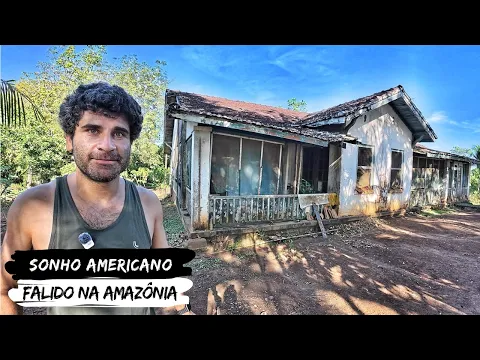
The memory of the episode is mentioned by researchers and locals as an example of the friction between corporate standards and local practices.
Over time, the district has come to be described as a space where remnants of the foreign experiment coexist with Amazonian life organized around the river.
Climate in Fordlândia and How the Tapajós Influences the Visit
The regional climate is hot and humid, with variation more noticeable due to rain than cold.
Meteorological data used in climate assessments for nearby municipalities indicate average maximums in the range of 30°C to 34°C in the hottest months, while specific records can be higher during heatwaves, according to historical series available for the region.
The dynamics of the Tapajós influences the movement and type of visit.
In the dry season, riverside beaches tend to appear, and travel through dry areas tends to become easier in specific stretches.
During the flood, boat trips gain prominence and change the angles of observation of the nearby buildings and ruins along the river.
How to Get to Fordlândia: Access by River and Alternatives by Land
The most common way to access is by river.
Boats and launches depart from cities like Santarém and Itaituba, and the travel time varies depending on the type of transport and navigation conditions, according to local operators and travelers’ accounts.
There is also the possibility of arriving by dirt road, connecting to BR-163, but the conditions of the route may worsen during the rainy season.
Therefore, river transport is usually cited as the most used alternative by those visiting the village.
Heritage Preservation and Debates on Conservation
The state of conservation of the structures and the future of the complex frequently appear in discussions about heritage and memory in the Amazon.
The topic involves conservation, use of space by residents, and tourist interest, in addition to assignments from different spheres of public management.
Among researchers and organizations linked to heritage, preservation is treated as a challenge because of the climate, the duration of abandonment, and the lack of continuous maintenance.






Seja o primeiro a reagir!