





 Portuguese
  English
  Spanish
  4 min of reading
  0 comments


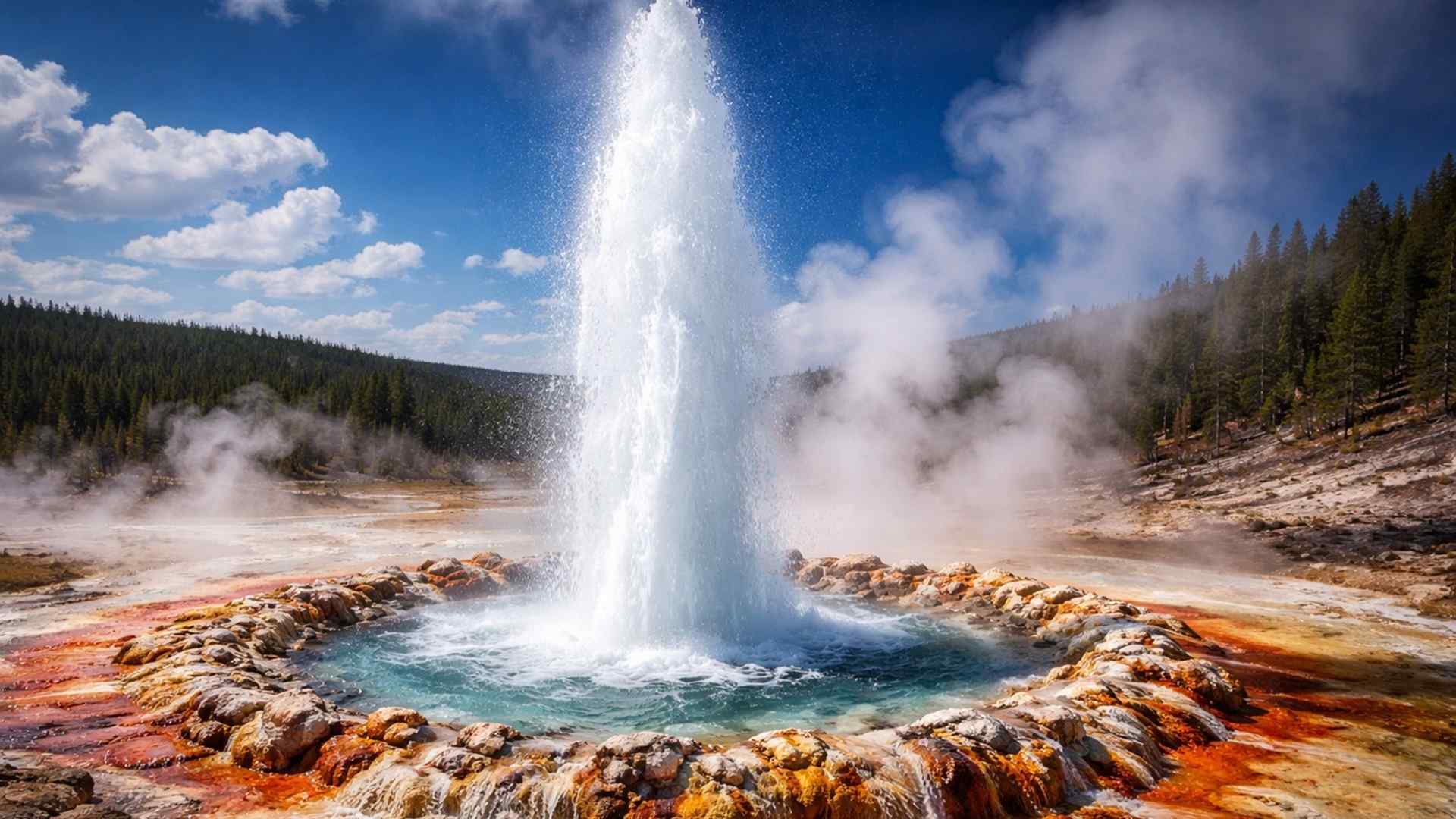
After six years without registered activity since December 2020, the Echinus geyser, considered the largest acid geyser in the world, erupted again in Yellowstone National Park in the United States, with jets between 6 and 9 meters monitored by scientists
The geyser Echinus, located in the Norris Geyser Basin in Yellowstone National Park, erupted again after six years of inactivity. The resumption of activity was observed in early February by scientists and park staff.
Return of Geyser Activity After Six Years of Inactivity in Yellowstone
The largest acid geyser in the world resumed eruptions after being inactive for six years. The last eruption of the Echinus geyser was recorded in December 2020, according to scientists from the United States Geological Survey (USGS).
In early February, researchers and park staff identified signs of a new phase of activity. The observation indicated that the geyser was beginning to resume its eruptive behavior within the Norris Geyser Basin.
-
With a cost per shot close to zero, the DragonFire laser could change naval warfare in 2027 and provide British ships with nearly unlimited defense against drones.

-
A British startup creates tires that generate electricity in electric vehicles when passing over potholes, speed bumps, and cracks.

-
Scientists have created robots made with living cells that have their own nervous system, swim on their own, explore the environment, and self-organize without any genetic engineering, and now they want to do the same with human cells.

-
Students create a solar-powered ambulance that operates without a plug, without fuel, and still keeps medical equipment running in remote areas.


The Echinus geyser is approximately 20 meters wide and features a spiky edge formed by silica. The surrounding area is bordered by rocks that resemble sea urchins, a characteristic that inspired the name of the geothermal formation.
When active, the geyser produces regular eruptions that reach between 6 and 9 meters in height. These eruptions occur every few hours, releasing heated water and steam through the underground system that feeds the formation.
Rare Chemical Profile Explains Unusual Functioning of Acid Geyser
Most acidic hot springs cannot function as geysers. High acidity typically decomposes the underground silica structure responsible for maintaining the pressure necessary for eruptions.
In the case of the Echinus geyser, the structure remains stable due to an unusual balance between neutral groundwater and acidic gases. This balance allows the system to maintain the so-called silica plumbing that supports steam pressure.
According to officials from the National Park Service, this particular chemical composition of the water produces distinct geological formations. The mixture creates visible mineral structures around the main pool of the geyser.
The accumulated mineral deposits generate intense colors around the edge of the pool. Shades of red, orange, and yellow appear due to high levels of iron, aluminum, and arsenic present in the sediments.
Despite the clear appearance of the water, scientists assert that the acidity of the liquid is comparable to that of common substances like vinegar or orange juice. This characteristic reinforces the unusual nature of the geothermal system.
History of Eruptions Shows Changes in Geyser Behavior
The current activity represents the most intense eruptive phase of the geyser since late 2017. In the past, the behavior of the formation was considered quite predictable.
During the 1970s, the geyser erupted at regular intervals of 40 to 80 minutes. This pattern made the formation one of the most observed geothermal systems in the region.
In the 1980s and 1990s, eruptions became more intense. Some reached heights of up to 23 meters and remained active for over 90 minutes.
Activity began to decrease in the early 2000s, reducing the frequency and intensity of eruptions. The new cycle observed in 2026 presents features similar to the resumption recorded in 2017.
During the current eruptive cycle, authorities have recorded jets reaching between 6 and 9 meters in height. Each event lasts about two to three minutes, according to observations made in the park.
Geologists use temperature sensors installed in the geyser’s runoff channels to track changes. These devices allow monitoring of the thermal pattern associated with eruptions.
Activity Occurs Alongside Other Eruptions in the Norris Geyser Basin
The return of activity of the Echinus geyser occurred at the same time as another geothermal system erupted. At the end of February, the Steamboat geyser, considered the tallest in the world, also became active.
The occurrence of two major eruptions in the Norris Geyser Basin drew attention from local residents. Despite the initial concern, experts stated that the situation remains within normal parameters.
The United States Geological Survey reported that the overall activity of the Yellowstone volcanic system remains stable. Measurements recorded in the park do not indicate significant changes in geological behavior.
During the month of February, the park recorded 74 small earthquakes. The largest one reached a magnitude of 2.4, a value considered low within the monitored parameters in the region.
Geologists highlight that geyser activity primarily depends on local groundwater systems. Seasonal changes also influence the functioning of these natural structures.
Authorities Warn Visitors About Water and Soil Risks in the Area
The resumption of activity of the Echinus geyser may attract visitors interested in observing the natural phenomenon. Photographers and tourists often travel to the area when eruptions are reported.
Park staff, however, emphasize the need for caution when visiting the area. The water released by the geyser can exceed temperatures of 93 degrees Celsius, equivalent to 200 degrees Fahrenheit.
Authorities advise visitors to stay exclusively on marked walkways. The soil in the Norris Geyser Basin is considered thin and unpredictable, potentially giving way in unprotected areas.
According to park officials, respecting the designated routes is essential to avoid accidents. Proximity to the geothermal system poses a risk due to water temperature and ground instability.










-

Uma pessoa reagiu a isso.