





 Portuguese
  English
  Spanish
  4 min of reading
  3 comments


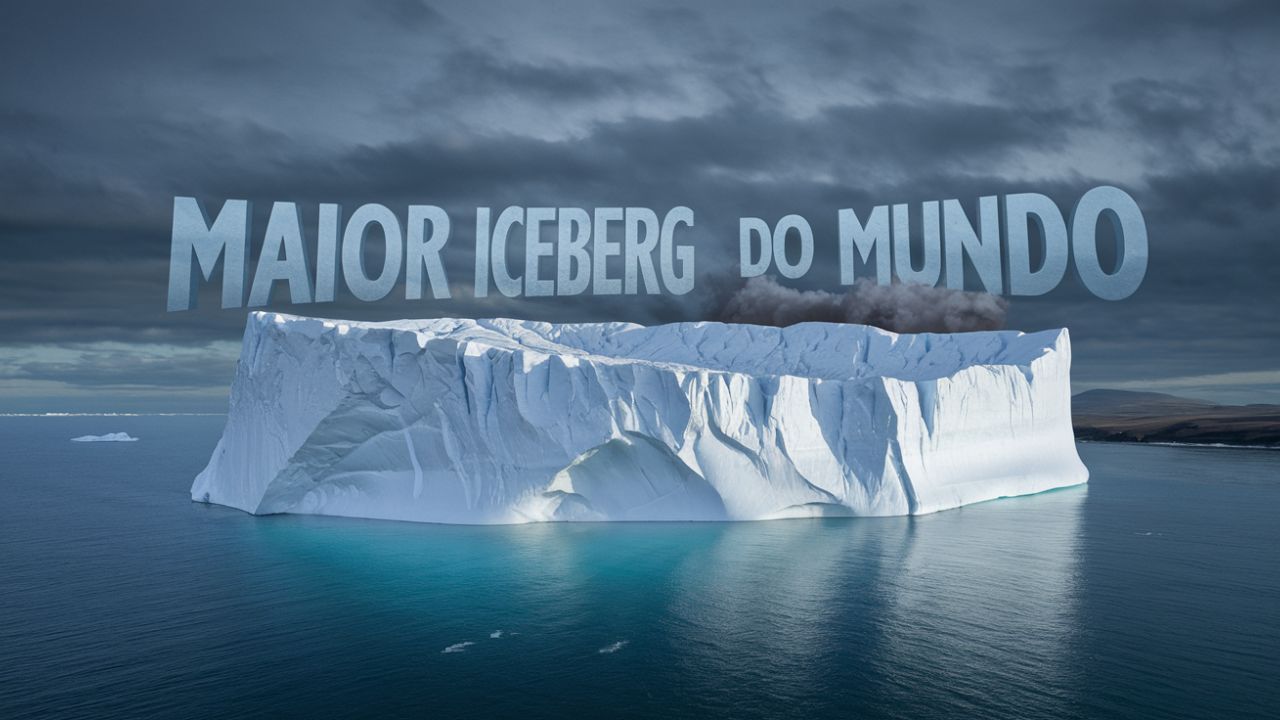


With 3,500 km², The Largest Iceberg In The World, A23a, Is 173 Miles From South Georgia And Threatens To Block Access To Food For Thousands Of Penguins And Seals, Reviving An Environmental Disaster Like That Of 2004.
A giant of ice, larger than several cities combined, slowly traveling across the ocean as if it were a ghost ship. This is the iceberg A23a, the largest iceberg in the world, which is on a dangerous course towards South Georgia, a remote British territory and home to incredible biodiversity. The imminent collision raises serious concerns for penguins and seals, who already face enormous environmental challenges.
What Is The A23a Iceberg And Its Historical Trajectory
The A23a is not just any block of ice. With its impressive 3,500 km² — an area similar to that of Cornwall County in the United Kingdom — it is a true “floating city.” This colossal iceberg broke off from the Filchner Ice Shelf in Antarctica in 1986 but remained “stuck” on the seabed for decades, like a prisoner of an oceanic vortex.
Only last December did it manage to free itself, starting its final journey toward South Georgia. Now, about 173 miles from the island, the ice giant threatens to run aground and cause devastating impacts on local wildlife.
-
A hot air bubble coming from Argentina expands over Brazil, causing thermometers to exceed 38 degrees with a thermal sensation of 40 degrees in late March, affecting 6 states at once.

-
The radish leaf that almost everyone throws away has more polyphenols, flavonoids, and fiber than the consumed root, and a 2025 study showed that the leaf contains compounds that protect the intestine, combat inflammation, and may inhibit the growth of cancer cells.

-
A planet that seemed to defy the laws of physics has intrigued scientists for decades, until the James Webb revealed what is really affecting Saturn’s rotation.
-
For the first time in history, the Brazilian Air Force conducted a highly complex inspection on the C-99 jet independently, without relying on foreign companies, marking a new level of logistical autonomy and operational sovereignty.


Environmental Impacts: The Danger To Penguins And Seals

Have you ever thought about how an iceberg can affect animals like penguins and seals? The answer lies in blocking feeding routes. These animals depend on free access to the ocean to hunt fish and krill, their main food sources. When a giant iceberg like A23a runs aground, it can create ice barriers that prevent animals from entering and leaving hunting areas.
Past cases show the extent of the disaster. In 2004, another colossal iceberg, A38, ran aground near South Georgia, resulting in the death of thousands of seal and penguin pups who were left without access to food. The same scenario could repeat itself now with A23a.
Scientific Monitoring And Expectations
Scientists are keeping an eye on this giant 24 hours a day. Satellite images reveal that the iceberg is rapidly deteriorating, with chances of splitting into large pieces at any moment. These fragments, even if smaller, can continue floating for years, creating risks to ships and surrounding ecosystems.
Simon Wallace, captain of the Pharos ship, summarized the situation well: “Icebergs are dangerous by nature. I would be extremely happy if it simply misses the island.” However, the impact seems inevitable, and the only certainty is that it will leave deep marks.
South Georgia: A Refuge In Danger
South Georgia Island is not just another point on the map. This remote piece of land is a paradise for wildlife, home to colonies of king penguins and several species of seals. The combination of icy beaches and nutrient-rich waters makes the place essential for the survival of these animals.
But the island’s position in the so-called “iceberg alley” also makes it vulnerable. This area receives large ice blocks coming from Antarctica, which often run aground, causing environmental impacts and hindering local fishing activities.
Final Reflections: Learning From A23a
What can we learn from the journey of the largest iceberg in the world? The A23a is an impressive reminder of the power and fragility of nature. It shows how seemingly isolated events, like the breaking off of an iceberg, can have global consequences, especially in a world impacted by climate change.
While we cannot stop A23a’s march, we can reflect on our actions and seek ways to protect vulnerable ecosystems. After all, ice giants like this are not just chunks of drifting ice; they are a reflection of what is happening to our planet.
So, will A23a change its course at the last minute, or will we witness yet another testament to the unstoppable force of nature?








Posso estar sendo um iludido mas, se ligasse dois petroleiros com um cabo gigante – tem-se fibra ótica entre continentes, e envolvessem o iceberg, poderiam desviar da rota.
Mas acho que preferem arrastar âncoras para cortar cabos de conexão entre países.
Essa é a hora das grandes potências bombardear o A23a..fragmentar….
A natureza dará seu jeito, o homem não precisa se preocupar com pinguins há mais coisas importantes para se preocupar.