





 Portuguese
  English
  Spanish
  5 min of reading
  0 comments


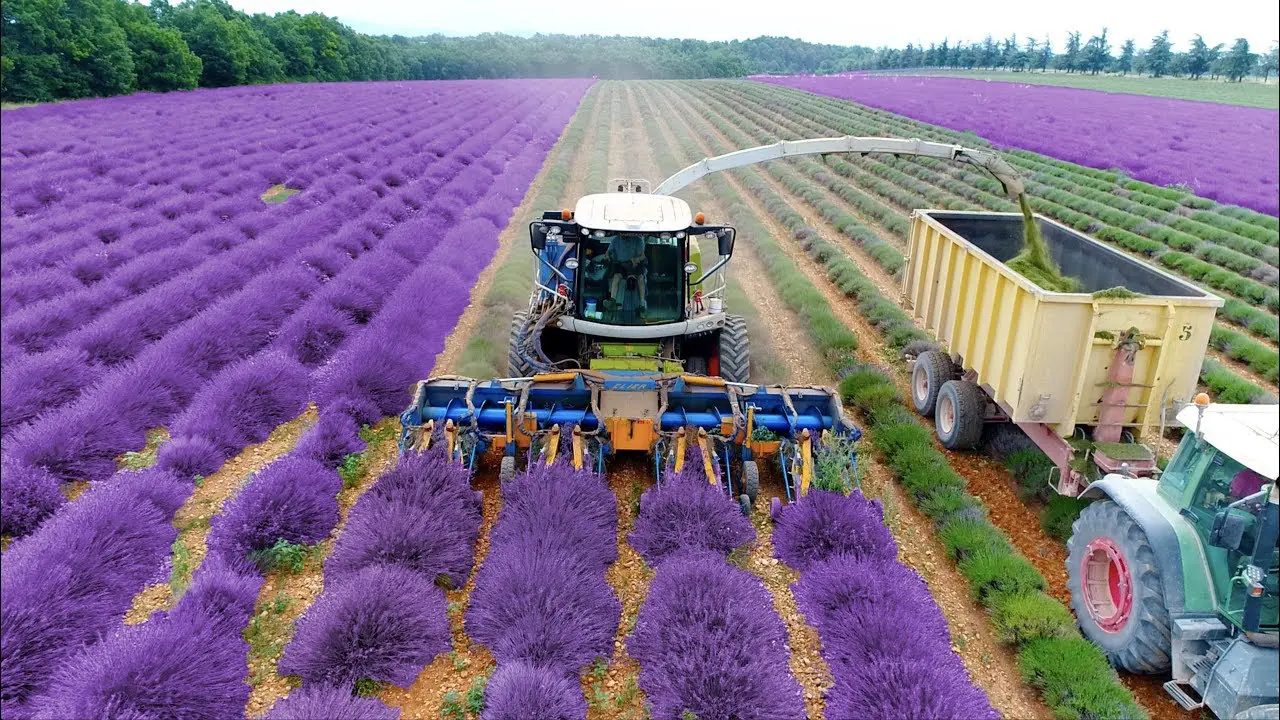
World’s Largest Lavender Hub, Covering 35,000 Hectares and Industrial Distilleries, Transforms the Purple Flower Into a Billion-Dollar Ingredient for Global Perfumery.
In 2024, new European agricultural reports rekindled attention on one of the world’s oldest, most valuable, and technically rigorous markets: lavender. The productive chain, which has been driving the economy of a specific territory in southern Europe for decades, surpassed the mark of €1 billion annually when adding up essential oil, derived cosmetics, premium perfumery, exports, and aromatic tourism. Behind this monumental figure is a cultivation system that brings together thousands of producers, high-capacity machines, and an industrial model capable of transforming a delicate flower into one of the most sophisticated ingredients in the global fragrance industry.
The public often imagines lavender as an artisanal plant, harvested by hand in small fields. The reality, however, is completely different. Between June and August, the heart of production transforms into a gigantic agricultural operation that mobilizes industrial harvesters, trucks, cooperatives, chemical engineers, large distilleries, and a logistics system that must operate flawlessly to preserve the quality of the flower and maintain the standards required by the world’s leading perfumeries.
The Purple Empire of 35,000 Hectares: Where Lavender Is Cultivated on an Industrial Scale
The largest lavender-producing region on the planet is located in southern France, in the famous Provence. There, studies by FranceAgriMer and the French Interprofessional Committee of Essential Oils confirm that the cultivated area exceeds 35,000 hectares, combining fine lavender (the rarest and most valued) and lavandin (the hybrid variety with higher agricultural yield).
-
The sea water temperature rose from 28 to 34 degrees in Santa Catarina and killed up to 90% of the oysters: producers who planted over 1 million seeds lost practically everything and say that if it happens again, production is doomed to end.

-
An Indian tree that grows in the Brazilian Northeast produces an oil capable of acting against more than 200 species of pests and interrupting the insect cycle, gaining ground as a natural alternative in soybean, cotton, and vegetable crops.
-
The rise in oil prices in the Middle East is already affecting Brazilian sugar: mills in the Central-South are seeing their margins shrink just as ethanol gains strength.
-
Rain gains strength in April, potentially exceeding 150 mm, placing the North, Northeast, and the coasts of the South and Southeast at the center of the heaviest forecast of the week.



The choice of region is not accidental. The Mediterranean climate, limestone soil, and moderate altitude create a perfect combination for lavender to develop its maximum concentration of linalool and linalyl acetate, the compounds responsible for the characteristic aroma and the high quality demanded by luxury perfumery.
Each hectare can produce between 80 and 150 kilograms of essential oil, depending on the variety and management techniques. This productivity, when multiplied by tens of thousands of hectares, explains why Provence has become the nerve center of the global natural fragrance industry.
The Harvest That Impresses with Its Speed: Machines Treating Lavender as a Large-Scale Crop
Contrary to popular belief, the flowers are not harvested manually. Specialized machines, similar to those used in hay harvesting, traverse entire rows of lavender and can process two tons of flowers per hour, cutting, suctioning, and loading the material directly into the transport compartment.
This pace is essential to avoid oxidation or loss of volatile compounds. The faster the flower reaches the distilleries, the purer and more valuable the resulting essential oil will be. It is literally a race against time, within a window of a few weeks, requiring military-like planning among producers, cooperatives, and industries.
In recent years, embedded sensors and drones have been used to monitor blooming, predict the ideal cutting point, and adjust machine routes to reduce losses. This is an agricultural operation that combines centuries-old tradition with advanced technology.
The Heart of the Industry: Distilleries Producing Up to 1,500 Liters of Oil Per Day
The next step is the transformation of the flower into essential oil, and this is where the industrial scale truly reveals itself. Periodically, large trucks arrive at the distilleries bringing immense volumes of freshly harvested lavender, which are then processed in large-capacity metal boilers.

The method used, called steam distillation, mobilizes tons of heated steam that pass through the flowers and extract the essential oil. In the largest units, production can reach 1,500 liters per day during the harvest, a volume that, depending on the chemical purity, is sold for prices ranging from €80 to €250 per liter, reaching even higher figures in the case of fine lavender from high altitudes.
The obtained oil is classified according to chromatography parameters, tested for purity and aromatic content, and only then sent to the cosmetics and fine perfumery industries.
From Provence to the World: The Billion-Dollar Impact of an Indispensable Ingredient
Reports from the European Union show that the lavender sector generates over €1 billion annually when combining essential oils, cosmetics, body creams, aromatic soaps, pharmaceutical products, and themed tourism.
The destination for most of the production is the high-fashion perfume houses; brands like Dior, Guerlain, Chanel, L’Occitane, and Hermès use French lavender oil in their formulations. The chemical precision of this product, coupled with the rigor of the distilleries, explains why the global market pays high prices for the ingredient sourced from Provence.
Additionally, lavender is also used in aromatherapy, natural medicines, premium cleaning products, and the food industry, further expanding the value chain.
An Agricultural and Cultural Heritage Maintained by Hundreds of Families
Despite the industrial scale, lavender remains a crop deeply connected to the identity of the region. There are over 4,500 producers registered in local cooperatives, many of them descendants of families that have been cultivating the flower for generations.
Collective organization is one of the pillars sustaining the market: cooperatives define standards, provide technical assistance, guarantee certifications, and operate shared distilleries. This allows small producers to access the same technology as large farms, maintaining the consistency of French essential oil.
The combination of rural tradition and technology ensures that the region continues leading a highly competitive global market, even in the face of pressure from countries like Bulgaria and China, which produce lavender on a large scale but with lower value-added.
The Challenge of the Future: Climate, Pests, and the Race for Chemical Purity
In recent years, climate change and pests like the stolbur phytoplasma threaten part of the crops.
To address the problem, French agricultural institutes have developed genetic programs to seek more resistant varieties, while cooperatives reinforce sustainable practices, controlled irrigation, and advanced monitoring with drones.
The goal is to keep French lavender at the top of the global market and preserve the quality that has made the region famous.








-

-

-

5 pessoas reagiram a isso.