





 Portuguese
  English
  Spanish
  4 min of reading
  0 comments


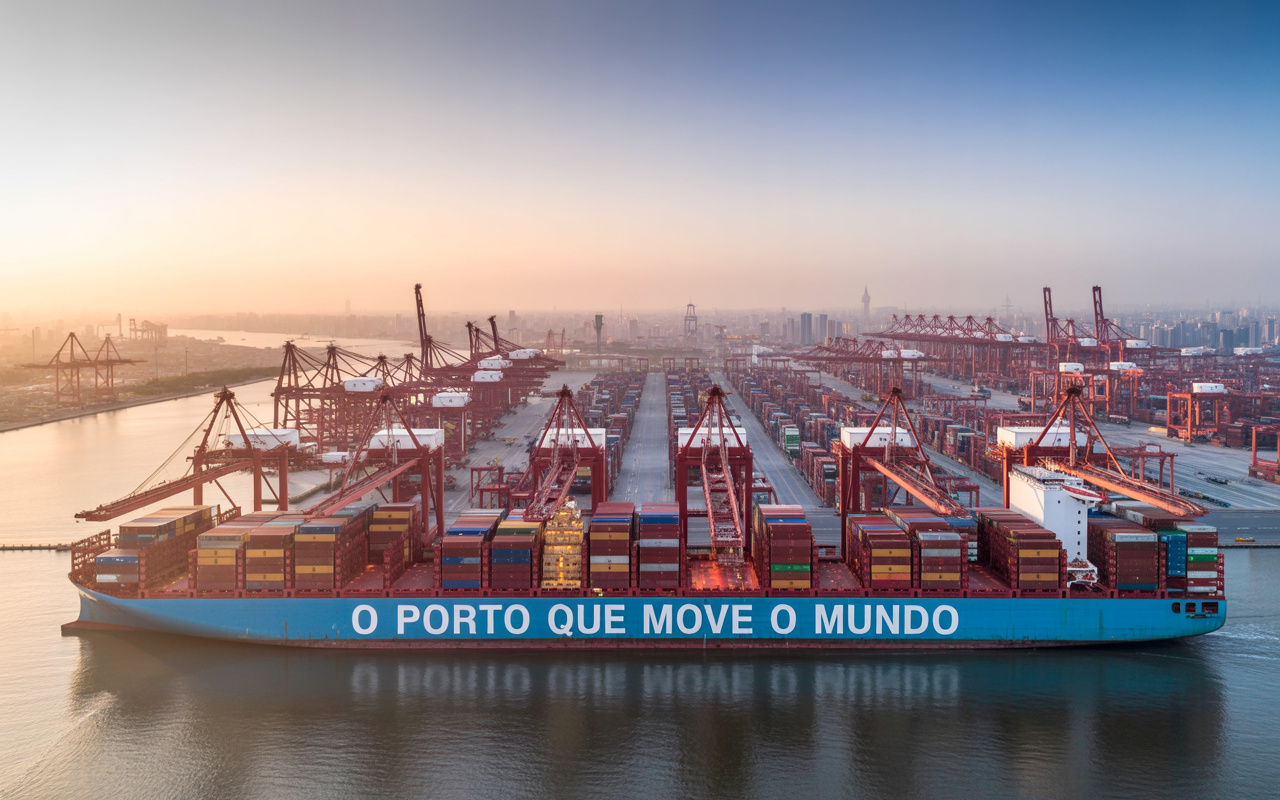
With 42 Million Containers Per Year and 24/7 Operation, the Port of Shanghai is the Largest in the World, Surpassing All US Ports Combined and Symbolizing China’s Logistical Dominance.
The Port of Shanghai, located at the mouth of the Yangtze River on China’s east coast, is today the largest and busiest port on the planet, surpassing in volume all US ports combined. According to data from the Shanghai International Port Group (SIPG) and the China Port Authority, the complex handled over 42 million TEUs (Twenty-foot Equivalent Units) in 2023, solidifying itself as the epicenter of global trade and one of the pillars of Chinese logistics infrastructure.
A Maritime Power That Operates Non-Stop
The operational pace at the Port of Shanghai is unceasing. Operating 24 hours a day, 7 days a week, the terminal receives hundreds of cargo ships, oil tankers, and container vessels daily, with an average flow of 200 ships docking every 24 hours.
This colossal capacity is supported by 130 berths, distributed among the port areas of Yangshan Deep-Water, Waigaoqiao, and Wusongkou, which together form the largest integrated port system ever built.
-
Private ports increased by 14.1% in January 2026 and lead port activity with 66% of the cargo, driven by oil, agribusiness, and exports.
-
Government Releases R$ 5.1 Billion to Modernize Ports and Generate Over 5,000 Direct Jobs in Brazil
-
Merchant Marine Fund Approves R$ 5.1 Billion for Port Projects Aiming to Accelerate Port Modernization, Expand Logistics Infrastructure, and Generate Over 5,000 Jobs in Brazil
-
Giant of World Trade: Largest Port in Latin America Is in Brazil, Covers 7.8 Million Sq. Meters on São Paulo Coast, Accounts for 25% of All Exports, and Now May Undergo Historical Expansion That Triples Its Area and Changes the Future of National Logistics
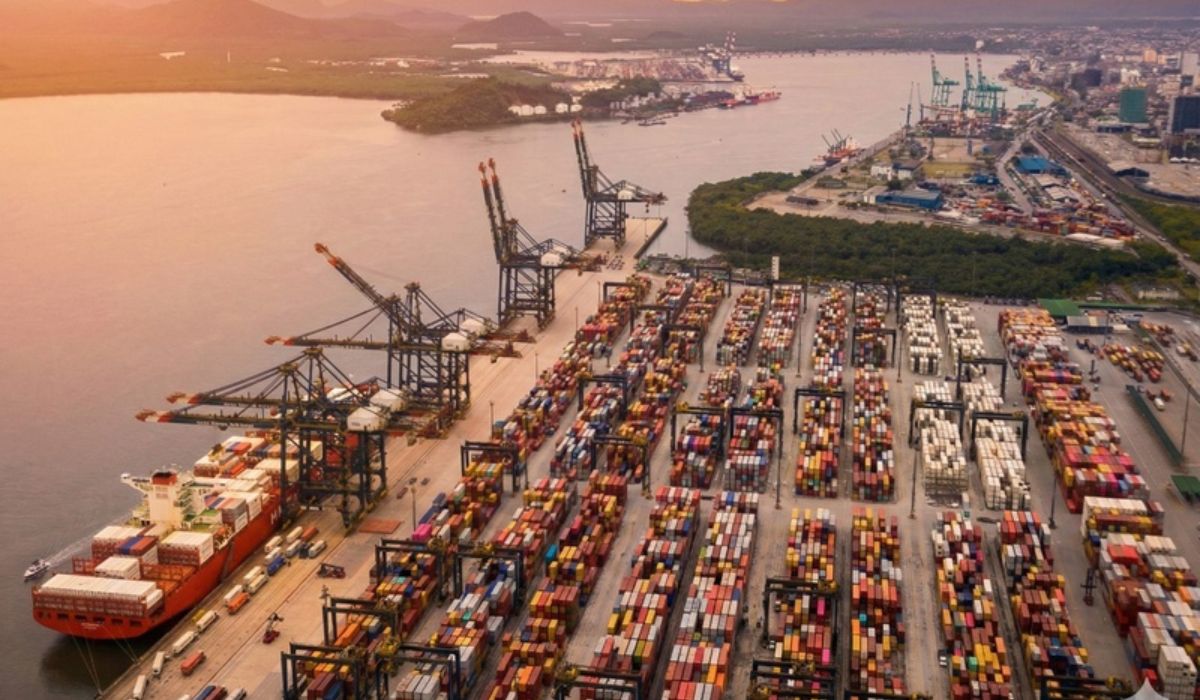

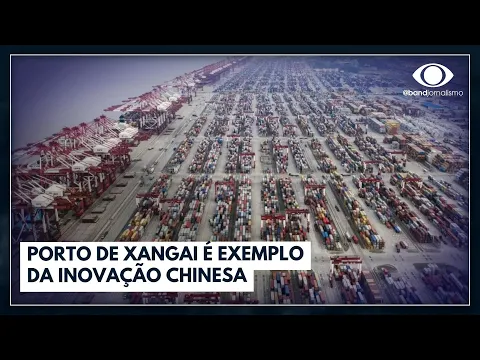

The Yangshan Deep-Water Port, inaugurated in 2005 and connected to the mainland by a 32 km bridge — one of the longest in the world, is the heart of the operation.
It allows the simultaneous docking of ships up to 400 meters in length and 200 thousand tons of cargo, a feat made possible by the natural depth of the region and advancements in Chinese engineering.
Logistical Capacity That Challenges the World
The secret to the success of the Port of Shanghai goes far beyond physical infrastructure. The site is considered a global model of port automation, featuring remotely controlled electric cranes, AI systems that optimize internal routes, and autonomous vehicles that transport containers between terminals.
It is estimated that over 50% of all operations are automated, reducing the average loading and unloading time of a vessel from 24 hours to just 10.
The operation is coordinated by a digital center that monitors in real time temperature, humidity, crane pressure, and the exact location of each container, ensuring logistical efficiency and total safety.
In addition to automation, the port houses three logistics zones interconnected by exclusive rail and highways, allowing for immediate dispatch of cargo to major industrial hubs in China — Shanghai, Suzhou, and Hangzhou in a matter of hours.
The Port That Connects the World
According to UNCTAD (United Nations Conference on Trade and Development), the Port of Shanghai maintains trade routes with over 500 ports in 200 countries. In 2023 alone, the total cargo flow exceeded 560 million tons, solidifying China as the largest export hub on the planet.
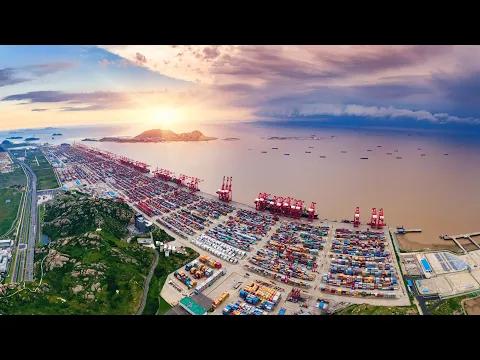
This impressive performance makes the port a vital point of the New Silk Road (Belt and Road Initiative), a strategic infrastructure project created by the Chinese government to connect Asia, Europe, and Africa through an extensive maritime and terrestrial network.
Moreover, the port is a key player in the global supply of electronics, automobiles, and manufactured goods, handling a significant portion of the exports of companies like Apple, Tesla, Alibaba, and Huawei.
Infrastructure That Functions Like a City
With over 3,900 hectares of total area, the Port of Shanghai operates like a true maritime industrial city. More than 80,000 people work on site, including engineers, crane operators, IT technicians, and logistics professionals.
There are dormitories, hospitals, training centers, and even an internal transportation network consisting of electric buses and autonomous trains, which travel the docks transporting staff and light cargo. The port also has its own power plant and wastewater treatment systems that ensure environmental sustainability — an increasingly present requirement in international navigation standards.
Records That Challenge the Competition
No other port in the world comes close to the scale of Shanghai. The port of Singapore, the second busiest, ended 2023 with around 38 million TEUs, while the port of Rotterdam in the Netherlands, the largest in Europe, handled just over 14 million.
Together, the 10 largest ports in the US (including Los Angeles, Long Beach, New York, and Houston) do not reach the volume handled by Shanghai alone.
This difference reflects not only the strength of the Chinese economy but also the country’s dominance in infrastructure, engineering, and global logistical integration.
The Future of Global Logistics
The Chinese government has already announced new investments of over US$ 12 billion to expand the handling capacity to 50 million TEUs by 2030. Upcoming stages include greater electrification of cranes, expansion of the deep-water port, and integration with high-speed railways.
International trade experts state that, with this growth rate, the Port of Shanghai is expected to double its current capacity in the next 20 years, solidifying its position not only as a maritime terminal but as the nerve center of global logistics.
More than just a port, Shanghai is the symbol of China’s modern economic prowess — a colossal structure that connects continents, redefines the scale of maritime trade, and keeps the planet moving, container by container.









Seja o primeiro a reagir!