





 Portuguese
  English
  Spanish
  3 min of reading
  0 comments


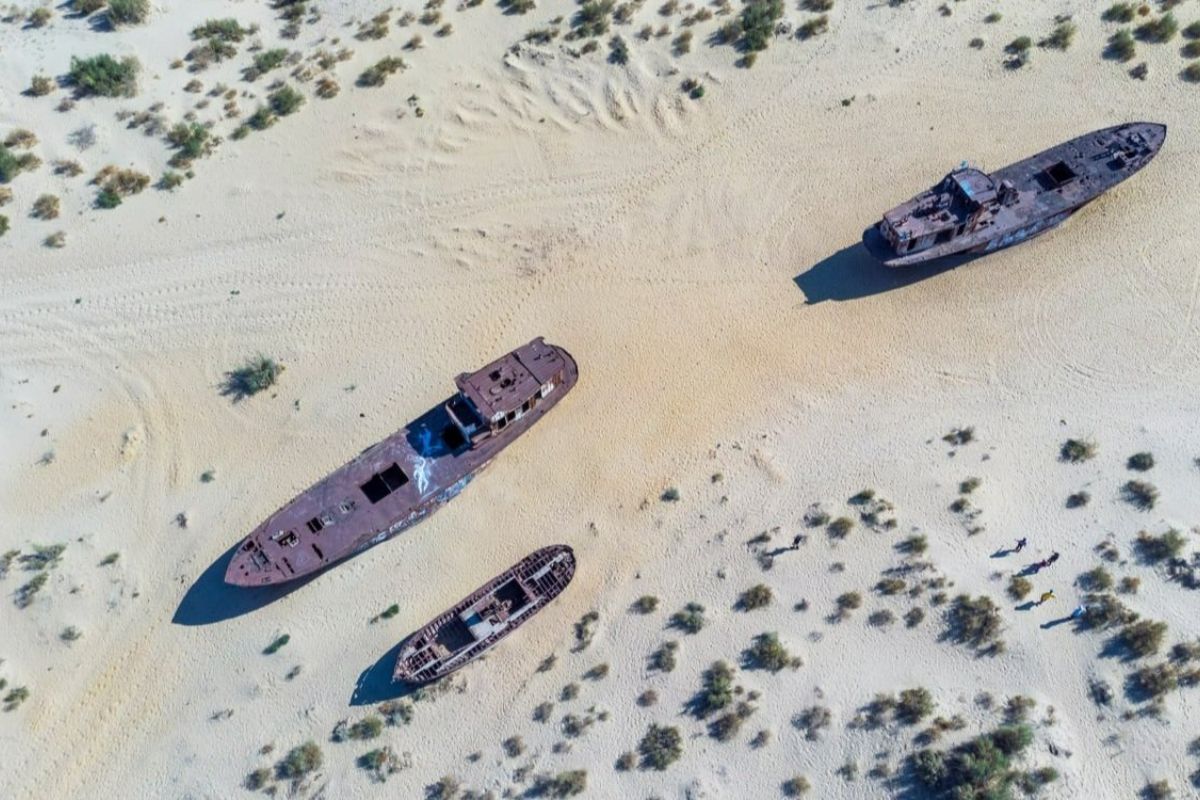
Understand How a Decision by the Soviet Union in the 60s Transformed the Fourth Largest Lake in the World into a Scary Graveyard of Rusty Ships
What was once an immense inland sea, full of life and sustaining thousands of people, is now the most powerful image of an ecological disaster. The story of the Aral Sea is the story of how human action transformed an oasis in the desert into a graveyard of rusty ships. Located on the border between Kazakhstan and Uzbekistan, this site serves, in 2025, as the biggest warning about the consequences of ignoring the limits of nature.
The tragedy began deliberately. In just a few decades, the fourth largest lake in the world was reduced to less than 10% of its original size. Where fishing boats once navigated, today stretches a vast plain of toxic sand. The vessels, now useless, were abandoned where the sea dried up, creating the desolate landscape that shocks the world.
What Was the Aral Sea Like Before the Catastrophe?
Before the 60s, the Aral Sea was a vibrant ecosystem. Covering an area of 68,000 km², it was mainly fed by two large rivers, the Amu Darya and the Syr Darya. Its waters sustained a rich biodiversity and a huge fishing industry, which was the backbone of the local economy.
-
He started running at 66 years old, broke records at 82, and is now a subject of study for having a metabolic age comparable to that of a 20-year-old, in a case that is intriguing scientists and inspiring the world.

-
Oldest tree on the planet reappears after 130 years of searches: Wattieza, 385 million years old, was 10 meters tall and had no leaves or seeds; Gilboa fossils in New York solved the mystery in 2007.

-
A 48-square-meter house assembled in hours with 4,000 bricks made of recycled plastic that does not absorb moisture, has natural thermal insulation, and costs less than 90,000 reais in a complete kit.

-
Luciano Hang revealed that Havan’s air fleet has already accumulated more than 20,000 landings, 10,000 flight hours, and 6 million kilometers traveled, and he says that without the planes, the company would never have grown so quickly.


Port cities such as Moynaq in Uzbekistan and Aralsk in Kazakhstan thrived on fishing. The Aral fishing fleet could catch over 43,000 tons of fish per year, representing a significant part of the entire Soviet production. Nobody imagined that this scene of prosperity was about to disappear.
The Soviet Decision That Created a Desert
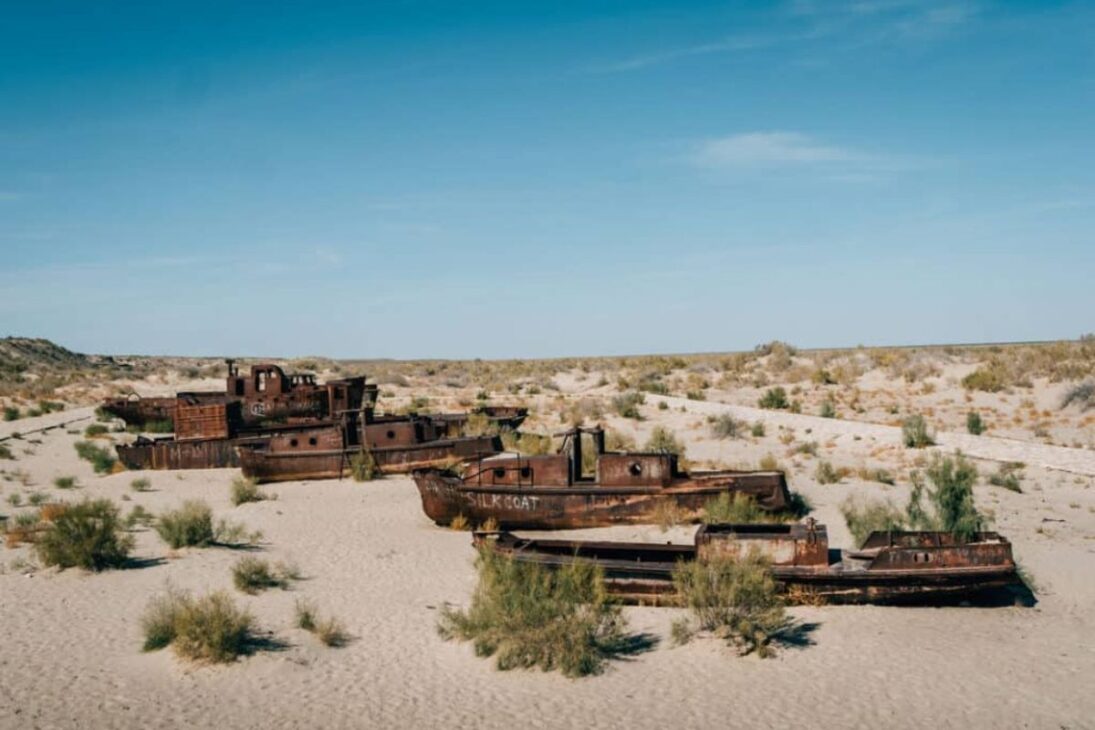
The catastrophe was the result of an ambitious and reckless plan by the Soviet Union. In the 60s, under the leadership of Nikita Khrushchev, planners in Moscow decided to transform the arid plains of Central Asia into the country’s new “cotton belt.” To do this, a monumental amount of water was needed.
The solution found was to massively divert water from the Amu Darya and Syr Darya rivers to irrigate the new crops. The engineering was brutally inefficient: the channels dug in the desert were unlined, and it is estimated that up to 75% of the water was lost to evaporation and seepage before it reached the fields. The sea was sentenced to death, deemed an “acceptable sacrifice” in the name of agricultural progress.
The Legacy of Destruction, the Graveyard of Rusty Ships, and the Toxic Dust
The consequences of diverting the rivers were swift and devastating. With its main source of water cut off, the sea began to shrink, and its salinity increased drastically, killing nearly all fish species. The fishing industry completely collapsed around 1982. The fleets, now functionless, were abandoned, creating the iconic graveyard of rusty ships in the middle of the new desert.
The dry seabed, called the Aralkum Desert, exposed soil saturated with salt and chemical residues from agriculture. Strong winds annually spread millions of tons of this toxic dust across the region, contaminating land, causing respiratory diseases and cancer in the local population, and even accelerating the melting of glaciers thousands of kilometers away.
A Ray of Hope for the North, An Uncertain Future for the South
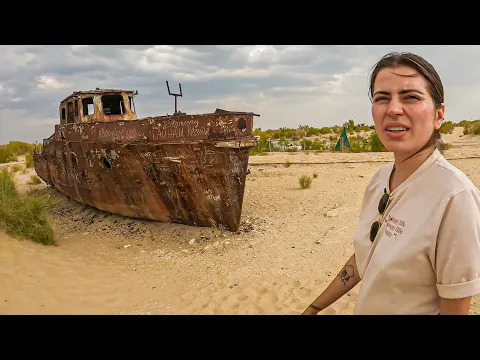

Amidst the devastation, a success story emerged. The government of Kazakhstan, with support from the World Bank, built the Kokaral Dam, completed in 2005. The dam separated the Northern Aral Sea from the Southern Aral Sea, preventing the little water that reached the north from flowing into the deeper southern basin.
The results were impressive. The water level in the north rose, salinity decreased, and fish returned. The fishing industry, which had disappeared, was reborn and revitalized the local economy. In contrast, the Southern Aral Sea in Uzbekistan continues its terminal decline. Efforts there focus on planting shrubs to attempt to contain the dust storms, an acceptance that the sea, as it was before, will not return.








-

Uma pessoa reagiu a isso.