





 Portuguese
  English
  Spanish
  5 min of reading
  0 comments


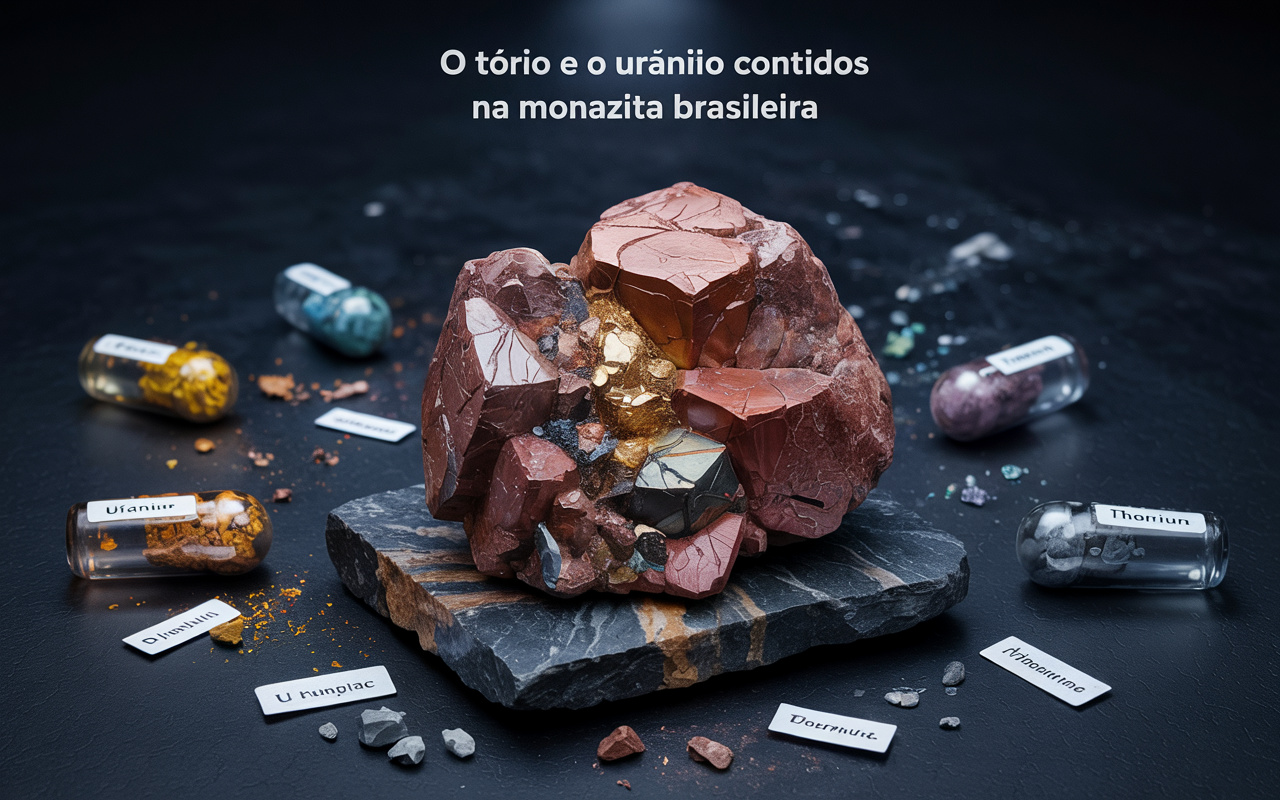
Thorium And The Uranium Contained In Brazilian Monazite Have Returned To The Radar Of Nuclear Powers After The War In Ukraine. Understand How An Ignored Mineral Can Redefine Brazil’s Role In Energy Geopolitics.
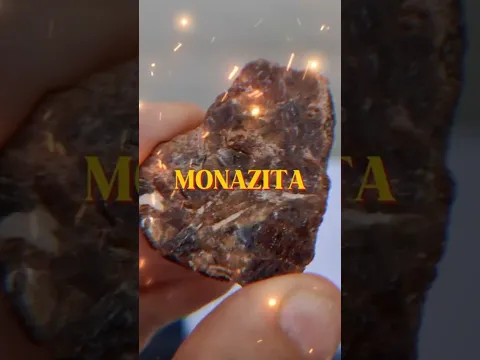
For decades, it remained in the background, buried in the sands of the Brazilian coast, ignored by much of public opinion and even by industrial policies. But with the outbreak of war in Eastern Europe and the global race for energy independence and strategic might, a nearly forgotten mineral has returned to the radar of major powers: monazite — a radioactive mineral rich in thorium and uranium, found abundantly in Brazilian territory.
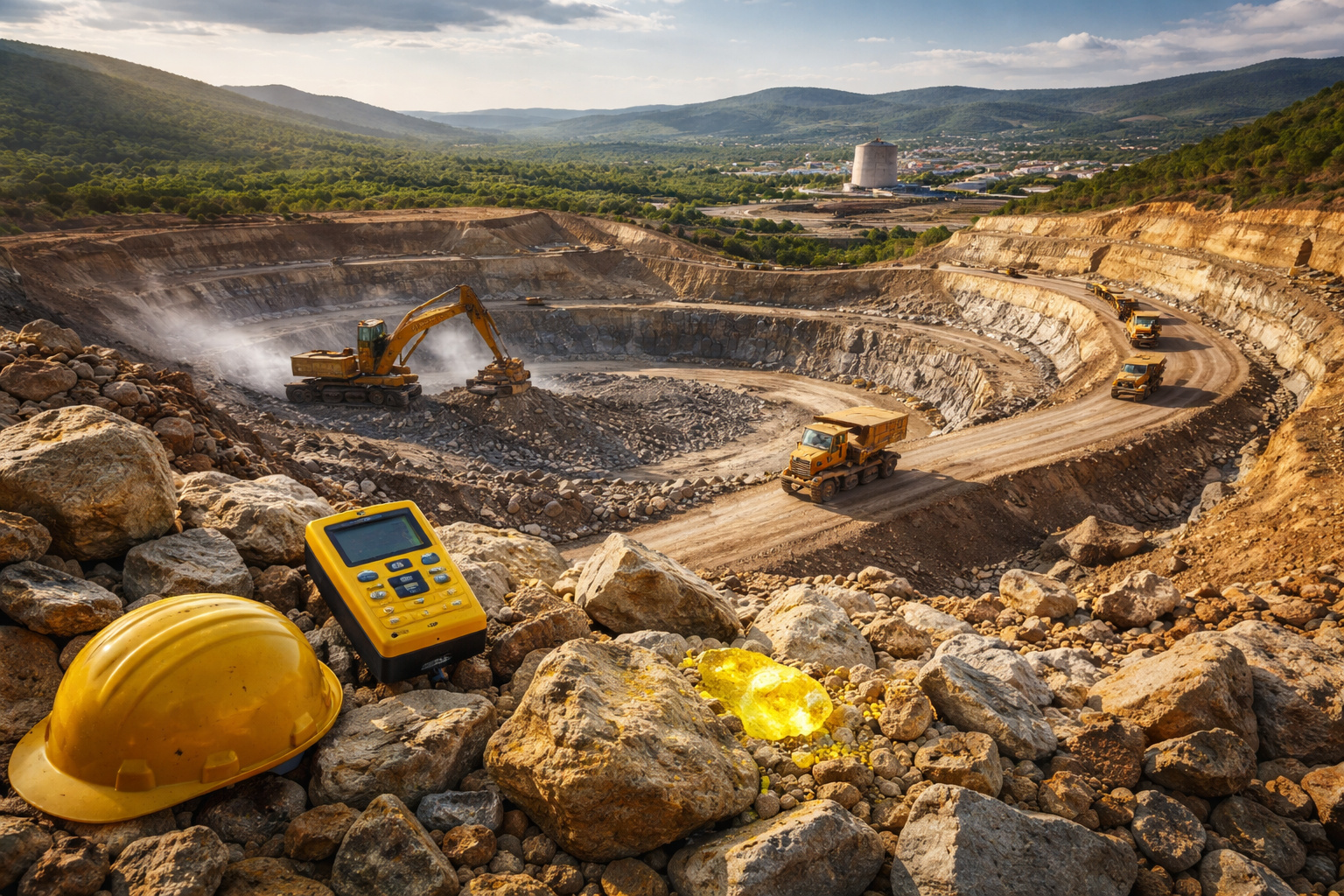
Much more than a remnant of the monazite sands of the Vargas era, monazite today represents a strategic geopolitical resource, fundamental for defense technologies, clean nuclear energy, and even next-generation reactors. And Brazil is, discreetly, among the countries with the largest known reserves of this mineral — including in areas where the extraction of rock salt and industrial sands is already occurring, such as Espírito Santo, Paraíba, and the coast of Bahia.
What Is Monazite — And Why Is It So Disputed
Monazite is a phosphate mineral that contains rare earth elements and, especially, thorium and uranium, two radioactive materials with high energy potential. Historically, it has been used in Brazil as a source of light rare earths, but the radioactive content — seen as an environmental and logistical obstacle — limited its large-scale utilization.
-
Brazil extracts 26.3 million tons of ore from what was previously treated as waste, transforming residues into wealth, producing over 3 million tons of sand, and demonstrating how national mining is relearning to generate value.
-
A $3.5 billion megaproject in Latin America pumps desalinated seawater at 1,050 liters per second over 194 km to keep a copper supermine in the Andes operational for another 20 years.
-
A hidden mine in the Andes valued at nearly R$ 1 trillion is starting to attract global attention, containing copper, gold, and silver, and raises an intriguing question: why do Argentina and Chile need to act together to exploit this gigantic wealth?
-
A silent discovery in the interior of Bahia could change the future of energy in Brazil: a uranium reserve in Lagoa Real has an estimated capacity to produce 400 tons per year and is already attracting the attention of energy sector specialists.


Today, with the advancement of nuclear technologies and the rising risks in the global supply chain, the narrative has changed. What was once waste is now a strategic asset. Thorium, in particular, is seen as a safer alternative to uranium in next-generation nuclear reactors — with a lower risk of meltdown and less long-lived radioactive waste. And, unlike enriched uranium, thorium cannot be easily converted into nuclear weapons, which attracts the attention of countries that want energy but do not want diplomatic tensions.
The main problem: Few countries dominate the chain of exploration, separation, and reuse of these materials. And China, once again, leads, both in production and processing. In this context, Brazil resurfaces as a reliable and independent option — an unexplored repository of critical minerals.
Brazilian Reserves Hidden In Plain Sight
Brazil has large deposits of monazite associated with sands rich in ilmenite, rutile, and zircon. They are primarily located in the coastal regions of Espírito Santo, Bahia, Rio de Janeiro, and northern Paraná. Much of these deposits are in concessions aimed at the extraction of titanium and rare earths — with monazite appearing as a byproduct.
Data from the Brazilian Geological Survey (CPRM) and studies from the Institute of Radioprotection and Dosimetry (IRD) indicate that Brazil may contain up to 16% of the known thorium reserves in the world — concentrated precisely in monazite sands. It is an impressive number that has only recently begun to attract the attention of geopolitical analysts and international military sectors.
With more than 150 rock salt concessions in operation, much of these areas also coincide with potential deposits of radioactive minerals, including thorium, uranium, and lanthanides. This means that the country can explore synergies between already operational industrial sectors and the production of strategic resources for energy and defense.
The War In Ukraine And The Domino Effect On Strategic Minerals
The Russian invasion of Ukraine in 2022 had a profound impact on global supply chains — especially in sectors related to energy and defense. Enriched uranium, for example, had been supplied by Russian companies to several countries in Europe. With the sanctions and the repositioning of NATO, Western countries began to seek alternative and independent sources.
In this movement, Brazil began to be watched more closely by Washington, Brussels, and even Tokyo, which see the country as a strategic ally and potential supplier of inputs for sensitive technology. The interest includes graphite, niobium, lithium — and now, also monazite.
Some confidential reports leaked by energy and security think tanks already indicate that the United States considers Brazilian thorium a dual-use resource — that is, with both civilian and military potential. The same applies to the uranium contained in monazite, which can be separated and used in conventional or advanced reactors.
Military Interest In Monazite And Future Reactors
One of the most discussed topics in the nuclear sector today is the development of molten salt reactors fueled by thorium. These reactors have the advantage of operating at higher temperatures, being intrinsically safer, and generating less high-hazard waste. Thorium does not undergo spontaneous fission, which reduces the risk of catastrophic accidents like Chernobyl or Fukushima.
Countries such as India, Norway, and China already have advanced testing programs with thorium. India, for example, plans to use this fuel in some of its reactors in the coming years, given its large internal reserve. China has also heavily invested in research to dominate this technology ahead of the West.
The problem: The refining of thorium and the separation of monazite are still technologies dominated by a few — and most are under direct influence from China. In this context, Brazil is becoming more than just a mineral supplier: it could be key in diversifying the Western technological chain.
Additionally, the Navy Command and national intelligence sectors are closely monitoring the topic. As Brazil has been developing a nuclear submarine program since 2009, the mastery of fuels and radioactive inputs is considered sensitive to national sovereignty.
A Promising Future — If The Country Does Not Waste It
The question that arises is: Is Brazil prepared to seize this window of opportunity? The country has already missed previous chances in sectors like rare earths and lithium, where it extracts but does not industrialize. The same could happen with monazite if there are no clear public policies, investment in R&D, and attraction of strategic partners who share technical knowledge.
Experts argue that the federal government should create a national plan for critical minerals, which includes special processing zones, forming partnerships with OECD countries, and protecting sensitive assets with supervision from the National Mining Agency (ANM) and the defense sector.
Otherwise, Brazil may once again see its strategic wealth exported as raw commodities, without generating skilled jobs, technological development, or international bargaining power.









-

-

-

-

5 pessoas reagiram a isso.