





 Portuguese
  English
  Spanish
  5 min of reading
  11 comments


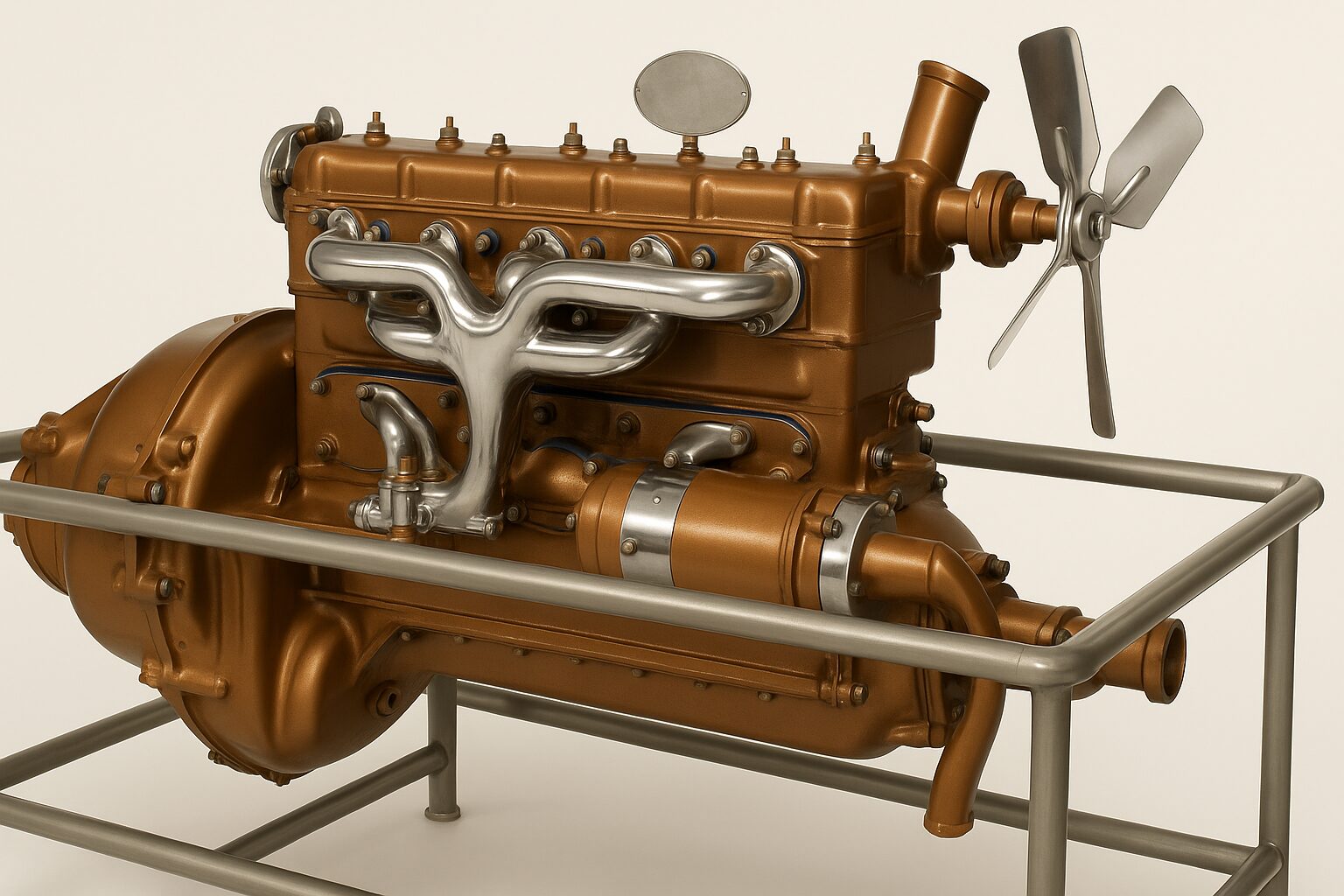


Born Out of a Global Crisis and an Energy Challenge, the Alcohol Engine Became a Symbol of National Engineering and Transformed Brazil Into a World Reference in Biofuels. Understand How It All Started — and Why This Story Still Resonates Today.
Although often associated with Brazilian innovation, the alcohol engine existed before its popularization here. In 1908, Henry Ford himself offered the legendary Model T in the United States with a version powered by hydrated alcohol, in addition to the traditional gasoline version. This option was particularly appealing to American farmers, who produced ethanol from corn, taking advantage of the easily accessible agricultural fuel. The 2.9 four-cylinder engine provided, in fact, more power with alcohol than with gasoline: 20 horsepower against 17.
In Brazil, the first Ford Ts arrived in 1919, and in remote areas where gasoline was scarce and sold in cans, the alcohol extracted from sugarcane became a viable alternative — especially used by rural producers.
The Oil Shock: When the World Became a Hostage to the Barrel
The turning point of the 1970s was marked by an event that shook the global economy: the 1973 oil crisis. OPEC (Organization of the Petroleum Exporting Countries) members quadrupled the price of the barrel in a few months — from US$ 2 to US$ 12.
-
These living root bridges and ladders are over 700 years old and help indigenous people survive in one of the rainiest regions in the world.

-
From sertanejo star to international investor: Ana Castela invests millions in a mansion in the USA, creates a themed accommodation in Orlando, and shows that the “boiadeira” also wants to grow away from the stage.

-
The 10 most stunning motorhomes in the world: a $3 million trailer with a rooftop nightclub and garage for a Ferrari, “palaces on wheels” with Italian marble, private cinema, and five-star hotel luxury for billionaires.
-
Trump wanted to spend $400 million on the White House, but the courts prohibited the million-dollar construction.


The impact was devastating, especially for countries like Brazil, which imported more than 80% of the oil consumed. Inflation skyrocketed, the trade balance became imbalanced, and the military government realized that a solution needed to be found.


It was in this context that the Proálcool (National Alcohol Program) was born, the largest biofuel incentive plan ever created in the world until then.
The Birth of Proálcool: The Largest Biofuel Program of the 20th Century
Officially launched in 1975, Proálcool aimed to reduce dependence on oil and create a national production chain based on hydrated alcohol, a byproduct of sugarcane.
The plan involved:
- Tax incentives and financing for alcohol plants
- Subsidies for automotive research
- Agreements between the government and major automakers
- Public policies restricting gasoline consumption
Brazil was betting on its agricultural vocation to solve an energy and geopolitical crisis.
Automotive Engineering Gets to Work
The automotive industry was quickly mobilized. Chrysler of Brazil, in partnership with the Aerospace Technical Center (CTA), was one of the first to develop alcohol-powered vehicles. Several Dodge 1800s were adapted, maintaining the structure of gasoline models but with adjustments in the carburetor, compression ratio, and ignition timing.
Despite the higher power, the first engines had issues with roughness and high consumption. This is because alcohol has a lower energy value than gasoline — about 6,500 kcal/kg compared to 10,800 kcal/kg.
However, ethanol has a much higher anti-knock power, which allowed for a significant increase in the compression ratio of the engines: from 7.5:1 to as much as 10:1, generating more torque and performance.
Proálcool on the Streets: The First Manufacturers to Adopt It
Fiat was the first manufacturer to officially homologate an alcohol car: the Fiat 147 1300, in July 1979. Although the car only arrived at dealerships in November, the milestone was historic.
Just a few days earlier, Volkswagen launched the Passat 1500 powered by alcohol, which quickly became popular with the public. Soon, other brands like Ford, Chevrolet, and Scania also adopted the technology.
From 1980 onwards, alcohol cars began to represent more than 90% of new car sales in Brazil.
Stimulus Measures and Restrictions on Gasoline
The military government adopted a series of policies to accelerate the adoption of alcohol:
- Gas stations closed on weekends
- Traveling with fuel jerry cans was prohibited
- Car tank capacities could not be increased
- Automobile competitions were suspended in 1977 — only returning if they were with ethanol
These measures forced a change in consumer behavior, which, in a few years, came to accept and even prefer alcohol-powered cars.
The Downfall: Supply Crisis and Loss of Trust
The success of Proálcool was shaken in the 1980s when oil prices fell and there was a break in the sugarcane production. Ethanol was missing from the pumps, and many drivers literally found themselves “stranded”.
In addition, the corrosive alcohol caused more wear on engines and required more maintenance. Over time, the popularity of alcohol cars waned, and gasoline regained market dominance in the 1990s.
The Renaissance with Flex-Fuel
The ethanol technology made a strong comeback in the early 2000s with the launch of flex-fuel cars. The first model was the Volkswagen Gol 1.6 Total Flex, in 2003.
This innovation allowed the driver to use gasoline, ethanol, or any mixture of both, without significant loss of performance.
The success was immediate: in less than two years, more than 70% of the vehicles sold in Brazil were flex. The experience accumulated with Proálcool was essential for the success of this new phase.
The International Legacy of the Alcohol Engine
Today, Brazil is considered a global reference in the use of biofuels. The country has the largest fleet of flex vehicles in the world, with over 30 million units in circulation.
Moreover, more than 500 plants produce ethanol sustainably, with technology exported to countries in Africa, Latin America, and Southeast Asia.
The Brazilian alcohol engine, although having faced challenges, has shown the world that it is possible to combine agriculture, industry, and innovation to create viable and ecological energy solutions.
Second-Generation Ethanol: The Future Has Already Begun
Brazil is also at the forefront of second-generation ethanol, produced from sugarcane waste, such as bagasse and straw.
With this technology, it is possible to increase production without expanding plantations, making the process even more sustainable. Companies like Raízen, GranBio, and Petrobras Biocombustível lead investments in this sector.
The alcohol engine is not just a story of engineering — it is a narrative of resilience, creativity, and energy sovereignty. Brazil faced one of the greatest crises in its history with a local and sustainable response that earned the respect of the world.
Today, with the advancement of renewable fuels and decarbonization goals, ethanol returns to the center of discussions about the future of mobility. And the lesson remains: it is possible to challenge oil — and win.









Ótima matéria !👏🏾👏🏾
Q retrospectiva massa!
O álcool combustível deu certo porque era – e ainda é- mais barato que a gasolina.
Agora estão empurrando goela abaixo da população combustíveis mais caros, como o hidrogenio verde, o SAF e o biodiesel.
Algo.me diz que não vai colar.
Sem contar o tal do arla pra lascar caminhoneiros né. Falam em consciência ecológica fazendo o povo pagar por isso mas não nos dão incentivo fiscal algum
Tenho um carro com motor importado feito pra funcionar com GASOLINA e nos empurram uma gasolina batizada com álcool que meu carro não foi projetado para trabalhar assim e com a assinatura de órgãos contratados pelo governo, no mínimo, suspeitos. Se estivessem realmente preocupados com meio ambiente, deveriam nos deixar escolher e não enfiar goela abaixo esse combustível adulterado que, seguramente, vai afetar o rendimento e a vida útil de veículos não projetados para trabalhar com tais misturas