





 Portuguese
  English
  Spanish
  4 min of reading
  7 comments


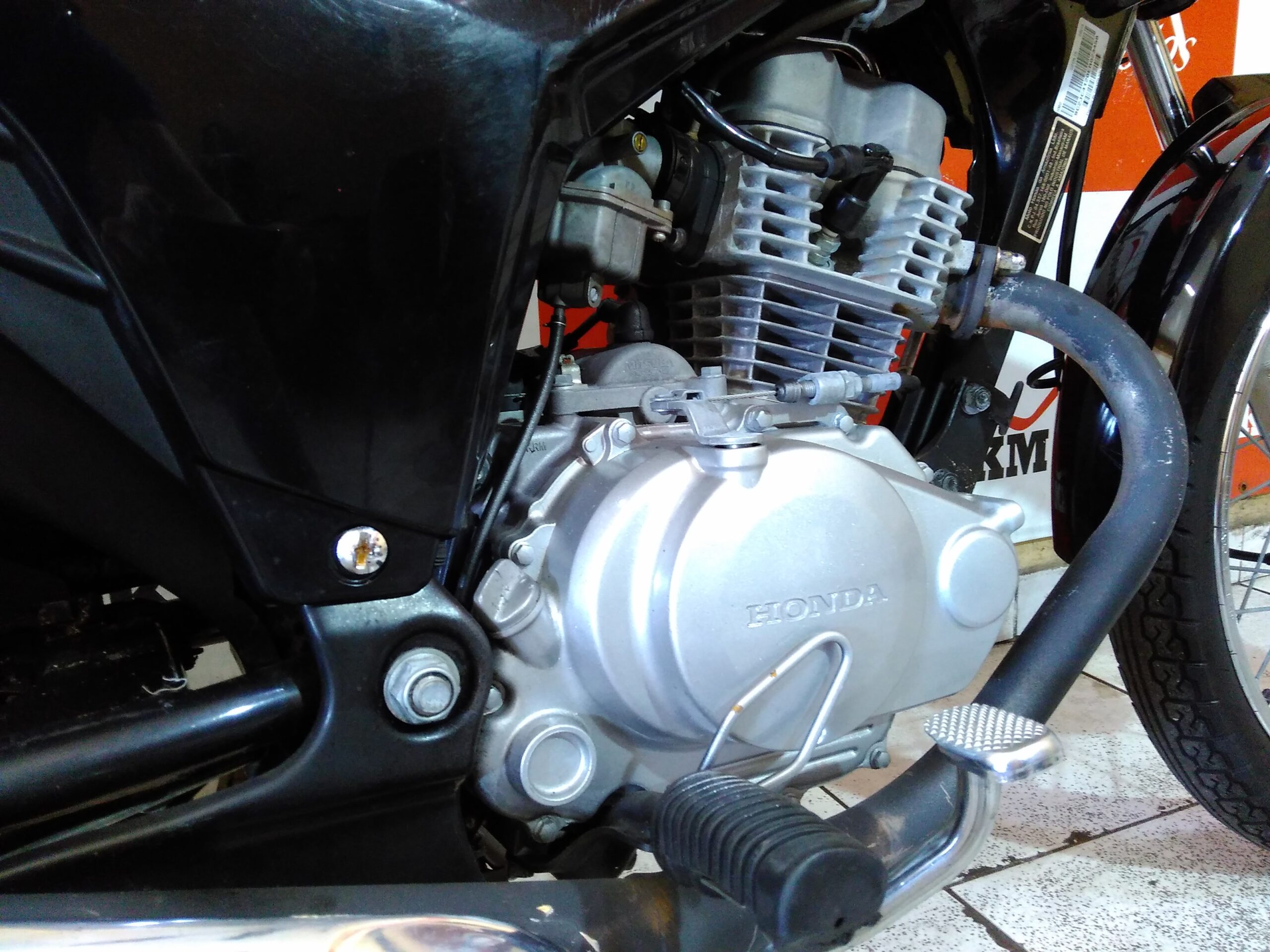


The Honda CG 125 Engine Was the Legend of Two Wheels in Brazil: It Ran 200,000 Km Without Opening Up, Equipped Millions of Motorcycles, and Said Goodbye in 2008 After More Than 30 Years of Success.
If there is an engine that can be called a legend on two wheels in Brazil, it is that of the Honda CG 125. Launched in the country in 1976, the CG was born with the mission of offering a simple, reliable, and inexpensive motorcycle to maintain, capable of facing the poor asphalt and dirt roads that still dominated the national landscape.
Over more than 30 years of history, the CG 125 equipped millions of motorcycles and established itself as the most popular motorcycle in Brazil, sold for both personal and professional use. Its single-cylinder engine, with low displacement and nearly artisanal maintenance, became synonymous with robustness: reports of units that ran 200,000 kilometers without ever being opened helped create the mythical aura surrounding the model.
The “rod” (OHV) engine of the Honda CG 125 stopped being produced in 2008, being replaced by the chain system (OHC) in the most recent versions starting in 2009. The rod engine, present since the beginning of the CG 125 line, was known for its extreme durability and resistance, including to lack of oil, and is still sought after by many.
-
The Toyota Hilux is R$ 75.5 thousand cheaper and bets on the 2.8 turbodiesel engine with up to 204 hp and 50.9 kgfm to catch up with the VW Saveiro, which leads with 4,472 sales.

-
The new Renault Koleos has a screen exclusively for the passenger that is invisible to the driver, heated rear seats, and 29 assistance systems, but its Chinese competitors cost R$ 40,000 less and deliver more power.

-
The car stored for 38 years: when opening the barn door, what appears is breathtaking and looks like a scene from a movie!

-
Fiat works miracles in the Brazilian market, lowers the price of its 0 km hatch to R$ 69,990, reestablishes the model as the cheapest car in the country, and reignites the battle against Kwid and C3.


Simplicity That Became a Symbol
The secret to the success of the CG 125 engine lay precisely in its simplicity. It was a four-stroke single-cylinder, air-cooled engine with a simple design and easily replaceable parts. This allowed not only neighborhood mechanics — but in many cases, the owners themselves — to perform basic maintenance.
The reliability was such that the engine could run thousands of kilometers on low-quality fuel and still delivered impressive consumption, reaching over 40 km/l in moderate use.
It didn’t take long for the CG to become the main work motorcycle in Brazil, used by delivery people, motorcycle taxi drivers, and small merchants.
The People’s Motorcycle
The Honda CG 125 wasn’t just a vehicle: it was a cultural phenomenon. For decades, it represented the first motorized vehicle for millions of Brazilians, especially in rural areas and small towns, where cars were still inaccessible.
Over time, the motorcycle also gained space in large cities, becoming a symbol of practicality and agility in traffic. In the 1990s, with the boom of urban deliveries, the CG 125 solidified its image as a “warrior motorcycle,” made to run all day without complaint.
The End of an Era in 2008
From the 2000s onwards, emissions regulations and technological advancements required that the carbureted CG 125 engine be replaced. In 2008, Honda announced the end of production of this version, paving the way for engines with electronic fuel injection and greater environmental efficiency.
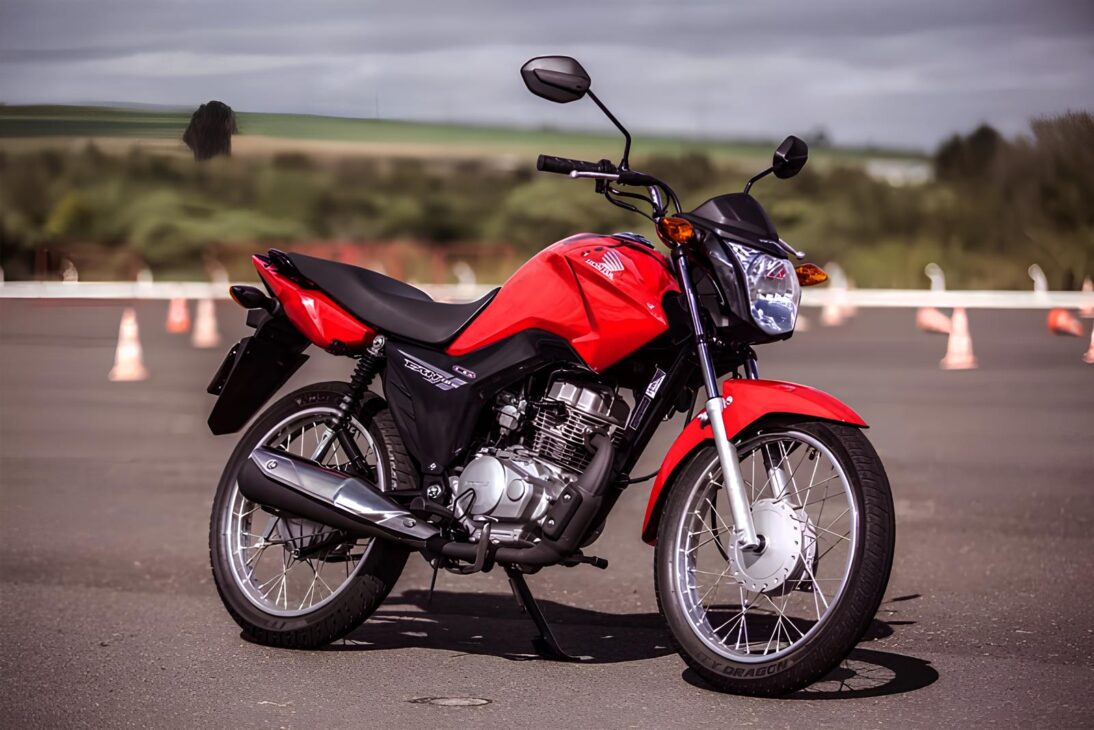
The end of the engine did not mean the end of the motorcycle. The CG family continued strong, moving through the 150 and 160 versions and is still among the best-selling motorcycles in Brazil today. But for enthusiasts, the farewell of the CG 125 marked the end of a cycle: that of an engine that, with its nearly artisanal simplicity, helped to motorize the masses in the country.
Legacy and Nostalgia
In total, more than 10 million units of the Honda CG were produced in Brazil since its launch in 1976. A large part of them left the factory equipped with the 125 engine that became a symbol of trust.


Even today, it is possible to see models from the 1980s and 1990s circulating in perfect condition, living testimonies of the durability of this project. For many motorcyclists, the CG 125 was the “school” where they learned to ride a motorcycle and also the first vehicle that allowed access to work, education, or even financial independence.
The Honda CG 125 engine is not just a piece of engineering. It is a chapter in Brazilian history, which helped connect people, shorten distances, and transform the way of life for millions.
Its farewell in 2008 marked the end of an era, but its spirit continues to roam the streets and roads of the country. For many, the CG 125 was not just a motorcycle: it was a lifelong companion.









A durabilidade de qualquer motor depende do dono principalmente se exigir muito dele ,sem manutenção nada aguenta,cavalo mal tratado não aguenta o trabalho.
O Fusca de duas rodas.
Eu tenho uma e é muito resistente